Saint Wenceslaus

A grandmother's faith, a mother's resentment
Wenceslaus was born around 907 into the ruling Přemyslid dynasty of Bohemia, at a moment when Christianity was still a relatively new and unsettled force in the region. His father, Duke Vratislaus I, was Christian; his mother, Drahomíra, came from a pagan Slavic background and never fully embraced the new religion the way her husband's family had. It was Wenceslaus's grandmother, Ludmila — herself later venerated as a saint — who took charge of his religious upbringing, and by most accounts did so with real success. Drahomíra reportedly resented her mother-in-law's influence over her son enough that Ludmila was murdered in 921, an early sign of just how personal and violent Bohemian court politics could get.
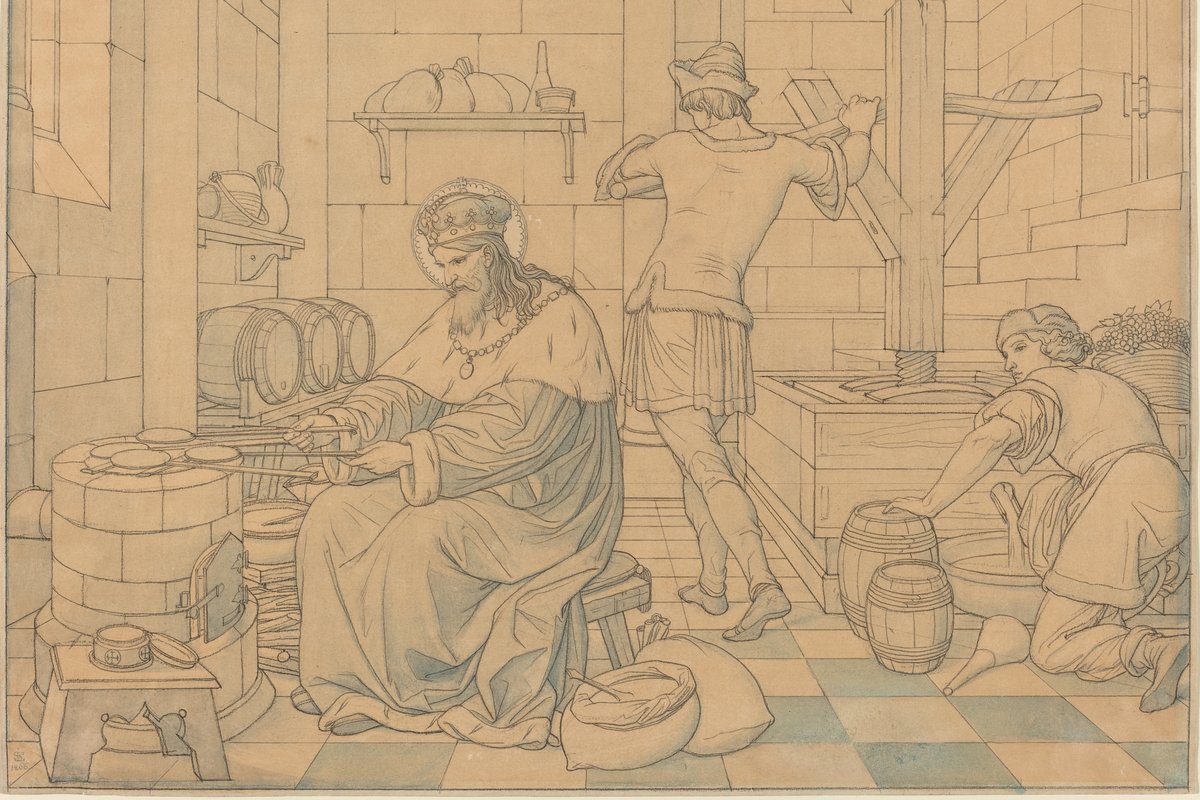
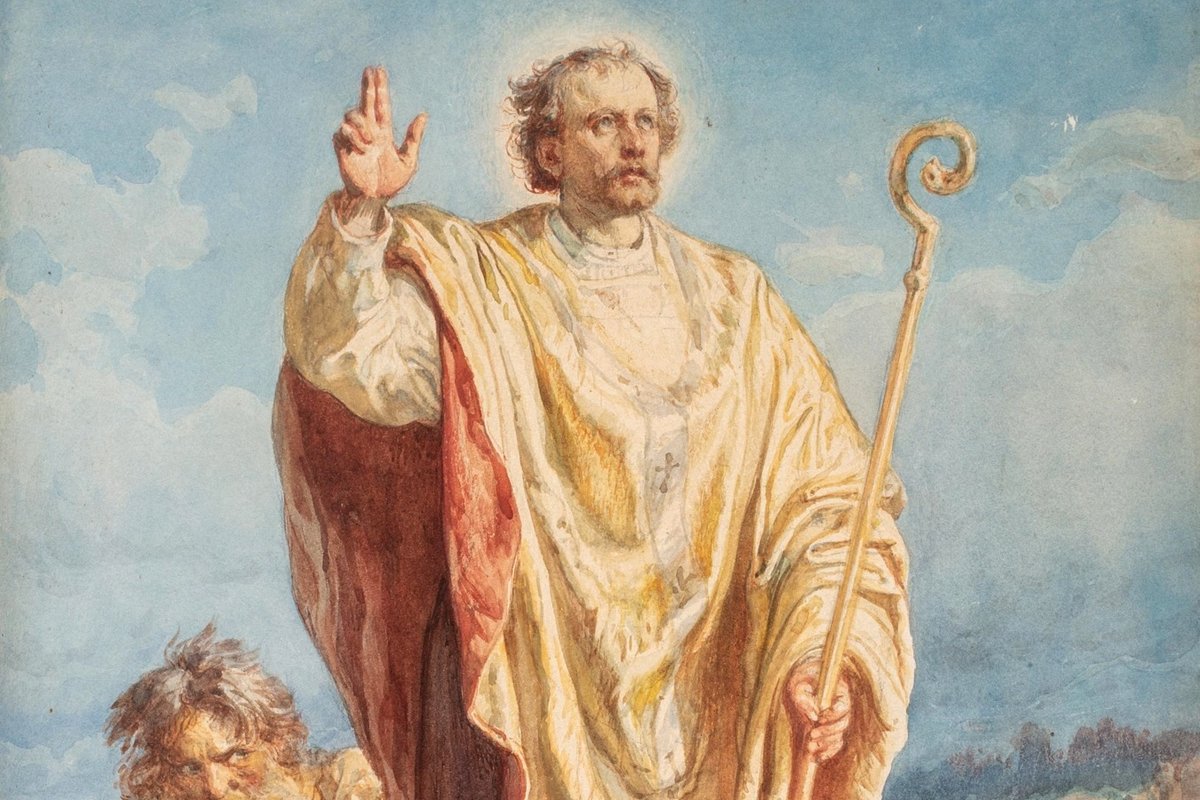
Edward Jakob von Steinle, Saint Wenzel Cooking Hosts as Two Youths Press Wine, 1866, National Gallery of Art, Washington, D.C. — public domain (CC0, NGA Open Access).
Wenceslaus took over rule of Bohemia as a young man in the 920s, in a duchy still working out its relationship both to Christianity and to its powerful German neighbors. He governed as a genuinely committed Christian ruler by the standards of his contemporaries and biographers, promoting the Latin rite and supporting German clergy in a way that struck some of his own nobility as a concession to a rival power rather than a matter of faith. Bohemia briefly resisted paying tribute to the German kingdom, but by around 929 Wenceslaus had returned to a policy of alliance and tribute rather than open conflict — a pragmatic, peace-favoring choice that not everyone around him supported.
A duke who baked his own communion bread
The stories that built Wenceslaus's reputation as a saint, rather than merely a competent ruler, come from hagiographies written within a few decades of his death — early enough to reflect a genuine, fast-forming popular memory, though not so early that every detail can be taken as verified fact. The most vivid of these describes Wenceslaus personally baking the bread and pressing the wine used for the Eucharist at local churches, rising at night with a single attendant to do menial, physical work most rulers of his rank would never have touched. It's this tradition, more than any single documented policy, that shaped his enduring image as a duke defined by personal humility and charity toward the poor — a pious legend worth taking seriously as an early and consistent thread in how his own era remembered him, even without independent corroboration outside the hagiographic sources.
Killed on the way to church
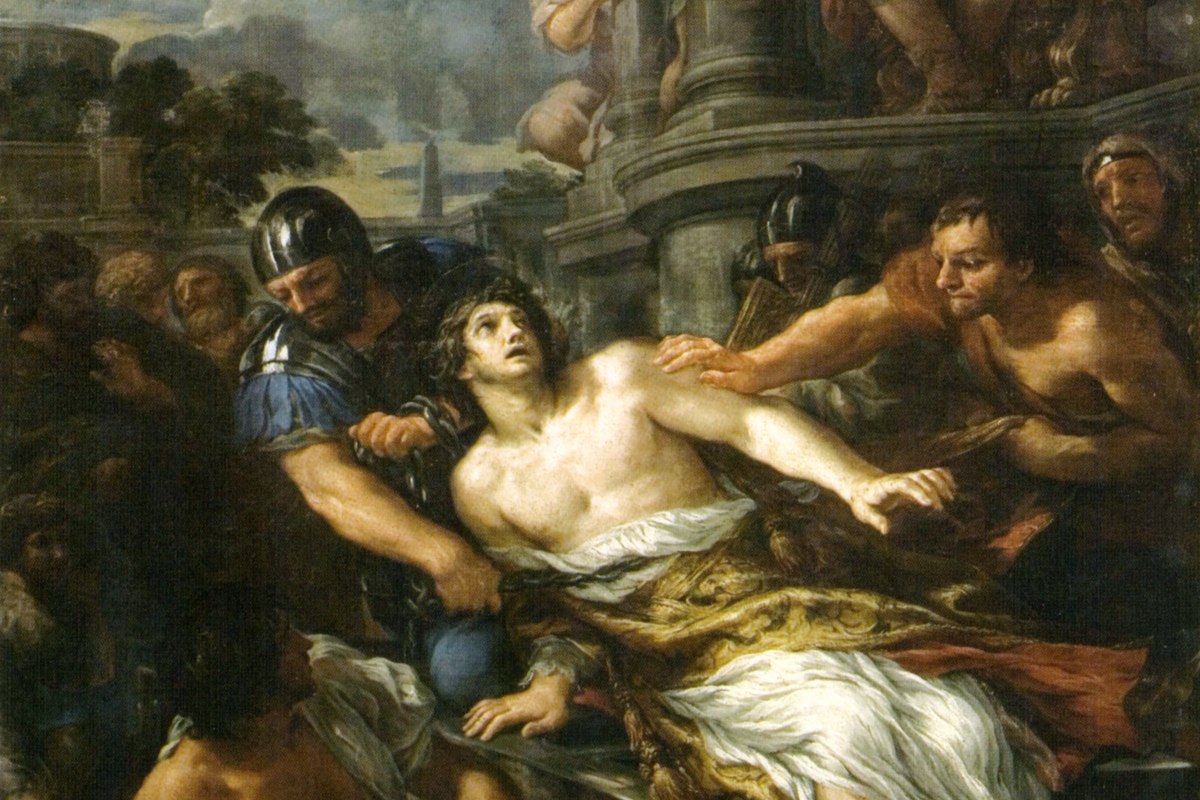
The conflict that ended Wenceslaus's life was, at its core, a family and factional struggle. His younger brother, Boleslaus, led a faction of Bohemian nobility uncomfortable with Wenceslaus's German alliance and, by some accounts, encouraged by their mother Drahomíra's long-standing resentments. In September of 935 — some sources give 929 — Boleslaus invited Wenceslaus to Stará Boleslav, ostensibly to celebrate a religious feast day. As Wenceslaus made his way toward the church for prayer, a group of Boleslaus's companions fell on him and stabbed him; Boleslaus himself is reported to have delivered the finishing blow with a lance, cutting down his own brother essentially at the church door. Whatever exact mix of family grievance and political calculation drove it, the killing of a Christian ruler on his way to worship read, to contemporaries, as an unmistakable martyrdom.
From murdered duke to national patron
The political outcome was almost immediate: Boleslaus, whatever his role in the killing, inherited Bohemia and — apparently moved by the wave of popular veneration that grew around his brother's death — had Wenceslaus's remains transferred a few years later to the Church of St. Vitus in Prague, the church that would go on to become Bohemia's premier cathedral. Wenceslaus was never crowned king in his own lifetime; he ruled as duke. But Holy Roman Emperor Otto I later granted him posthumous royal dignity, and it's this posthumous royal status, layered onto his martyr's reputation, that let later generations refer to him — loosely, but consistently — as a king. His feast is kept on September 28, which remains a national public holiday in the Czech Republic, Czech Statehood Day, built directly around his memory.
The Bohemian crown, and an English carol
Wenceslaus's afterlife as a symbol outlasted the details of his actual biography by a wide margin. The historic coronation crown of the Kingdom of Bohemia is still known today as the Crown of Saint Wenceslas, a direct institutional link between his memory and Czech national identity that has held for a thousand years. In the English-speaking world, though, he's known almost exclusively through "Good King Wenceslas," a carol written by John Mason Neale in 1853 describing the duke braving harsh winter weather to bring food and fuel to a poor man on the Feast of Stephen. It's a lovely piece of Victorian devotional songwriting, and it does capture, in spirit, Wenceslaus's reputation for personal charity — but no historical record documents the specific episode the carol describes, and it should be read as 19th-century legend built on an old reputation, not as history. He's venerated today as the principal patron of the Czech Republic and Bohemia, and, less formally, of brewers.
Trivia
Who was Saint Wenceslaus?
Is 'Good King Wenceslas' historically accurate?
Why was Wenceslaus murdered by his own brother?
What is Saint Wenceslaus the patron saint of?
Is the story of Wenceslaus baking bread and pressing wine himself historically true?
You May Also Like
Related Reading