Saint Columba of Iona

An Irish prince who chose a monastery instead
Columba was born on December 7, 521, in Gartan, County Donegal, into the powerful Uí Néill dynasty — a family with a genuine claim to kingship in early medieval Ireland, one whose branches would go on to dominate Irish high kingship for centuries afterward. Rather than pursuing that path, he entered religious life, studying under some of Ireland's most respected churchmen and eventually founding a string of monasteries across the country, including the influential community at Derry, built, tradition holds, on land his own royal kinsmen granted him. He was, by the time he reached his early forties, already a significant figure in Irish monastic Christianity — which makes what happened next all the more striking.
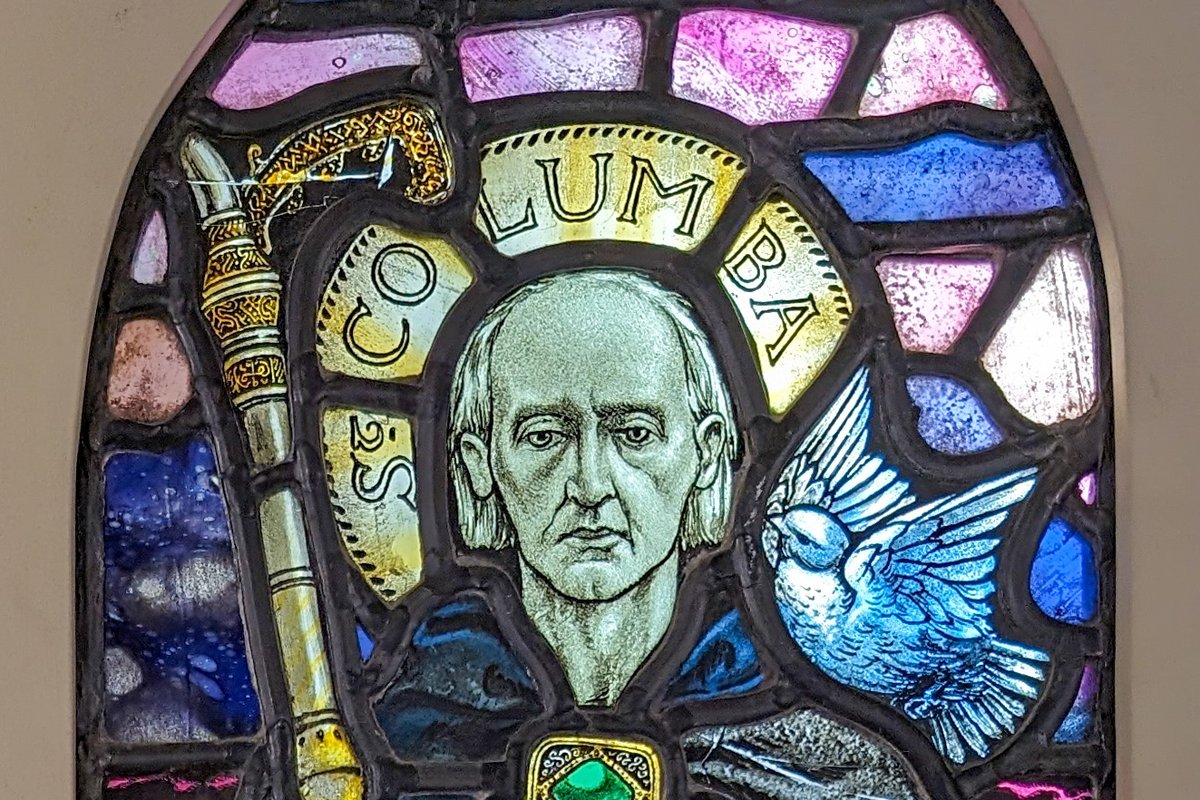
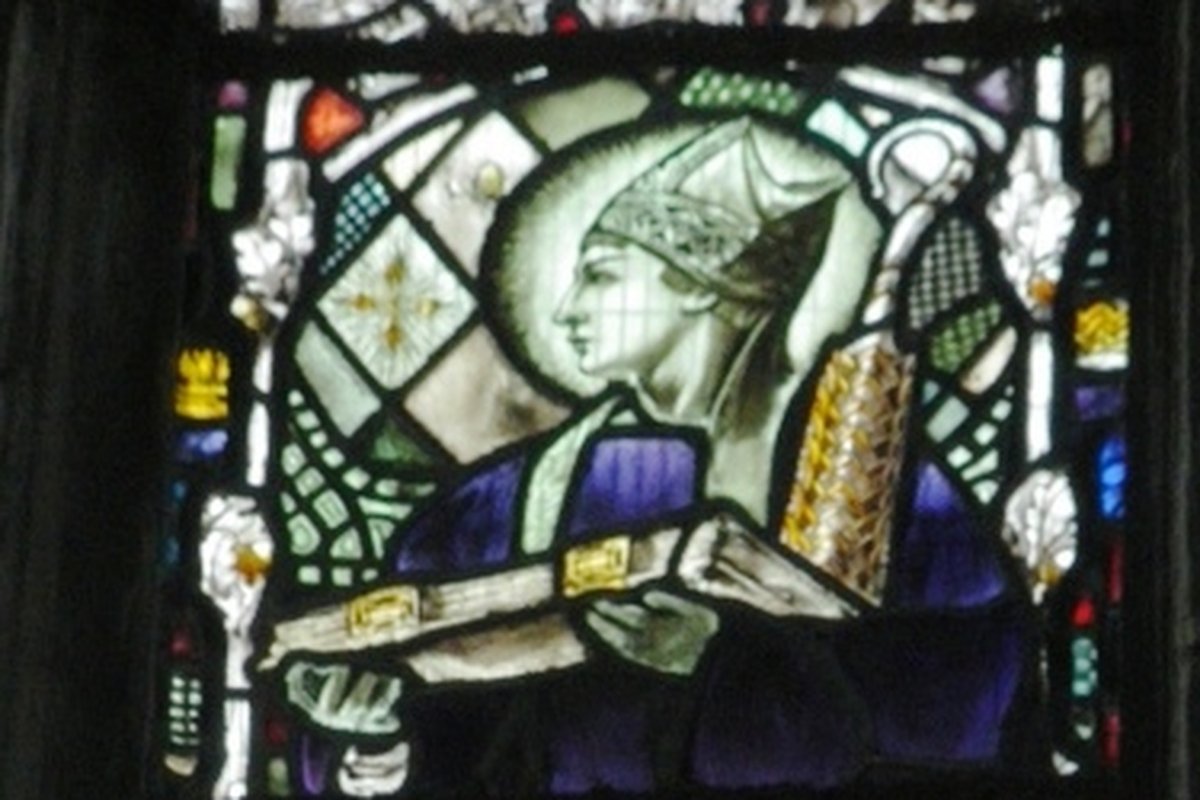
Karl Parsons, Saint Columba (stained glass window), 1913, Church of St Michael, Sulhamstead, Berkshire — public domain (CC0 photograph).
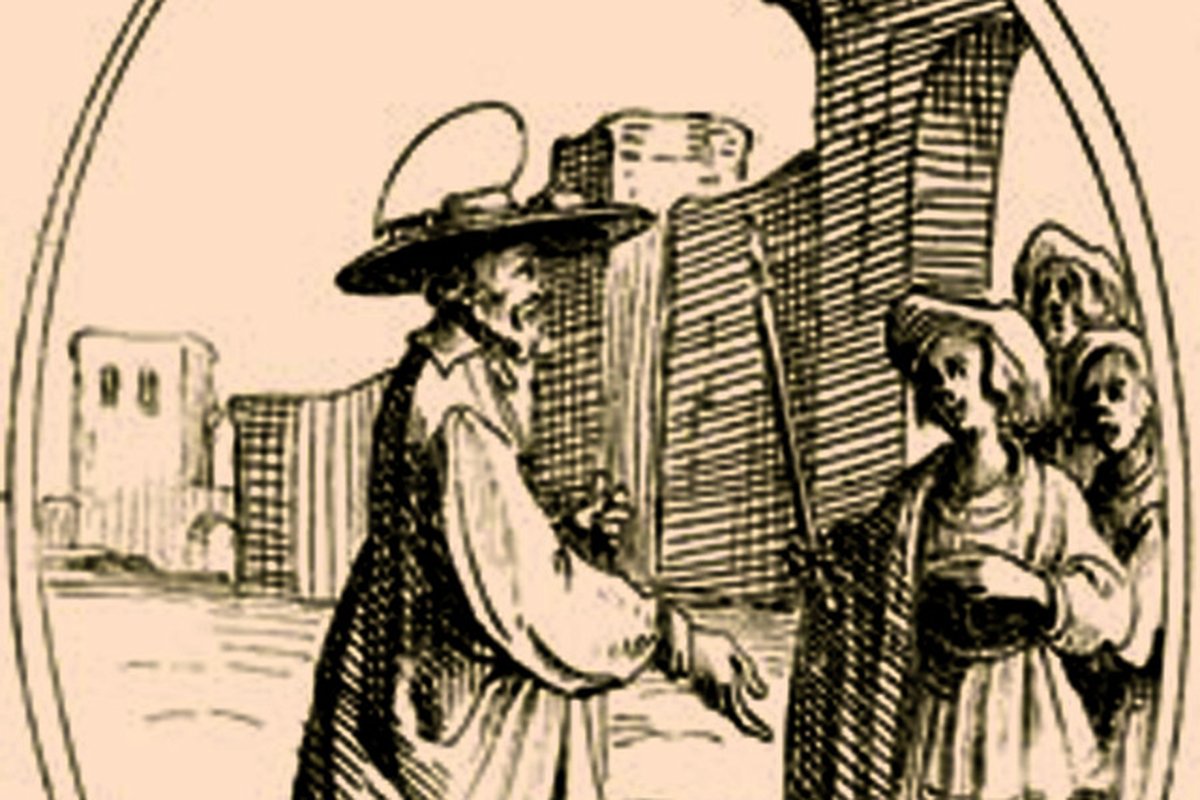
In 563, Columba left Ireland altogether, crossing to Scotland with a small group of companions, traditionally numbered at twelve, an echo of Christ's own twelve apostles that later biographers were quick to note. Tradition connects his departure to a dispute back home, sometimes described as a quarrel over a copied manuscript that escalated into a battle with real casualties, though the surviving accounts don't agree closely enough on the details to treat any single version as settled fact, and some scholars think the story of Columba leaving in disgrace or penance was shaped later to fit a familiar pattern of monastic exile-as-penitence rather than reflecting exactly what happened. What is certain is where he went and what he built once he got there.
Founding Iona
Columba and his companions settled on Iona, a small island off the western coast of Scotland, granted to them by the local ruler, and there he founded the monastery that would define the rest of his life. Iona was not an obvious choice for a project of major historical consequence — a modest island, remote even by the standards of the era — but the monastery Columba built there became the operating base for a sustained mission to the Picts, the peoples of what's now Scotland who had not yet been evangelized. Monks trained and formed at Iona carried Christianity further into Pictish territory over the following decades, and the monastery itself grew into one of the most important centers of learning and manuscript production in the entire insular Christian world — a reputation that would eventually produce treasures like the Book of Kells, associated with the Columban monastic familia, in the centuries after Columba's own death.
The legend at Loch Ness
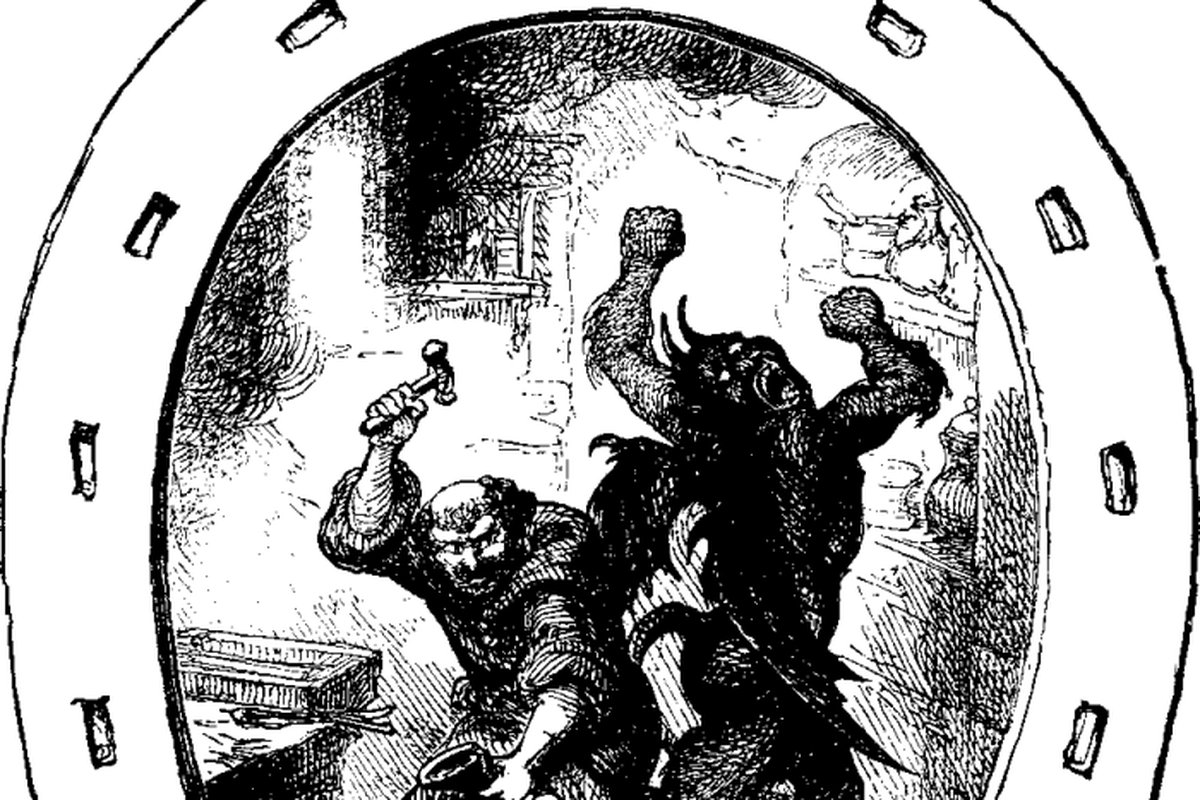
No account of Columba is complete without addressing the story most people have actually heard about him: an encounter with a beast in the River Ness in 563, an episode later ages connected to the modern legend of the Loch Ness Monster. It's important to be direct about what this is and isn't. The story first appears in a biography of Columba written by Adomnán, an abbot of Iona, roughly a century after Columba's death — making it a later hagiographical tradition rather than a contemporary record of events, and it should be read as folklore attached to Columba's memory rather than documented history. The far less flashy, far better-attested reality of Columba's life is more interesting on its own terms: a prince-turned-monk who spent three decades methodically building the monastic and missionary infrastructure that brought Christianity to Scotland.
A monastery that outlasted empires
Iona's influence stretched far beyond Columba's own lifetime. In the seventh century, monks trained in the Columban tradition traveled south into Northumbria at the invitation of King Oswald, himself educated among the Iona community during a period of exile, and founded the monastery of Lindisfarne on the English coast — extending Columba's missionary reach from Ireland and Scotland into northern England as well. Iona also became a favored burial place for early Scottish and even some Norse and Irish kings, a mark of the prestige the monastery had accumulated within a few generations of its founding. That prestige wasn't without cost: Iona, exposed and coastal, was raided repeatedly by Viking ships beginning in the late eighth century, and some of its monks were killed in these attacks — a violent counterpoint to the peaceful image the island otherwise carries in popular memory.
Patron of poets, patron of Scotland
Columba died on Iona on June 9, 597, and was venerated as a saint through ancient popular acclaim, well before the Church formalized its modern canonization process. He's counted as one of the three patron saints of Ireland, alongside Saint Patrick and Saint Brigid, and separately honored as a patron of Scotland — a double national patronage that reflects the two halves of his own life, the homeland he left and the country his mission helped shape. He's also venerated as patron of poets and of bookbinders, fitting tributes to a monastery famous for its scriptorium, and is invoked against floods. His feast, June 9, remains one of the most widely kept saints' days in both Irish and Scottish tradition, and Iona itself remains an active site of Christian worship today, drawing pilgrims of several denominations to an island that has never entirely stopped being what Columba first made it.
Trivia
Who was Saint Columba of Iona?
Why did Columba leave Ireland for Iona?
Is the story of Columba and the Loch Ness monster true?
What is Saint Columba the patron saint of?
When is the feast of Saint Columba?
You May Also Like
Related Reading