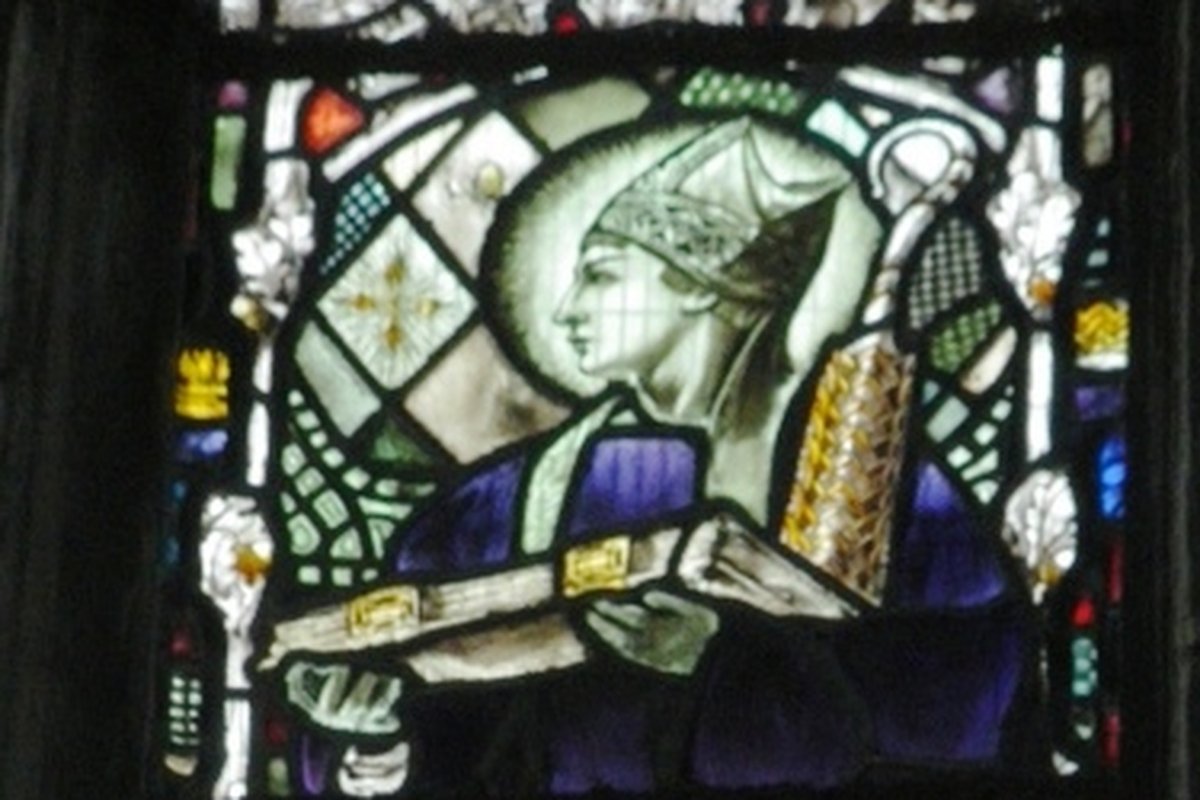
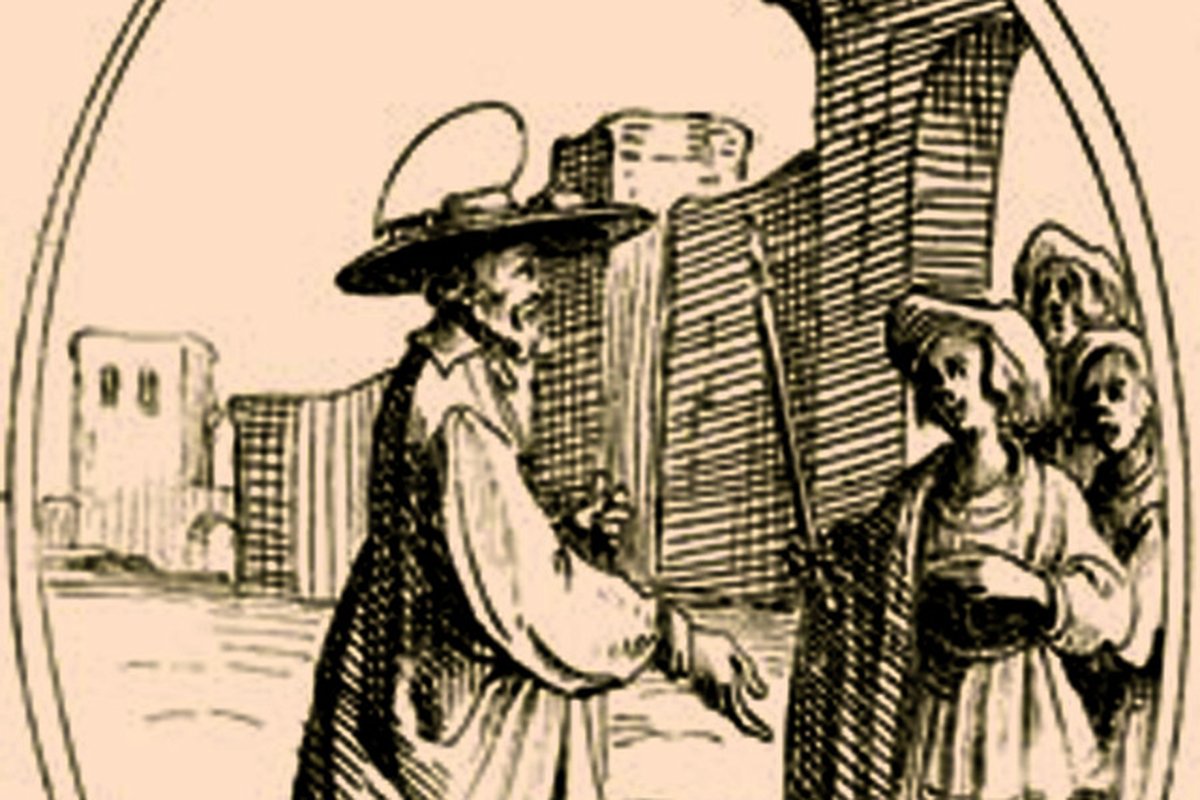
Saint Benedict of Nursia

A life lived as Rome fell apart
Benedict was born around 480 CE in Nursia, a town in central Italy, at a moment when the Western Roman Empire had only just collapsed and the structures that had organized life across the continent for centuries were unraveling. He would die around 547, at Monte Cassino, the monastery he had founded and where he spent the last, most influential years of his life. The instability of his era isn't incidental to his story — it's part of why the sturdy, orderly community he built at Monte Cassino mattered as much as it did.
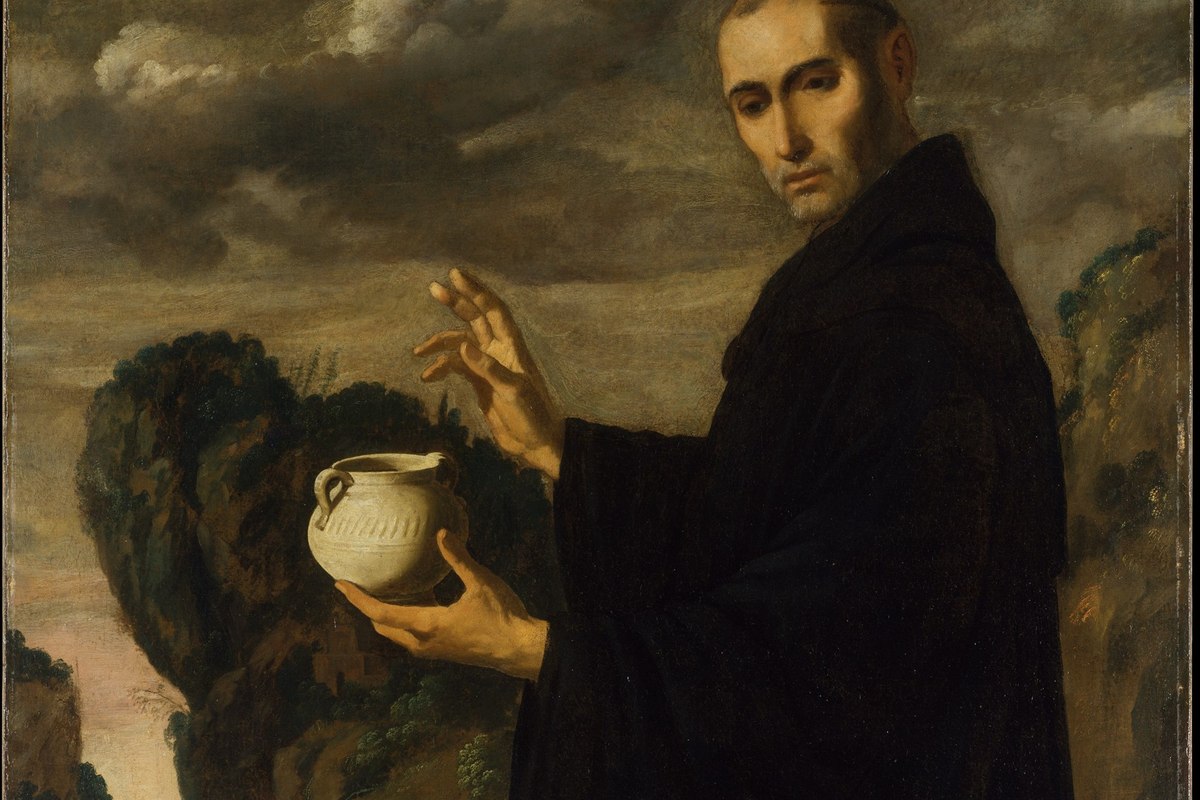
Francisco de Zurbarán, "Saint Benedict," c. 1640-1645, The Metropolitan Museum of Art — public domain.
According to his earliest biographer, Pope Gregory the Great, Benedict was sent as a young man to study in Rome but fled the city, disturbed by the moral corruption he found there among his fellow students. He withdrew instead to a cave near Subiaco, east of Rome, where he lived alone as a hermit for roughly three years, supplied with food lowered down to him on a rope by a monk from a nearby monastery. Word of his holiness gradually spread despite his isolation, and a nearby community of monks eventually asked him to become their abbot — an experiment that reportedly ended when the monks, resentful of the discipline he imposed, tried to poison his wine. Benedict is said to have blessed the cup before drinking, at which point it shattered, and he calmly left the community rather than force the issue. Only later, after gathering his own disciples around Subiaco and eventually moving south to Monte Cassino around 529, did he found the community that would define the rest of his life.
A rulebook written for practical use
What Benedict left behind wasn't a theological treatise but something far more workmanlike: the Rule of Saint Benedict, a practical guide covering how monks under his care should structure prayer, work, meals, and community life together. He drew on existing sources, including the writings of John Cassian and an earlier, anonymous text known as the "Rule of the Master," but reshaped what he borrowed into something distinctly his own — a document marked, above almost anything else, by its balance and moderation, avoiding the extremes of asceticism that characterized some earlier monastic writing.
The Rule organizes a monk's entire day around a rhythm the tradition still calls ora et labora — "pray and work." Roughly a third of each day was set aside for the Opus Dei, the "Work of God," meaning the communal recitation of psalms and prayers at fixed hours from before dawn until night; the rest was divided between manual labor, reading, and rest. Benedict warned that idleness was dangerous to the soul, and gave equal weight to physical work — farming, building, copying manuscripts — and spiritual discipline, refusing to treat one as more valuable than the other. He also wrote at length about the qualities required of an abbot, describing a leader who should be firm but never harsh, adjusting expectations so the strong have something to strive for while the weak aren't driven to despair — a tone of realistic moderation that runs through the entire document and sets it apart from stricter monastic rules written before it.
The rule that outlived an empire
That balance is likely why the Rule spread so far beyond its original audience. Written for one monastery's practical needs, it went on to become the model adopted, in whole or in part, by the overwhelming majority of monasteries across medieval Western Europe — giving Benedict a claim to the title "father of Western monasticism" that few other figures in Christian history could match. Centuries of monks who never set foot in Monte Cassino nonetheless organized their entire daily lives around a document written for a single, specific community.
That spread happened in large part because Benedictine monasteries became something far more than places of prayer. Through the chaos and upheaval of the early medieval centuries, Benedictine houses preserved and copied classical and Christian texts by hand, ran schools, kept agricultural knowledge alive, and offered shelter to travelers — the often-cited phrase "the monks saved civilization" is an oversimplification, but not a baseless one. Monte Cassino itself was destroyed and rebuilt several times over the centuries, most famously in 1944 when Allied bombing leveled the abbey during the Battle of Monte Cassino in the Second World War; it has since been reconstructed and remains an active monastery today, drawing pilgrims to the same hillside Benedict chose some fifteen hundred years ago.
Patron saint of the continent his rule helped hold together
In recognition of that legacy, Pope Paul VI formally declared Benedict patron saint of all Europe in 1964 — a title that credits him not with any single miracle, but with the quieter, more durable work of giving structure and continuity to religious community life across a continent during one of its most unstable periods. He is buried at Monte Cassino alongside his twin sister, Saint Scholastica, who founded a related community of nuns — twins who, in their own separate ways, helped lay the groundwork for Western monastic life as it would exist for the next fifteen hundred years.
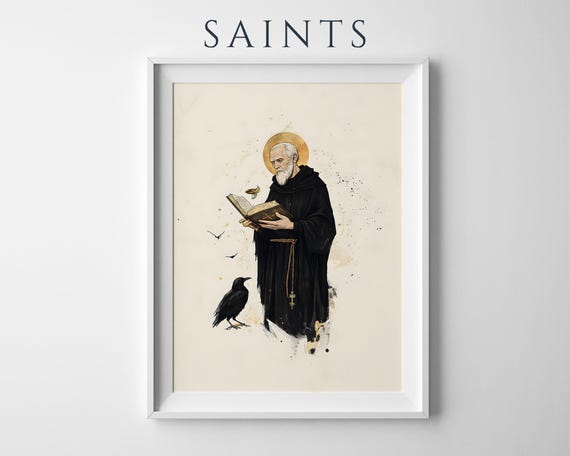
Benedict's feast is now celebrated on July 11 in the Roman calendar, moved from the traditional March 21 date associated with his death, so it wouldn't consistently fall during Lent. He's often depicted in art holding a broken cup, referencing the poisoning attempt at his first monastery, or with a raven, recalling a similar legend about bread sent to test him. Alongside his patronage of Europe, he's also invoked against poison, and by monks, students, and — fittingly, given how much of the Rule concerns the discipline of daily routine — people seeking a more ordered spiritual life.
Trivia
When did Saint Benedict live?
What is the Rule of Saint Benedict?
Why is Benedict called the father of Western monasticism?
Why was Benedict declared patron saint of Europe?
Related Reading