Saint Tarcisius

A few lines of poetry, and almost nothing else
Strip Tarcisius's story down to what can actually be verified against an ancient source, and what remains is remarkably slight. In the 4th century, Pope Damasus I — a pope known for commissioning verse epitaphs to honor Rome's early martyrs at their tombs — composed a short poem praising a Christian named Tarcisius who died defending "the heavenly mysteries" (widely understood as a reference to the Eucharist) from what the inscription calls a "rabid mob," rather than surrender or expose what he carried. That inscription is a genuine, surviving epigraphic artifact — solid physical evidence that a real cult of a martyr named Tarcisius existed in Rome by the 4th century. What it doesn't give is almost everything people picture when they hear his name: no confirmed age, no description of a crowd of boys, no blow-by-blow account of a confrontation in the street.
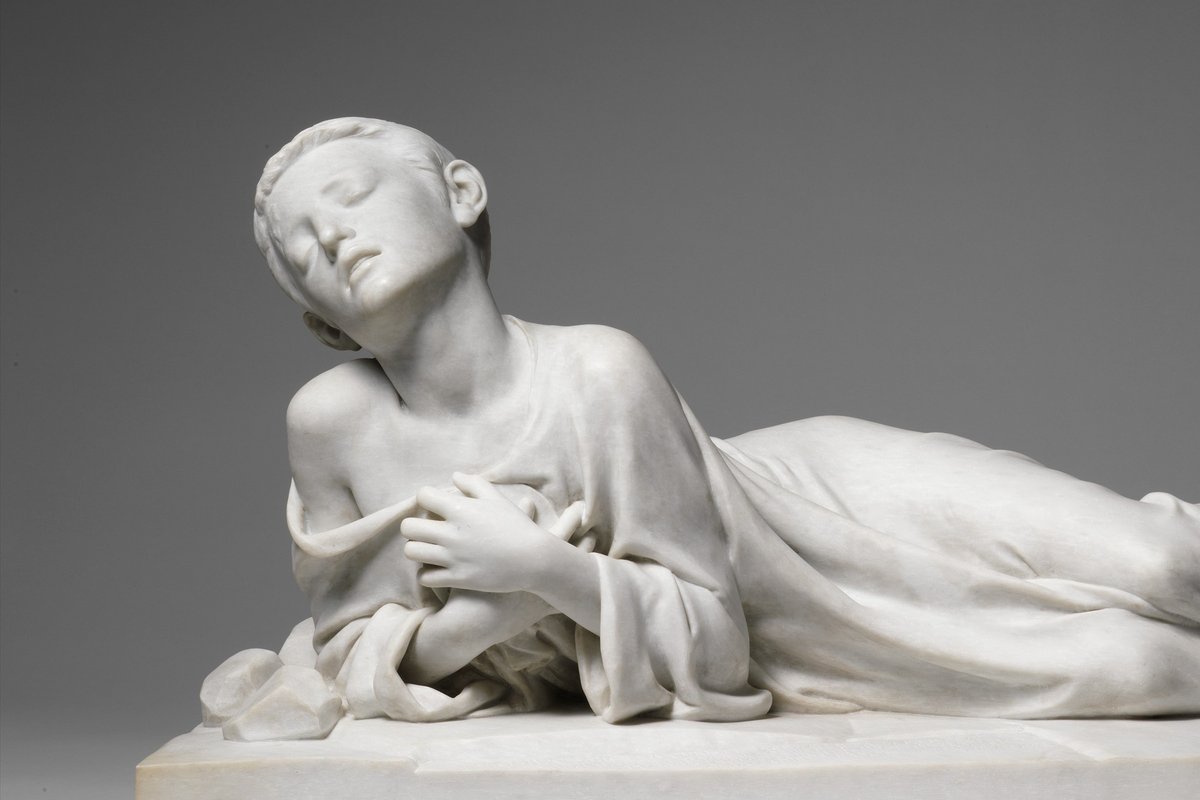
Alexandre Falguière, Tarcisius, martyr chrétien, 1868, Metropolitan Museum of Art — public domain (CC0).
The story as it's told today
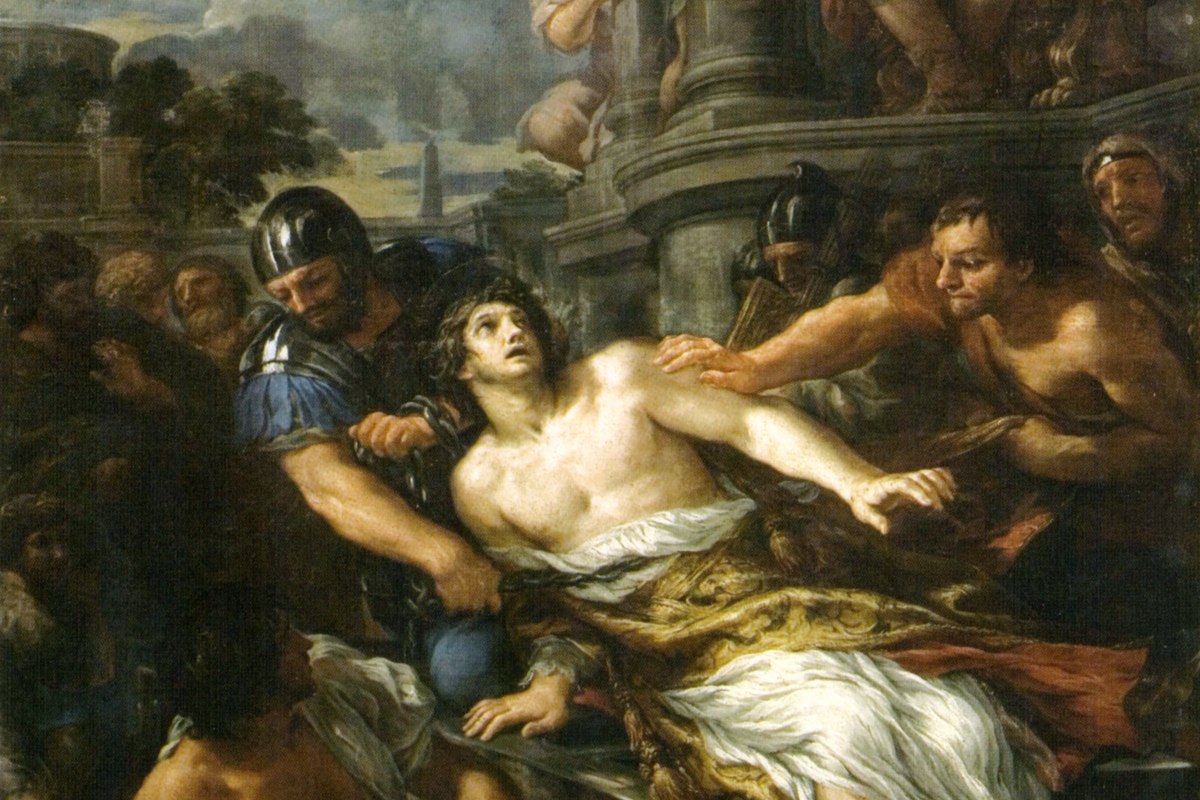
The popular account fills in those gaps in a way that's become deeply familiar in Catholic devotional culture: Tarcisius, often pictured as a boy or young adolescent acolyte, is entrusted with carrying the reserved Eucharist to Christians awaiting execution or already imprisoned during a Roman persecution (sometimes associated with Valerian's persecution around 257-258 AD, though the dating isn't firmly fixed). On the way, a group of other boys — pagan, and unaware or suspicious of what he's carrying — surrounds him and demands to see it. Tarcisius refuses, shields the Eucharist with his body and clothing, and is beaten so severely that he dies from the assault, having never let go of what he was protecting.
A Victorian novel, not an ancient Acts document
It's worth being direct about where that fuller picture actually comes from, because it's not where most people assume. The vivid narrative detail — the specific image of a young boy, the taunting crowd of playmates, the drawn-out physical confrontation — largely traces to 19th-century popular literature rather than to any detailed ancient Acts contemporary with the events. The single most influential source is Fabiola, an 1854 novel by Cardinal Nicholas Wiseman set in persecution-era Rome, which dramatized and considerably expanded the bare outline given by the Damasus inscription into the fully realized scene now standard on holy cards and in children's catechesis. That doesn't mean the underlying kernel is fabricated — the Damasus epitaph is real ancient testimony that a martyr named Tarcisius died protecting the Eucharist from a hostile crowd — but the specific, cherished details of the story as most Catholics know it today are a much later literary elaboration on a sparse ancient source, closer in spirit to how Saint Genesius of Rome's fuller legend developed centuries after his own brief early attestation.
The practice of carrying the Eucharist to prisoners
Whatever the exact details of Tarcisius's own death, the underlying practice his story is built around was real and well documented in the early Church: acolytes, a minor clerical office traditionally filled by younger members of the community, regularly carried the reserved Eucharist — consecrated Communion kept outside of Mass — to Christians who were sick, imprisoned, or condemned to death, so they could receive Communion before execution. Roman persecutions made this a genuinely dangerous task, since being caught carrying the Eucharist openly marked a person as a practicing Christian in a period when that alone could be a capital offense. Whether or not the specific mob-and-dice-game scene ever happened exactly as later tradition describes it, the danger it depicts was entirely real for the young men and boys who carried out that duty in Tarcisius's era.
Why the image endured anyway
None of that later embellishment stopped Tarcisius from becoming one of the most enduring images in the Church's devotional life, and it's not hard to see why: a young person, entrusted with something sacred, who chooses to die rather than let it be profaned, is a story with obvious pull for a Church that has always placed the Eucharist at the center of its worship. Pope Saint Pius X, who did more than almost any other modern pope to encourage young people receiving Holy Communion, is often associated with promoting devotion to Tarcisius as a model for children preparing for their First Communion.
Art that outran the evidence
Alexandre Falguière's 1868 marble sculpture, used as this article's hero image, captures the moment most people picture when they think of Tarcisius: a boyish figure, collapsed and dying, still clutching the hidden Eucharist tightly to his chest even as his strength gives out. The sculpture, like the Wiseman novel before it, reflects the 19th century's particular fascination with early Christian martyrdom as a subject for both devotional art and popular fiction — a period when catacomb archaeology was capturing public imagination across Europe, and stories of young, innocent martyrs held special appeal for Catholic educators looking for models children could relate to directly. That combination of a genuine ancient inscription and a much later wave of artistic and literary elaboration is fairly typical of how early Roman martyrs are remembered generally; Tarcisius's case is simply one of the clearest examples of the gap between the two.
Feast day and patronage
Tarcisius's feast is kept on August 15. He's venerated — informally, by broad popular consensus rather than a single formal papal proclamation — as patron of altar servers, of children preparing for First Communion, and of eucharistic ministers, all of it flowing directly from the one clear thread connecting the ancient inscription to the modern devotional image: a young Roman who died rather than let the Eucharist fall into hostile hands.
Trivia
Who was Saint Tarcisius?
What's the oldest actual evidence for Tarcisius?
Is the popular story of Tarcisius being killed by a mob of boys historically documented in detail?
What role did the novel Fabiola play in shaping the modern image of Tarcisius?
What is Saint Tarcisius the patron saint of?
You May Also Like
Related Reading