Saint Willibrord

Twelve years of preparation before the mission even began
Willibrord was born in Northumbria in 658 and trained at Ripon under St. Wilfrid, one of the most formidable churchmen of early Anglo-Saxon England. Wilfrid himself was a controversial, combative figure — a bishop who spent years in exile over jurisdictional disputes with rival churchmen and kings — and the household Willibrord grew up in would have been steeped in exactly the kind of ecclesiastical politics that later shaped how missions to the Continent were organized and funded.
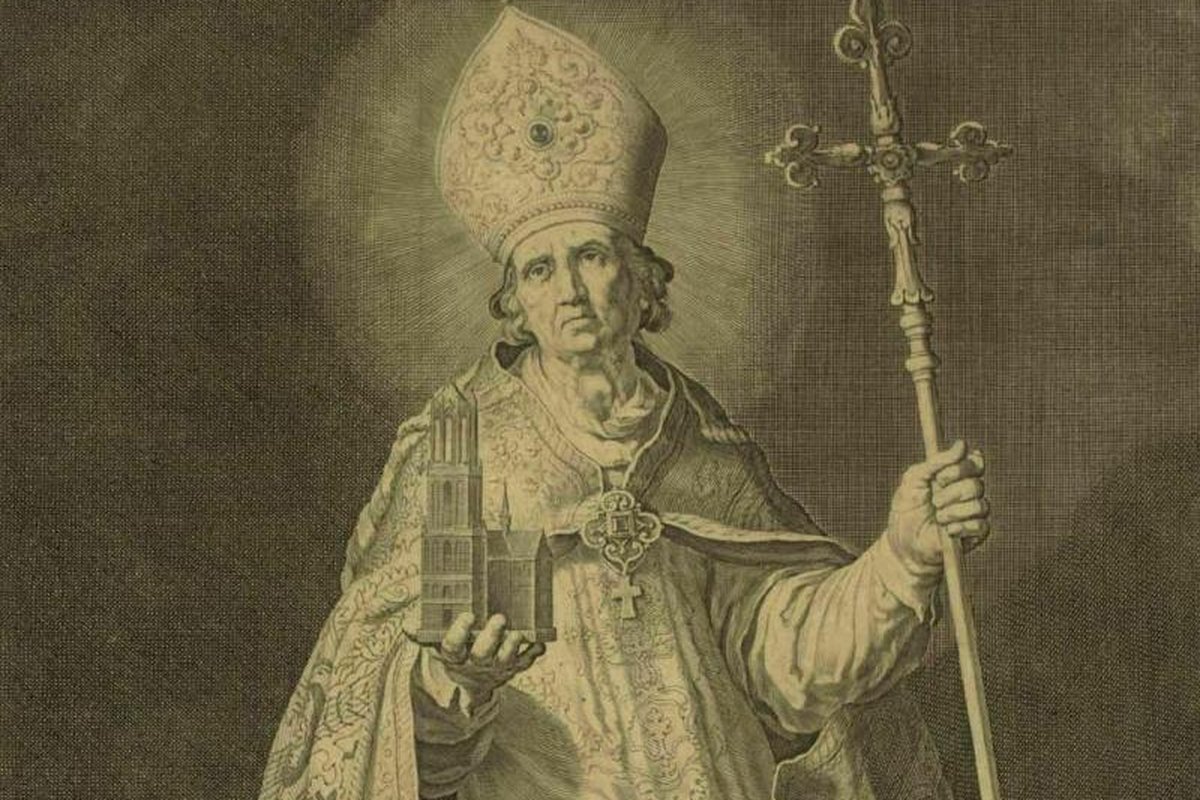
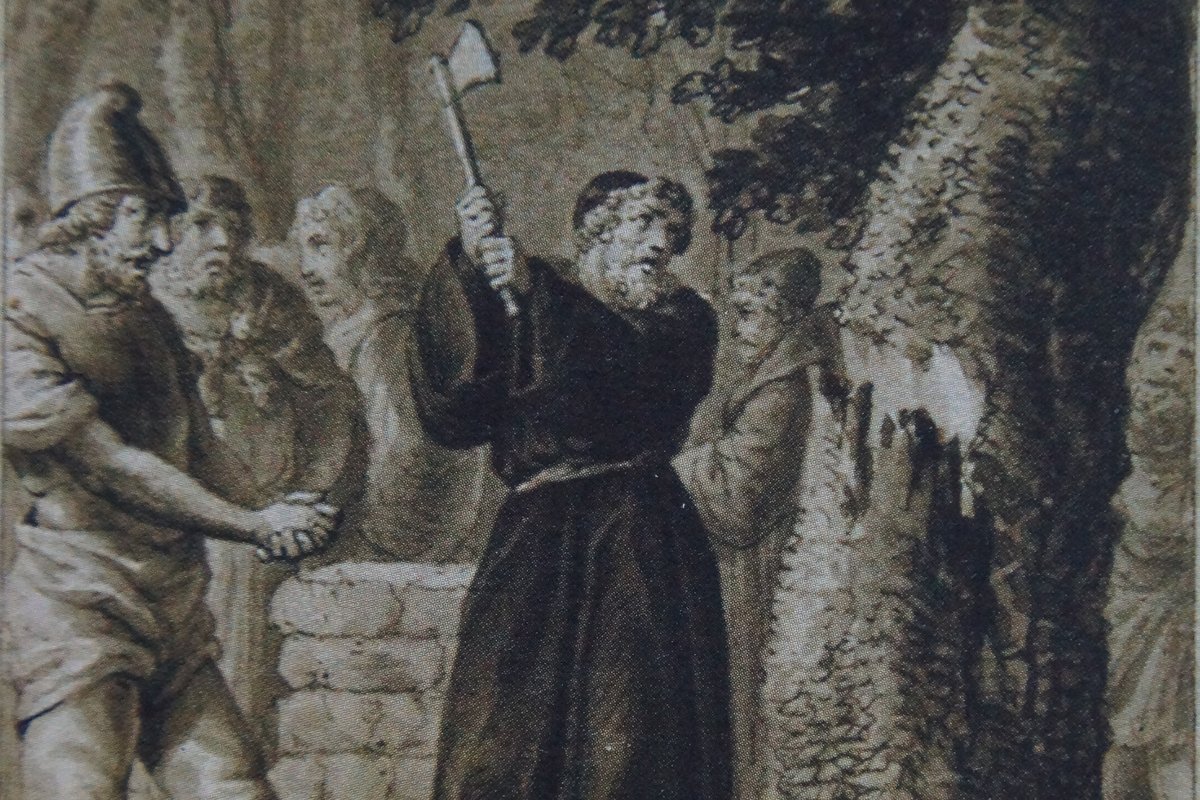
Frederick Bloemaert, after Abraham Bloemaert, S. Willibrordus, c. 1630, Het Utrechts Archief — public domain.
Most missionaries of the era moved quickly from training to fieldwork, but Willibrord didn't. At twenty, he left for Ireland, then a renowned center of learning and monastic discipline, and stayed twelve years, given over largely to study and prayer, before he ever crossed to the Continent to begin the work he's remembered for. Ireland in this period drew scholars and pilgrims from across Britain and the Frankish lands precisely because its monasteries had preserved a depth of Latin learning and biblical scholarship that was harder to find elsewhere in post-Roman Western Europe. It's a striking amount of patience for a man whose reputation would eventually rest on decades of hard, often dangerous missionary labor — a long, quiet apprenticeship before the public part of his life ever started.
Bishop of the Frisians, and "Clement"
Willibrord's actual mission field was Frisia, roughly the coastal region of the modern Netherlands, home to a population that had stayed stubbornly outside the reach of earlier Christian missions. He arrived there around 690 with a small band of companions, working under the protection of the Frankish ruler Pepin of Herstal, whose political power over the region gave the mission a measure of safety it wouldn't otherwise have had. Missionary work in this period rarely succeeded on preaching alone; it depended heavily on a friendly local ruler willing to tolerate, or actively back, the disruption a new religion brought to existing customs and loyalties.
In 695, Willibrord traveled to Rome, where Pope Sergius I consecrated him bishop and gave him formal charge of the Frisian mission — and, in the same ceremony, gave him a second name, Clement. It's a small detail, but a telling one: a pope investing a missionary with a new name at the moment of consecration signals just how deliberately Rome was backing the undertaking, not leaving it to informal, freelance evangelism. The choice of "Clement" itself likely gestured toward Pope Clement I, an early bishop of Rome remembered for his own letters urging unity in the Church — a fitting namesake for a missionary being sent to plant Roman Christianity firmly in a new land. Willibrord would go on to spend most of the rest of his life in that mission field, building a Christian presence among a people who hadn't asked for one and didn't always welcome it. Political fortunes shifted more than once during those decades — a Frisian ruler named Radbod pushed back hard against the mission after Pepin's death, undoing some of Willibrord's early gains — but the bishop kept returning to the work rather than abandoning it.
Echternach, the abbey that outlived him
In 698, on land given to him by Saint Irmina, a Frankish noblewoman and abbess, Willibrord founded Echternach Abbey, in what is now Luxembourg. It became his operational base — the place he returned to between rounds of missionary work — and eventually the place where he was buried after his death on November 7, 739. Echternach outlasted him by well over a millennium, developing over the medieval centuries into a major center of manuscript production; the abbey's scriptorium became famous for illuminated Gospel books whose artistry rivaled anything produced in the more celebrated monasteries of Ireland or Northumbria. That legacy is a large part of why Willibrord is remembered today not just in the Netherlands, where he did most of his missionary work, but specifically in Luxembourg as well, where he's venerated as a patron saint.
His work in Frisia also laid groundwork that later missionaries built on directly — Boniface, who would go on to evangelize Germanic territories further east, began his own missionary career attempting to assist Willibrord in Frisia before shifting his focus elsewhere. The two men represent something like successive stages of the same larger project: bringing the peoples east of the old Roman frontier, who had never been part of the empire's Christianized world, into the Latin Church. Willibrord's example also echoes an older wave of Irish-trained missionaries such as Columba of Iona, who a century earlier had carried monastic Christianity from Ireland into Scotland — the same Irish monastic culture that shaped Willibrord's own twelve formative years abroad.
A patron for two countries — and for convulsions
Willibrord's canonization followed the ancient, informal pattern typical of his era — recognition through popular veneration and local Church approval rather than the centralized, formal canonization process the Vatican developed centuries later — rather than any later formal process, and over the centuries his patronage settled into a specific and slightly unusual combination: he's honored as patron of Luxembourg, of the Netherlands, and of the Archdiocese of Utrecht — a direct reflection of where his missionary work and his abbey actually stood — and, separately, as a traditional patron invoked against epilepsy and convulsions, an association popular devotion attached to him without a clearly documented origin. Some later folk tradition connected the association to a "jumping procession" or dancing pilgrimage still held in his honor at Echternach each Pentecost Tuesday, in which pilgrims process through the town's streets with a distinctive skipping step — a custom old enough that its precise origins are genuinely uncertain, but that continues to draw participants to this day.
His feast is kept on November 7, the date of his death, though some English calendars instead observe it on November 29, following a decision made centuries later by Pope Leo XIII. Between the Roman pope who renamed him at his consecration and the English pope who later shifted his feast day, Willibrord's story keeps circling back to a Church that took his mission seriously enough to keep adjusting the details around it.
Trivia
Who was Saint Willibrord?
Why did Pope Sergius I give Willibrord the name Clement?
What is Echternach Abbey, and why did Willibrord found it?
Why is Saint Willibrord invoked against epilepsy and convulsions?
When is the feast of Saint Willibrord?
You May Also Like
Related Reading