The Angel Closing the Lions' Mouths

A law written to trap one man
Daniel was a Jewish exile who had risen to become one of the three highest officials under the Persian king Darius, so capable that Darius planned to put him in charge of the entire kingdom. That was exactly the problem for Daniel's rivals: unable to find any fault in how he did his job, they built a trap out of his religion instead. They convinced Darius to sign a decree that for thirty days, anyone who prayed to any god or human being other than the king would be thrown into the lions' den — flattering the king's vanity while knowing full well that Daniel "got down upon his knees three times a day and prayed and gave thanks before his God," with his windows open toward Jerusalem, exactly as he always had (Daniel 6:10, RSV-CE). He kept praying. They reported him immediately.
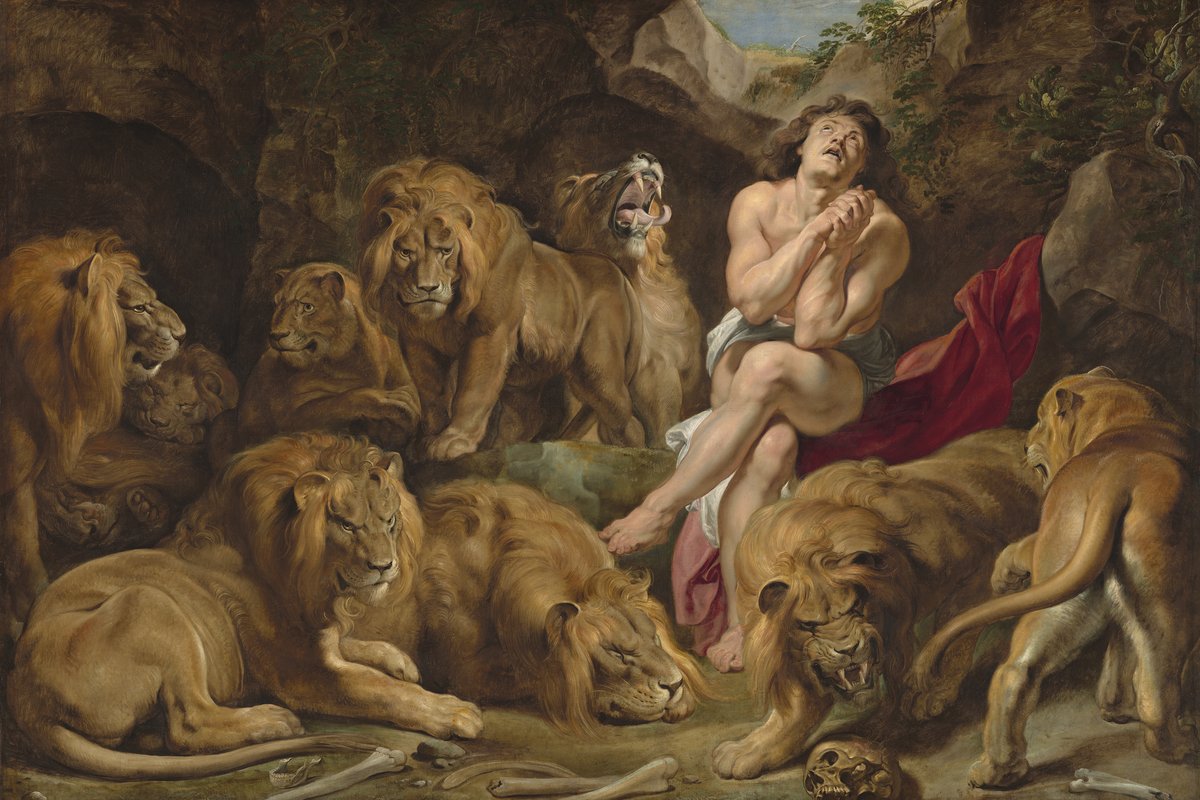
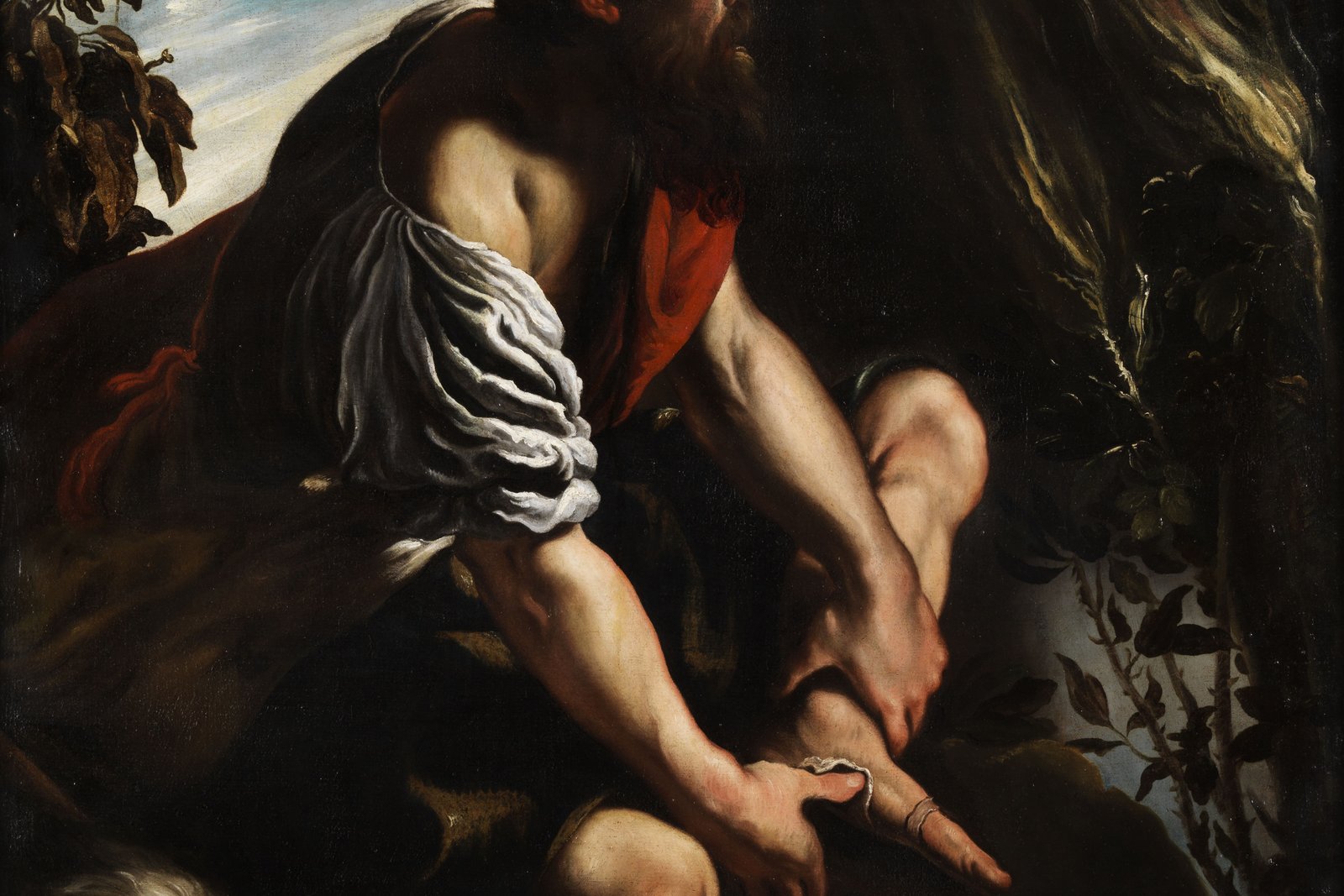
Peter Paul Rubens, "Daniel in the Lions' Den," c. 1614-1616, National Gallery of Art, Washington — public domain (CC0).
A king who didn't want this outcome
What makes Daniel 6 unusual among the Bible's political intrigue stories is that the king himself is not the villain. Once Darius realizes what his own decree has forced him into, he is "deeply grieved" and "worked till sunset to rescue him" (Daniel 6:15, NABRE) — but the law of the Medes and Persians, once signed, could not be revoked even by the man who signed it. Darius has Daniel sealed into the den anyway, telling him directly, "Your God, whom you serve so constantly, must save you" (Daniel 6:17, NABRE) — the words of a ruler hoping to be wrong about what's about to happen.
A sleepless king and a simple answer
Darius spends the night "fasting; no diversions were brought to him," and sleep flees from him (Daniel 6:18, RSV-CE), and rushes to the den at first light, crying out "in a tone of anguish" to ask whether Daniel's God had been able to deliver him (Daniel 6:20, RSV-CE). Daniel's answer is disarmingly direct: "My God sent his angel and shut the lions' mouths, and they have not hurt me, because I was found blameless before him" — and he adds, pointedly, that he had done no wrong before the king either (Daniel 6:22, RSV-CE). No drawn-out battle, no visible confrontation — just an angel, sent by God, and lions that simply didn't attack.
An ending that turns on the accusers
The story doesn't end with Daniel's release. Darius has the men who engineered the plot thrown into the den themselves, along with their families, "before they reached the bottom of the den, the lions overpowered them and crushed all their bones" (Daniel 6:25, NABRE) — proof, in the story's own logic, that it was never really about the lions' temperament. The same animals that left Daniel entirely unharmed killed his accusers almost instantly. Afterward, Darius writes to "the nations and peoples of every language, wherever they dwell on the earth" (Daniel 6:26, NABRE), declaring that Daniel's God "is the living God, enduring forever, whose kingdom shall not be destroyed, whose dominion shall be without end" (Daniel 6:27, NABRE) — a foreign king's public acknowledgment, provoked entirely by what he saw at dawn outside that den.
An angel Daniel already knew
This wasn't the only angelic encounter recorded in the Book of Daniel, and that context matters for understanding how Daniel could name what had saved him so confidently. Earlier chapters describe Daniel receiving visions interpreted and explained to him directly by an angel identified as Gabriel (Daniel 8:16, 9:21, RSV-CE), and later he encounters another angelic figure who describes himself as having been in conflict with spiritual "princes" over the fate of Persia and Israel (Daniel 10:13, RSV-CE). By the time Daniel is thrown into the den, in other words, he wasn't a man unfamiliar with angelic intervention in his life — he'd already spent years as someone who took it for granted that God sent messengers and protectors into difficult, high-stakes moments. That history is part of why his answer to Darius reads as calm certainty rather than a guess: "my God sent his angel" wasn't a new kind of claim for Daniel to make about his own experience.
An unseen guardian, made visible in paint
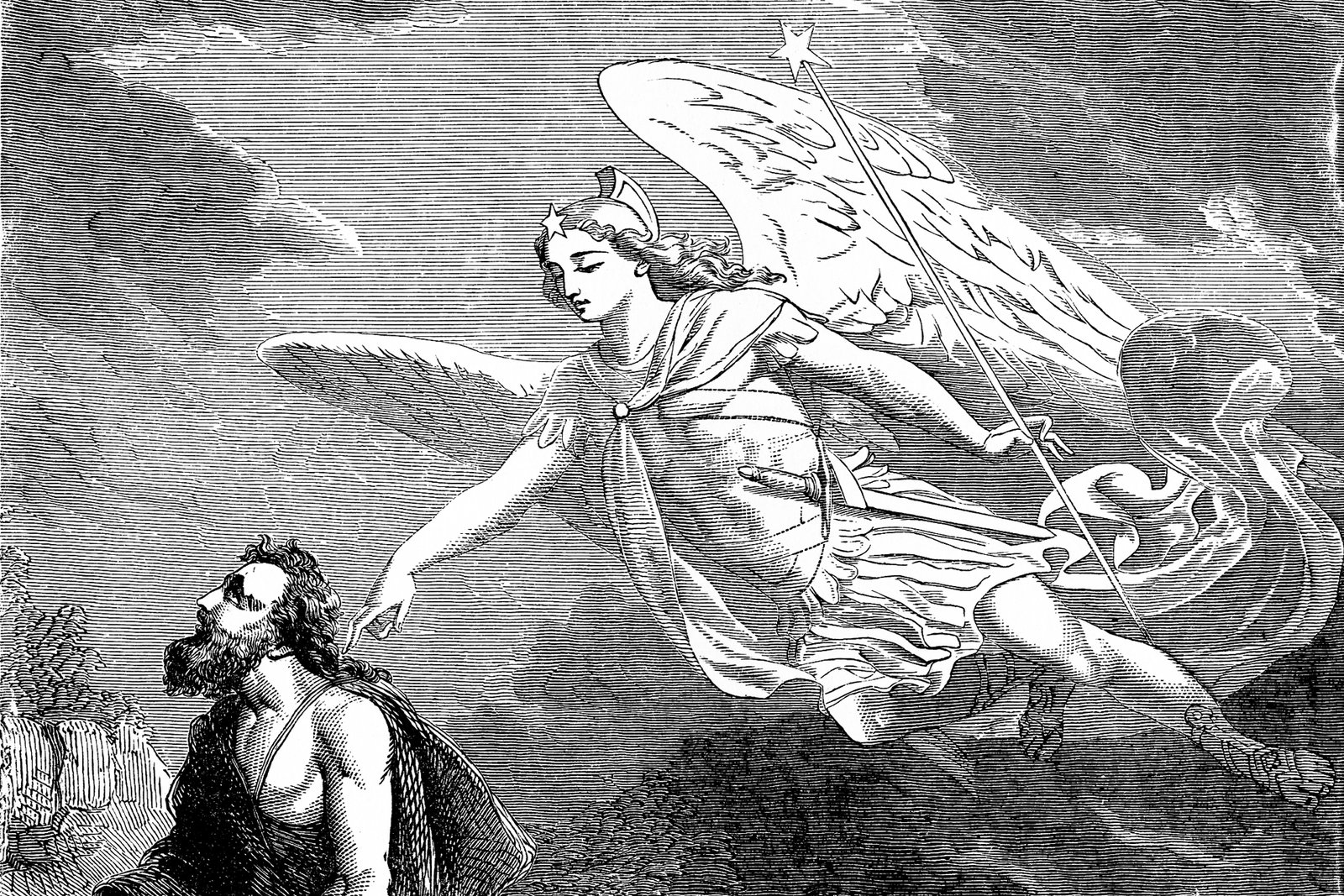
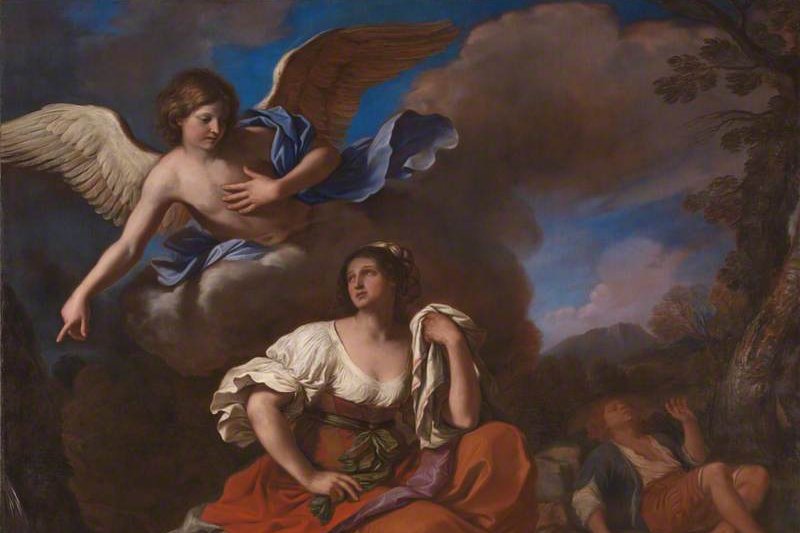
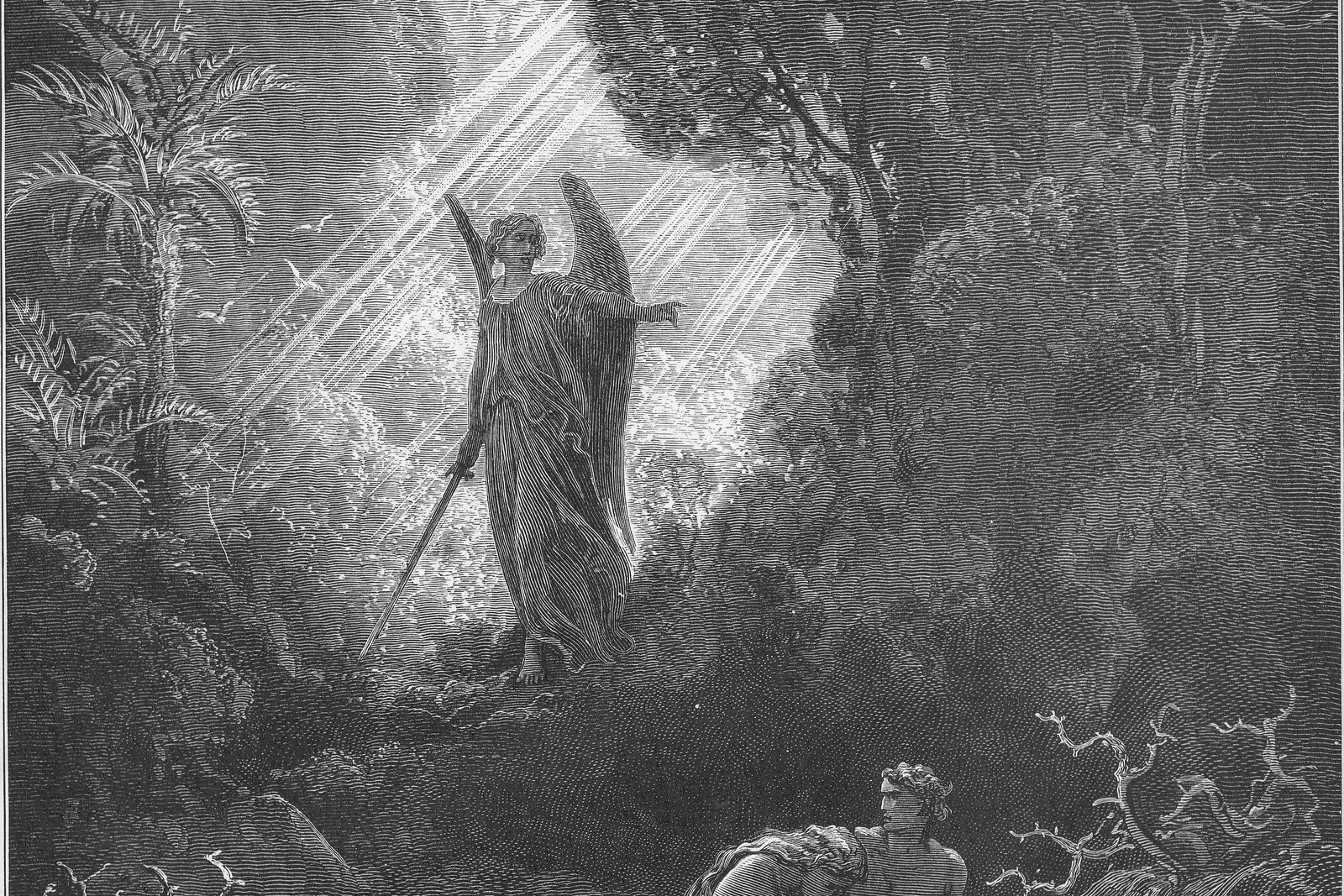
The Book of Daniel never describes what the angel in the den actually looked like, or how exactly it kept the lions from attacking — the text simply states the fact of it after the danger has passed. Christian art had to fill that visual gap on its own, and painters took two broad approaches: some added a visible angelic figure standing guard beside Daniel, wings spread protectively over him, while others, including the Rubens canvas illustrating this article, leave the angel out entirely and show only Daniel, calm and praying among the lions, trusting the viewer to supply the unseen cause. That second approach arguably captures something true to the text itself, since Daniel never claims to have seen the angel act — he simply reports its effect the next morning. It's a similar dynamic to the confidence described in teaching on the guardian angel: protection that is real and specific, even when it's never directly witnessed by the person it protects.
Why this scene has stayed so vivid
Daniel in the lions' den has been carved, painted, and illustrated for close to two thousand years, and it isn't hard to see why: it compresses political betrayal, royal helplessness, quiet faith, and a genuinely startling rescue into a single, visually unforgettable image — one man, unarmed, sitting calmly among animals that could kill him in seconds and simply don't. Unlike the angel's rescue of Peter from prison, which comes with visions and a dramatic confrontation, this one is almost entirely offstage: no one sees the angel act, only its result, discovered the next morning by a king who could hardly believe what he found.
Trivia
Why was Daniel thrown into the lions' den?
What did Daniel say happened to him in the den?
Did King Darius want Daniel to be punished?
What happened to the men who accused Daniel?
What does this story say about Daniel's God, according to the text itself?
Related Reading