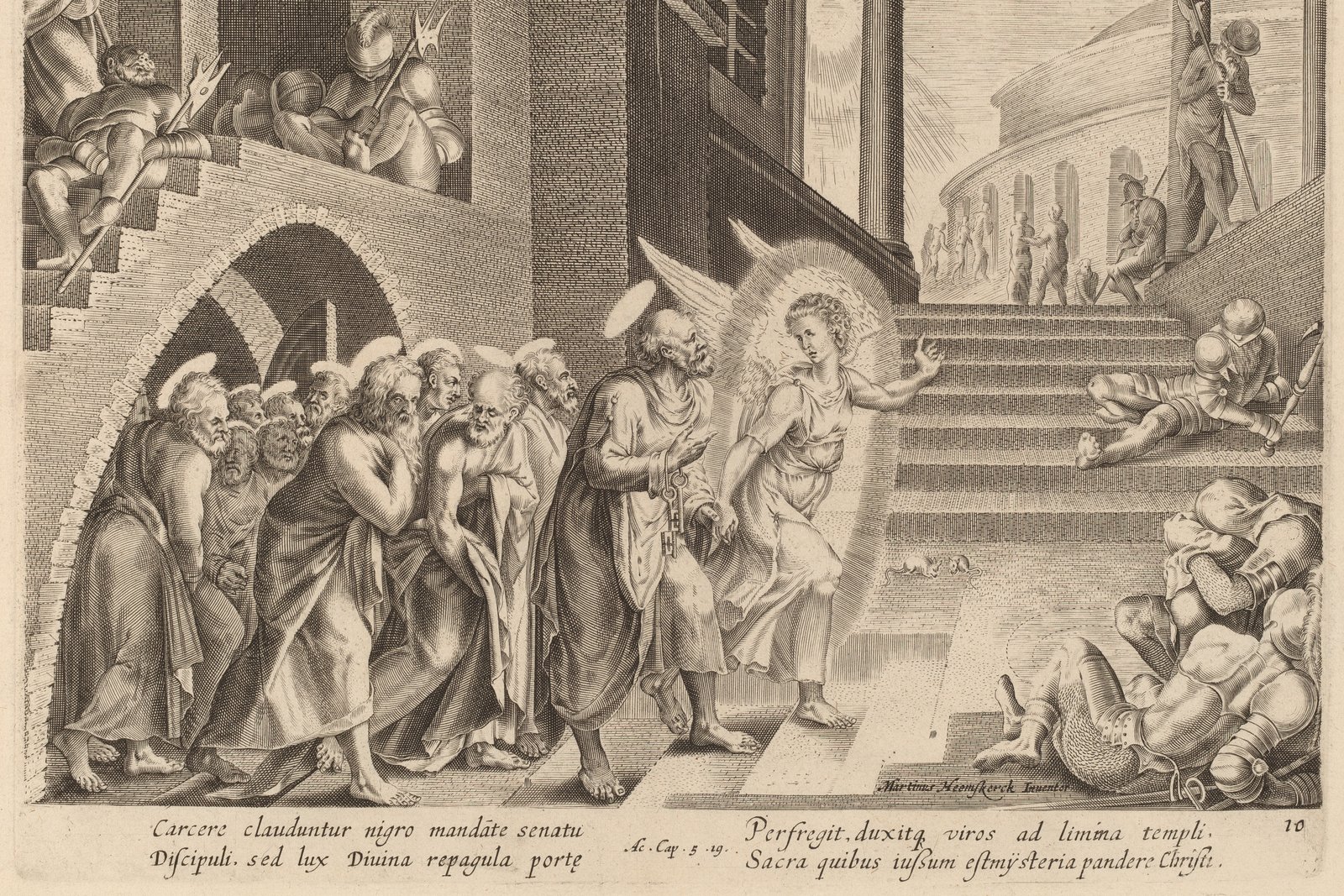
The Angel Freeing Peter from Prison

An execution, an arrest, and a scheduled trial
Acts 12 opens with King Herod Agrippa I moving against the young church in Jerusalem: he "He had James, the brother of John, killed by the sword," (Acts 12:2, RSV-CE), and when he saw that this "pleased the Jews," he proceeded to arrest Peter also, during the days of Unleavened Bread (Acts 12:3, RSV-CE). Rather than a quick execution, Herod plans a public trial once Passover ends — which means Peter has days to sit in custody, delivered to "four squads of soldiers to guard him," while, Luke notes almost in passing, "prayer by the church was fervently being made to God on his behalf" (Acts 12:5, NABRE).
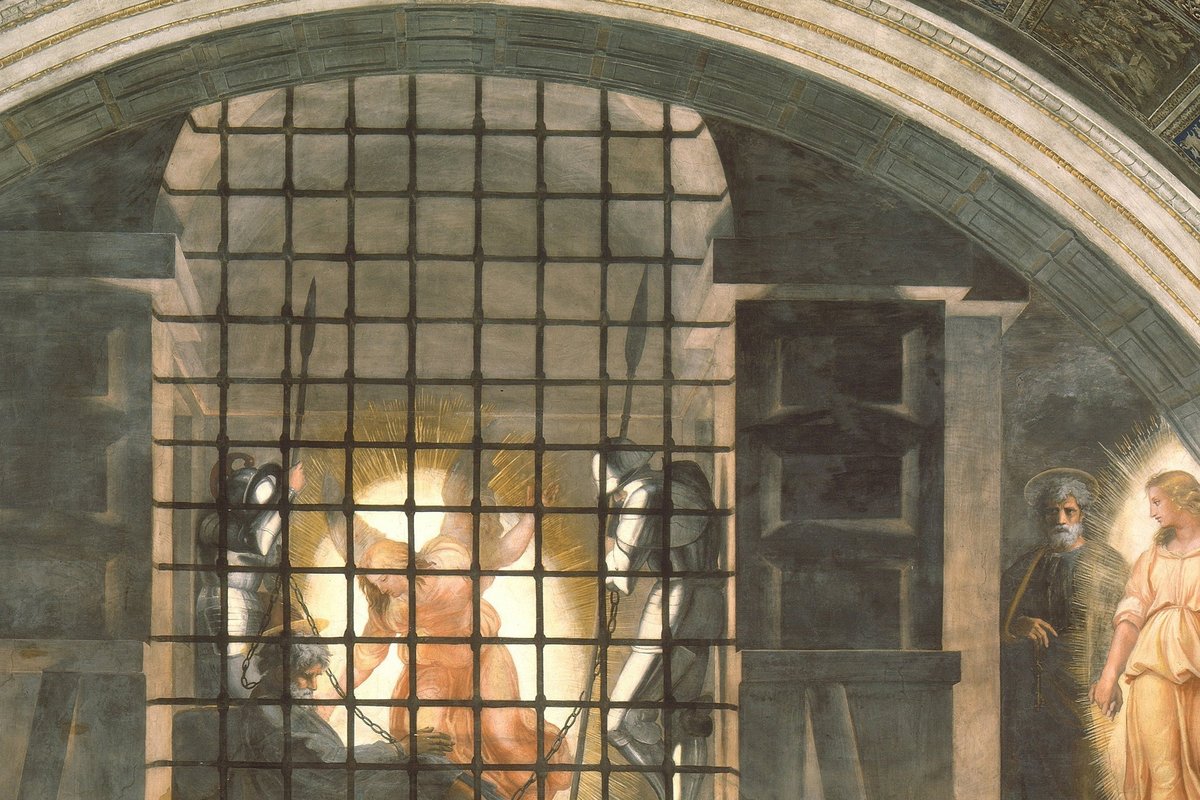
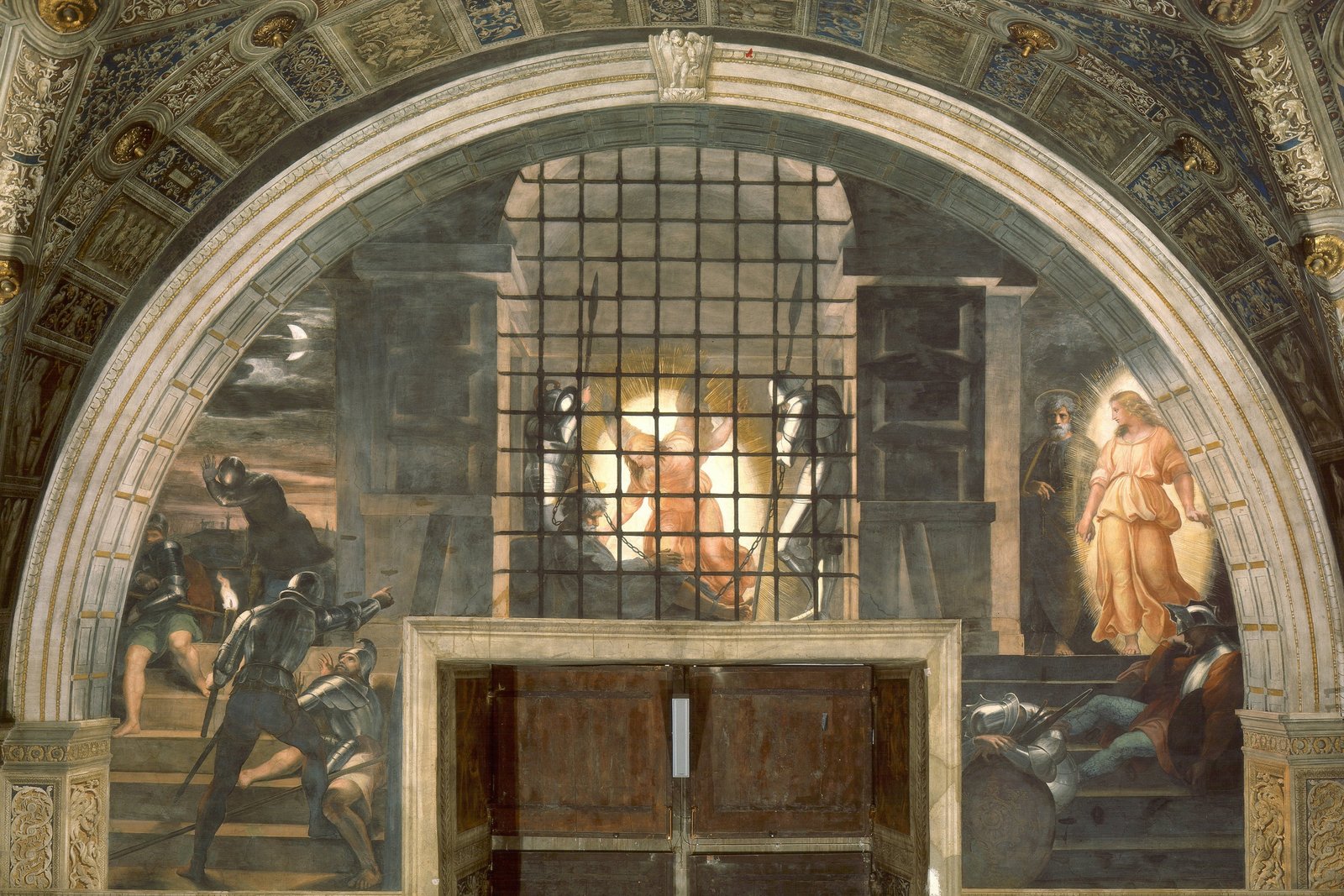
Raphael, "Deliverance of Saint Peter," 1514, Stanza di Eliodoro, Vatican Museums — public domain.
Chained between two soldiers, on the night before trial
By the night before his scheduled trial, security around Peter is about as tight as first-century imprisonment allowed: he is "sleeping between two soldiers, bound with two chains," with sentries before the door also posted at the entrance (Acts 12:6, RSV-CE). There's no ambiguity in the text about how contained he is — this isn't a lightly watched holding cell, it's a prisoner considered important enough to chain directly to his own guards.
Woken by light and a single command
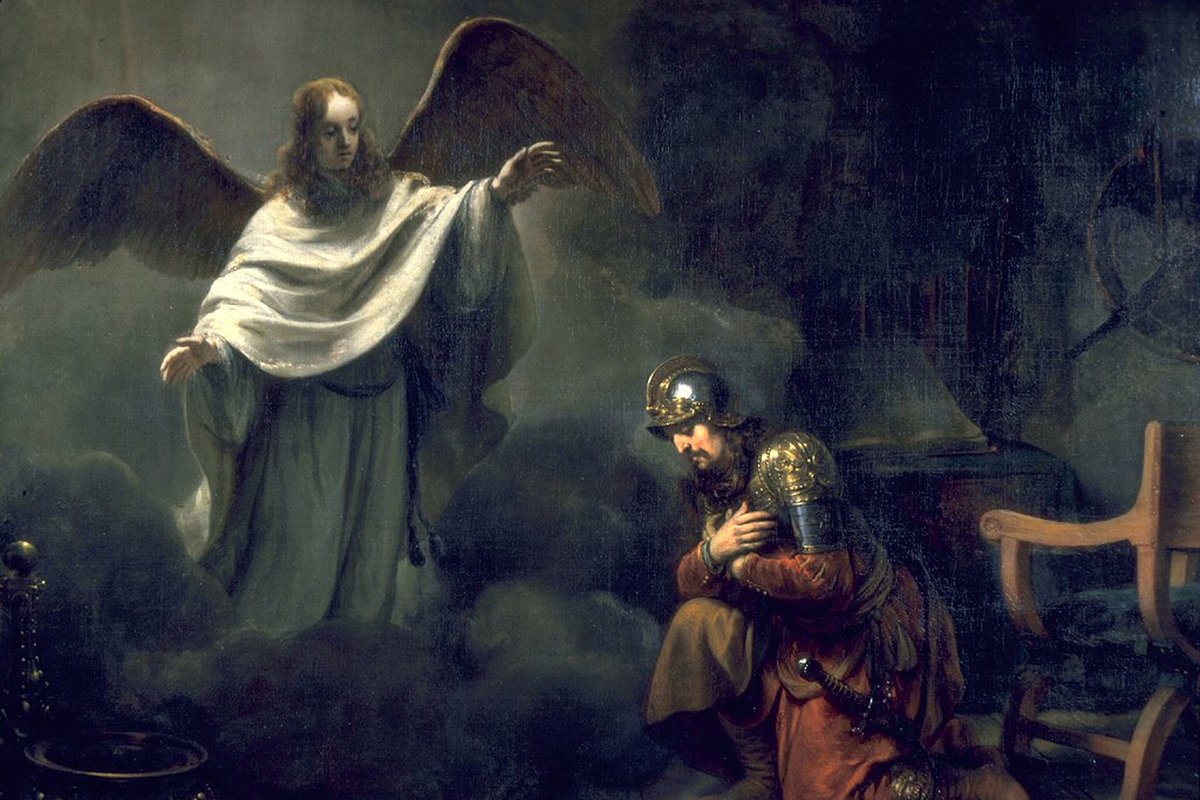
What happens next arrives without warning: "Suddenly the angel of the Lord stood by him and a light shone in the cell. He tapped Peter on the side and awakened him, saying, “Get up quickly.” The chains fell from his wrists." (Acts 12:7, RSV-CE). The angel doesn't linger to explain — he tells Peter to dress, put on his sandals, and wrap his mantle around himself, and Peter, still disoriented, simply does what he's told (Acts 12:8, RSV-CE). Luke is careful to note Peter's state of mind here: he "So he followed him out, not realizing that what was happening through the angel was real; he thought he was seeing a vision." (Acts 12:9, RSV-CE) — he isn't calm and certain in the moment, he's half-asleep and uncertain whether any of it is real.
Past the guards, through a gate that opens itself
The two of them walk directly past the first and second guard posts — unnoticed, unstopped — and arrive at "the iron gate leading out to the city," which "opened for them by itself. They emerged and made their way down an alley" (Acts 12:10, NABRE). The angel walks with Peter one more block, then simply leaves. Only once he's alone does Peter's confusion clear: "Then Peter recovered his senses and said, “Now I know for certain that [the] Lord sent his angel and rescued me from the hand of Herod and from all that the Jewish people had been expecting." (Acts 12:11, RSV-CE). The moment of realization comes after the danger has already passed, not during it.
A very human touch: not sure it was even real
What makes this rescue distinct among the Bible's angelic interventions is how ordinary Peter's confusion feels. He doesn't recognize a miracle in progress; he assumes he's dreaming, follows instructions half-awake, and only grasps what happened once he's standing by himself in an empty street. Scripture rarely lingers on how disorienting divine intervention might actually feel to the person living through it — Peter's dazed, delayed realization is one of the more human moments attached to any angel story in the New Testament.
Rhoda at the door, and a house full of disbelief
The scene that follows the escape is almost comic, and Luke seems to know it. Peter makes his way through Jerusalem's dark streets to the house of Mary, mother of John Mark, where a crowd of believers has gathered to pray — very likely praying for exactly the outcome that has just happened. A servant girl named Rhoda answers his knock, recognizes his voice through the door, and is so overcome with joy that she runs back to tell everyone without ever letting him in (Acts 12:13-14, RSV-CE). The people inside, astonishingly, don't believe her — they insist she must be out of her mind, then suggest it must be "his angel" rather than Peter himself (Acts 12:15, RSV-CE), a detail that hints at an early Jewish and Christian belief in guardian angels who could, in some sense, resemble the person they watched over. Only when Peter keeps knocking and they finally open the door does the household see for themselves that the prayer they had gathered to offer had already been answered.
What happened to Herod, and to the guards
Luke doesn't let the story end with celebration. Herod, furious at the escape, orders the sentries who had been guarding Peter examined and then executed (Acts 12:19, RSV-CE) — a grim reminder of how seriously Roman-era client kings treated a failure of custody, and of the real danger the soldiers themselves had been placed in on Peter's behalf. Herod's own end follows shortly after in the same chapter: struck down during a public address at Caesarea after accepting a crowd's flattering claim that he spoke "with the voice of a god," he is "eaten by worms and breathed his last" (Acts 12:23, NABRE). Luke places the two fates side by side quite deliberately — the apostle delivered by an angel, the persecuting king struck down by one — reinforcing Acts' recurring theme that no earthly power can finally contain the young Church's growth.
Peter's prison escapes and the Church's memory
This wasn't the only time an angel intervened to free an apostle from custody — earlier in Acts, "an angel of the Lord" had already opened the doors of a public prison to release the apostles as a group (Acts 5:19, RSV-CE), and Peter's personal history with miraculous release became something the early Church remembered and celebrated. By the fourth century, Christians in Rome kept a feast — Saint Peter's Chains, still marked on some calendars — associated with relics believed to be the very chains that fell from his wrists that night, housed today in the basilica of San Pietro in Vincoli. Whatever one makes of the relic tradition itself (distinct from the biblical account, which the Church's teaching authority does not require anyone to authenticate), it shows how central this single night in prison became to how later generations remembered Peter as the Church's first leader — a man repeatedly delivered from death not by his own strength but by intervention he could barely believe was happening.
Trivia
Why was Peter in prison in the first place?
How exactly did the angel free Peter?
Did Peter realize right away that it was really happening?
How heavily guarded was Peter's cell?
What did Peter do immediately after escaping?
Related Reading