The Guardian Angel

What the Church actually teaches
It's easy to assume the guardian angel is more folk piety than formal doctrine, but the Catechism of the Catholic Church states the belief plainly: "From infancy to death human life is surrounded by their watchful care and intercession," quoting the ancient teaching that "beside each believer stands an angel as protector and shepherd leading him to life" (CCC 336). This isn't framed as an optional devotion for the especially pious — it's presented as a description of ordinary Christian life, true for every person, from the very beginning.
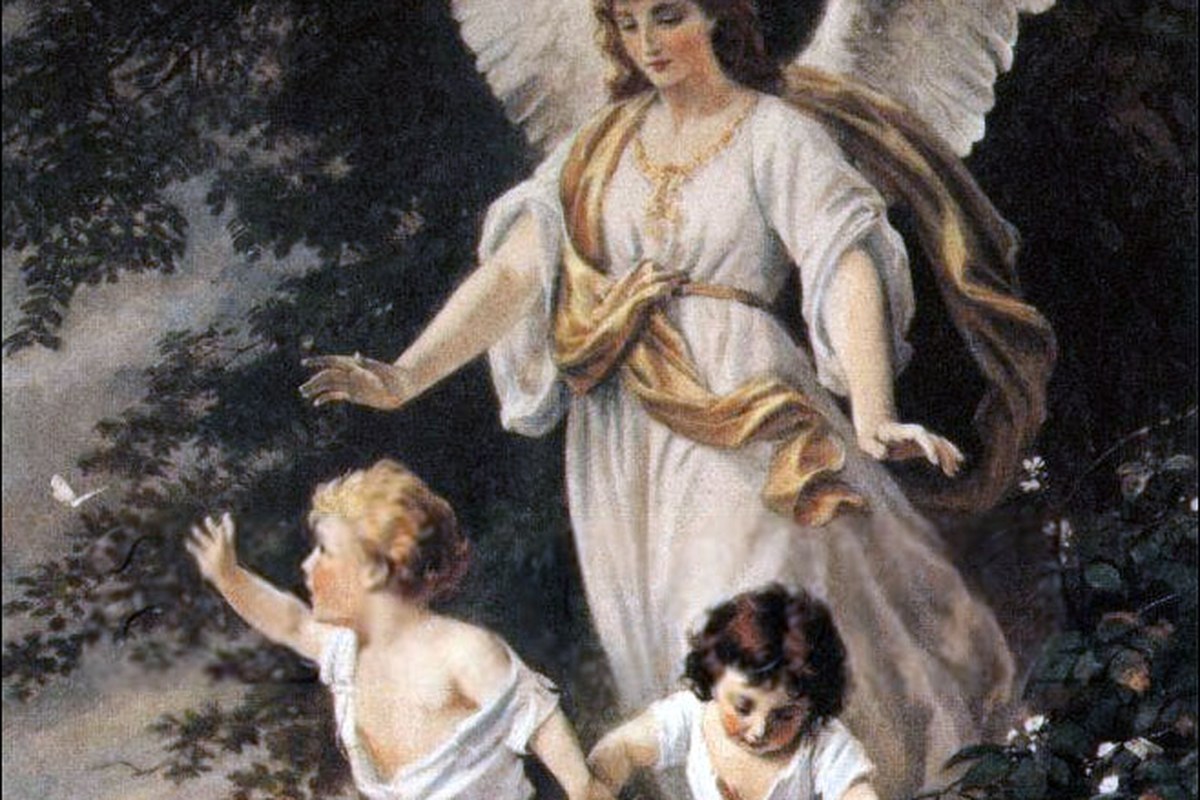
Bernhard Plockhorst, "Guardian Angel," c. 1880s — public domain.
Where the belief comes from
The idea has roots stretching back through the whole of Scripture rather than one single proof text. In Exodus, God tells Moses, "See, I am sending an angel before you, to guard you on the way and bring you to the place I have prepared." (Exodus 23:20). The Psalms promise that God "will give his angels charge of you to guard you in all your ways" (Psalm 91:11). And in the Gospels, Jesus warns against looking down on children because "See that you do not despise one of these little ones, for I say to you that their angels in heaven always look upon the face of my heavenly Father." (Matthew 18:10) — a line the Church has long read as pointing toward a guardian assigned to each individual person, not only to children specifically.
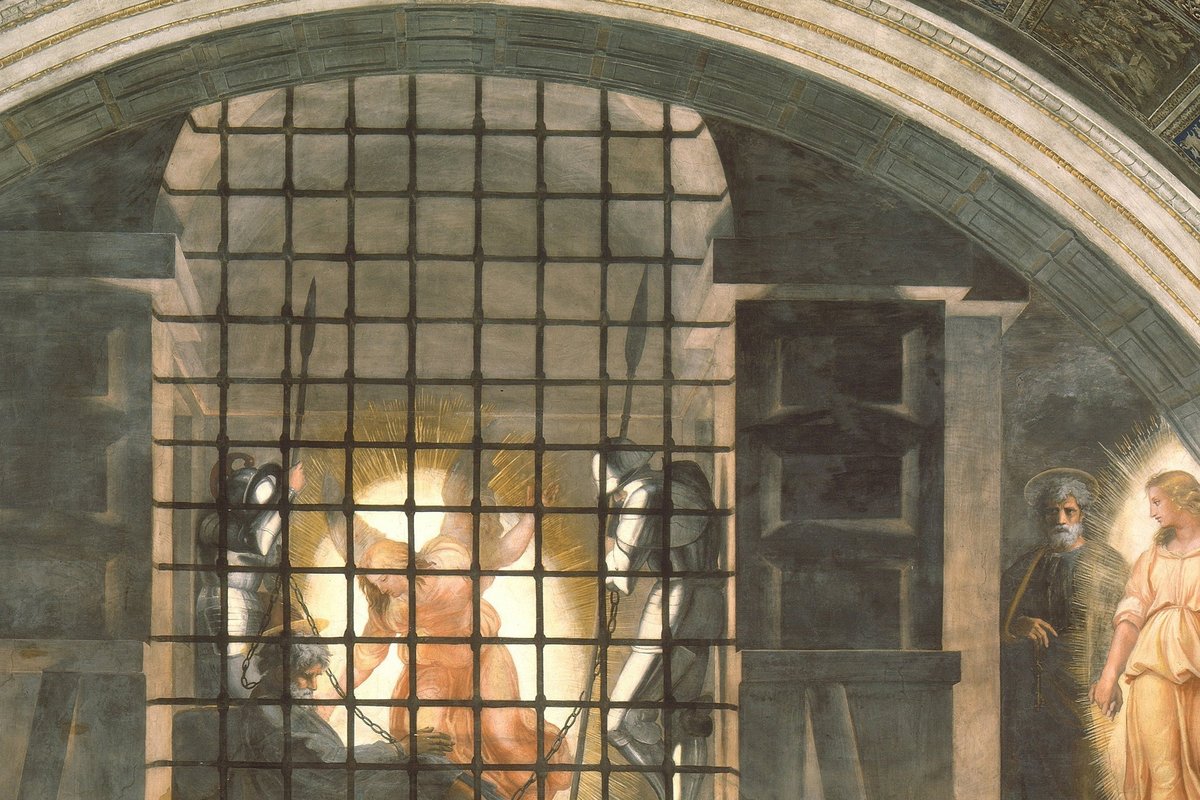
The Book of Tobit adds a narrative example rather than a promise: the angel Raphael travels in disguise as a companion for the young Tobias, guiding him safely through a journey full of danger without ever revealing, until the very end, that he is anything other than a fellow traveler. Early Christian writers pointed to that story as a picture of what a guardian angel's protection actually looks like in practice — quiet, unannounced, recognized only in hindsight. The Acts of the Apostles carries a similar thread: when Peter turns up at a house after his escape from prison, the disciples inside assume it must be "his angel" at the door rather than Peter himself, a passing comment that shows the belief in a personal protecting spirit was already commonplace among the earliest Christians.
How the doctrine took its present shape
Belief in guardian angels existed informally for centuries before the Church gave it settled theological form. Origen and Saint Jerome both wrote about individual protecting angels in the third and fourth centuries, and Saint Thomas Aquinas later worked the idea into a fuller argument in the Summa Theologiae, reasoning that because human beings are vulnerable to both physical harm and spiritual temptation on the long road toward God, it fits with divine providence that each person would be given an angelic guide for that journey. Pope Paul V and later Pope Clement X helped establish the Feast of the Guardian Angels for the universal Church in the sixteenth and seventeenth centuries, cementing into the liturgical calendar a belief that had already been part of ordinary Catholic devotion for well over a thousand years.
Why this angel has no name and no single story
Every other angel in this series is defined by one unrepeatable scene: Michael casting down the dragon, Gabriel greeting Mary, Raphael walking Tobias home. The guardian angel is different by design — it isn't a historical figure with a beginning, middle, and end, but an ongoing, present-tense relationship the Church describes as constant across an entire lifetime. That's also why guardian angels are never named the way Michael, Gabriel, and Raphael are: naming one would turn a universal promise into a story about a single person, and the whole point of the teaching is that it applies, unnamed and unremarked, to everyone.
Why the image endures
Every generation of Christian art has returned to more or less the same scene: a winged figure, often shown larger and more solid than the people beside it, watching over someone too young or too distracted to notice the danger in front of them. It's a deliberately domestic image compared to Michael's battle or Gabriel's announcement — closer to a parent than a soldier or a messenger — which is exactly why it has remained one of the most requested pieces of devotional art for children's rooms and family spaces alike.
Bernhard Plockhorst's nineteenth-century painting of an angel guiding two children along a cliffside path, one of the best-known versions of this scene, captures the whole theology in a single image: the danger is real and close — a broken bridge, a steep drop — but the children themselves never see it, because the angel has already positioned itself between them and the edge. That's a fairly precise illustration of how the Catechism frames the guardian angel's task: not necessarily removing difficulty from a person's life, but accompanying them through it, "leading him to life," as the ancient teaching quoted in CCC 336 puts it.
A devotion that travels well
Because the guardian angel isn't tied to a single scene, a specific country, or a particular era of Church history the way some other devotions are, it has traveled easily across cultures and centuries. Parents in many Catholic countries still teach children a short prayer to their guardian angel before bed, a practice that predates any of the version of the prayer now in common use. It remains, in a sense, the most democratic of angelic devotions: every single baptized person, regardless of where or when they lived, is taught to believe they have been assigned one from the very beginning.
Trivia
Does the Catholic Church really teach that everyone has a guardian angel?
What is the Scriptural basis for guardian angels?
What is the feast day for guardian angels?
Are guardian angels ever given individual names?
Related Reading