The Dominions

A rank built for coordination, not glory
It's a little wry, but it's honest: compared to angels who burn with love or appear to prophets in blazing visions, the Dominions have a genuinely unglamorous job description. Later Christian tradition holds that their purpose is to regulate the work of the angelic ranks beneath them — passing along God's commands rather than carrying them out directly, the way a regional office relays instructions from headquarters to the people actually doing the work on the ground. It's not the role most people imagine when they picture an angel, and that's exactly what makes it worth explaining plainly.
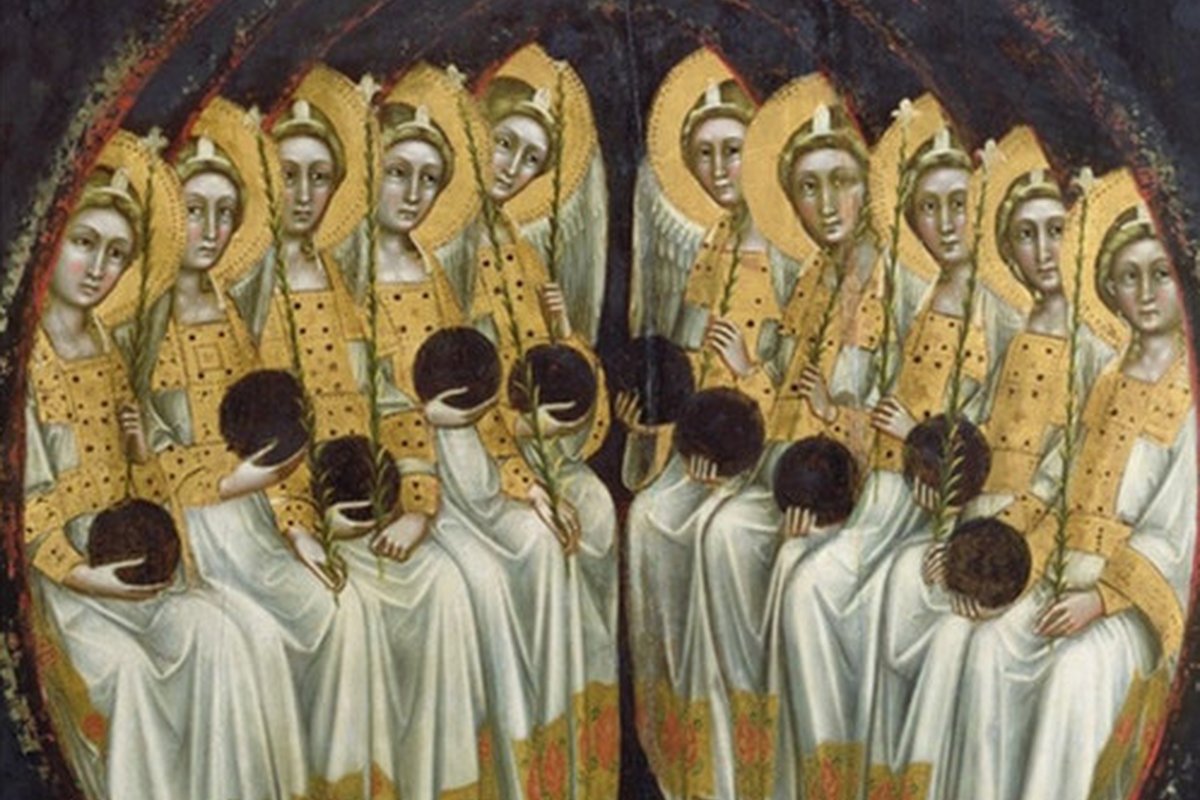
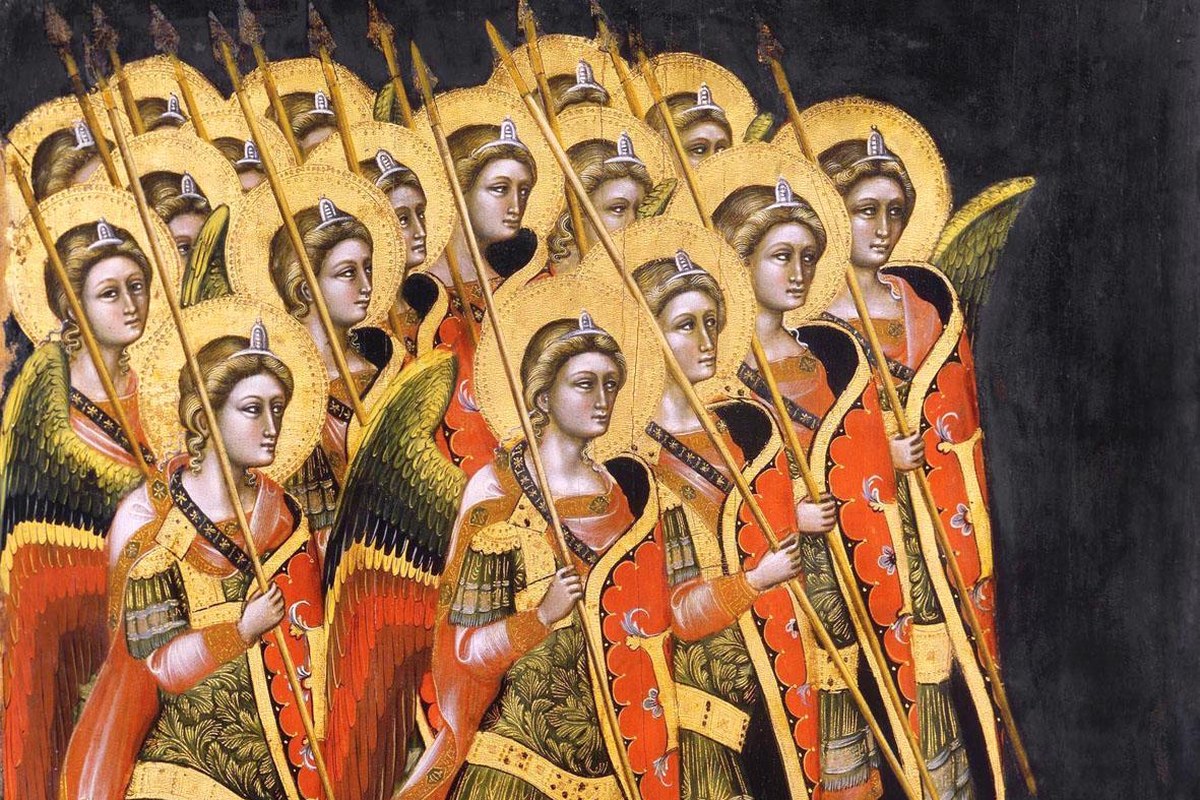
Guariento di Arpo, angels grouped in a circular composition traditionally identified with the Dominions, from his Nine Choirs of Angels cycle, c. 1354, Museo Civico, Padua — public domain.
Where "dominion" comes from in the first place
Paul gives the whole tradition its raw material in a single phrase, listing Christ as ranked "far above every principality, authority, power, and dominion, and every name that is named not only in this age but also in the one to come." (Ephesians 1:21, RSV-CE). The underlying Greek word is kyriotēs — "lordship" or "mastery." The same word turns up again in Colossians 1:16, where Paul writes of "thrones or dominions or principalities or authorities" — the RSV-CE renders that identical Greek word as "dominions" in both places, a small but real reminder of how directly a single English Bible translation can carry one Greek word across two different letters. Paul isn't describing a rank, a task, or a hierarchy in either verse — just naming a category of heavenly authority in passing, the way he does with several others in the same breath.
Turning a word into a job description
The coordinating, middle-tier role attached to the Dominions is a later theological addition, not something Paul spells out. Pseudo-Dionysius the Areopagite, the 6th-century writer whose treatise The Celestial Hierarchy first organized heaven into nine ranks, placed the Dominions fourth overall — first among the "second hierarchy," a tier tradition connects to governing creation, alongside the Virtues and the Powers. That's a step down from the highest tier of Seraphim, Cherubim, and Thrones, which tradition associates instead with direct closeness to God. Where the highest tier contemplates, the Dominions administer — less about burning love, more about making sure the right order reaches the right rank.
A rank built by theologians, not by Scripture
It's worth saying plainly: nothing in Ephesians or Colossians describes an angel whose job is coordinating other angels' assignments. That's a picture built entirely by later systematic theology — respected, long-standing, and still taught, but a human framework laid over a bare word rather than something Paul himself described. The Dominions sit alongside the Seraphim, Thrones, Virtues, Powers, Principalities, and Archangels as a rank in that same nine-choir system — proof that even the most administrative-sounding angel in Christian tradition has an origin story worth knowing.
How later writers imagined them, and what they're said to look like
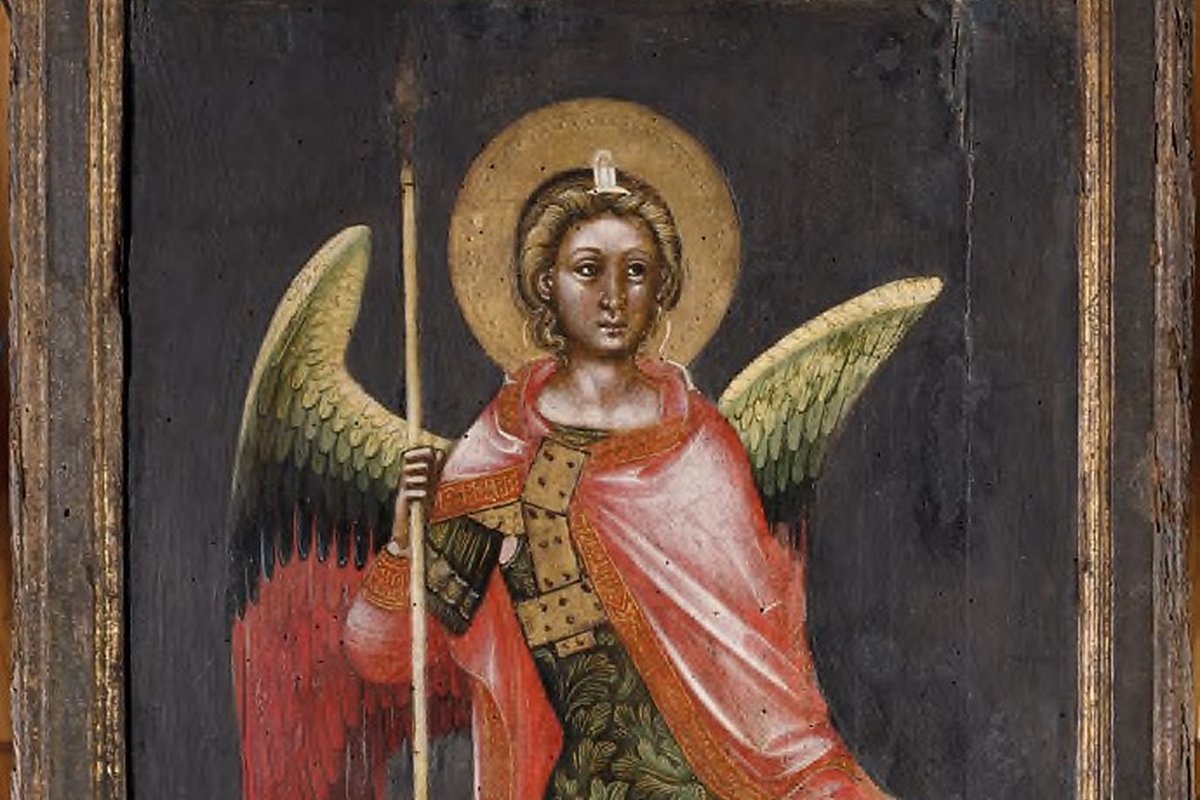
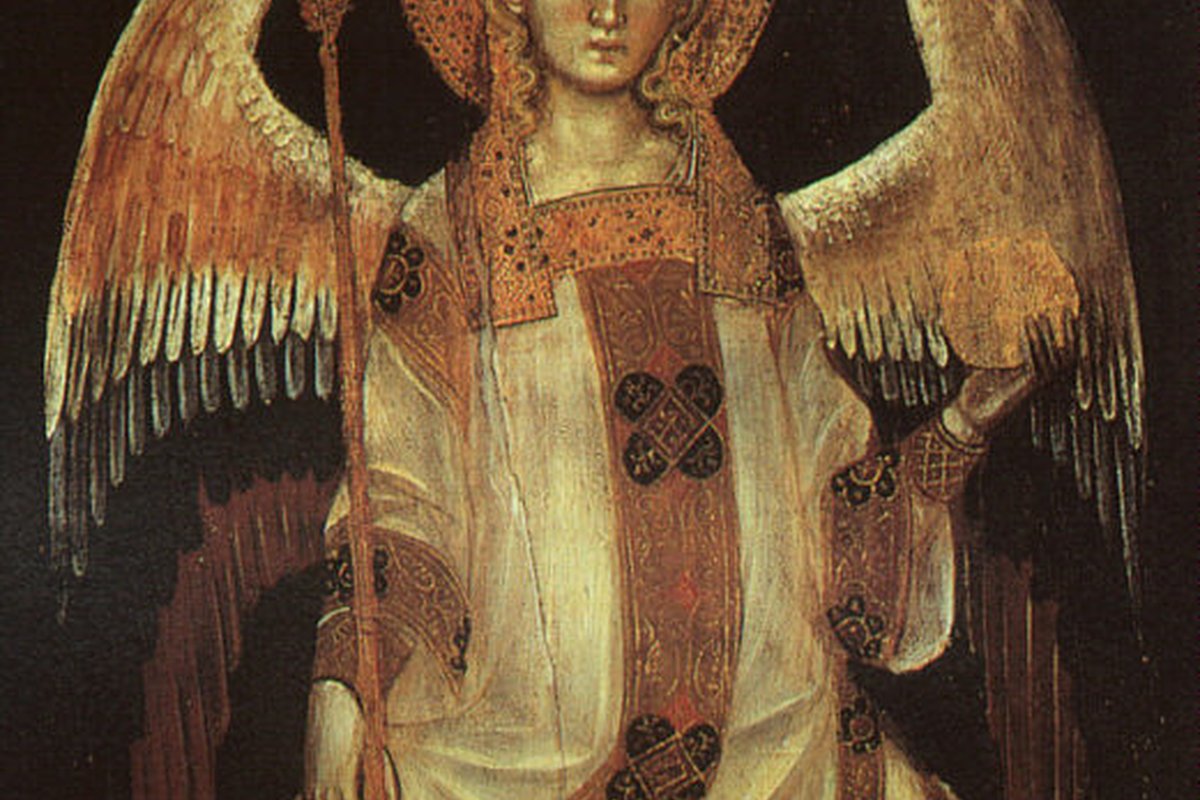
Medieval art rarely gave the Dominions a distinct look of their own the way it did for, say, the sword-bearing Powers or the many-eyed Thrones. When artists did try to distinguish them, they tended to reach for symbols of governance: an orb, a scepter, sometimes a staff topped with a cross, the same props a medieval viewer would recognize from paintings of earthly kings and judges. That borrowed royal imagery fits the role Pseudo-Dionysius assigned them — a rank concerned with order and lawful command, translated by painters into the visual language of court and crown, since there was no biblical description to work from directly. Guariento di Arpo's 14th-century Padua cycle, the source of this article's hero image, is one of the relatively rare cases where an artist attempted a full set of all nine choirs in one unified scheme, giving each rank its own distinct grouping.
Thomas Aquinas, writing his own systematic angelology in the 13th century in the Summa Theologiae, largely accepted Pseudo-Dionysius's nine-fold scheme, including the Dominions' placement and coordinating function, and his endorsement is a major reason the ranking stuck so firmly in Western Catholic tradition rather than fading as one theologian's private theory. Aquinas did note, characteristically, that these angelic ranks describe differences of function and nearness to God rather than differences of the angels' basic nature — all angels, in his account, share the same kind of created spiritual being, whatever rank tradition assigns them.
Why the ordering still matters today
None of this hierarchy is binding Catholic dogma in the way, say, the Nicene Creed is — the Catechism of the Catholic Church affirms that angels exist and serve God and humanity, but it does not require belief in the specific nine-rank ordering that Pseudo-Dionysius proposed. It's better understood as a long-accepted theological tradition, woven deeply into liturgy, art, and popular devotion (the Preface for the feast of Christ the King, for instance, still names "Dominations" among the ranks of heaven), without carrying the weight of a defined doctrine the way the Trinity or the Resurrection does. That distinction — venerable tradition versus formal dogma — is worth keeping in mind with all nine choirs, the Dominions very much included: a framework built with real theological care, but a human framework nonetheless, laid over a handful of scattered biblical words. See our companion article on the Nine Choirs of Angels for the full hierarchy.
Trivia
Where does the name 'Dominions' come from?
What do Dominions actually do, according to tradition?
Are 'Dominions' and 'Dominations' the same thing?
Does the Bible describe the Dominions the way later art and theology does?
Where do the Dominions rank among the nine choirs?
Related Reading