The Thrones

One word Paul never explains
Writing to the church at Colossae, Paul makes an enormous claim about Christ almost in passing: "For in him were created all things in heaven and on earth, the visible and the invisible, whether thrones or dominions or principalities or powers; all things were created through him and for him." (Colossians 1:16, RSV-CE). "Thrones" appears once, in a list of four, with no definition, no ranking, and no return visit anywhere else in the letter. Paul's point is about Christ's supremacy over every conceivable power, not about angelic taxonomy — but that one word was enough raw material for later Christian thinkers to build an entire rank of heaven's inhabitants.
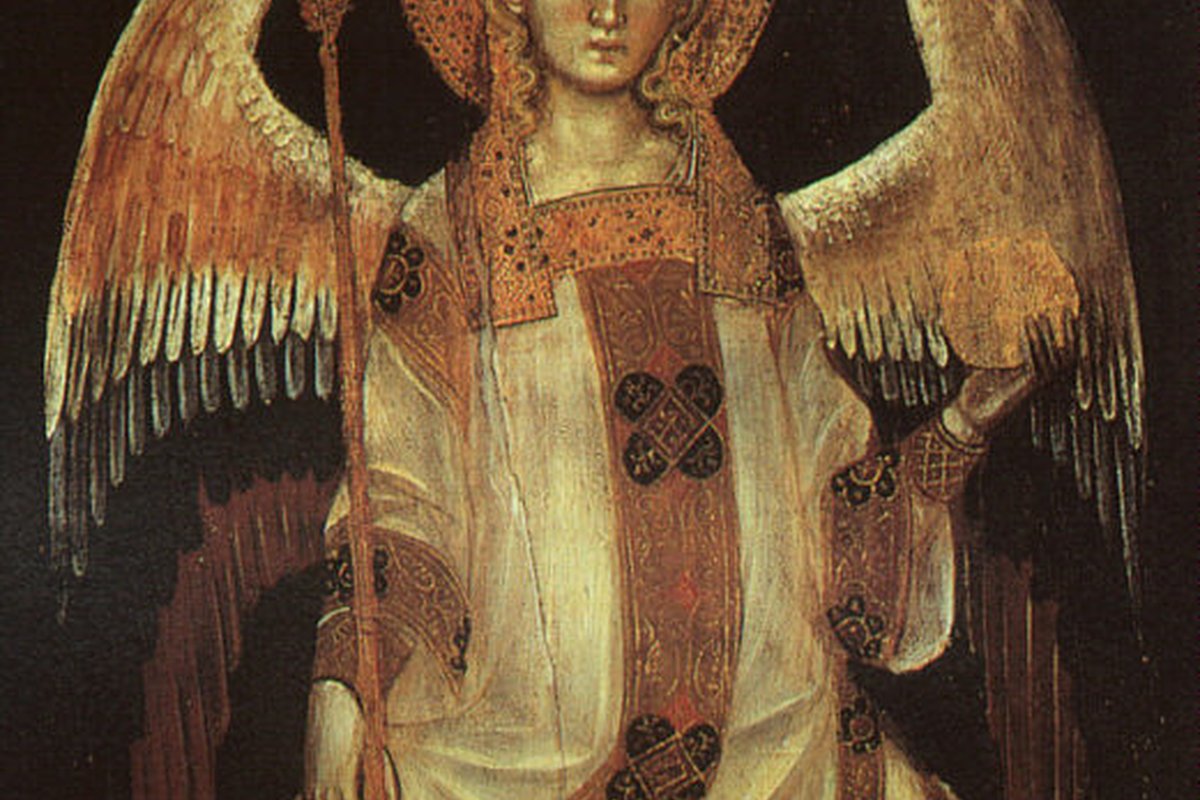
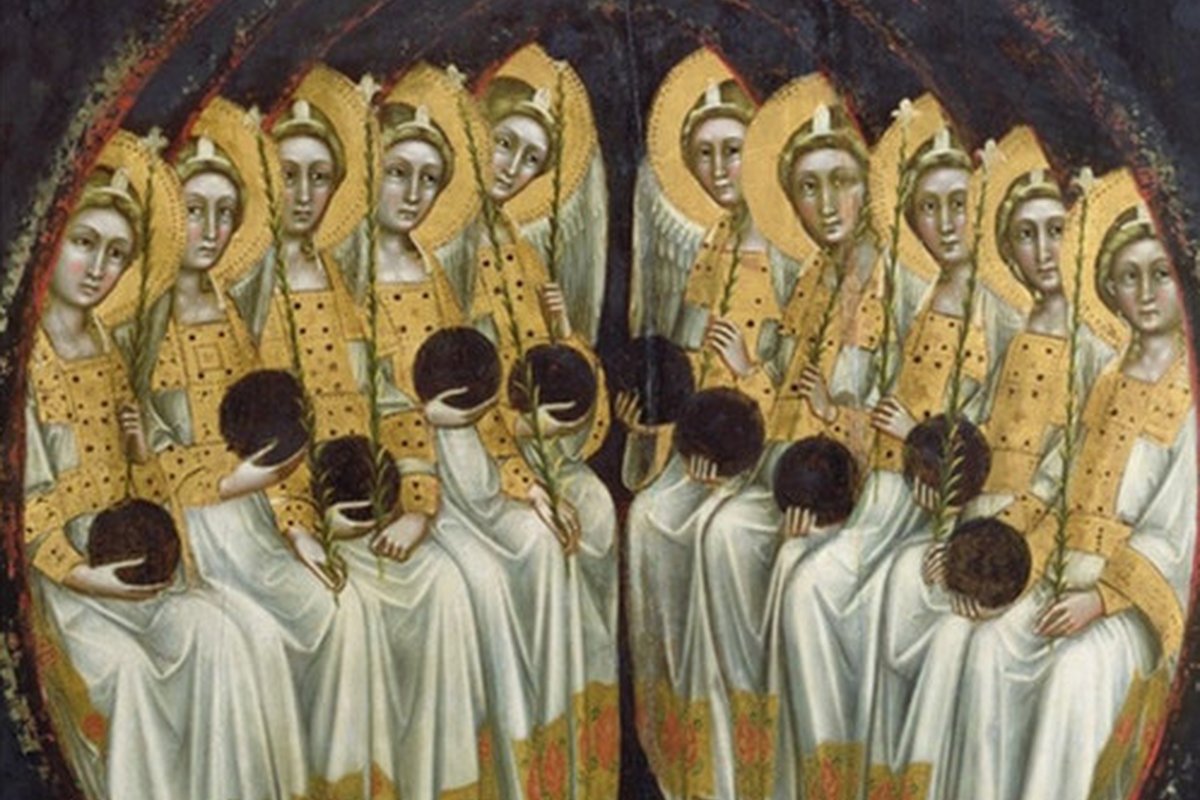
Guariento di Arpo, angel traditionally identified with the Thrones, from his Nine Choirs of Angels cycle, c. 1354, Museo Civico, Padua — public domain.
From a stray word to a rank of judges
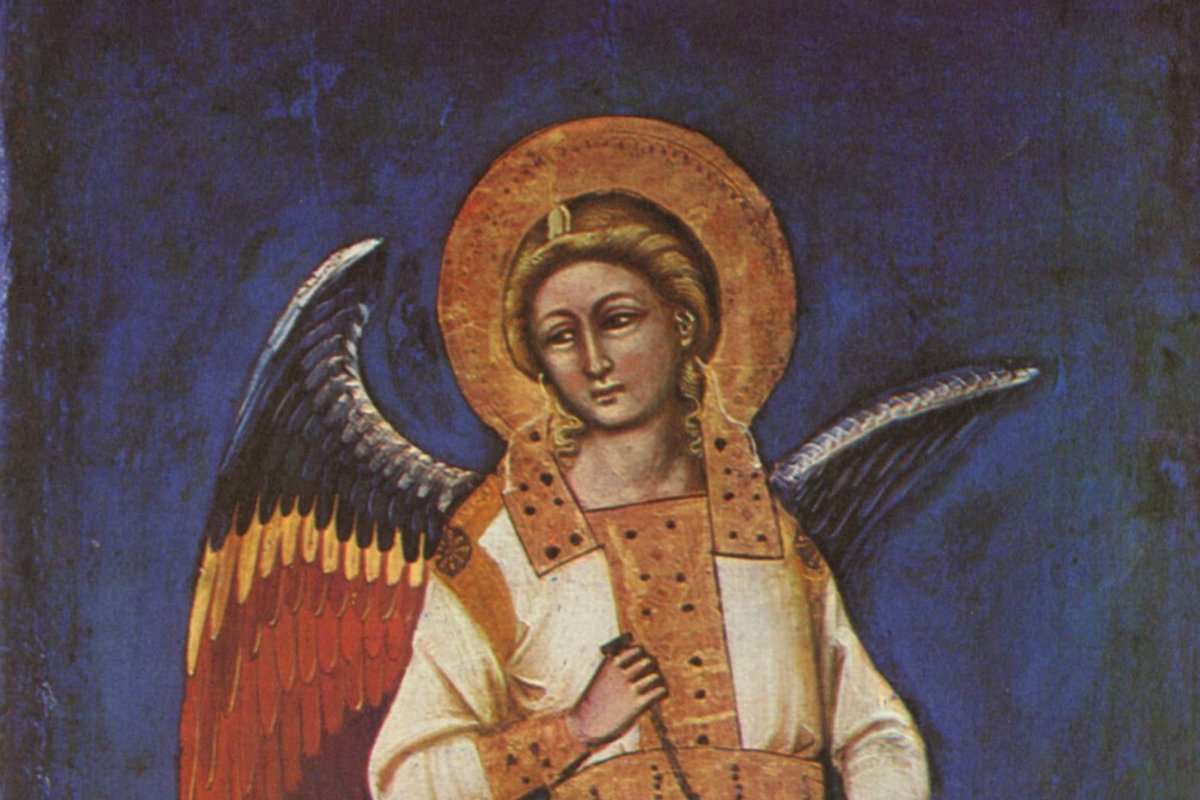
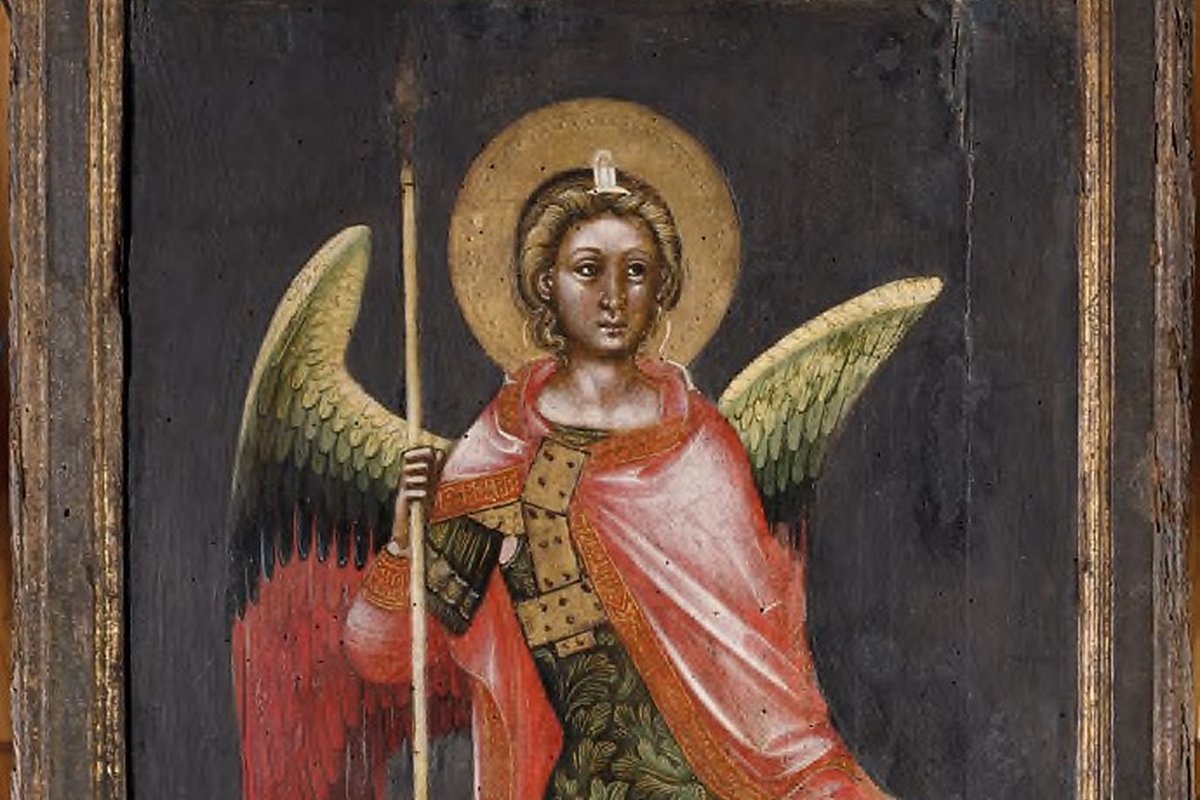
The systematizing came from Pseudo-Dionysius the Areopagite, a Greek Christian writer of roughly the 6th century whose treatise The Celestial Hierarchy organized every heavenly being named anywhere in Scripture into nine ranks — work later refined by Thomas Aquinas. In that system, the Thrones occupy the third rank, grouped with the Seraphim and Cherubim in the highest of three tiers. Tradition associates them, more than the other two, with something outward-facing: bearing up God's judgment and justice, functioning almost as the seat itself from which divine verdicts are rendered. It's a striking image for a word that shows up in Colossians with no elaboration at all.
Wheels covered in eyes — and a common mix-up
Medieval and Renaissance art ran further still, sometimes depicting Thrones as great burning wheels studded with eyes. That image is borrowed, and the borrowing is worth being honest about. It comes from the prophet Ezekiel's vision of a divine throne-chariot, where he describes "As I looked at the living creatures, I saw wheels on the ground, one alongside each of the four living creatures." (Ezekiel 1:15, RSV-CE) whose "The four of them had rims, high and fearsome—eyes filled the four rims all around." (Ezekiel 1:18, RSV-CE). It's a genuinely unforgettable image — but Ezekiel is describing the wheels that accompany four "living creatures," and later in the same book he identifies exactly what those creatures are: "These were the living creatures I had seen beneath the God of Israel by the river Chebar. Now I knew they were cherubim." (Ezekiel 10:20, RSV-CE). The Cherub is a separate rank from the Thrones in the traditional nine-choir system. Artists folded Ezekiel's wheel-and-eye imagery into paintings of Thrones anyway, because "thrones" and "wheels" both suggested something vast, geometric, and covered in a way of seeing that never blinks — but it's an artistic conflation, not something Ezekiel or Colossians states as a single, tidy identification.
What the Bible leaves open, and what tradition filled in
None of this makes the tradition worthless — the Church has taught and depicted the nine choirs for well over a thousand years, and the Thrones' association with divine judgment has a long, respected pedigree in Catholic thought. But it is tradition, built carefully on top of a single unexplained word in one of Paul's letters, not a hierarchy Colossians itself lays out. The Thrones take their place alongside the Seraphim, Dominions, Virtues, Powers, Principalities, and Archangels as a rank in a nine-choir framework that later theologians, not Scripture directly, assembled — a distinction worth keeping in mind while reading art history books that describe medieval wheel-and-eye angels with total confidence.
Why Paul's list mattered so much to later theologians
Colossians 1:16 gained outsized importance in Christian history for a reason that has little to do with angels directly: Paul wrote it while combating an early heresy at Colossae that seems to have involved excessive veneration of spiritual "powers" and intermediary beings, possibly alongside Christ rather than subordinate to him. By listing "thrones," "dominions," "principalities," and "authorities" together and declaring that all of them were created through and for Christ, Paul was making a pointed theological claim: whatever these unseen powers were, none of them ranked as Christ's equal or rival. Centuries later, when theologians like Pseudo-Dionysius went looking for scriptural material to organize into a full angelic hierarchy, Colossians 1:16 stood out precisely because it named several ranks in a single verse — even though Paul's own purpose was closer to the opposite of angelology: he was working to keep his readers' attention fixed on Christ's supremacy, not on cataloguing the beings beneath him.
Aquinas and the three-tiered structure
Thomas Aquinas, writing his Summa Theologiae in the 13th century, inherited Pseudo-Dionysius's nine-rank system and gave it its most influential philosophical treatment in Western Christianity. Aquinas grouped the nine choirs into three hierarchies of three, arguing that each tier's closeness to God corresponded to a different kind of knowledge and function: the highest tier (Seraphim, Cherubim, Thrones) contemplates God directly; the middle tier (Dominions, Virtues, Powers) governs the created order in a general way; and the lowest tier (Principalities, Archangels, Angels) deals most directly with human affairs and individual guidance. Within that scheme, the Thrones occupy a hinge position — closest of the three "governing" or "judging" ranks to God's direct presence, yet already oriented, in their traditional association with justice, toward how divine will gets carried out rather than simply how it is contemplated. Aquinas himself was careful to note that this entire structure was a matter of theological reasoning built on Scripture and earlier tradition, not a hierarchy directly revealed verse by verse.
A choir with almost no individual stories attached
Unlike the archangels — Michael, Gabriel, and Raphael, who each appear in Scripture as named characters with their own narratives — the Thrones have no individual members named or storied anywhere in the biblical text or in reliable tradition. They exist, in Christian imagination, purely as a category rather than as identifiable persons, which is part of why their portrayal in art leaned so heavily on borrowed, abstract imagery like Ezekiel's wheels rather than on any personal iconography. It's a useful reminder of how differently Scripture and tradition treat different ranks of angels: some, like the archangels, come with names, missions, and encounters readers can follow closely; others, like the Thrones, remain almost entirely conceptual — present in the structure of Christian cosmology, but never given a face or a story of their own. See our companion article on the Nine Choirs of Angels for the full hierarchy.
Trivia
What does Colossians 1:16 actually say about thrones?
Why are Thrones sometimes painted as wheels covered in eyes?
Are the 'wheels within wheels' in Ezekiel actually the Thrones?
What is the traditional role of the Thrones?
Where do the Thrones rank among the nine choirs of angels?
Related Reading