The Principalities: Angels Who Guard Nations

A name shared with the archangels
"Principalities" comes from the Greek arche — "first," "ruling," or "foundational." It's the identical root behind "archangel" (archangelos, "chief" or "ruling angel"), and that shared etymology isn't a coincidence: both names describe some form of primacy among created beings, even though later tradition placed them in neighboring but distinct ranks. Paul uses the underlying word in his lists of heavenly categories — "principalities" in Colossians 1:16, "rule" in Ephesians 1:21 — without pausing to define it any further than that.
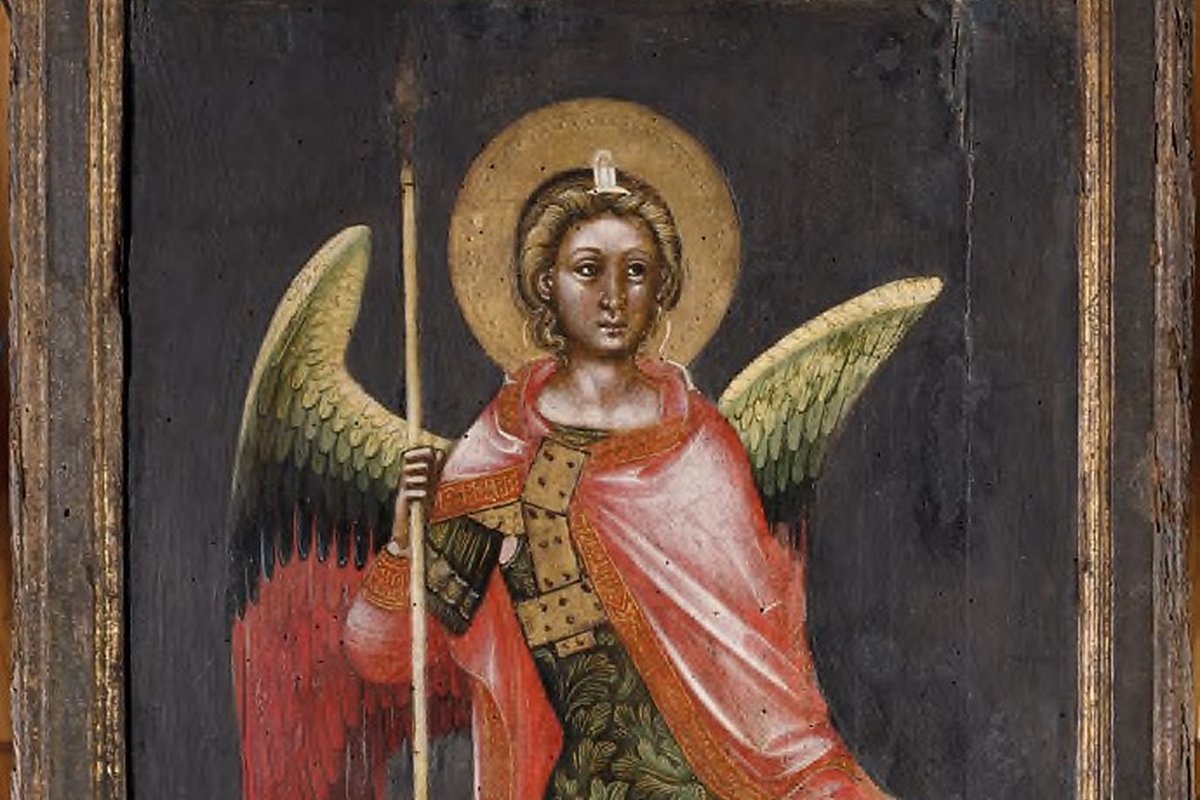
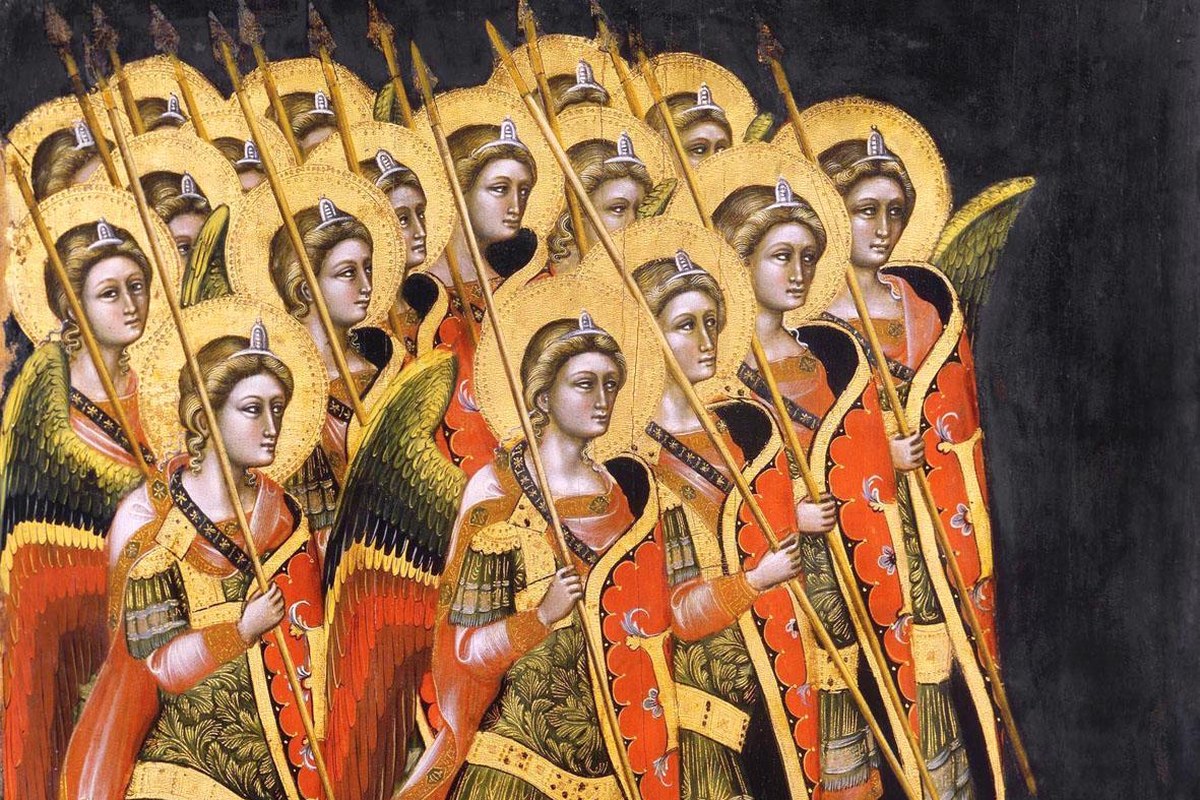
Guariento di Arpo, "Armed Angel (Principatus)," c. 1354, Harvard Art Museums, Cambridge — public domain.
Those same New Testament passages, though, hint at something darker alongside the positive picture. Paul also writes of struggling "For our struggle is not with flesh and blood but with the principalities, with the powers, with the world rulers of this present darkness, with the evil spirits in the heavens." (Ephesians 6:12, RSV-CE), using the identical Greek term to describe hostile spiritual forces rather than protective ones. Later theology resolved this apparent tension the same way it resolved it for every other angelic rank: the word itself simply describes a category of being, a kind of authority or order of creation, and Scripture applies it to both the angels who remained faithful and the fallen angels who did not. The Principalities discussed in the nine-choir system refer specifically to the faithful angels of that rank, not the corrupted ones Paul warns believers to stand against.
An assignment the size of a country
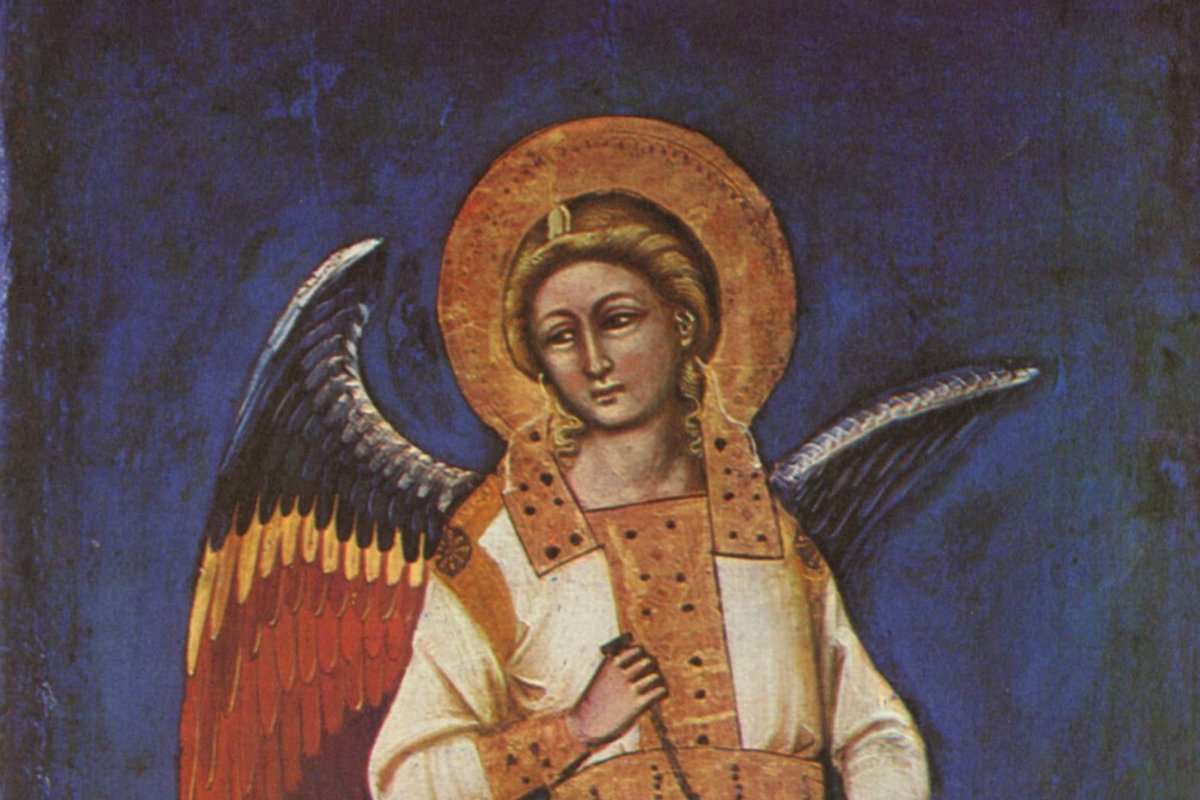
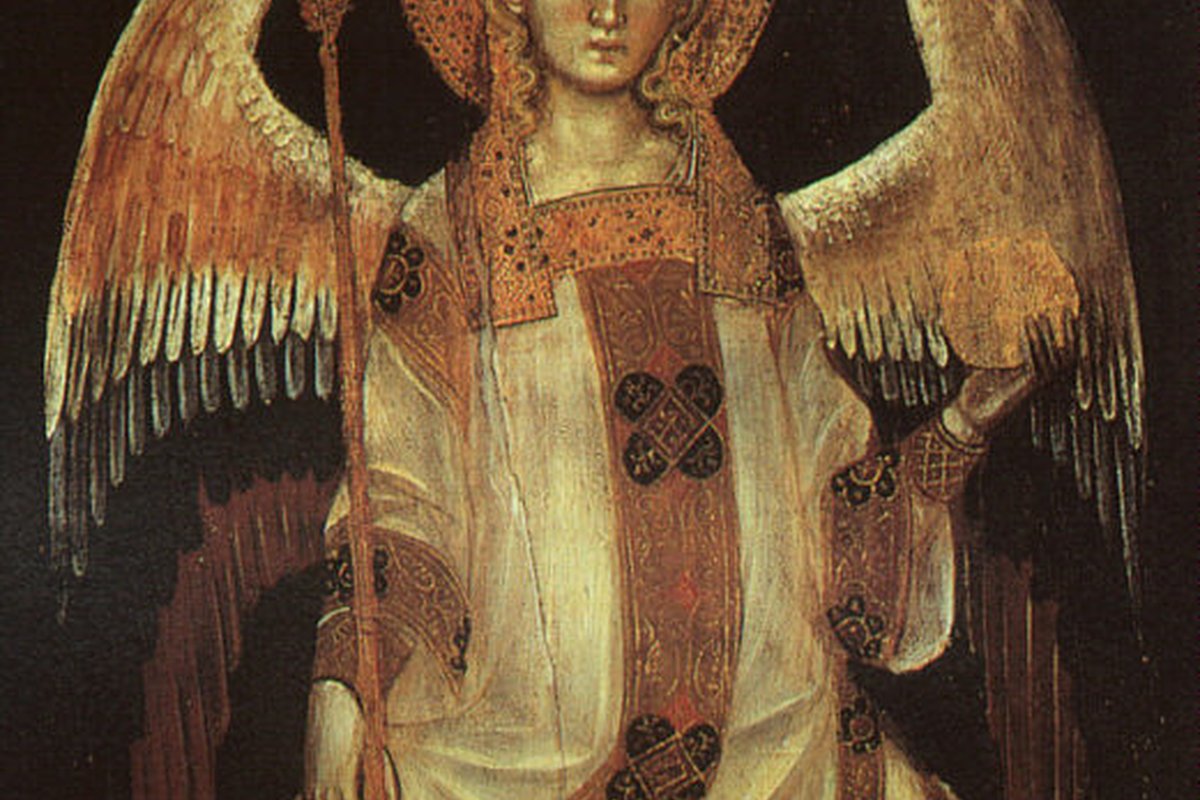
The specific role assigned to Principalities is one of the more distinctive ideas in the whole nine-choir system. Rather than a single person, later Christian tradition holds that this rank watches over large-scale human groups — nations, cities, institutions — as a collective charge. In Guariento di Arpo's 14th-century cycle of the Nine Choirs of Angels in Padua, the Principalities are traditionally shown armed, with shields and spears, dressed in the fashion of the Paduan merchant class of the artist's own day — angels imagined, quite literally, in the clothing of the civic and commercial life they were thought to oversee.
The idea of angels assigned to entire nations isn't purely a Christian invention — it draws on a much older Jewish tradition of a "prince" or guardian spirit set over each nation, an idea found in the Book of Daniel, where an angelic figure describes being resisted for three weeks by "the prince of the kingdom of Persia" before receiving help from the archangel Michael, described as "your prince," meaning the guardian of Israel specifically. Later Christian writers absorbed and adapted this framework, folding it into the broader nine-choir system and expanding it to cover not just nations but cities, dioceses, and even institutions such as universities or religious orders — each, according to the tradition, understood to have its own angelic patron watching over its collective life.
A different scale than the Guardian Angel
It's worth setting this rank directly beside the most personal angel in Christian devotion. The Catholic Church teaches that a Guardian Angel walks with a single person "from infancy to death" (CCC 336) — an intimate, individual relationship. Principalities, in the same tradition, are assigned nothing so small: their charge is a nation, a city, an institution, a collective body of people rather than any one member of it. It's a genuinely different shape of angelic care, closer to the scale of a patron than a companion.
It's worth being clear about how firm any of this is. Unlike Church dogma on matters such as the Trinity or the Resurrection, the nine-choir hierarchy — including the specific role assigned to the Principalities — has never been formally defined by the Magisterium as binding doctrine. It's a theological tradition, developed gradually by writers like Pseudo-Dionysius and later refined by figures such as Saint Thomas Aquinas, and Catholics are free to hold it as a reasonable and long-standing framework without treating its every detail as settled fact. What is firmly taught, by contrast, is simply that angels exist, that they serve God's purposes, and that some among them minister to human beings and human affairs — the finer points of rank and assignment sit within the realm of theological opinion rather than required belief.
Ministry to the world, not contemplation of God
Pseudo-Dionysius the Areopagite's 6th-century treatise The Celestial Hierarchy places the Principalities seventh among the nine choirs, first in what tradition calls the "third hierarchy" — Principalities, Archangels, and ordinary Angels — the tier associated with direct ministry to the created world and to humanity, rather than the contemplative closeness to God assigned to the Seraphim, Cherubim, and Thrones, or the governing work assigned to the Dominions, Virtues, and Powers. As with every rank in this system, that placement is the work of later theologians reading between the lines of a handful of scattered verses — worth knowing, and worth exploring alongside the Archangels as a rank that shares this Principalities' own linguistic root. See our companion article on the Nine Choirs of Angels for the full hierarchy.
Trivia
Where does the name 'Principalities' come from?
What do Principalities do, according to tradition?
How are Principalities different from Guardian Angels?
Does the Bible name a rank called the Principalities?
Where do the Principalities rank among the nine choirs?
Related Reading