The Powers

A rank built for resistance
Most angels people picture at Christmas or on nursery walls are gentle figures — watchers, messengers, comforters. Tradition describes the Powers very differently. Later Christian theology holds that this rank exists to stand guard at the boundary between heaven and the forces actively working against it, resisting evil on something closer to a cosmic scale than a personal one. It's the angelic assignment least likely to show up on a greeting card, and one of the most distinctive jobs given to any of the nine choirs.
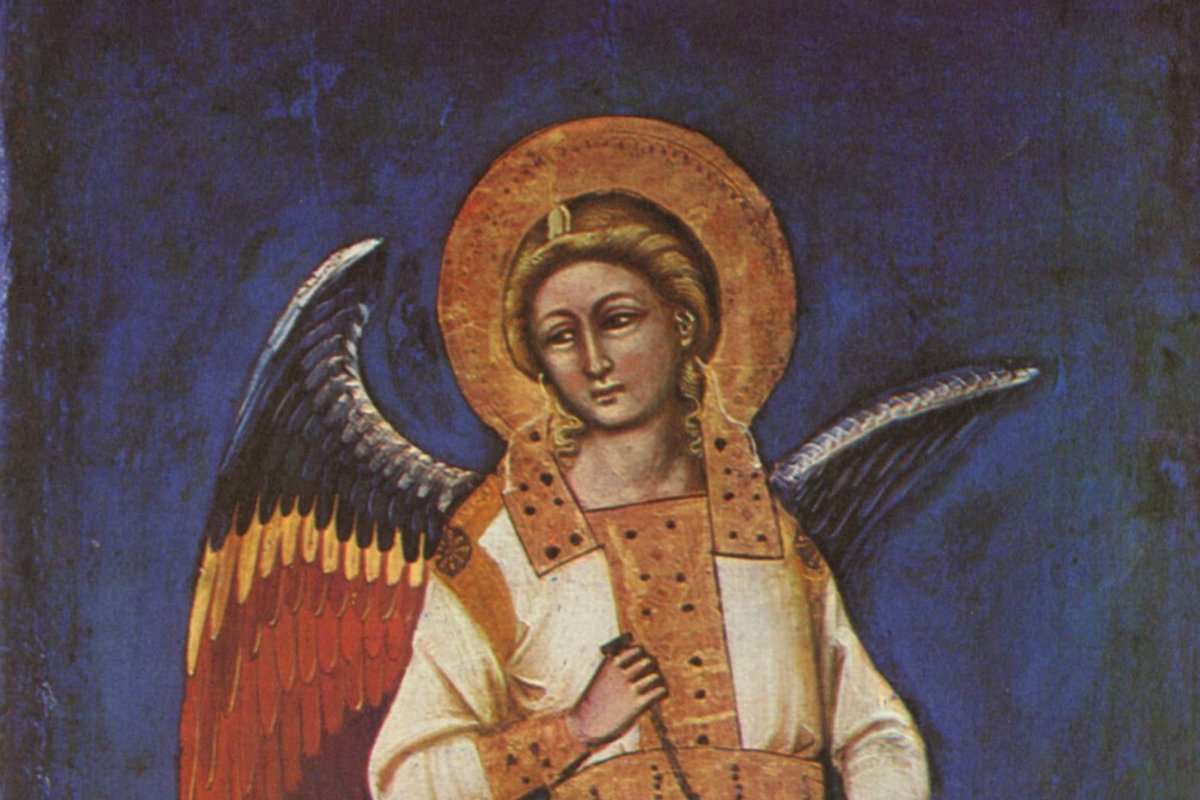
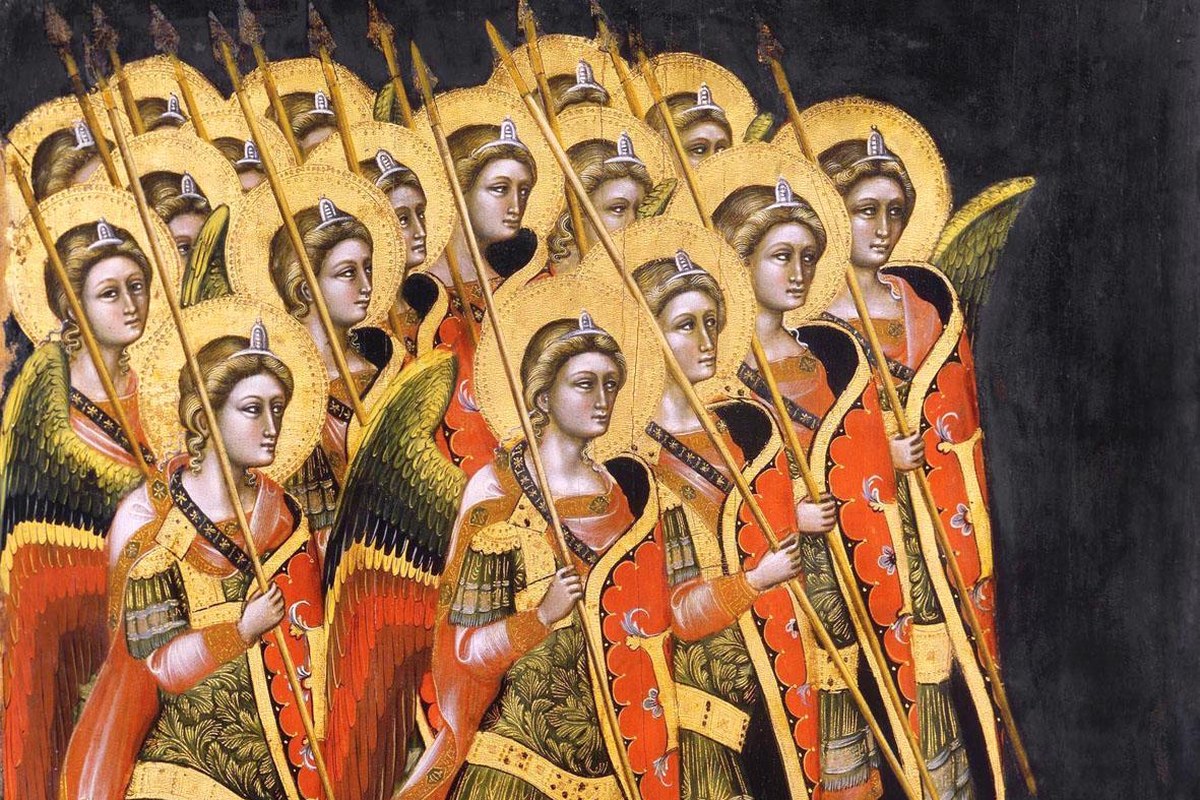
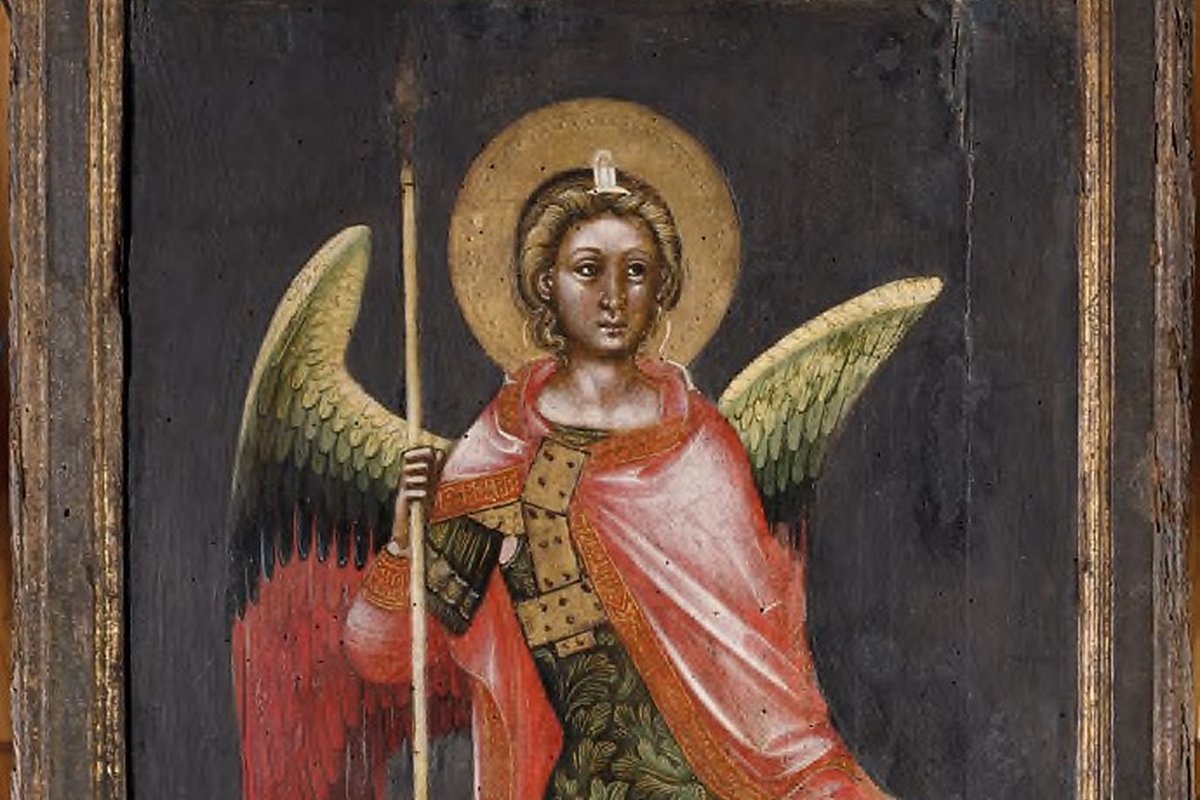
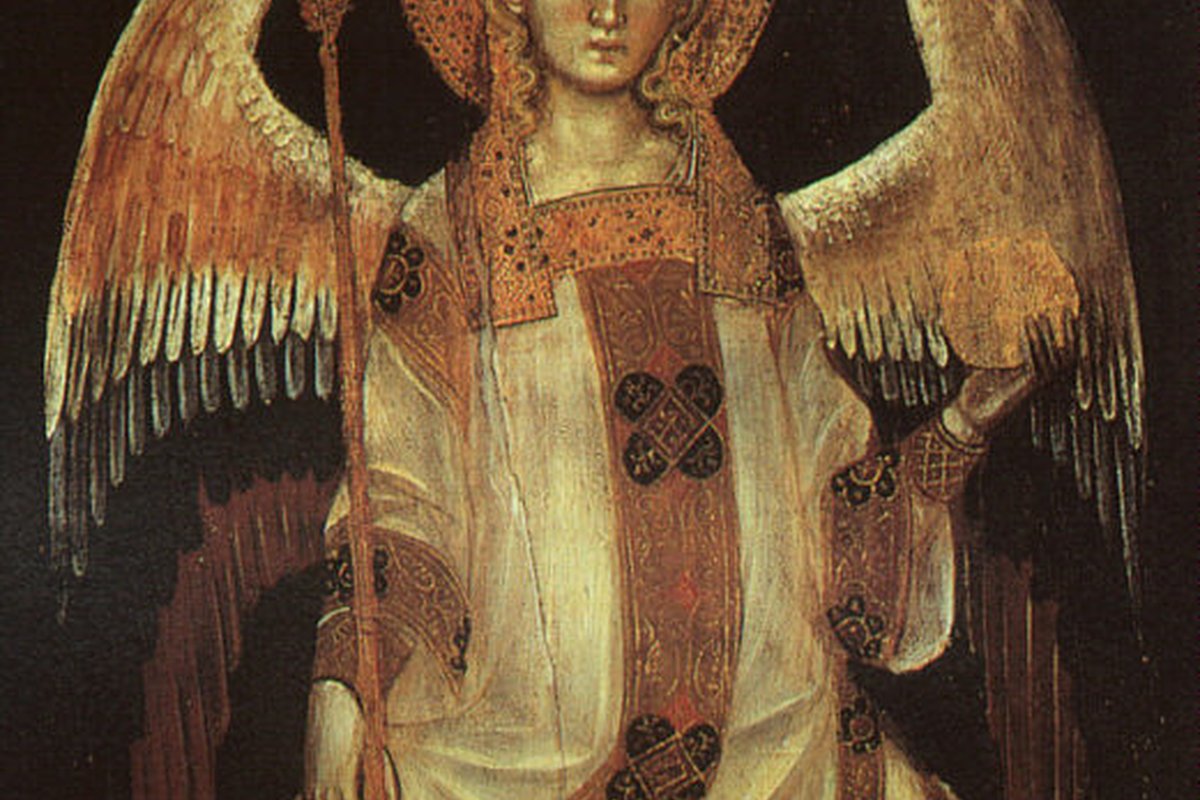
Guariento di Arpo, angel traditionally identified with the Powers — shown in the full panel with a small subdued devil at its feet — from his Nine Choirs of Angels cycle, c. 1354, Museo Civico, Padua — public domain.
Authority, borrowed from a word used everywhere else
The name comes from the Greek exousia, meaning delegated or authorized power. It's not a rare or specialized term in the New Testament — Paul uses the very same word elsewhere for entirely earthly authority, writing that "there is no authority except from God" regarding civil government (Romans 13:1, RSV-CE). That's worth being precise about: Romans 13 isn't describing angels at all, it's describing human rulers — but it shows the same underlying Greek word doing double duty across very different contexts in Scripture, which is part of how later theologians justified reading exousia as naming a distinct angelic rank when it appears in Colossians 1:16 and Ephesians 1:21 among lists of heavenly categories.
Guarding the border, according to tradition
The specific job attached to that name — resisting evil at a cosmic boundary — comes from later systematic theology, not from a battle scene anywhere in the Bible. In Guariento di Arpo's 14th-century cycle of the Nine Choirs of Angels in Padua, the Powers are traditionally shown unarmed but dominant, subduing a small devil at their feet with a rope or rod rather than a sword — an image of controlled, ongoing restraint rather than open combat. It's a meaningfully different picture from the Guardian Angel, who Catholic teaching holds is assigned to one person, "from infancy to death" (CCC 336), walking beside an individual life. The Powers, by contrast, operate at the scale of the created order as a whole — not your protector, in the tradition's own terms, but part of what stands between the whole of creation and what opposes it.
What Scripture says, and what tradition adds
It bears repeating here as much as anywhere in this series: nothing in Colossians or Romans describes the Powers standing at a cosmic border, fighting demons, or doing anything at all beyond being named in a list. That entire picture is the achievement of later Christian thought, chiefly Pseudo-Dionysius the Areopagite and those who refined his work, including Thomas Aquinas — a long-respected tradition, but a human systematization rather than a hierarchy Scripture spells out on its own terms. The Powers take their place alongside the Seraphim, Thrones, Dominions, Virtues, Principalities, and Archangels as a rank in that same carefully built nine-choir system.
Why "spiritual warfare" language attaches to this rank
The Powers are the choir most often invoked in later Christian writing about what's called spiritual warfare — the idea, rooted loosely in passages like Ephesians 6:12, that the Christian life involves an unseen struggle against evil, not only against visible human wrongdoing. Ephesians itself never names the Powers as a distinct angelic choir doing this fighting; Paul writes only that "our struggle is not with flesh and blood but with the principalities, with the powers, with the world rulers of this present darkness, with the evil spirits in the heavens" (Ephesians 6:12, NABRE) — naming forces Christians contend with in a spiritual rather than physical sense, without assigning the fight to any specific angelic rank. Medieval and later writers folded that verse together with the Colossians and Ephesians 1 lists to build the picture of the Powers as heaven's front-line defenders — a synthesis of several separate texts rather than a single passage describing one rank at war.
That synthesis had staying power because it filled a real pastoral need: Christians wanted language for the sense of being opposed by something larger than an individual temptation, and "the Powers stand at the boundary and resist" gave shape to that intuition without requiring Scripture to say more than it does. It's a good example of how the nine-choir system as a whole developed — not invented from nothing, but built by later theologians reading the New Testament's scattered angelic vocabulary as a coherent map, then filling in the gaps with reasoned inference about what each rank's name implied it must do.
A choir invoked, but rarely given its own feast or patronage
Unlike the Archangels — Michael, Gabriel, and Raphael, who each have their own feast day, iconography, and centuries of individual devotion — the Powers have never developed an individual cult of their own in the way a named angel or saint does. There's no shrine dedicated to the Powers, no widely used prayer addressed to them by name the way there is to Michael for protection. Their role in devotional life is almost entirely collective: they appear grouped with the other eight choirs in litanies, in the Preface for the feast of Christ the King, and in theological writing about the whole angelic hierarchy, but almost never as individuals a person would turn to directly. That's part of what makes the choir system worth learning as a set — most of these ranks, the Powers very much included, are less individual figures to know by name than they are a structured way medieval Christians tried to make sense of how vast and varied Scripture's angelic vocabulary really is. See our companion article on the Nine Choirs of Angels for the full hierarchy.
Trivia
Where does the name 'Powers' come from?
What do the Powers do, according to tradition?
How are the Powers different from a Guardian Angel?
Does the Bible describe the Powers fighting demons directly?
Where do the Powers rank among the nine choirs of angels?
Related Reading