Blessed Columba Marmion

A Dublin ordination, and a redirected calling
Joseph Aloysius Marmion was born in Dublin on April 1, 1858, one of nine children, and ordained a priest for the Archdiocese of Dublin in 1881 after studies partly completed in Rome. Like a number of ambitious young clergy of his generation, he felt drawn to missionary life beyond Ireland, and specifically requested his archbishop's permission to join a Benedictine monastic mission that had been established decades earlier in Western Australia. Permission was refused. Dublin needed priests, and Marmion was assigned instead to parish work and then to teaching philosophy at Holy Cross College, the archdiocese's seminary in Clonliffe — a solid, ordinary clerical career that gave no obvious sign of where it was actually heading.
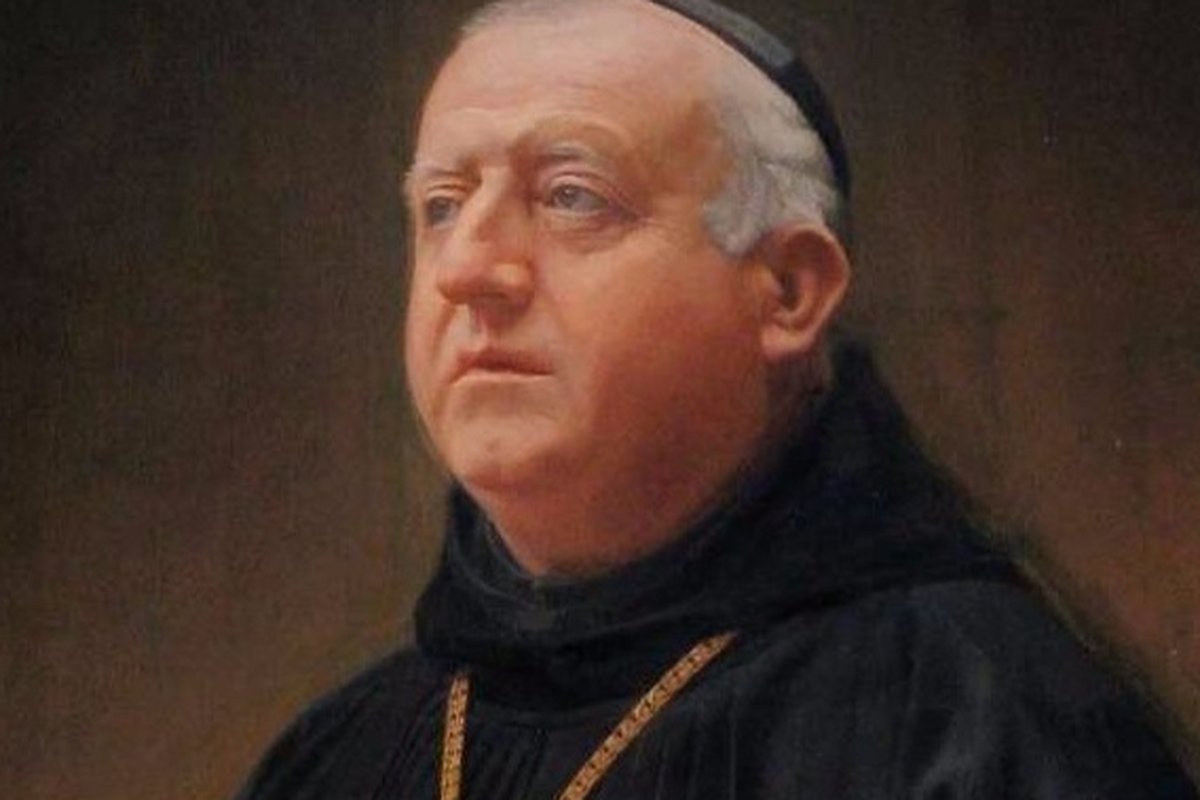
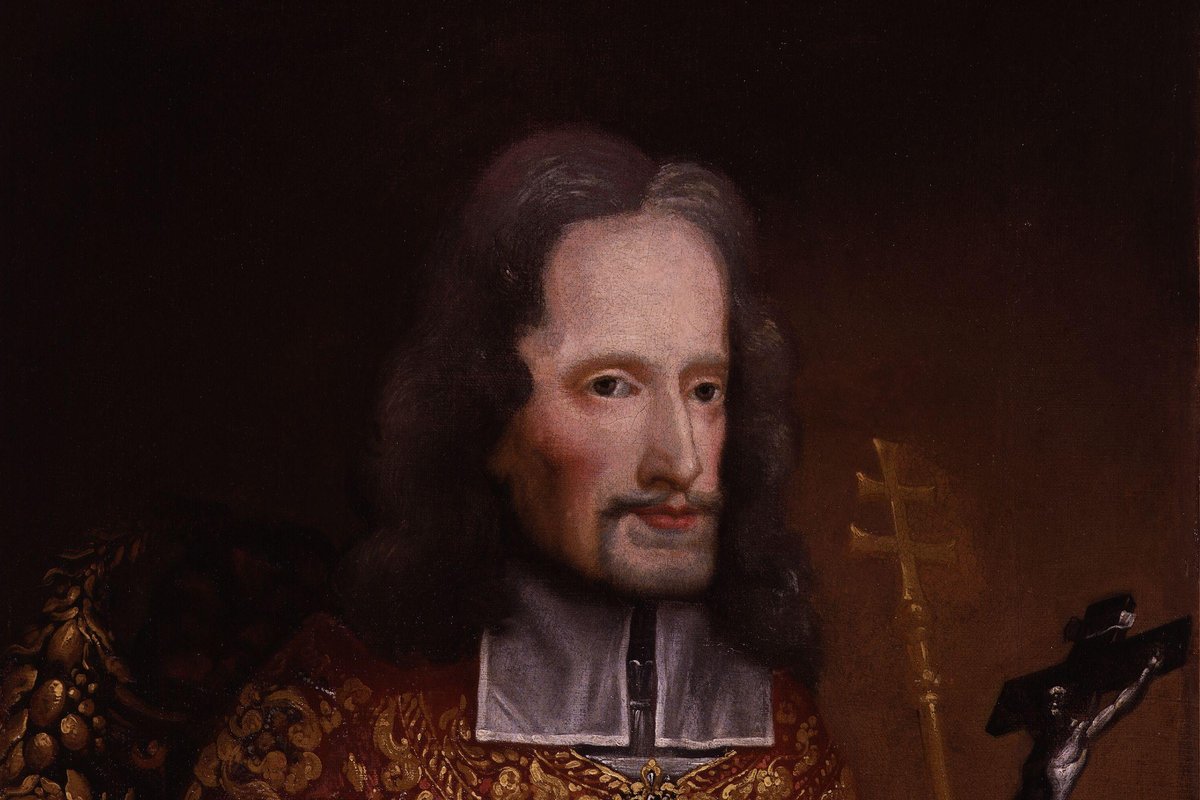
Portrait of Dom Columba Marmion, Abbot of Maredsous, artist unknown, before 1923 — public domain.
Finding the Benedictines in Belgium instead
The redirection that mattered came a few years later. Marmion had already been introduced to Benedictine monastic life during a visit to the newly founded abbey of Maredsous, in Belgium, and the encounter stayed with him. In 1886 he left the Dublin archdiocese, entered Maredsous as a novice to follow the Rule of Saint Benedict, and was given the religious name Columba. He made his solemn monastic profession in 1891 and was ordained to serve as a monk-priest of the community, taking on roles over the following two decades that included teaching theology, serving as prior of a daughter house in Louvain, and directing spiritual formation for the monks under his care — the kind of steady, largely unglamorous monastic administration that rarely produces a household name.
On September 28, 1909, the monks of Maredsous elected him their third abbot, a position of real authority within the wider Benedictine confederation, and one he held until his death in 1923.
His years as abbot spanned one of the most disruptive periods in modern European history. During the First World War, German forces occupied Belgium, and Marmion took considerable personal risk carrying messages between Belgian bishops and the exiled Belgian government, work that placed him in real danger given the occupying authorities' suspicion of any clergy suspected of aiding resistance efforts. That wartime experience, largely absent from the popular image of Marmion as a gentle spiritual writer, shows a man capable of quiet, practical courage well beyond the walls of his monastery.
Conferences that became some of the century's most-read spiritual books
Marmion's fame rests almost entirely on writing he didn't personally sit down and compose as finished manuscripts. As abbot, he regularly gave conferences and retreat talks to the monks of Maredsous and to visiting religious communities, and his secretary, Dom Raymond Thibaut, began transcribing and organizing these talks into book form. The result was a trilogy: Christ, the Life of the Soul (1917), Christ in His Mysteries (1919), and Christ the Ideal of the Monk (1922). All three found an audience far beyond the monastery walls they were originally spoken in — by the time of Marmion's death in 1923, they had already been translated into seven languages, an unusually fast and wide reception for spiritual writing produced by a monastic superior with no particular public profile before the books appeared.
The central thread running through all three books is what theologians call divine adoption — the idea, rooted in Scripture and developed at length by Saint Paul, that grace draws Christians into an actual, living participation in Christ's own relationship with the Father, not merely a moral imitation of his example. Marmion's gift, by most accounts, was making that theologically dense idea readable and practical: his conferences were aimed as much at ordinary religious and laypeople trying to pray seriously as at trained theologians, which is very likely why the books traveled so far, so fast, in translation.
Part of what set Marmion apart from many contemporaries writing in a similar devotional vein was his consistent grounding in the liturgy itself. Rather than treating personal prayer and the Church's official public worship as separate tracks, he argued that the feasts and seasons of the liturgical calendar were themselves the primary school of Christian holiness — that living through Advent, Christmas, Lent, and Easter attentively, year after year, was how ordinary Christians were meant to be gradually formed into the likeness of Christ. That approach anticipated, by several decades, themes the wider Church would later emphasize during the twentieth-century liturgical movement and at the Second Vatican Council.
A quiet death and a slow-building cause
Marmion died at Maredsous on January 30, 1923, having spent close to four decades of his life inside a single Belgian abbey after abandoning his hopes of a missionary career on the far side of the world. His writings continued circulating and being reprinted for decades after his death, sustaining a reputation as one of the more significant spiritual authors of the early twentieth century even as his own name remained relatively unfamiliar outside monastic and devotional circles. Pope John Paul II beatified him on September 3, 2000, formally recognizing a life whose visible achievements — teaching, administering an abbey, giving retreat talks — were modest next to what his transcribed words went on to do in the hands of readers who never met him. He has not been canonized, so he is properly addressed as Blessed rather than Saint; his feast is kept on October 3, the date the Benedictine calendar assigns him.
No strong, formally established patronage has attached itself to Marmion in the way it has for some other Benedictine figures — his legacy remains primarily that of a spiritual author and monastic teacher rather than a patron invoked for a specific need or profession.
Trivia
Who was Blessed Columba Marmion?
What are Columba Marmion's most famous books?
Why did Columba Marmion want to go to Australia?
When was Columba Marmion beatified, and is he a canonized saint?
What is the central theme of Columba Marmion's spiritual writing?
You May Also Like
Related Reading