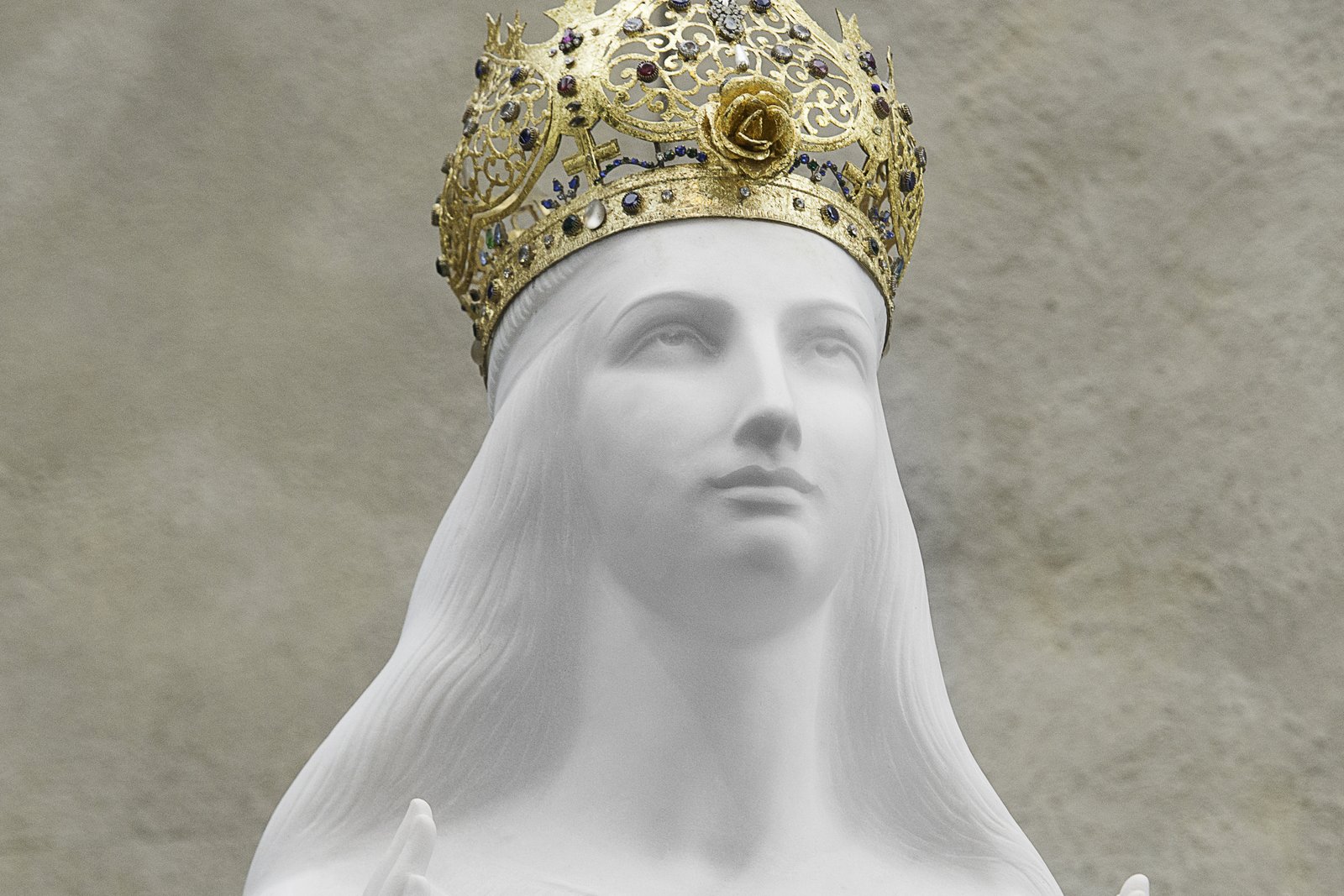
Saint Brigid of Ireland

A life anchored more in tradition than in record
Brigid of Ireland is traditionally dated to around 451 to 525, with a birthplace at Faughart in modern County Louth and her life's great work centered at Kildare. It's important to say plainly, before anything else: those dates, and much of what follows, rest on tradition rather than on the kind of independent documentation historians would prefer. Some scholarship goes further and questions how much of her biography can be treated as historically anchored at all. That uncertainty isn't a modern skeptic's invention — it's simply what happens when a figure's earliest surviving Life was written by a monk named Cogitosus, working at Kildare in the 7th century, roughly a century and a half or more after Brigid's traditional death. Cogitosus wrote in the conventions of his genre, and those conventions ran heavily toward miracle stories.
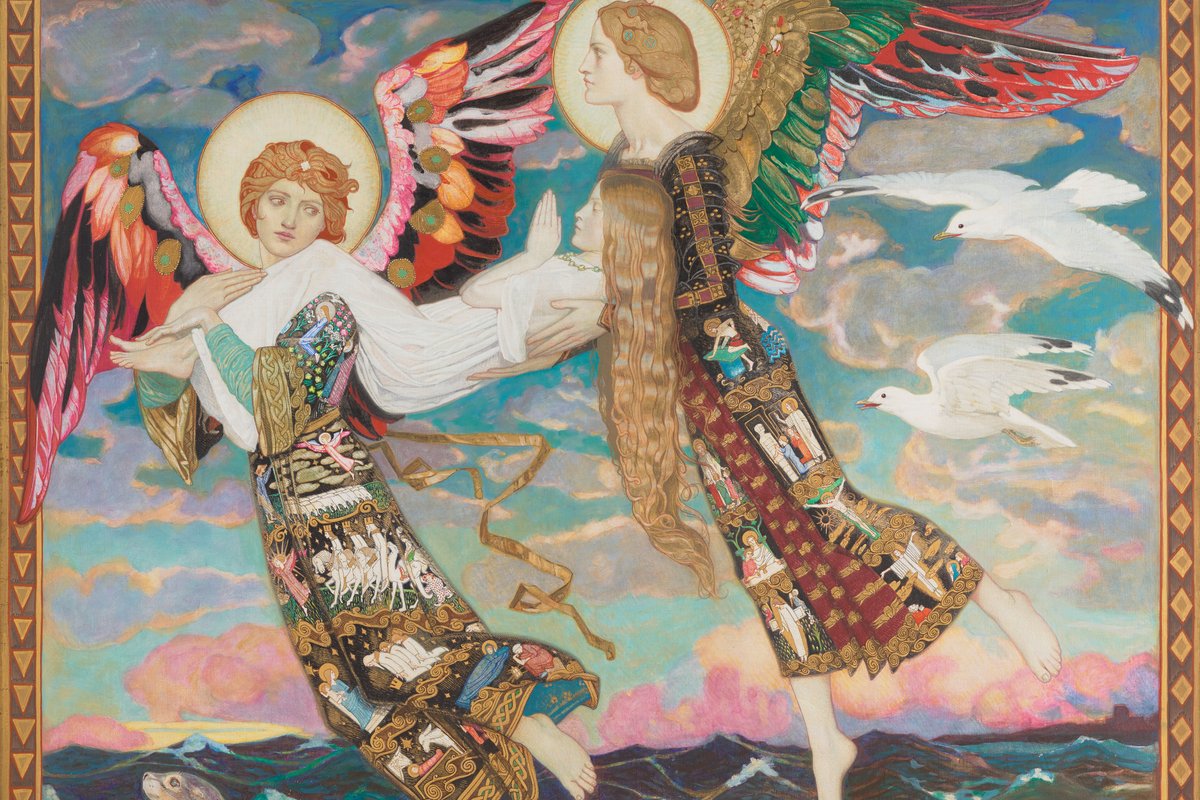
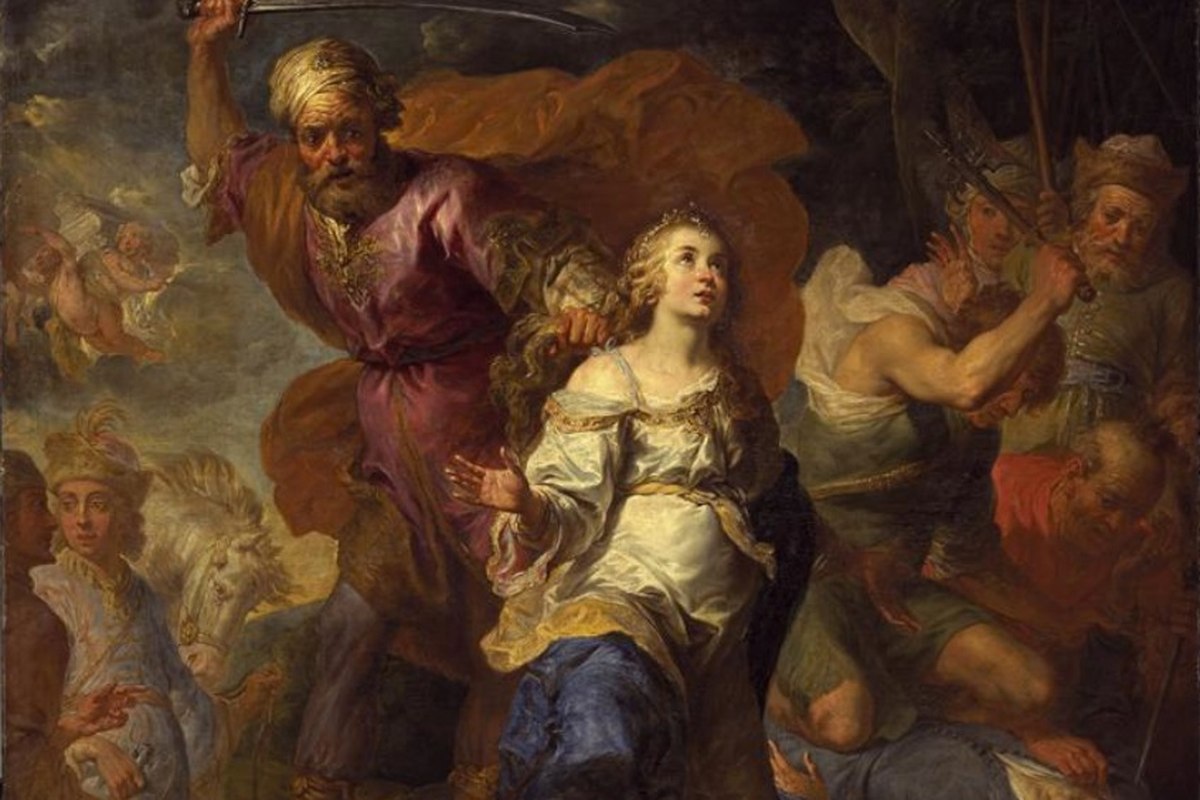
John Duncan, Saint Bride, 1913, National Galleries of Scotland — public domain. The painting illustrates a Scottish Hebridean legend of angels carrying Brigid across the sea, a distinct strand of her wider tradition from the Kildare stories told in this article.
Founding Kildare
What does hold up as solid, longstanding tradition is her founding, around 480, of a monastery at Kildare — Cill Dara, "church of the oak" — which grew into one of the most important religious foundations in early Christian Ireland. It wasn't an ordinary convent: it was a double monastery, housing both men and women, with Brigid serving as its first abbess. In an arrangement unusual for the era, she is said to have invited a hermit named Conláed to become the community's bishop, creating a joint abbess-bishop governance model that placed real ecclesiastical authority alongside her own. Kildare's later importance in early Irish Christianity — as a center of learning, craft, and religious life — traces directly back to this foundation.
Patroness of Ireland, alongside Patrick and Columba
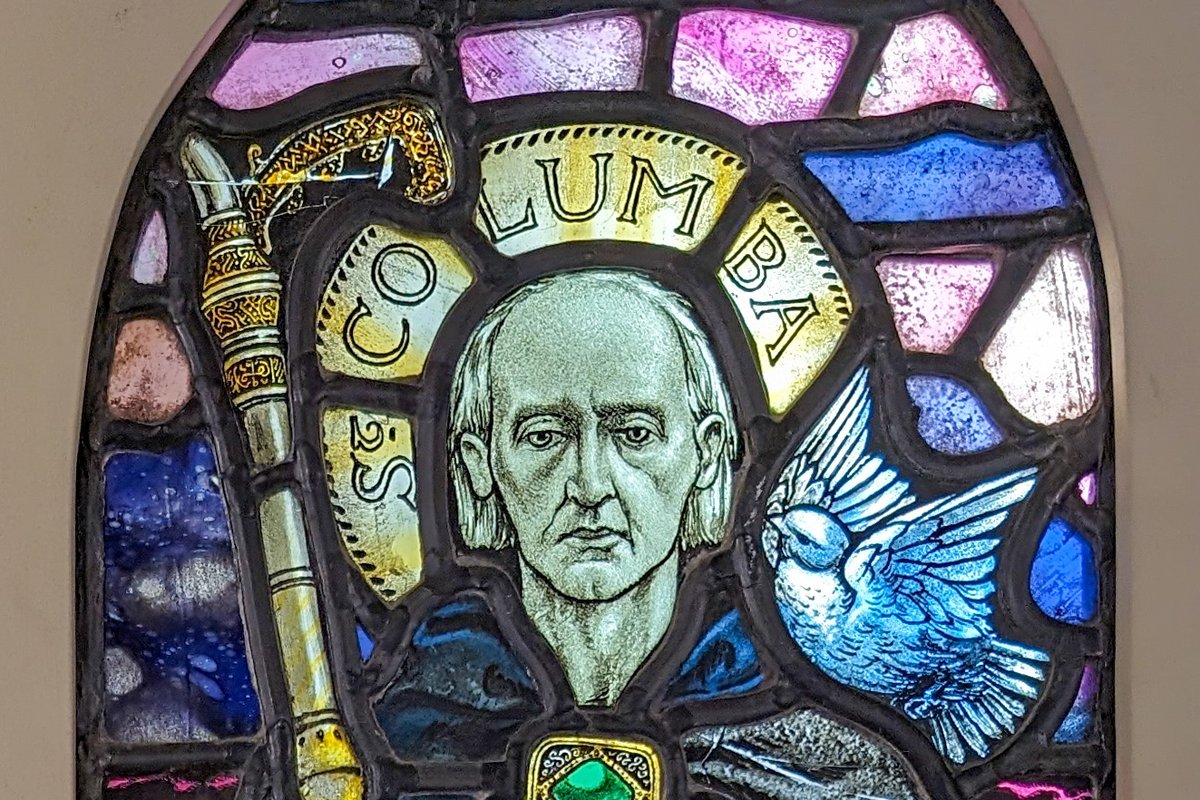
Brigid holds a firm and longstanding place as one of the Three Patron Saints of Ireland, alongside Saint Patrick and Saint Columba (also known as Columcille). This triad is solid, well-established tradition, not a modern invention — the three have been grouped together in Irish devotion for many centuries. Her feast, February 1, has taken on renewed public significance in recent years: Ireland made it a public holiday, a recognition that folded her civic and cultural importance into her older religious one.
Miracles that belong to legend, not history
The stories that made Brigid famous — and that fill Cogitosus's account and the tradition built on it — are worth naming clearly as legend rather than documented fact. She's said to have hung her wet cloak to dry on a beam of sunlight, as if it were a solid rail. A household's butter or ale is said to have multiplied endlessly under her blessing, feeding guests and the poor without ever running out. Various healing miracles round out the collection. These are hagiographical conventions — standard, recognizable features of the genre medieval writers used to signal a subject's holiness — not eyewitness reports, and treating them as literal history would misrepresent what kind of text Cogitosus was actually writing.
One further wrinkle, worth presenting as exactly what it is — a hypothesis, not a fact: some historians have suggested that Brigid's cult absorbed elements of a pre-Christian Irish goddess of the same name, one associated with fire, poetry, and smithcraft. It's a real and reasonably common line of scholarly speculation about how her veneration developed, especially given how strongly fire imagery runs through her later cult. But it remains a proposed explanation among others, not an established conclusion.
The perpetual flame at Kildare
That fire imagery is nowhere more vivid than in the tradition of the flame kept burning at Kildare in Brigid's honor for centuries after her death. According to that tradition, nuns tended the flame in a careful relay — nineteen women, each responsible for one night — and on the twentieth night, the fire was left to Brigid herself to keep alive, unattended by human hands. Whatever its precise historical accuracy, it's one of the most evocative images connected to any Irish saint: a community organizing itself, night after night, around keeping something alive that was never supposed to go out — not unlike the thin, hard-to-pin-down historical record of Brigid herself, which her cult has kept burning regardless.
A patronage built on folk tradition
Brigid's patronage is genuinely well established, even where individual pieces of it rest more on folk custom than formal decree. Beyond her place as a patroness of Ireland, she's traditionally invoked by poets, healers, and midwives, and is associated with newborns. At a more local, folk level — traditionally associated with her rather than formally assigned — she's also connected to blacksmiths, dairy workers and dairying, and cattle, associations that likely trace back to the same fire-and-craft imagery that surrounds the goddess-cult hypothesis above. Together, documented monastery and undocumented legend, solid patronage and folk custom, make up a saint whose actual biography may be thin, but whose presence in Irish religious life has proven remarkably durable regardless.
Trivia
Who was Saint Brigid of Ireland?
Is the story of Saint Brigid's cloak drying on a sunbeam true?
Did Saint Brigid's cult absorb elements of a pagan goddess?
Was Saint Brigid formally canonized?
What is Saint Brigid the patron saint of?
You May Also Like
Related Reading