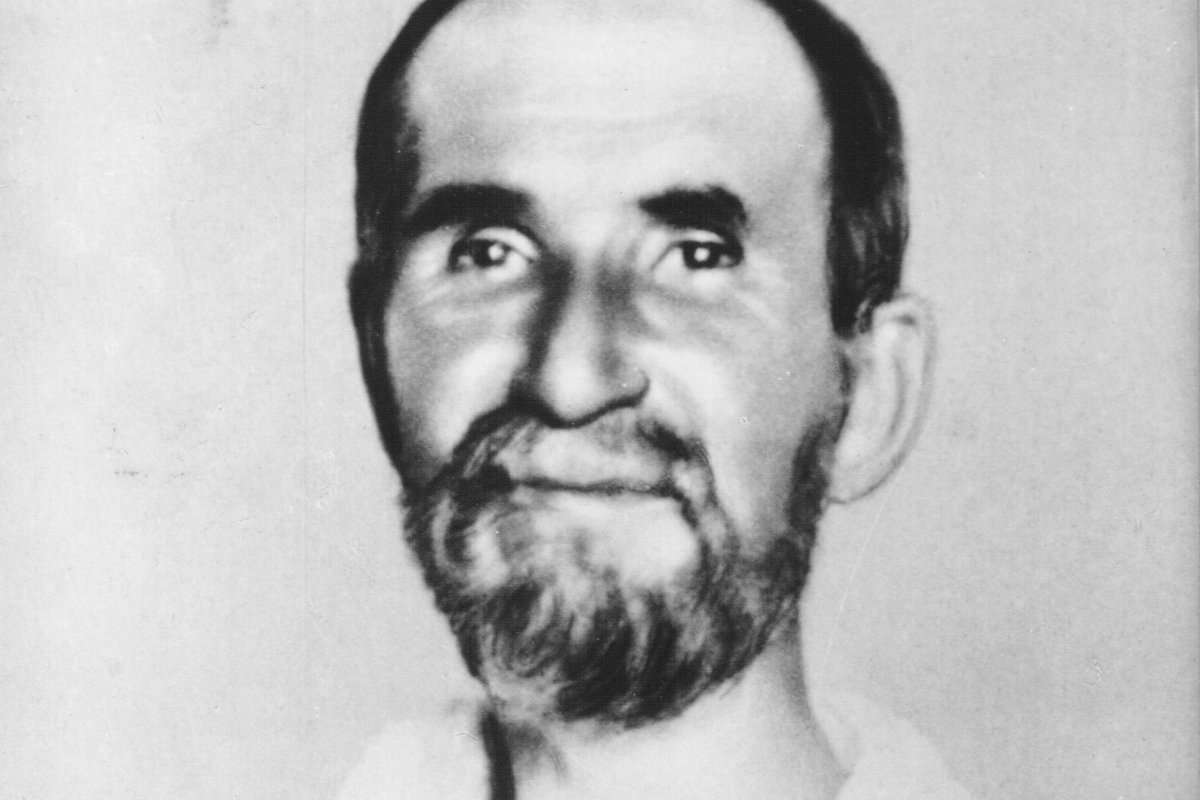
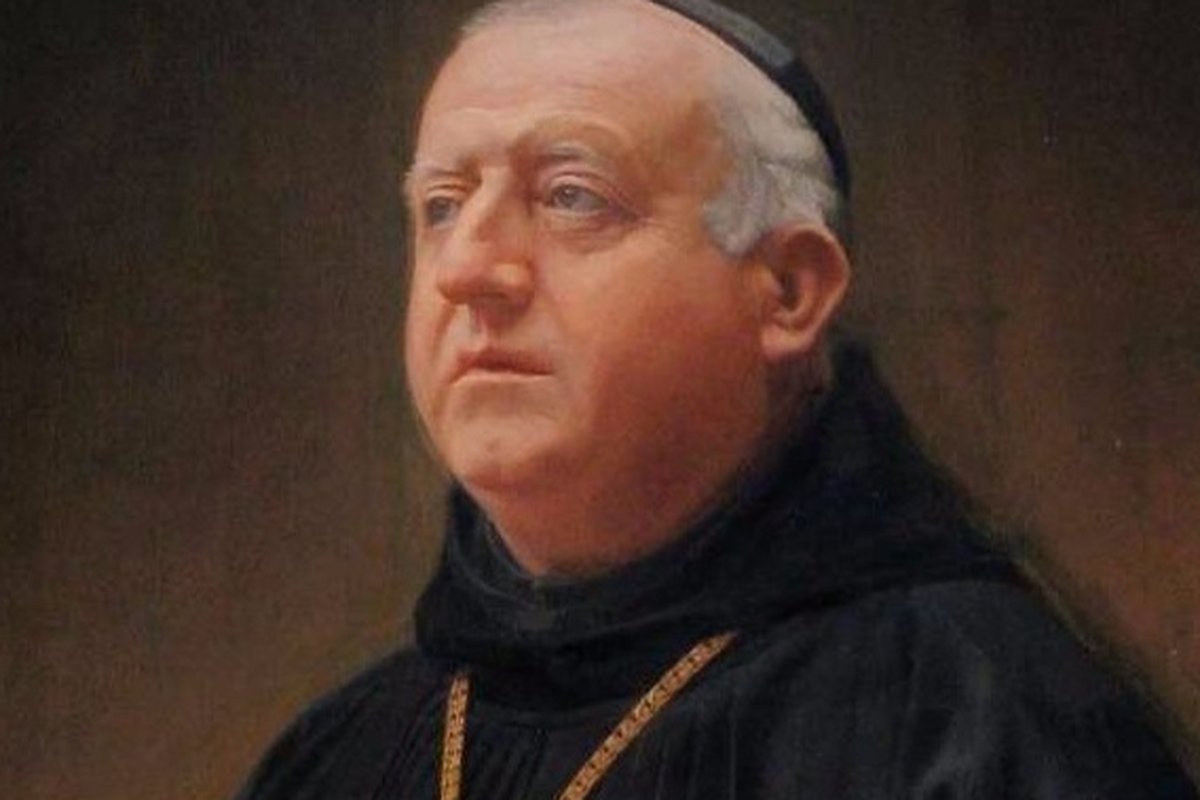
Saint Romuald

A duel, and forty days that never ended
Romuald was born around 951 in Ravenna, Italy, into the noble Onesti family. According to Peter Damian's 11th-century biography of him — written decades after Romuald's death and worth reading as hagiographic tradition rather than a contemporary transcript — the young nobleman witnessed his own father kill a relative in a duel fought over a property dispute. Horrified by what he'd seen, Romuald retreated to the Benedictine abbey of Sant'Apollinare in Classe, near Ravenna, to perform forty days of penance on his father's behalf.
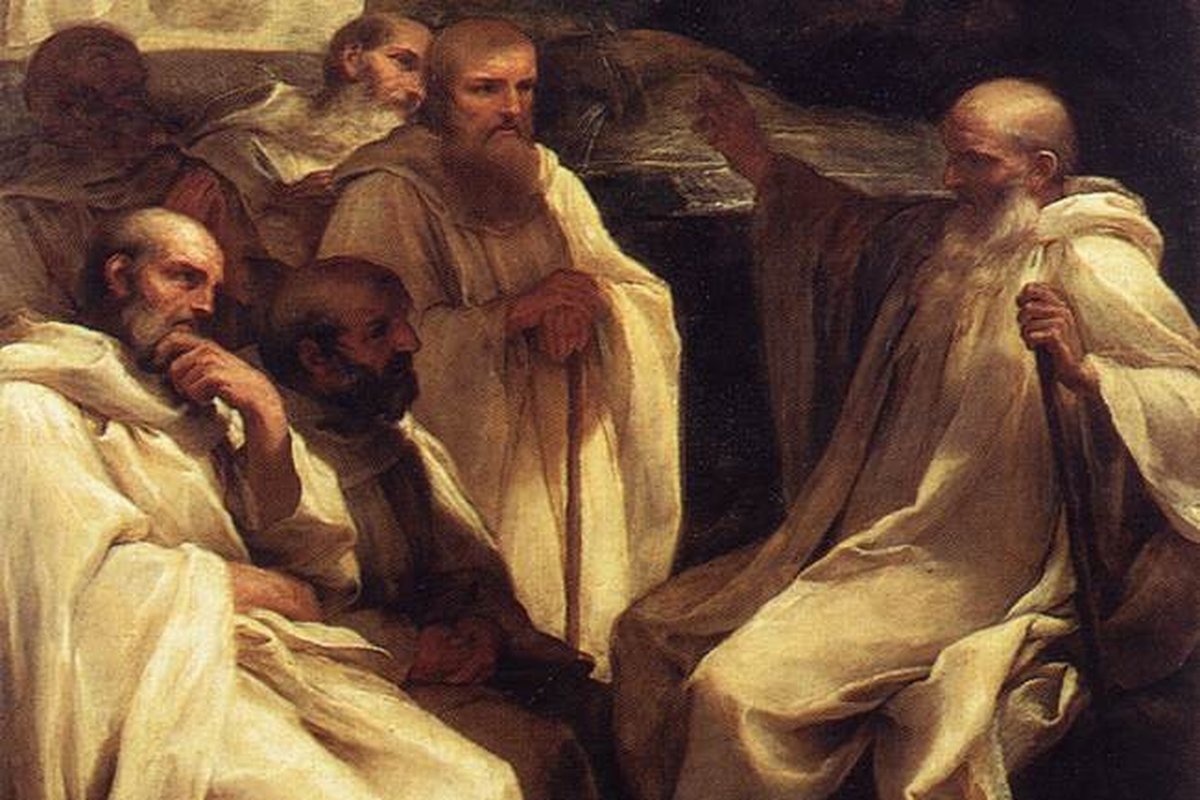
Andrea Sacchi, The Vision of Saint Romuald, 1631, Pinacoteca Vaticana — public domain.
The dialogue and precise circumstances of that story come down through a source removed from the events by two generations, so the details shouldn't be treated as a verified transcript. What historians do accept as broadly reliable is the outline: a young man of noble birth entered monastic life early, following a personal crisis inside his own family. The forty days, whatever exactly prompted them, never really ended — Romuald stayed.
A hermit who kept moving
After his time at Sant'Apollinare, Romuald sought out stricter training than the Benedictine community there could offer, studying under a hermit named Marinus in Venice. From there, across the following decades, he crossed Italy repeatedly, founding and reforming hermitages and monasteries, always pushing for a stricter observance than whatever community he'd just joined already practiced. He even attempted a mission toward Hungary at one point, cut short by illness.
It's tempting to read this restlessness as pure reforming zeal, and historians generally do credit Romuald with a genuine charism for renewal. But it's worth being candid about the more human reading sitting right alongside it: a man who moved this often, and left this many projects behind once they were established, may also have been someone who simply struggled to settle. Both things can be true at once, and a founder who never really finished founding is a more complicated, more believable figure than a purely triumphant one.
Camaldoli: hermit cells above a monastery
Around 1012, that restlessness produced Romuald's most lasting achievement. In the Tuscan hills near Arezzo, he founded Camaldoli, a community built on a genuinely distinctive structure: individual hermit cells for monks living in strict solitude, set above a smaller communal monastery that supported them. It fused two monastic instincts that most orders had to choose between — the solitary intensity of the desert hermit and the shared structure of communal life — into a single, working model. That model came to define the Camaldolese order, a reform branch of Benedictine monasticism that continues to follow it.
"Sit in your cell as in paradise"
Romuald left behind a short instructional text for solitary monks known as the Brief Rule, or Regula brevis. It doesn't survive in his own handwriting; it comes down through St. Bruno of Querfurt's "Life of the Five Brothers," written around 1006, where Bruno records it on the testimony of a monk named John who had known Romuald personally. Its most quoted passage still reads as strikingly direct spiritual instruction, nine centuries later:
"Sit in your cell as in paradise; put the whole world behind you and forget it; like a skilled angler on the lookout for a catch, keep a careful eye on your thoughts... realize above all that you are in God's presence, and stand there with the attitude of one who stands before the emperor. Empty yourself completely and sit waiting, content with the grace of God, like the chick who tastes nothing and eats nothing but what his mother brings him."
The eremitic revival Romuald helped ignite
Romuald belongs to a broader movement historians call the eremitic revival — a renewed enthusiasm, especially strong across Italy and France in the tenth and eleventh centuries, for hermit life (from the Greek eremos, meaning desert or wilderness) after several centuries in which communal monasticism under the Rule of Saint Benedict had become the default form of religious life in the West. Romuald wasn't alone in this: contemporaries like Saint Peter Damian, who later wrote Romuald's biography, and later figures such as Saint Bruno of Cologne, founder of the Carthusians, pursued similar ideals of stricter solitude within a generation or two of Camaldoli's founding. What set Romuald apart within that wider movement was his refusal to settle on a single fixed model. Where Bruno's Carthusians and other reform communities generally arrived at one stable structure and preserved it, Romuald kept experimenting across dozens of foundations, treating each new hermitage as another attempt at getting the balance between solitude and community exactly right, rather than a finished achievement to be defended and repeated unchanged.
Canonized by inscription, not by bull
Romuald died on June 19, 1027, at the Val di Castro monastery. He wasn't canonized through the formal bull process familiar from later centuries; instead, Pope Clement VIII confirmed his cultus and had him inscribed directly into the Roman Martyrology in 1595, a recognized mechanism in Catholic canon law known as equipollent, or equivalent, canonization — the same path taken for Saint Bruno of Cologne, and one that counts as full sainthood despite skipping the more familiar modern process.
His feast is kept on June 19, restored to his actual date of death in the 1969 calendar reform; before that, it had been marked on February 7, the date of a relic translation, since 1595. Romuald is venerated today as the patron of hermits, a patronage that needs no embellishment — it follows directly from a life spent, restlessly and repeatedly, trying to build somewhere quiet enough to pray.
Trivia
Who was Saint Romuald?
Why did Romuald first enter monastic life?
What makes Camaldoli different from an ordinary monastery?
Did Romuald write a monastic rule?
How and when was Romuald canonized?
You May Also Like
Related Reading