Saint Juliana of Liège

Orphaned young, raised in the cloister
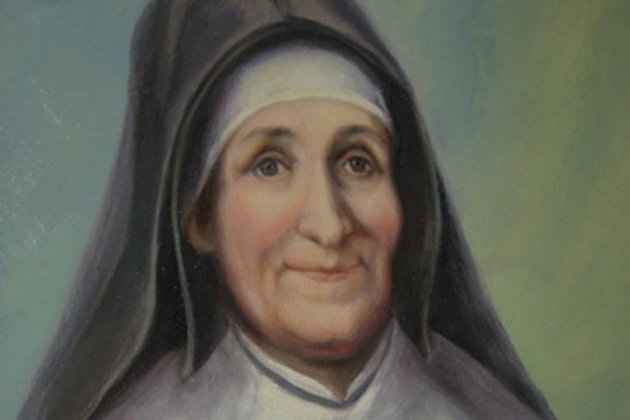
Juliana was born around 1191–1193 in Retinnes, a village near Liège in what is now Belgium. She and her twin sister, Agnes, were orphaned at five years old and raised by Augustinian nuns in the area — a childhood spent almost entirely inside religious life, with no real memory of anything else. She entered religious life herself at Mont-Cornillon, near Liège, and by 1230 had risen to become prioress, or superioress, of the community there. On paper, it reads like a fairly typical religious career for the period. What set Juliana apart had already been happening, privately, for over a decade.
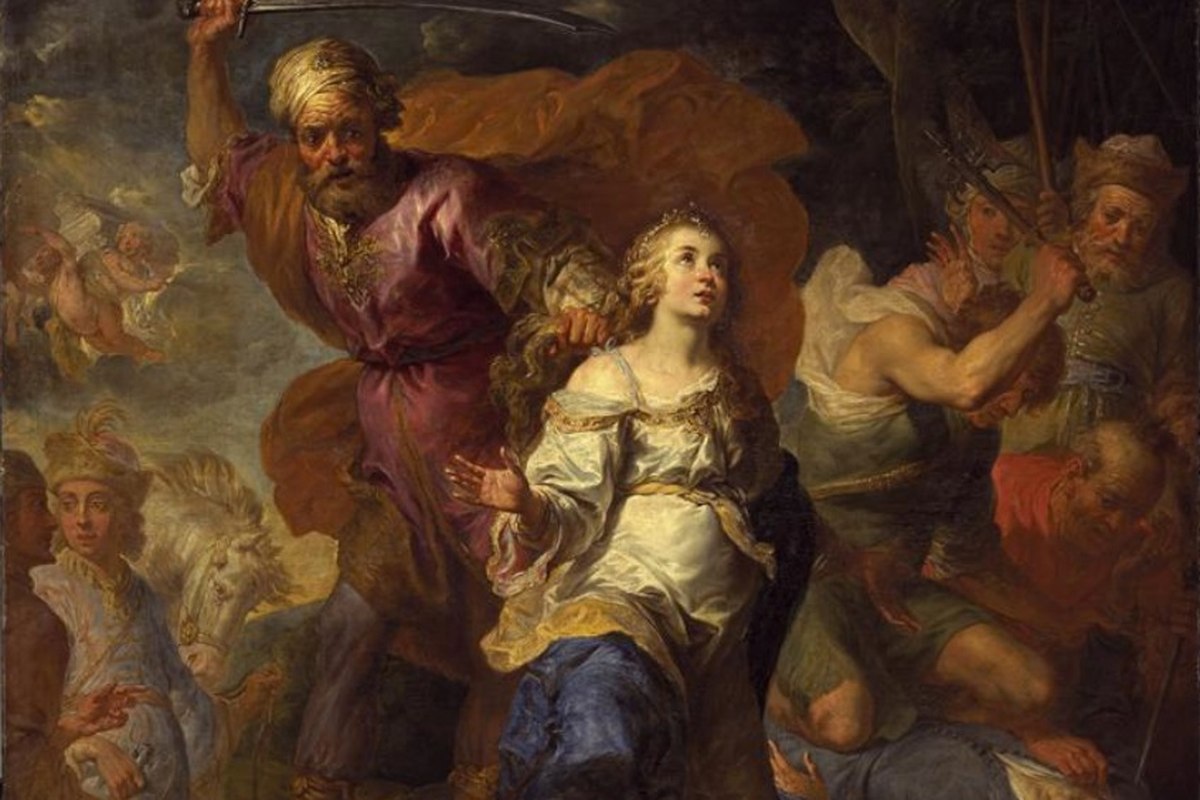
Englebert Fisen, Sainte Julienne du Mont-Cornillon et de l'institution de la Fête-Dieu, Church of St-Martin, Liège, 1690 — public domain.
Twenty years of silence about a vision
From around age sixteen, Juliana began experiencing a recurring vision during moments of Eucharistic adoration: a full, brilliant moon, marked by a single dark stripe running across its face. She told no one. For roughly two decades, she carried this image without explanation or disclosure, long before she'd settled on what — if anything — it was asking of her.
When she finally did interpret it, the conclusion she reached was specific: she came to believe the vision was a divine call for a new liturgical feast, one dedicated entirely to honoring the Real Presence of Christ in the Eucharist — something distinct from Holy Thursday, which already commemorated the Last Supper but was tangled up, in the Church's liturgical calendar, with the somber lead-up to Good Friday. Juliana wanted a feast that could be celebrated with the wholehearted joy that the sorrowful timing of Holy Thursday made difficult.
Driven out, twice, for an idea that outlived her opposition
Juliana's advocacy for this new feast did not go smoothly. A corrupt superior named Roger drove her from her position at Mont-Cornillon not once but twice, in 1233 and again in 1247, forcing her into years of displacement among Cistercian and Norbertine religious communities rather than the settled life she'd known before. She eventually found stability at Fosses, where she remained until her death on April 5, 1258.
She had real allies, too. The Bishop of Liège supported her cause, as did Jacques Pantaléon, the archdeacon of Liège — a man whose backing turned out to matter enormously, because he later became Pope Urban IV. With that support, the feast Juliana had envisioned began to take institutional shape: Corpus Christi was celebrated locally in the diocese of Liège starting in 1246. Juliana died twelve years before it went any further than that. It wasn't until 1264, several years after her death, that Pope Urban IV — the same Jacques Pantaléon who had once backed her as a diocesan official — issued the bull Transiturus de hoc mundo, extending the feast of Corpus Christi to the entire Latin Church. Juliana never lived to see the feast she'd spent decades pushing for become universal.
Saint, or Blessed? An honest answer
Juliana's formal status in the Church is genuinely a little more ambiguous than most saints covered on this site, and it's worth being straightforward about that rather than picking whichever title sounds more definitive. Older and traditional Catholic reference works — including the 1910 Catholic Encyclopedia — refer to her as "St. Juliana," but that same entry specifies only that in 1869, Pope Pius IX ratified her long-standing local veneration and permitted an office and Mass to be celebrated in her honor. That's a papal confirmation of an existing, centuries-old cultus, not a modern formal canonization process built around an investigated miracle. A number of contemporary sources instead refer to her as "Blessed Juliana." Both usages appear in circulation today; the honest summary is that she is venerated as a saint following Pius IX's 1869 confirmation of her cultus, while some modern sources continue to call her Blessed.
Eva of Liège and a vision carried by others
Juliana wasn't the only person tied to the eventual founding of Corpus Christi, and it's worth naming the others, because devotional history sometimes flattens a decades-long collective effort into a single visionary's story. A recluse named Eva of Liège, a close associate of Juliana, is credited in the traditional account with helping keep the cause alive after Juliana's death, pressing Church authorities to follow through on the feast Juliana had championed. Another woman, Isabelle of Huy, is also named in some sources as part of the small circle that carried the project forward through the years between the local 1246 celebration in Liège and the 1264 bull that made it universal. The feast of Corpus Christi, in other words, wasn't simply handed down from Juliana's vision to the wider Church — it survived because a handful of specific, largely unrecorded women kept pushing it forward after she was gone.
Why Corpus Christi needed its own feast at all
It's worth explaining why Juliana felt Holy Thursday wasn't enough on its own. Holy Thursday, which commemorates the Last Supper and the institution of the Eucharist, falls at the start of the Church's most solemn and somber stretch of the liturgical year — the beginning of the Sacred Triduum that moves immediately into Good Friday's mourning over Christ's crucifixion. There was, in Juliana's view, no real space within that liturgical arc for the kind of unguarded, joyful public celebration the Eucharist itself seemed to deserve. Corpus Christi (Latin for "Body of Christ") was conceived specifically to fill that gap: a feast placed later in the year, outside the shadow of the Passion, built entirely around joyful adoration and, eventually, public processions carrying the consecrated host through city streets — a tradition that continues in Catholic parishes worldwide today, and one that traces its entire existence back to that recurring vision of a moon with a dark stripe across its face.
A feast that outgrew its origin story
Whatever title is attached to her name, Juliana's actual legacy is hard to overstate: the feast of Corpus Christi, now one of the major observances on the Catholic liturgical calendar and marked with processions, adoration, and celebration in parishes across the world, traces directly back to a sixteen-year-old nun's private vision that she didn't act on for twenty years. Her feast day is kept on April 5, with some calendars listing April 6 instead. No strongly established universal patronage has attached to her name, but her connection to Eucharistic devotion remains, on its own, a considerable legacy. For more on how the Church has recognized figures central to its liturgical life, see the Patron Saints Directory.
Trivia
Who was Saint Juliana of Liège?
What was Juliana's vision, and what did she believe it meant?
Did Juliana face opposition to her Corpus Christi vision?
Is Juliana of Liège officially canonized as a saint?
When is Saint Juliana of Liège's feast day, and what is she the patron of?
You May Also Like
Related Reading