Blessed Henry Suso

A childhood vocation with no childhood enthusiasm attached
Henry Suso was born around 1295 in Constance, in what is now southern Germany, into a family whose surname he apparently disliked enough to drop in favor of his mother's family name — Süs, or Suso — a small but telling detail for a man whose later writing would be so preoccupied with identity dissolved into something greater than itself. He entered the Dominican convent at Constance at the age of thirteen, a placement more typical of family arrangement than personal calling at that age, and by his own later account, spent his first several years there in fairly ordinary, unremarkable religious observance.
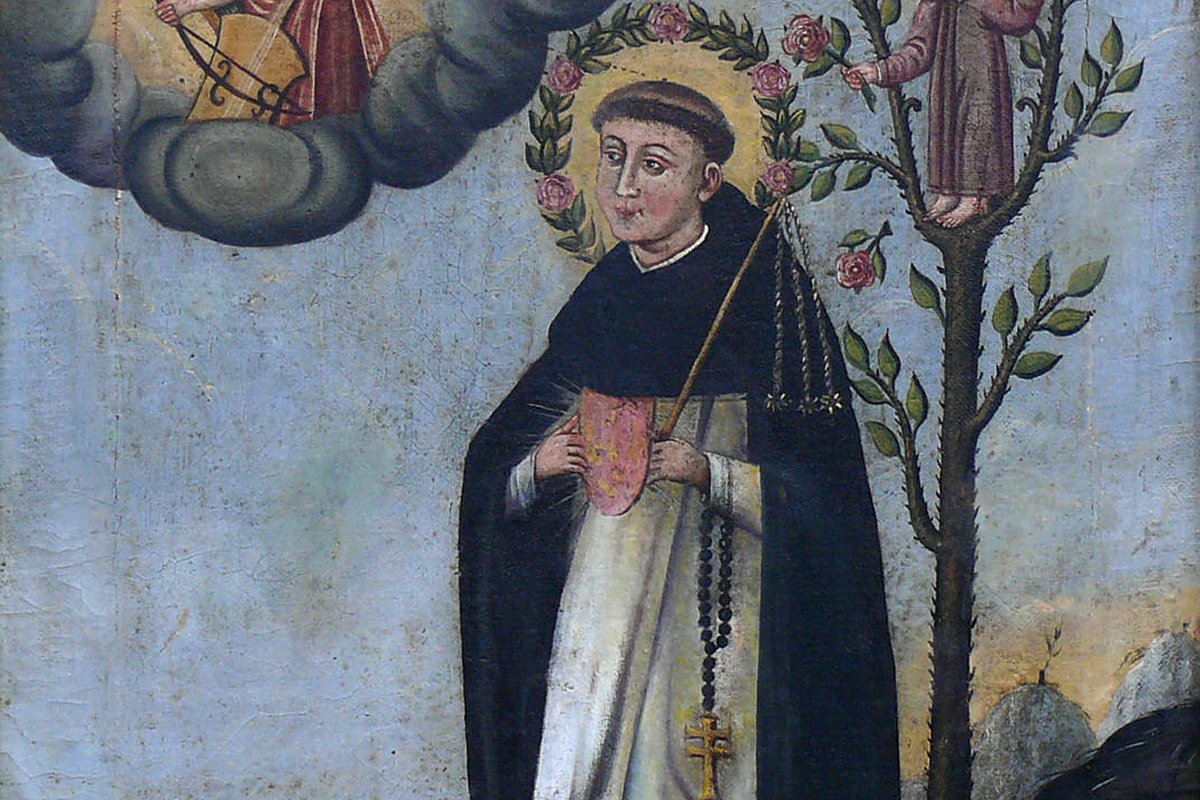
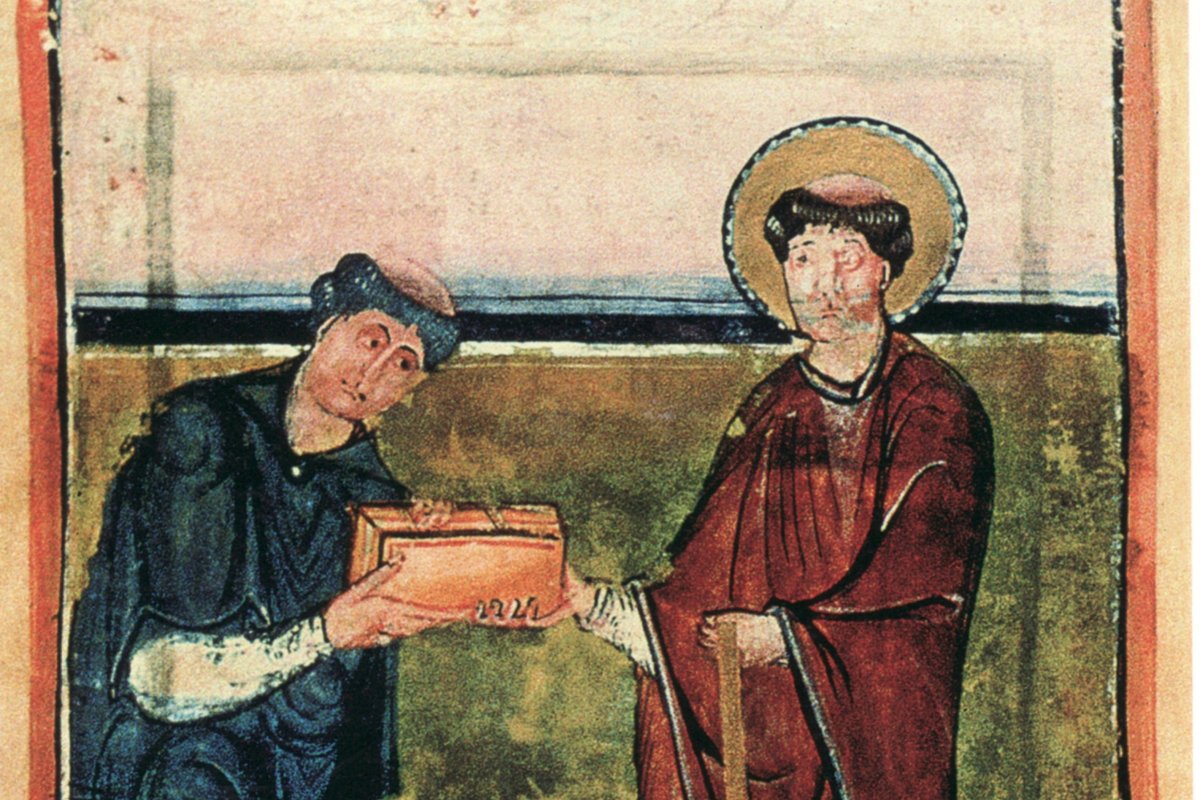
Anonymous devotional painting of Heinrich Suso, 1601 — public domain.
That changed, according to Suso's own autobiographical writing, around age eighteen, when he experienced a sudden and overwhelming religious conversion — not away from the Dominican life he was already living, but into a far more intense, deliberately cultivated devotion within it. He began referring to the object of this devotion as "Eternal Wisdom," a concept drawn from the Wisdom literature of Scripture and closely identified, in his theology, with Christ himself, but described throughout his writing in language of longing and courtship more commonly associated with romantic poetry than academic theology.
Studying under a condemned master
Around 1324, Suso was sent to Cologne to study at the Dominican order's Studium Generale, one of the order's most important centers of theological training, where he came under the direct influence of Meister Eckhart, already one of the most original and controversial theologians of the age, and very likely also encountered Johannes Tauler, another major mystical writer of the period. Eckhart's teaching on the soul's union with God pushed the language of Christian mysticism further than many of his contemporaries found comfortable, and in 1329 — after Eckhart's own death — Pope John XXII formally condemned a number of propositions drawn from his writing as heretical or suspect.
This left Suso in a genuinely difficult position, not a comfortable one to gloss over. Rather than quietly distancing himself from a teacher now under a papal cloud, Suso continued to defend the substance of Eckhart's mystical theology, arguing — in his own later writings, including a dialogue called the Little Book of Truth — that Eckhart's core insights had been misunderstood or overstated by hostile readers rather than genuinely heretical. It was a real theological and personal risk to take on behalf of a condemned figure, and it says something about the seriousness with which Suso held his own convictions that he took it anyway.
A medieval bestseller written for one purpose
Suso's most enduring work, The Little Book of Eternal Wisdom (Das Büchlein der ewigen Weisheit), composed around 1328, took the intense personal devotion he had cultivated since his conversion and turned it into a structured meditation meant for a much wider readership than his own religious community. Framed partly as a dialogue between the soul and Eternal Wisdom, the book moves through extended meditations on Christ's Passion, encouraging readers toward an emotionally engaged, almost visceral identification with Christ's suffering — a style of devotion that had a lasting influence on later medieval and early modern spirituality well beyond German-speaking Europe.
The book's popularity in its own time is genuinely remarkable by any measure: surviving manuscript counts and later printing history place it among the most widely circulated devotional texts of the entire medieval period, with many historians ranking it second in overall popularity only to The Imitation of Christ, the anonymous devotional classic usually attributed to Thomas à Kempis. For a text produced by a friar with no particular political or institutional standing, writing from a provincial German convent, that kind of reach is a striking testament to how deeply the book's blend of intense feeling and structured meditation resonated with readers across the Middle Ages.
Death, beatification, and a calendar that never quite agreed on his feast
Suso spent his later years serving as a preacher and spiritual director, eventually settling at the Dominican convent in Ulm, where he died on January 25, 1366. He was beatified by Pope Gregory XVI in 1831, a recognition that came more than four and a half centuries after his death, reflecting how long and gradually his cultus had developed within Dominican and broader German devotional circles before receiving formal Church confirmation.
Even his feast day carries a small unresolved discrepancy: the General Roman Calendar marks it on January 23, while the Dominican Order's own calendar keeps it on March 2 instead — a minor but genuine inconsistency between the universal and the order-specific commemorations, rather than an error in either one. No strong, universally established patronage has attached to Suso in the way it has for some other medieval mystics; his lasting legacy remains primarily literary and devotional, carried by a small book that outlived the political controversies its author lived through.
Trivia
Who was Blessed Henry Suso?
What is The Little Book of Eternal Wisdom about?
How was Henry Suso connected to Meister Eckhart?
When is Blessed Henry Suso's feast day?
Is Henry Suso a canonized saint?
You May Also Like
Related Reading