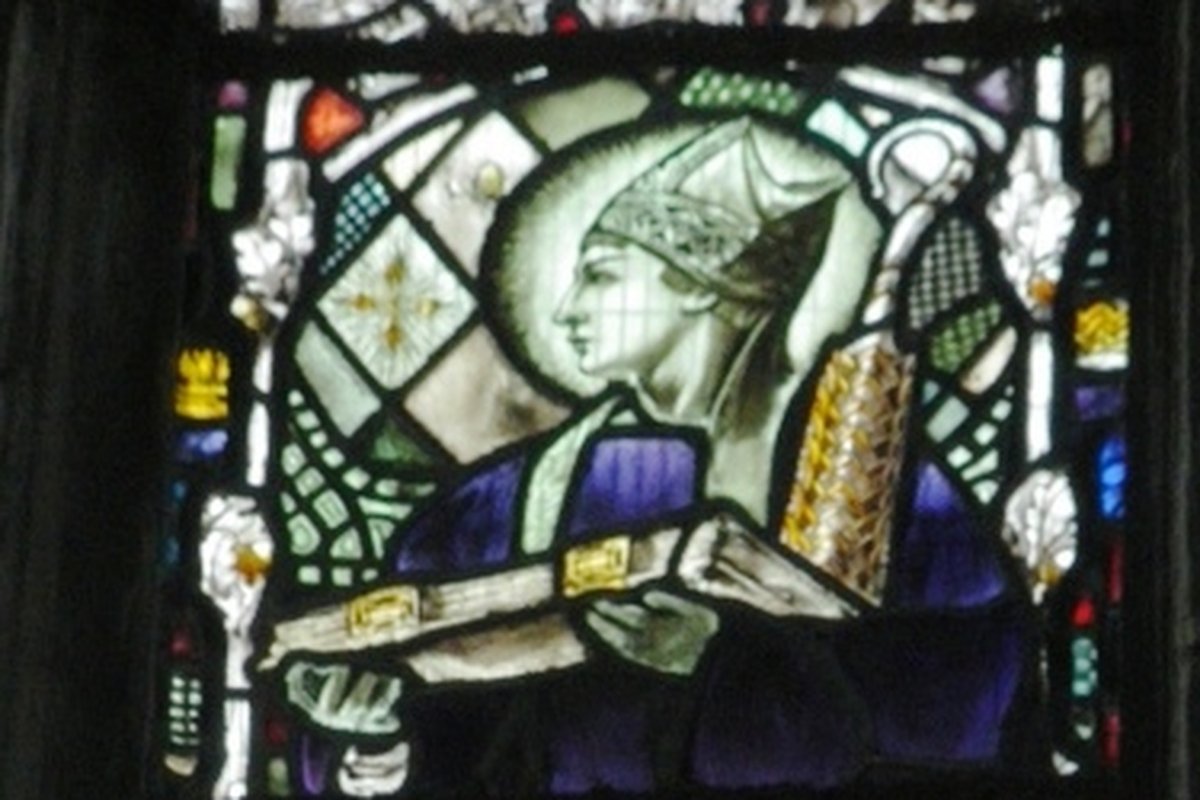
Saint Brendan the Navigator

An abbot of Ireland's golden monastic age
Brendan was born around 484 in Tralee, County Kerry, in Ireland, at a time when Irish monasticism was entering one of the richest periods in its history. He was fostered and educated under Saint Íte of Killeedy and is traditionally counted among the students of Finnian of Clonard, placing him inside the same close-knit network of teachers and monastic founders that produced so many of Ireland's early saints. He's remembered as one of the "Twelve Apostles of Ireland," a traditional grouping of Finnian's most prominent students, and over his life he founded churches and monastic communities at sites including Inchiquin and Inishglora.
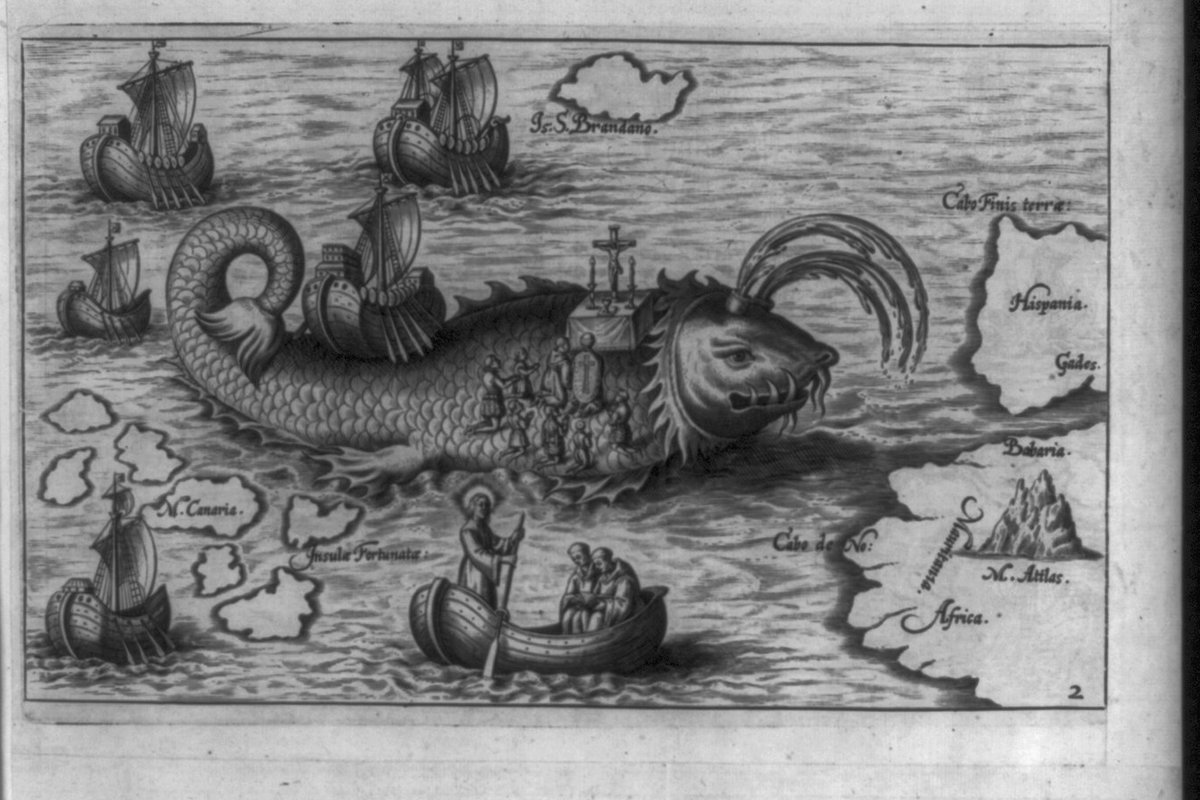
Engraving illustrating the legendary voyage of Saint Brendan, 1621, Library of Congress — public domain.
Clonfert, and thousands of monks
Brendan's most significant foundation was Clonfert Abbey, in County Galway, established sometime in the 6th century — sources place the date anywhere from around 557 to 563 — where he served as abbot for the rest of his life. By the time he died, the community at Clonfert had reportedly grown to house thousands of monks, making it one of the major centers of Irish monastic life in its era. Brendan died around 577 while visiting his sister Briga at Annaghdown, and was buried at Clonfert, the abbey that had become the center of his life's work. As with most saints of this period, he was never put through a formal papal canonization process; his veneration developed through popular and local devotion, the ordinary path to sainthood in the early medieval Church.
Ireland's monastic movement of this era was itself distinctive within the wider Church, organized less around the diocesan bishop-and-parish structure common on the European continent and more around powerful abbots governing sprawling monastic federations, sometimes spanning multiple sites and thousands of monks and lay dependents at once. Brendan's Clonfert fit squarely into that pattern, and his traditional grouping among the "Twelve Apostles of Ireland" reflects how tightly this first great generation of Irish monastic founders saw themselves, and were later remembered, as a single interconnected movement rather than isolated individual holy men.
The voyage that made him famous
None of that — the real founding, the real abbacy, the real community of thousands of monks — is what most people know Brendan for today. His fame rests almost entirely on the Navigatio Sancti Brendani Abbatis, an anonymous Irish voyage-tale in the immram genre, a category of Irish literature built around fantastical sea journeys. Its earliest surviving version dates from roughly the 9th or 10th century, well over three hundred years after Brendan actually lived, which places real distance between the historical abbot and the story that made him famous. By the Navigatio's account, Brendan and a small crew of monks set out in a curragh — a boat built from ox-hide stretched over a wooden frame — and spent seven years sailing the Atlantic in search of a "Promised Land of the Saints." Along the way they encounter crystal pillars rising from the sea, strange islands, and, in the story's best-known episode, a whale named Jasconius so large the crew mistakes its back for solid ground and lands on it to celebrate Easter Mass — until the island wakes up, submerges, and swims away with the monks scrambling for their boat.
Legend, not a travel log
It's worth being direct about what the Navigatio actually is: pious hagiographic literature written centuries after its subject's death, not a historical account of an actual voyage. No genuine writing of Brendan's own survives, and none of the dialogue or incident in the Navigatio comes from him — it's the literary composition of an anonymous later author working in a well-established genre of fantastical monk-voyage tales. The popular modern claim that Brendan reached North America before Columbus, or even before the Norse, doesn't rest on anything sturdier than that legendary text.
The immram genre the Navigatio belongs to had its own well-established conventions long before Brendan's story was attached to it — voyages to otherworldly islands, encounters with wonders that tested a traveler's faith, and journeys structured around the liturgical calendar, with major feasts like Easter and Christmas marking stages of the trip. Reading the Navigatio against that background makes its purpose clearer: it wasn't trying to record geography so much as to dramatize the monastic virtues of patience, faith, and endurance through a series of increasingly fantastic trials, using a real, respected abbot's name to anchor a story meant to instruct rather than to document. In 1976 and 1977, the explorer Tim Severin built a curragh to period-appropriate specifications and sailed it across the North Atlantic, successfully demonstrating that a voyage like the one described was physically possible in a boat Brendan's era could have built. That's a real and interesting piece of experimental archaeology — but it shows feasibility, not proof. Severin's voyage didn't establish that Brendan actually made the crossing, and it didn't identify any real place behind the Navigatio's crystal pillars or whale-island. The plausibility is worth noting; the history remains unproven.
Patron of sailors
Brendan's feast is kept on May 16. He's venerated today as patron of sailors, mariners, and travelers — a patronage that traces directly back to the Navigatio legend rather than to anything documented about his actual life as a 6th-century abbot — and, in some traditions, is invoked in connection with whales. He also remains patron of the Dioceses of Kerry and Clonfert, a quieter but better-documented legacy of the real man who built a monastery there and led it for decades before anyone had written a word about a talking whale.
Trivia
Who was Saint Brendan the Navigator?
Did Saint Brendan actually sail to America?
What is the Navigatio Sancti Brendani?
Was Brendan the Navigator ever formally canonized?
What is Saint Brendan the patron saint of, and when is his feast?
You May Also Like
Related Reading