Saint Casimir of Poland

A dynastic pawn, not a battlefield objector
Casimir was born on October 3, 1458, at Wawel Castle in Kraków, the third son — and second surviving son — of King Casimir IV Jagiellon, ruler of the sprawling union of Poland and Lithuania. His education was placed in the hands of Jan Długosz, one of the most serious historians of the age, and by all accounts the young prince absorbed it seriously: pious, disciplined, and unusually reserved for a royal court built on ambition and marriage politics.
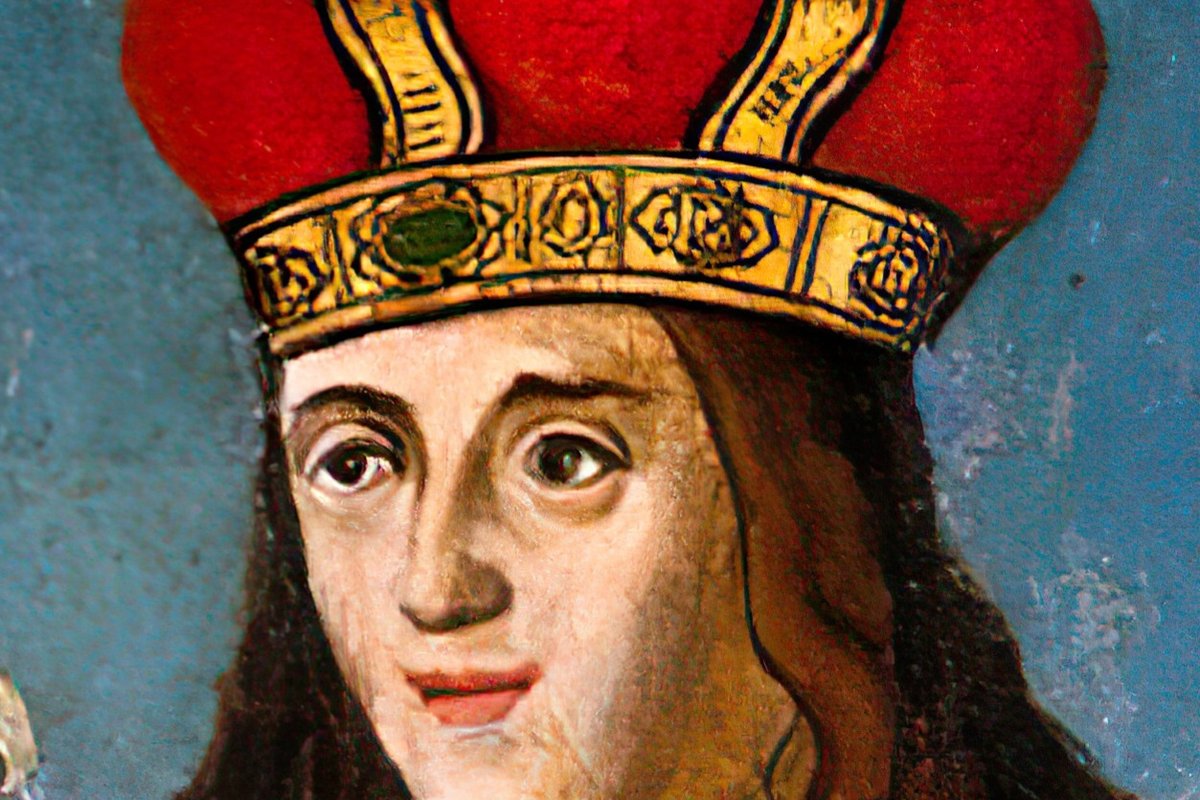
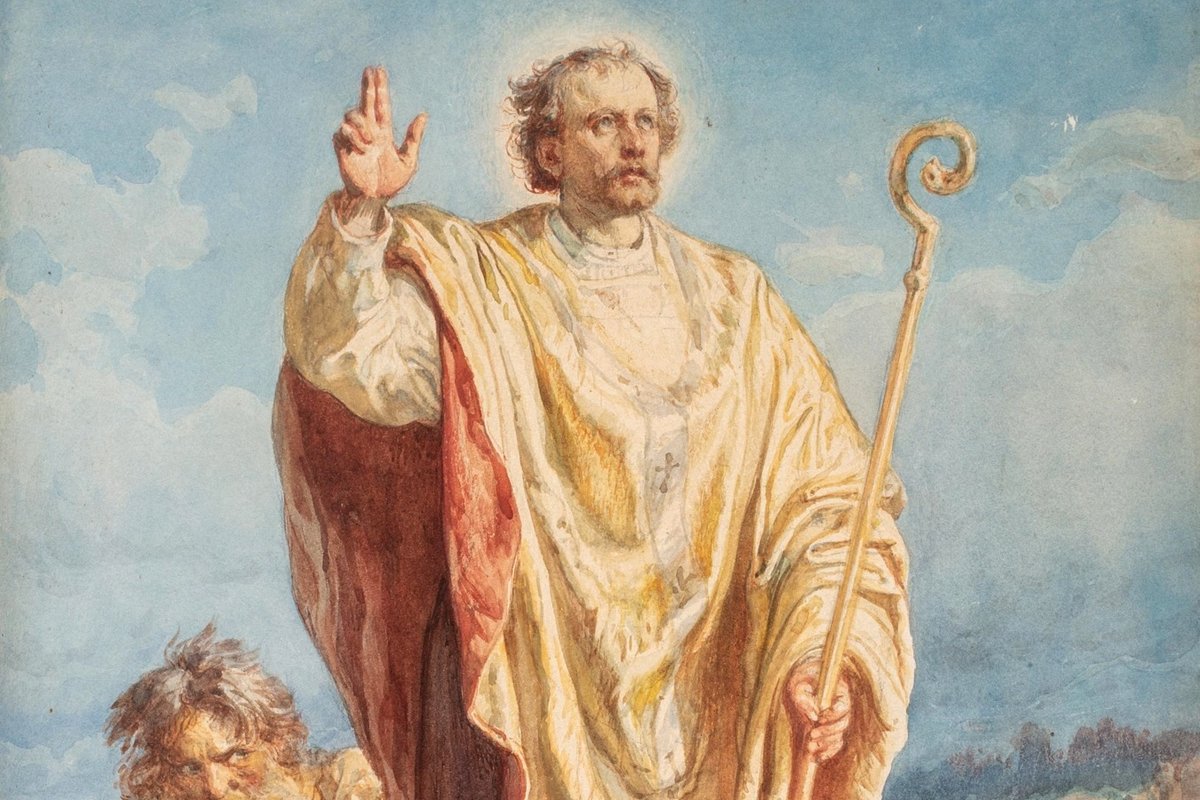
Unknown painter, Saint Casimir, 1594, St. Casimir's Chapel, Vilnius Cathedral — public domain.
None of that shielded him from being used as exactly what a royal court needed him to be. In 1471, Poland's nobles offered the crown of Hungary to Casimir's father in defiance of the sitting king, Matthias Corvinus. Casimir IV didn't go himself — he sent his thirteen-year-old son at the head of an invading army instead. It's worth being honest about what this was: a dynastic power play chosen entirely by the boy's father, not a cause the teenage prince championed on his own. The campaign never got the chance to prove itself one way or the other. Disease spread through the ranks, the treasury ran dry, and soldiers deserted faster than replacements could be found. The army dissolved before any real battle was fought, and Casimir rode home to a humiliation Długosz recorded in stark terms — "great sorrow and shame." He never commanded troops or took up arms again for the rest of his life.
Regent of Poland, and a marriage he refused
The Hungarian debacle didn't end Casimir's public role — it just redirected it. From 1481 to 1483, while his father was occupied with Lithuanian affairs, Casimir administered the Kingdom of Poland as regent, reportedly governing with a diligence and fairness that stood in visible contrast to his one military failure. It's the part of his biography historians treat as the most solidly documented: a young prince handling the routine, unglamorous work of government competently, without the drama that surrounds the rest of his story.
At some point a marriage was arranged for him with Kunigunde of Austria, daughter of the Holy Roman Emperor — precisely the kind of alliance royal sons were expected to accept without complaint. Casimir refused it, reportedly out of a preference for continence over the political convenience of the match. A line sometimes quoted alongside this refusal — "Better to die than commit sin" — has no traceable primary source behind it, and should be read as unverified pious tradition rather than a documented quote from Casimir himself. What is better attested is the pattern: a prince who had already been forced into one worldly ambition not his own, and who spent the years afterward declining every other one offered to him.
Death at twenty-five, and a hymn that probably isn't his
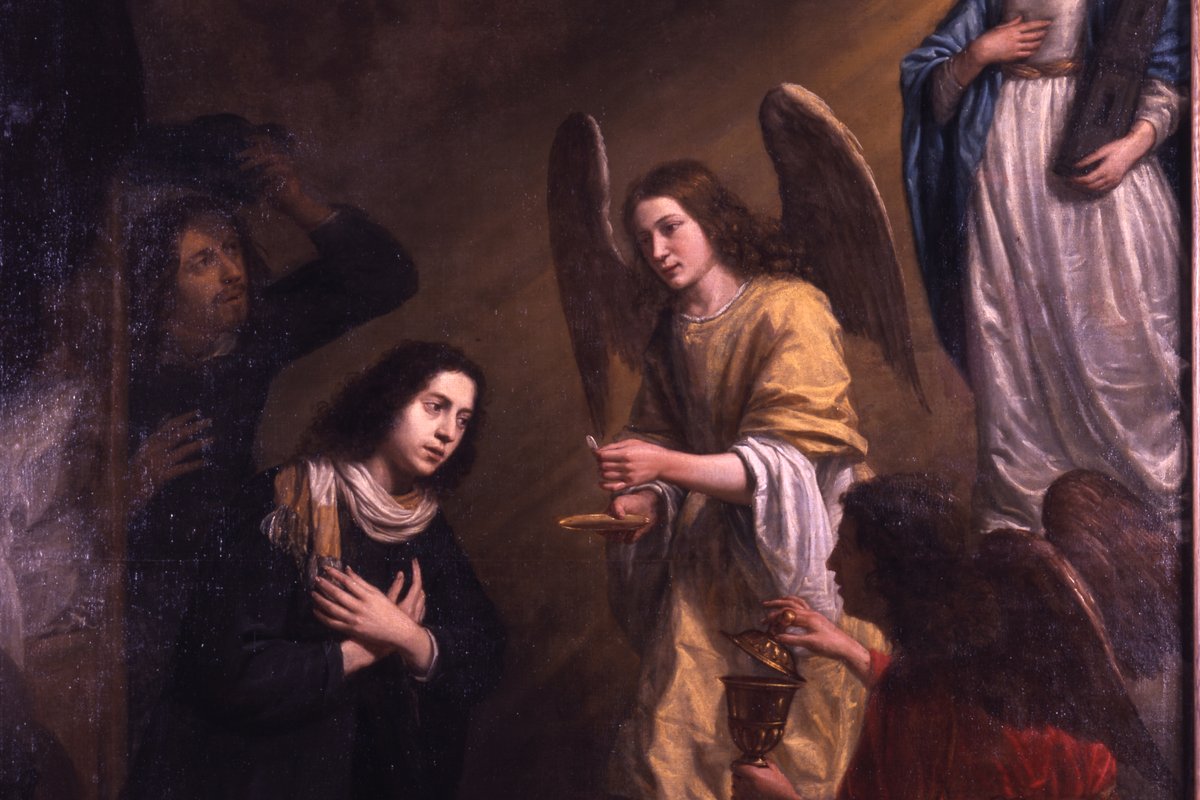
Casimir died on March 4, 1484, in Grodno, in the Grand Duchy of Lithuania, at just twenty-five — most likely of tuberculosis. Tradition holds that a copy of the Latin Marian hymn "Omni die dic Mariae" ("Daily, Daily Sing to Mary") was buried with him, and for centuries the hymn itself was attributed to Casimir. Modern scholarship attributes it instead to the earlier medieval writer Bernard of Cluny, active centuries before Casimir was born — a case worth flagging plainly as very likely pious legend rather than documented authorship, even though the hymn's association with his devotion endures in popular tradition.
A canonization the records themselves can't fully settle
Most saints' articles can state a canonization date cleanly. Casimir's genuinely can't be flattened that way, and it's worth explaining why rather than picking whichever date sounds most authoritative. His brother, King Sigismund I, petitioned Pope Leo X to open a canonization cause in 1514. A papal legate, Zacharias Ferreri, spent 1520–21 investigating Casimir's life and producing a hagiography of him. Leo X died in December 1521 — and no documentary bull confirming an actual canonization has survived from his pontificate, though modern historians note that losses from the catastrophic 1527 Sack of Rome could plausibly explain a missing record rather than prove one never existed. The 1913 Catholic Encyclopedia states that Pope Adrian VI formally canonized Casimir in 1522. Later, in 1602, Pope Clement VIII issued the brief "Quae ad sanctorum," authorizing and confirming Casimir's liturgical feast for Poland and Lithuania — an act modern scholars often treat as the effective completion of the canonization process, whatever happened or didn't happen eighty years earlier under Leo X and Adrian VI. The most honest summary is that Casimir's canonization was initiated in the early 1520s and confirmed by his successors over the following decades, with the precise documentary sequence still disputed by historians today.
Patron of Poland and Lithuania
Whatever the exact paperwork, Casimir's cult took hold quickly and durably. He's venerated today as patron of both Poland and Lithuania, and in 1948 he was specifically designated patron of Lithuanian youth — a modern addition to an already centuries-old devotion, and a fitting one for a young man remembered less for any single dramatic achievement than for a lifetime of quietly refusing the ambitions handed to him. His feast is kept on March 4, the date of his death at Grodno.
Trivia
Who was Saint Casimir of Poland?
Did Saint Casimir really try to invade Hungary as a teenager?
When was Saint Casimir canonized?
Did Saint Casimir write the hymn 'Daily, Daily Sing to Mary'?
What is Saint Casimir the patron saint of?
You May Also Like
Related Reading