Saint Euphrasia of Constantinople

A senator's daughter, orphaned young
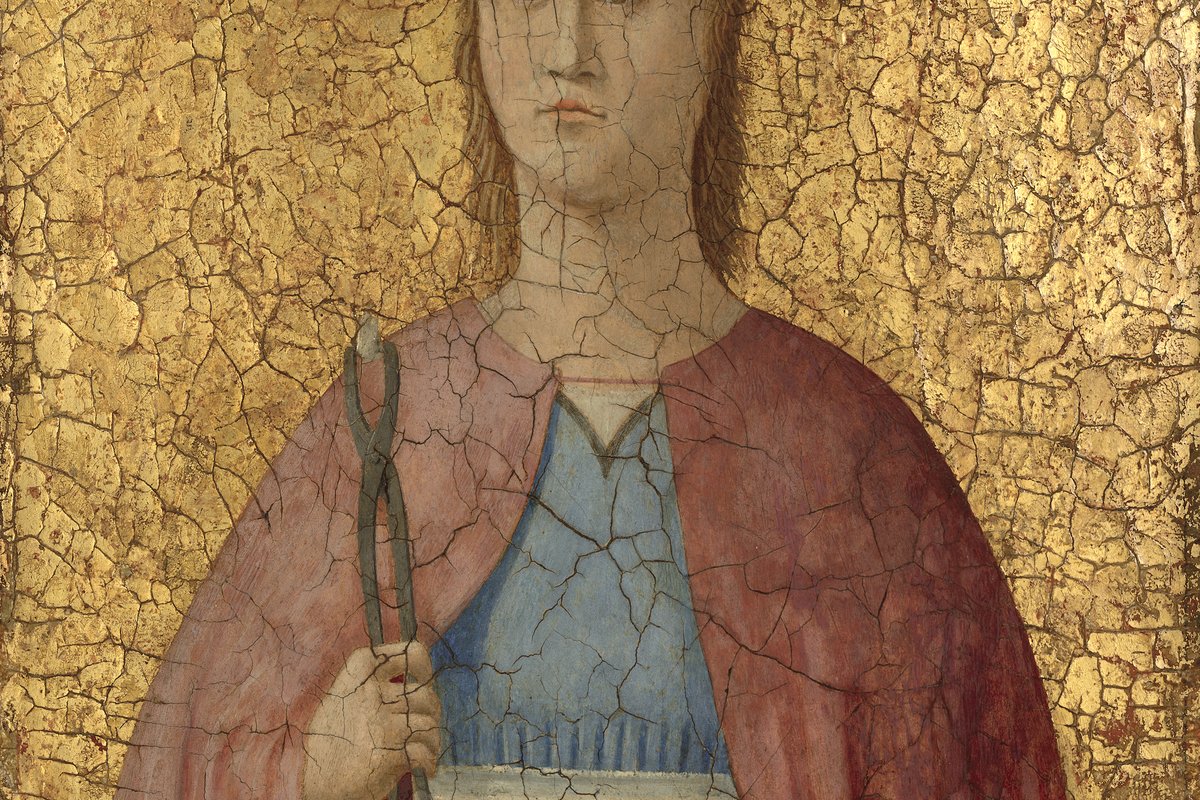
Euphrasia was born around 380 in Constantinople, into about as privileged a position as the late Roman world had to offer: her father, Antigonus, was a senator and a relative of the reigning emperor, Theodosius I. That privilege didn't last long in any ordinary sense — Antigonus died not long after her birth, leaving his widow to raise their daughter alone and leaving Euphrasia, from infancy, connected to imperial power she'd never asked for and would eventually walk away from entirely.
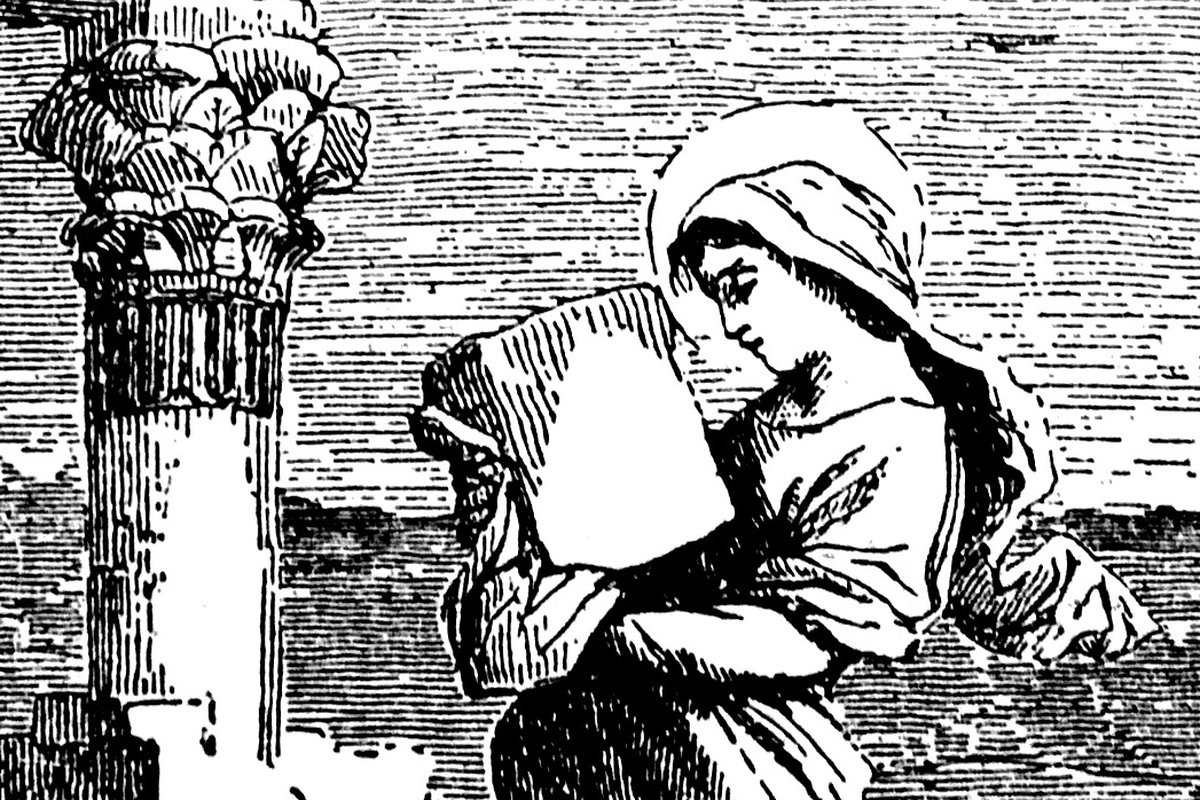
Unknown illustrator, engraving from "Little Pictorial Lives of the Saints," Benzinger Brothers, 1878 — public domain.
Her mother chose an unusual path for a woman of her rank: rather than remain in the political and social world of the capital, she took the young Euphrasia to Egypt and settled near a monastery of about 130 nuns living in the desert. It was there, according to the tradition surrounding her, that a seven-year-old girl who had technically already been promised in marriage by the imperial court asked to join the community instead. Her mother and the monastery agreed. A childhood that had been mapped out for her by other people's political calculations turned, instead, into a life she'd chosen herself before she was old enough to be trusted with much of anything else.
The Egyptian desert Euphrasia's mother chose wasn't an obscure backwater; by the late fourth century it was one of the most significant centers of Christian spiritual life anywhere in the empire. Decades earlier, figures like Saint Anthony the Great and Saint Pachomius had established the patterns of monastic life — solitary hermits on one model, organized communities living under a common rule on another — that drew thousands of men and women out of ordinary society and into the desert. The community of 130 nuns that took in the young Euphrasia followed the coenobitic pattern Pachomius had pioneered: women living, praying, and working together under shared discipline, rather than each pursuing solitude alone. It was, by the standards of the age, one of the most respected and well-established ways of life a Christian woman could choose, and Euphrasia grew up inside it not as an eccentric exception but as one member of a functioning, established institution.
Growing up in the desert
Euphrasia grew up inside that community, formed by the same discipline, prayer, and communal life as the women around her rather than by the court she'd been born into. The arranged marriage never disappeared from the record — it remained, on paper, a live obligation tied to her family's standing near the emperor — but it simply receded from the life she was actually living. When she came of age and the question could no longer be deferred, she made the choice explicit: she declined the marriage.
More strikingly, she also declined the fortune that came with her birth. Rather than claim her family's estate for herself, as she had every legal right to do, Euphrasia transferred the entire inheritance to imperial charitable use. It was not a quiet retreat from wealth she'd never really had — it was a specific, deliberate renunciation of money and status she was fully entitled to keep, made by a woman who had grown up with nothing to compare it to but a life of prayer in the Egyptian desert, and who apparently preferred that life anyway.
The gesture carried weight well beyond her own household. An estate connected to the imperial family, transferred instead to charitable use, would have represented real resources — land, income, and social capital that could otherwise have anchored Euphrasia firmly among Constantinople's ruling elite for the rest of her life. Giving it up wasn't a symbolic renunciation made from a position of already having nothing; it was a concrete choice to redirect genuine wealth toward the poor rather than toward her own comfort or standing, made by someone who had spent her whole life, by that point, learning from women who owned nothing at all.
Legend layered onto history
Later centuries added miracle stories to Euphrasia's biography, as they did for most saints remembered mainly through monastic tradition rather than independent historical record. Hagiographical accounts written well after her death describe her healing a child who could neither hear, speak, nor walk, and delivering a woman from possession. These stories come from devotional literature centuries removed from Euphrasia's actual lifetime, and belong to the realm of pious tradition rather than documented fact — worth knowing as part of how she's been remembered, but worth naming plainly for what they are rather than presenting as verified history alongside the more solidly attested facts of her birth, her childhood entry into monastic life, and her renunciation of marriage and inheritance.
Euphrasia is a pre-congregation saint, venerated since antiquity through the Roman Martyrology rather than through any modern formal canonization process with the kind of documented miracle investigation the Church now requires. Her feast is kept on March 13. No strongly established universal patronage has attached to her name over the centuries, and it's better to leave that gap honest than to invent one — her story stands well enough on its own, as an early and vivid example of the desert monasticism that shaped so much of how the early Church understood renunciation, prayer, and a life given over entirely to God. Readers curious about the wider monastic world that raised her may also want to read about Saint Pachomius the Great, whose rule for organized communal life shaped the very structure of the community that took Euphrasia in as a child.
Trivia
Who was Saint Euphrasia of Constantinople?
Why did Euphrasia join a monastery as a young child?
Did Euphrasia ever go through with her arranged marriage?
Are the miracle stories associated with Euphrasia historically documented?
When is Saint Euphrasia's feast day?
You May Also Like
Related Reading