Saint John of Avila

A converso family in a suspicious age
John of Ávila was born in 1499 in Almodóvar del Campo, in the Ciudad Real province of Spain, to Alfonso de Ávila and Catalina Xixón. His father's family descended from Jewish converts to Christianity — conversos, as they were known in Spain — a documented biographical fact worth stating plainly rather than glossing over, since 16th-century Spain was a society where converso ancestry drew real and often hostile scrutiny, even generations after a family's conversion. That John would go on to become one of the most trusted spiritual authorities of the Spanish Counter-Reformation, in that same social climate, is a genuinely notable fact about his life, not an incidental footnote.
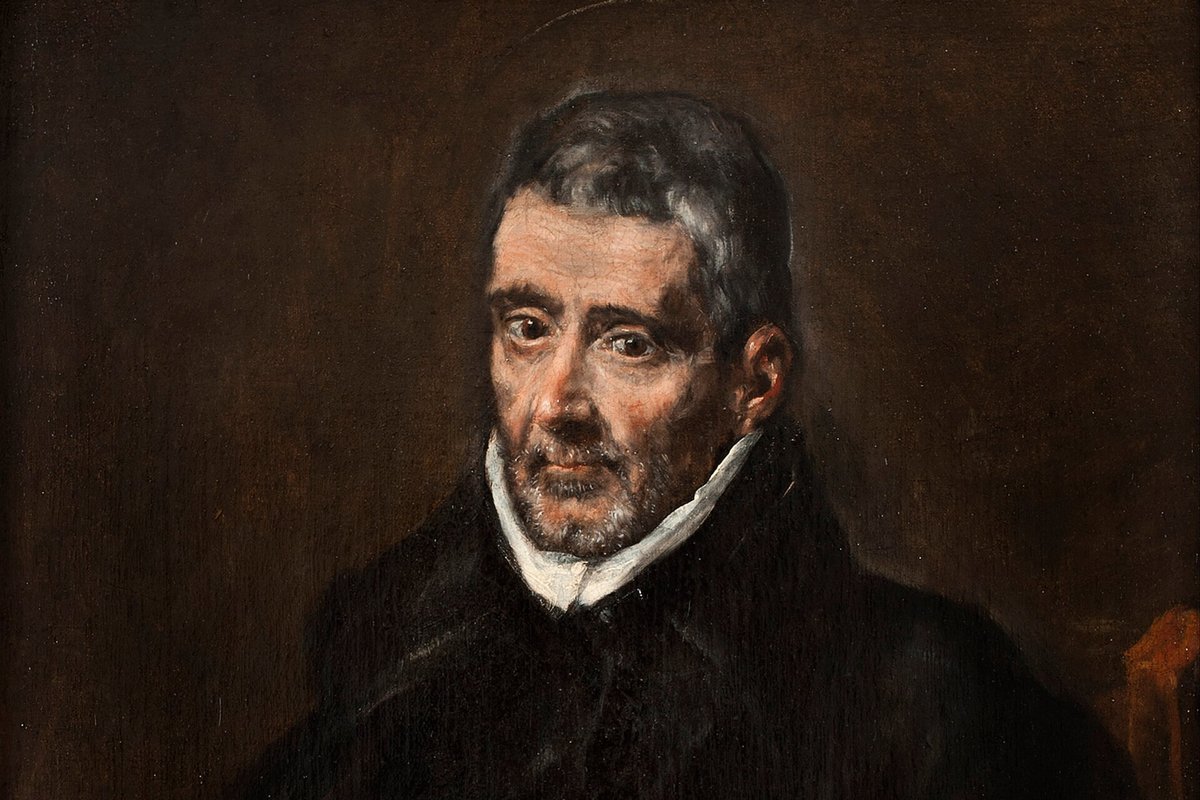
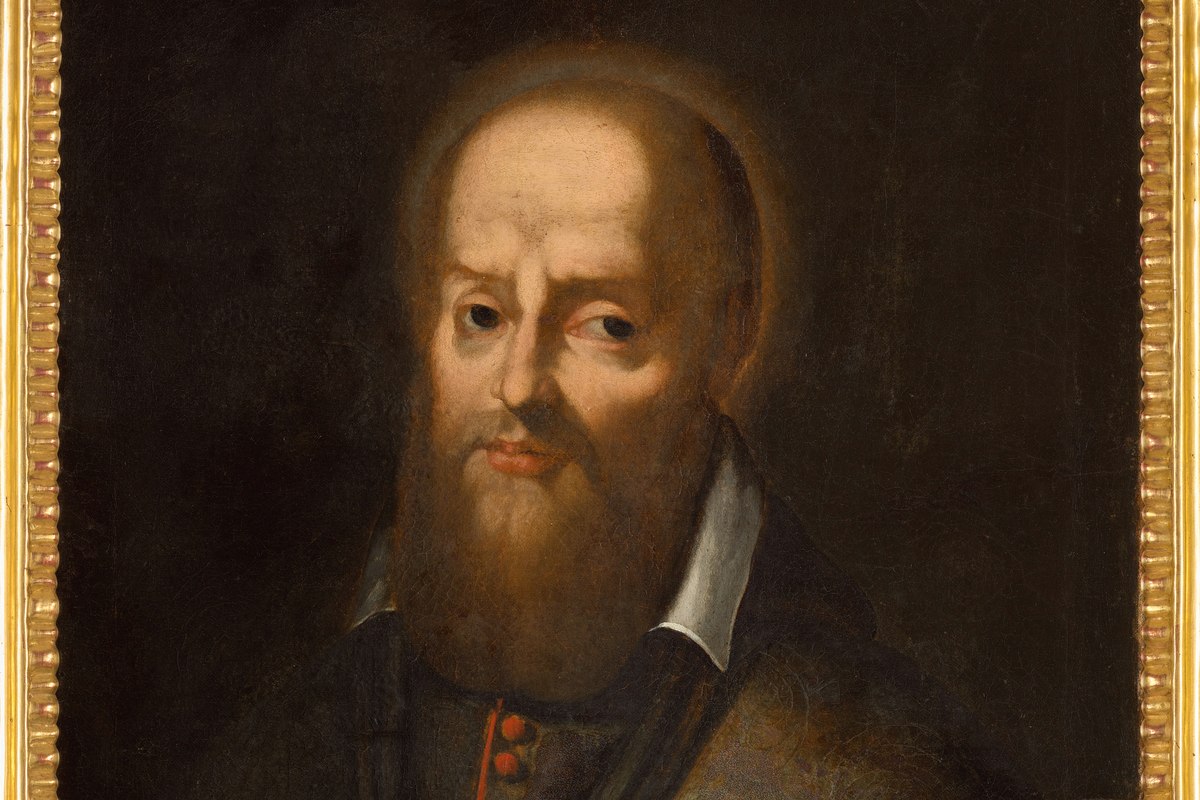
Workshop of El Greco, Portrait of Juan de Ávila, c. 1580 — public domain.
At fourteen, in 1513, John was sent to the University of Salamanca to study law, following the path his family expected of him. He withdrew in 1517 without completing a degree and returned home instead, where he spent the next three years living in unusually austere personal piety — a period that reads, in outline, like a young man quietly discerning a call his legal studies weren't answering.
That period of discernment eventually led him back to formal study, but of a very different kind. He enrolled at the University of Alcalá de Henares to study theology and philosophy under the Franciscan scholar Domingo de Soto, absorbing the more rigorous theological training that would later underpin his preaching and his writing. It was also around this time that he first considered becoming a Carthusian monk, drawn to the order's near-total silence and solitude — the same austere, cloistered life practiced by the order Bruno of Cologne had founded centuries earlier. A spiritual director convinced him instead that his gifts as a preacher and teacher were better spent in active ministry among ordinary believers, a decision that set him on the path to Andalusia rather than a monastery cell.
Ordination, and giving everything away
Both of John's parents died while he was still a student, before he had the chance to be ordained. After his ordination in the spring of 1526, he returned to celebrate his first Mass at the church where they were buried — a deliberate, personal choice to begin his priesthood at his parents' grave rather than anywhere more prominent. He then sold the family property he'd inherited and gave the proceeds to the poor, entering full-time ministry without the financial cushion his inheritance would otherwise have provided.
The Apostle of Andalusia
John spent the following decades building a reputation as one of the great preachers of the Spanish Counter-Reformation, earning the title "Apostle of Andalusia" for the extensive preaching and reform work he carried out across that region of southern Spain. His preaching drew crowds not just of ordinary laypeople but of clergy and nobility, and he used that influence to push, sometimes forcefully, for reforms he thought Spanish religious life badly needed: better-educated priests, seminaries capable of actually forming them, and stricter clerical discipline generally. Some of his ideas along these lines were later echoed in the decrees of the Council of Trent, the great Counter-Reformation council that reshaped Catholic practice across Europe, though John himself was too ill to attend in person and instead sent his recommendations in writing.
His preaching wasn't his only, or even his most historically significant, contribution, though — it was matched, and arguably outlasted, by his work as a spiritual director, carried out largely through personal correspondence.
Advising Ignatius of Loyola — and Teresa of Ávila
John corresponded actively with an extraordinary cross-section of Counter-Reformation Spain: bishops, consecrated religious, priests, and laypeople who wrote to him seeking spiritual guidance. Two of those correspondents were themselves headed for canonization. He exchanged letters with Ignatius of Loyola, the founder of the Jesuits, and with John of Ribera, another major reforming bishop of the period. Most striking of all is his documented relationship with Teresa of Ávila, who specifically sought John's counsel on her own spiritual writings — the very texts that would, centuries later, help establish her as a Doctor of the Church in her own right. It's a real, well-attested spiritual-direction relationship, not a later embellishment: one of the era's most influential mystical writers turned to John of Ávila for guidance on the writing that would define her legacy.
Canonized, then named a Doctor of the Church
John of Ávila died in 1569, revered as a preacher, reformer, and spiritual director. His most lasting written work, "Audi, Filia" ("Listen, O Daughter"), grew out of his correspondence and spiritual direction and circulated widely as a guide to prayer and interior life — the kind of practical, personally-tested spiritual writing that later made him a natural candidate for recognition as a Doctor of the Church, a title given only to saints whose teaching has shaped the wider Church's understanding of the faith.
Pope Paul VI canonized him on May 31, 1970, formally recognizing a sanctity his contemporaries had already sensed in the trust so many of them placed in him. More than four decades later, on October 7, 2012 — the Feast of the Holy Rosary — Pope Benedict XVI declared John a Doctor of the Church. He received the title in the same ceremony as Hildegard of Bingen, another towering spiritual writer honored the same day, bringing the total number of Doctors of the Church to thirty-five. His feast is kept on May 10, and he is venerated today as patron of Spanish diocesan clergy — a fitting patronage for a priest whose greatest legacy may be the guidance he gave, quietly and by letter, to the people who most needed it, including two saints, Teresa of Ávila and Ignatius of Loyola, whose own written legacies still shape Catholic spirituality today.
Trivia
Who was Saint John of Avila?
What is John of Avila's converso family background, and why does it matter?
Why did John of Avila sell his family's property?
Did John of Avila really advise Teresa of Ávila and Ignatius of Loyola?
Is Saint John of Avila a Doctor of the Church?
You May Also Like
Related Reading