Saint Francis de Sales

From law to the priesthood
Francis de Sales's early path pointed toward a legal career rather than a religious one. Born in 1567 near Annecy, he studied at the Jesuit college of Clermont in Paris before earning a doctorate in law at Padua, Italy, in 1591. Only after briefly practicing law did he turn toward religious life, ordained a priest in 1593 — a late start, relatively speaking, for a man who would go on to reshape Catholic devotional writing for the following three centuries.
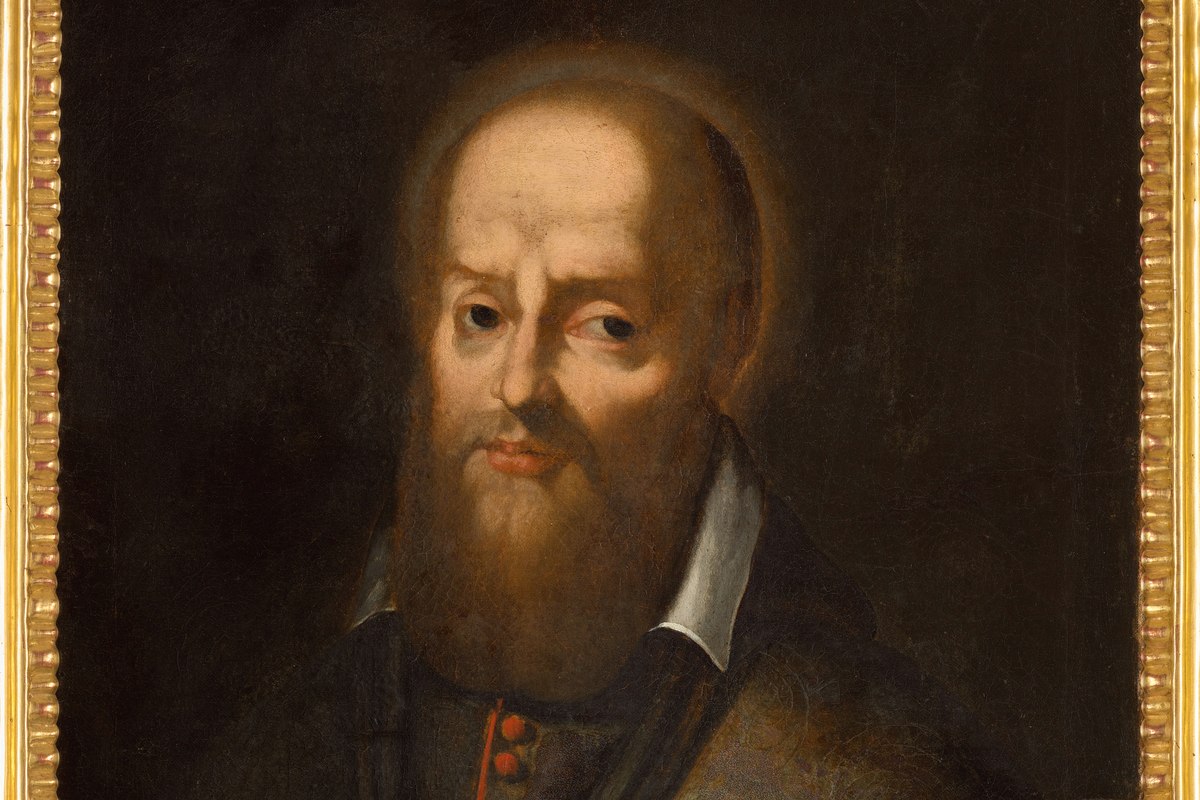
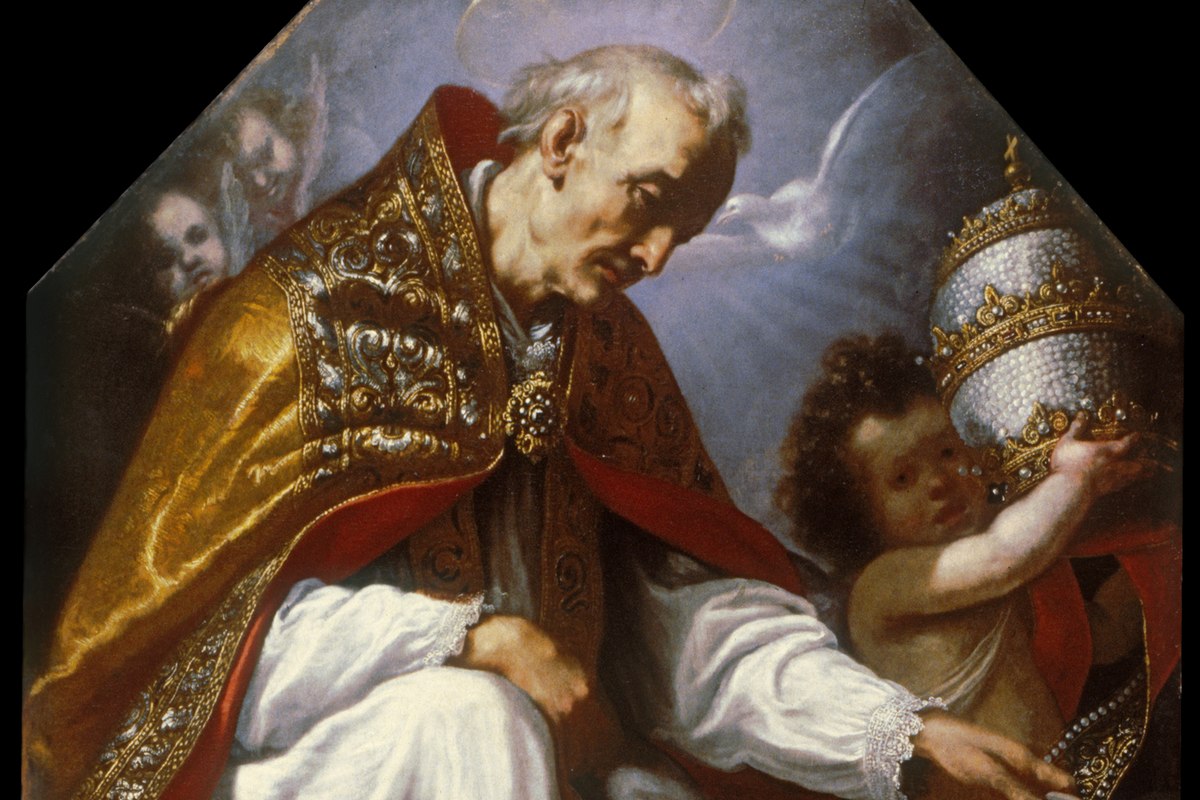
Portrait of Saint Francis de Sales, Château de Bussy-Rabutin — Licence Ouverte, photo by Benjamin Gavaudo.
His father had already arranged a prestigious marriage and a seat in the regional senate for him, fully expecting Francis to continue the family's tradition of civil service. Francis's decision to pursue ordination instead came only after a period of serious personal crisis as a student in Paris, when he became convinced, based on a misunderstanding of predestination he later resolved through prayer before a statue of the Virgin Mary at Saint-Étienne-des-Grès, that he might be condemned regardless of anything he did. That resolution left a lasting mark on his theology, which consistently emphasizes God's approachable, patient love rather than a distant or arbitrary judgment — a theme that runs through nearly everything he wrote afterward.
Tens of thousands won back during the Counter-Reformation
In 1602, at thirty-five, he was ordained Bishop of Geneva and devoted himself to a specific, difficult mission: winning the city's largely Protestant citizens back to the Catholic Church during the height of the Counter-Reformation. He's estimated to have converted around 70,000 Calvinists over the course of his lifetime — a scale of pastoral persuasion achieved not through force, but through the same patient, approachable teaching style that would later define his written work.
His actual episcopal seat, notably, wasn't in Geneva itself — the city had become a Protestant stronghold under Calvinist control decades earlier, forcing the Catholic bishop into exile in nearby Annecy, from where Francis administered the diocese for his entire tenure. His most intensive missionary work took place in the Chablais region south of Lake Geneva, where he spent years going door to door on foot, preaching to often hostile or indifferent audiences, and, when direct preaching failed to draw a hearing, writing and distributing printed pamphlets explaining Catholic teaching — leaflets he reportedly slipped under doors himself when no one would open them to him. That practical, persistent use of the printed word during his Chablais mission is the direct historical reason Pope Pius XI later named him patron of writers and journalists.
A private letter that became a public classic
That style reached its widest audience through Introduction to the Devout Life, published in 1608. The book had modest origins: it began as personal letters of spiritual direction written specifically to one woman, Madame de Charmoisy, never intended as a broadly published work at all. Yet it went on to become the single most widely circulated work of Catholic spirituality in the entire seventeenth century — a private correspondence that outgrew its original, narrow purpose almost entirely by accident.
Francis also formed a close spiritual partnership with Saint Jane Frances de Chantal, a widow he met in 1604 and guided for years as her spiritual director. Together, in 1610, they founded the Order of the Visitation of Holy Mary, a religious community distinctive for accepting women whose age or health would have excluded them from the stricter physical demands of other contemplative orders of the period — another expression of Francis's consistent instinct to widen the path to holiness rather than narrow it. His second major work, the Treatise on the Love of God, published in 1616, went further into the theological foundations behind his gentler, more accessible spirituality, exploring how divine love draws the human will freely rather than through fear or compulsion.
Holiness redefined for people who couldn't leave their lives behind
What made the book so influential was its central, then-unusual claim: that spiritual perfection wasn't reserved only for monks, nuns, and others who had formally withdrawn from ordinary society. Francis argued it was fully available to people busy with work, family, and the ordinary business of daily life — a democratizing vision of holiness that ran directly against the prevailing assumption of his era. Writing specifically for laypeople rather than clergy or religious, he offered practical, concrete guidance suited to ordinary circumstances — how to pray amid a busy household, how to approach one's work and social obligations with spiritual intention — rather than the more austere, monastery-derived instructions common in earlier devotional literature.
That same insight, recognized centuries later, led Pope Pius IX to declare him a Doctor of the Church in 1877, making him the first French-language writer ever given that title. His influence reaches into later Catholic spiritual movements as well — the 19th-century priest and founder Léon Dehon named an entire religious congregation partly in his honor, and Francis's central conviction, that ordinary life itself can be the setting for real holiness, anticipated by centuries the Second Vatican Council's own 20th-century emphasis on the universal call to holiness for all the faithful, not only for clergy and religious.
Trivia
What was Francis de Sales's role in the Counter-Reformation?
What is Introduction to the Devout Life?
What was distinctive about Francis de Sales's approach to holiness?
When was Francis de Sales declared a Doctor of the Church?
What is Saint Francis de Sales the patron saint of, and when is his feast day?
Related Reading