Saint Macrina the Elder

A family that shaped a century of theology
Macrina the Elder was born sometime before the year 270, most likely in or near Neocaesarea in the Roman province of Pontus, in what is now northern Turkey. Precise dates for her birth and death don't survive — she's generally reckoned to have died around 340 — but what does survive is remarkable in a different way: a documented chain of theological influence running directly through her and down three generations of one of the most consequential families in the history of Christian doctrine. Macrina studied under Gregory Thaumaturgus, a direct disciple of the great early theologian Origen, and she carried what she learned from him forward into her own family, teaching it to her children and, later, to her grandchildren. Among those grandchildren were Basil the Great, Gregory of Nyssa, Peter of Sebaste, and Macrina the Younger — collectively, alongside Basil's close friend Gregory of Nazianzus, the core of what later theology calls the Cappadocian Fathers, whose writing shaped the Church's understanding of the Trinity for centuries afterward.
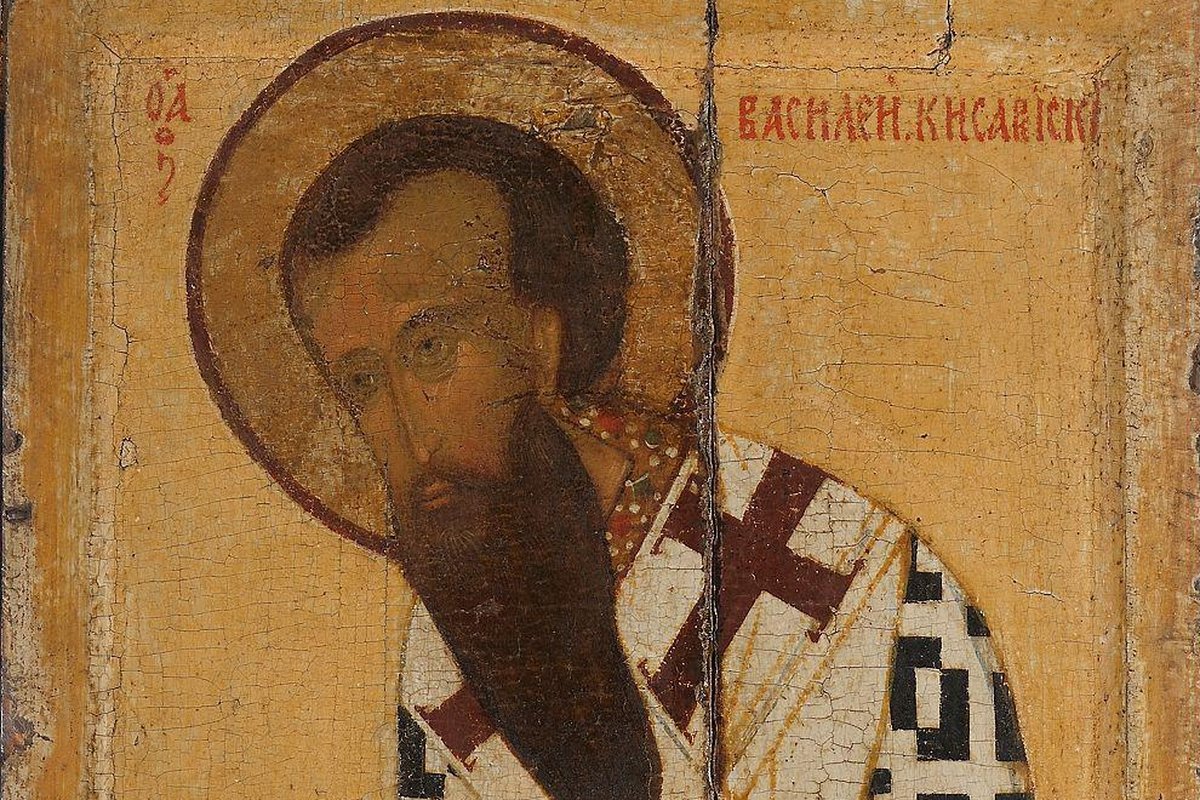
11th-century fresco of St. Macrina the Younger, Saint Sophia Cathedral, Kyiv (public domain) - used as a thematically representative image of the Cappadocian family monastic saints
Seven years in hiding
Before any of that family legacy could take shape, Macrina and her husband had to survive the empire trying to kill them for being Christian. During the Diocletianic persecution in the early 4th century — one of the most severe and systematic persecutions Christians faced under Roman rule — the couple fled Neocaesarea for remote wilderness along the Black Sea coast, rather than renounce their faith as imperial edicts demanded. They lived there in hiding for roughly seven years before it was safe enough to return home.
This part of Macrina's story isn't later hagiographical embellishment; it comes down to us through her grandson Basil the Great's own surviving letters, making it a reasonably solid piece of family history rather than pious legend grown up around a vague memory. The exact dates of the flight, like most details of Macrina's life, remain matters of scholarly inference rather than precise record — but the substance of the account, a family surviving years in hiding rather than abandon their faith, rests on testimony from someone who knew her personally and had every reason to get the basic facts right.
Teaching the boys who would become theologians
Macrina was eventually widowed, and by the time her grandchildren were growing up, she was doing something that mattered just as much as having survived persecution in the first place: she was personally teaching them the faith she'd nearly died defending. Basil the Great wrote about this directly, crediting his grandmother by name for shaping his early religious formation — not a vague nod to family piety, but a specific acknowledgment of a specific woman's direct instruction. Gregory of Nyssa, another of her grandsons, likewise recognized her influence on the family's theological direction.
It's worth pausing on what that actually means: a woman who had spent seven years hiding from a regime that wanted her dead for her faith lived long enough to sit her grandsons down and teach them that same faith directly, and those grandsons went on to become two of the most important theologians in the history of the Christian Church. Basil the Great became Bishop of Caesarea and one of the towering figures of 4th-century theology; Gregory of Nyssa became one of the era's most philosophically sophisticated defenders of Trinitarian doctrine. Both, by their own account, had their start in the faith at their grandmother's side.
A quiet legacy, honestly told
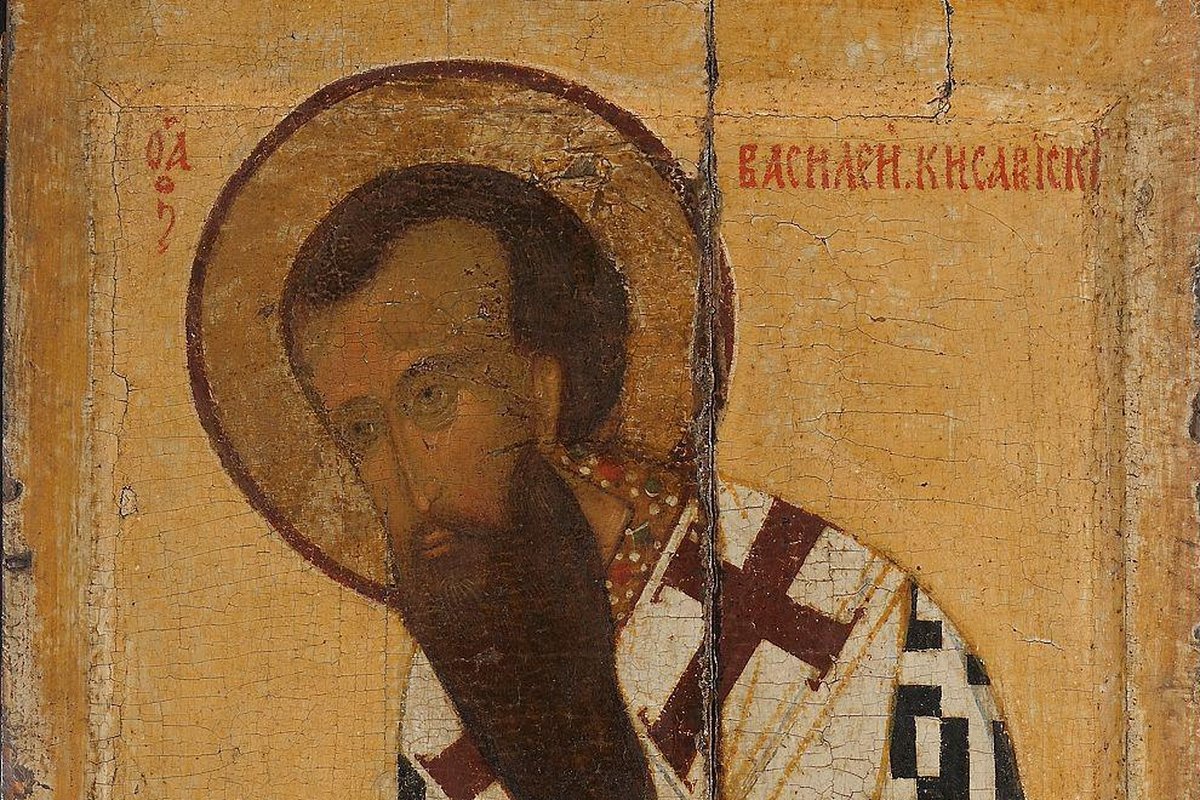
No direct quotations from Macrina the Elder's own words survive — everything known about her personality, her convictions, and her teaching comes filtered through Basil's testimony rather than through anything she wrote herself, which is why this account draws on what Basil said about her rather than putting words directly in her mouth. She's a pre-congregation saint, venerated since antiquity rather than through the Church's modern canonization process, and no image of her from her own lifetime survives — the closest visual connection to her that does survive is the iconography of the grandsons she raised, men whose faces have been painted and venerated in churches for over a thousand years partly because of the grandmother who taught them first.
Her feast is kept on January 14 in the Roman calendar, and on January 30 in the Byzantine calendar, where she's remembered alongside other members of her remarkable family. She's invoked, in a modest and largely folk devotional sense rather than through any grand formal decree, as a patron of widows and against poverty — a fittingly quiet patronage for a woman whose real legacy was never really about herself at all.
A family of saints, not just one
What makes Macrina the Elder unusual among early Christian women isn't only that she survived persecution and taught her grandsons well — it's that so many members of her family ended up honored as saints in their own right. Her son Basil the Elder and his wife Emmelia are venerated as saints, as are five of their ten children: Basil the Great, Gregory of Nyssa, Peter of Sebaste, Macrina the Younger, and Naucratius. Few families in Christian history can claim that density of recognized holiness across two generations, and Macrina the Elder sits at the root of it, the grandmother whose own choices under pressure set the family's direction long before any of her grandchildren were born.
Her granddaughter and namesake, Macrina the Younger, carried the family's spiritual intensity in a different direction, founding a monastic community and becoming, through her brother Gregory of Nyssa's writing, one of the best-documented women ascetics of the early Church. The two Macrinas are often confused in casual reference precisely because the elder's influence shows up so clearly in the younger's life — a grandmother's example, replicated a generation later in a granddaughter who never knew her.
That layered inheritance is really the heart of why Macrina the Elder still gets remembered at all. She left no writings, sat for no portrait, and built no institution with her name on it. What she left was a family that took the faith seriously enough to risk everything for it once, and then made sure the next generations understood why.
Trivia
Who was Saint Macrina the Elder?
What persecution did Macrina the Elder survive, and how do we know about it?
What theological tradition did Macrina the Elder pass down to her family?
Do any of Macrina the Elder's own words survive?
What is Saint Macrina the Elder the patron saint of, and when is her feast?
You May Also Like
Related Reading