Saint Norbert of Xanten

A courtier who paid someone else to pray
Norbert was born around 1080 or 1082 in Xanten, in the Rhineland region of the Holy Roman Empire, into a noble family with the connections to place him comfortably within the Church's upper ranks without much personal effort. He became a canon at St. Victor's in Xanten and, at the same time, a courtier attached to the imperial court of Emperor Henry V — a life of genuine ecclesiastical rank carried with essentially none of its spiritual seriousness. By most accounts, Norbert was wealthy and worldly enough in this period that he paid a substitute to say his daily prayers for him, treating his clerical office as a source of status rather than a vocation.
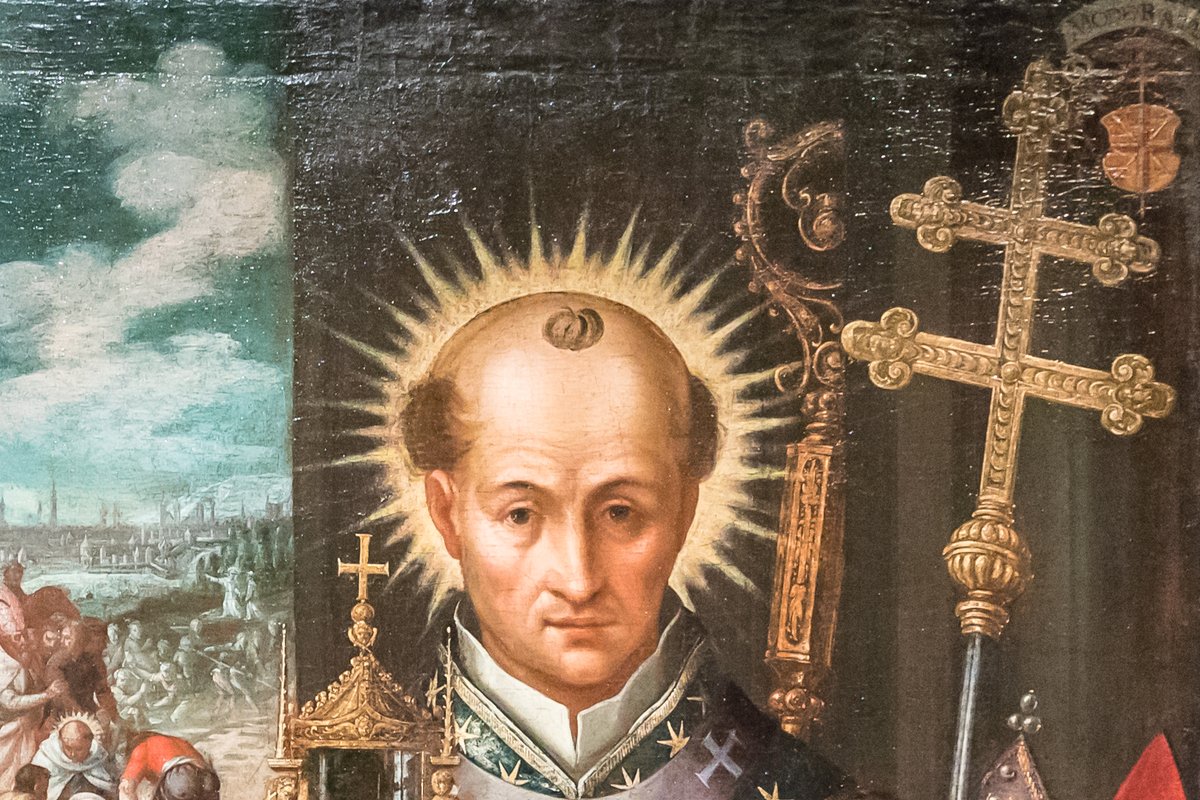
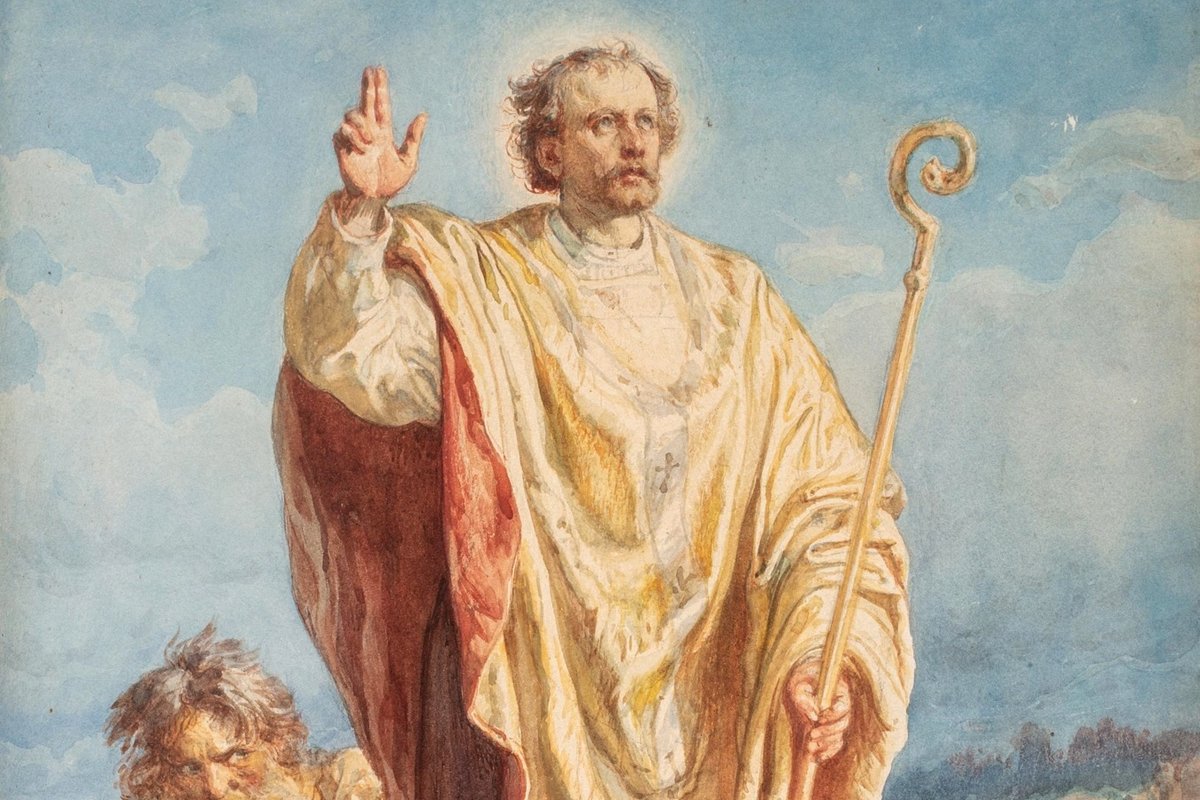
Jan de Hoey, Norbert von Xanten, early 17th century, Stiftsmuseum Xanten — public domain.
Struck by lightning near Vreden
That comfortable arrangement ended, according to tradition, in a single dramatic moment around 1115. Riding near Vreden, Norbert was thrown from his horse by a sudden lightning strike and lay as if dead for close to an hour before coming to. It's worth being direct about how this story should be read: the vivid specific details often attached to it — the exact words, the staged drama of the scene — were shaped by later hagiographers who deliberately modeled the account on Saul's conversion on the road to Damascus in Acts 9, a well-known scriptural template for sudden, dramatic conversion stories. That doesn't mean nothing happened. The underlying fact that Norbert experienced a sudden and radical conversion around 1115 is well documented and treated as solid history; it's specifically the dialogue and dramatic embellishment layered onto the moment that belongs to pious legend rather than a contemporary eyewitness account.
Whatever exactly happened near Vreden, the change in Norbert's life afterward was real and lasting. He sought and received papal permission from Pope Gelasius II to be ordained a priest, sold his properties, gave the proceeds to the poor, and became a barefoot itinerant preacher — about as complete a reversal as a wealthy courtier-canon could make.
Founding Prémontré
Norbert's preaching eventually gathered followers, and on Christmas Day, 1120, he formally founded the Canons Regular of Prémontré — known ever since as the Premonstratensians, or Norbertines — in the Prémontré valley near Laon, France. The community he built combined two traditions that didn't always sit easily together: the shared, active clerical life of canons serving the wider Church, and the strict interior discipline of monastic observance. It proved to be a durable model, and Premonstratensian communities spread across Europe within Norbert's own lifetime.
An archbishop who nearly got himself killed
In 1126, Norbert was made Archbishop of Magdeburg, and it's here that his story becomes genuinely complicated rather than simply inspiring. He pursued an aggressive program of reform in his diocese — enforcing clerical celibacy, cracking down on simony (the buying and selling of Church offices), and ending clerical absenteeism among canons who'd grown comfortable with exactly the kind of lax, self-serving arrangement Norbert himself had once lived under before his conversion. The resistance was fierce, and it wasn't merely rhetorical: Norbert survived at least two or three assassination plots organized by opponents from within his own cathedral chapter, and at one point was driven out of Magdeburg entirely by an armed mob.
It's worth resisting the temptation to flatten this into a simple story of a heroic reformer persecuted by corrupt clergy. Both things were true at once: the abuses Norbert targeted were real and well documented, and his uncompromising, no-negotiation style of imposing reform genuinely destabilized his diocese and nearly got him killed more than once. He also played a real diplomatic role beyond Magdeburg, helping negotiate the settlement of Church-State disputes at the Diet of Worms in 1122 — work that suggests a man capable of patient negotiation in some contexts and total inflexibility in others.
Facing down a heretic in Antwerp
Before Magdeburg, Norbert's itinerant preaching brought him into direct conflict with Tanchelm, a charismatic and disruptive preacher active in Antwerp whose followers had drifted into rejecting the authority of the clergy and, by some accounts, the sacraments themselves, including the Real Presence of Christ in the Eucharist. Norbert arrived in the city around 1124 at the invitation of local clergy struggling against Tanchelm's influence, and preached forcefully in defense of the Eucharist and the sacramental authority of ordained priests, work credited with substantially restoring order and orthodox practice in the city. That episode became closely tied to his later reputation and iconography — Norbert is frequently depicted in art holding a monstrance, the vessel used to display the consecrated host, a visual shorthand for his role defending Eucharistic belief against a popular heretical movement.
Canonization and a Bohemian afterlife
Norbert died in Magdeburg on June 6, 1134, and was originally buried there; his relics were later moved to Strahov Abbey in Prague, which is the direct source of his patronage of Bohemia today. Pope Gregory XIII canonized him in 1582, in the bull "Immensae Divinae Sapientiae altitudo" dated July 28, 1582, and his feast was extended to the universal Church calendar in 1672 under Pope Clement X. No verified direct quotation from Norbert survives from the conversion story — the line sometimes rendered as "Lord, what do you want me to do?" is a hagiographic echo of Acts 9:6 rather than a citable historical quote. His feast is kept on June 6, and he's remembered today as patron of Bohemia and of Magdeburg, and, given his negotiating role at Worms, is sometimes invoked in connection with peace and reconciliation between Church and state.
Trivia
Who was Saint Norbert of Xanten?
What happened during Norbert of Xanten's conversion?
What order did Saint Norbert of Xanten found?
Why did Norbert of Xanten's own clergy try to kill him?
When was Saint Norbert of Xanten canonized, and what is he the patron of?
You May Also Like
Related Reading