Saint Olympias of Constantinople

An enormous inheritance, and a brief marriage
Olympias was born around 360 to 365, most likely in Constantinople, into a family of high imperial rank — her father, Seleucus or Secundus depending on the source, held the title of "Count." She was orphaned relatively young, which left her heir to a substantial fortune, one of the largest held by any private individual in the Eastern Roman Empire at the time. In 384 or 385 she married Nebridius, the prefect of Constantinople, but the marriage was short-lived: she was widowed shortly afterward, remained childless, and — despite considerable social and even imperial pressure to remarry into more wealth and connections — refused every further proposal that came her way.
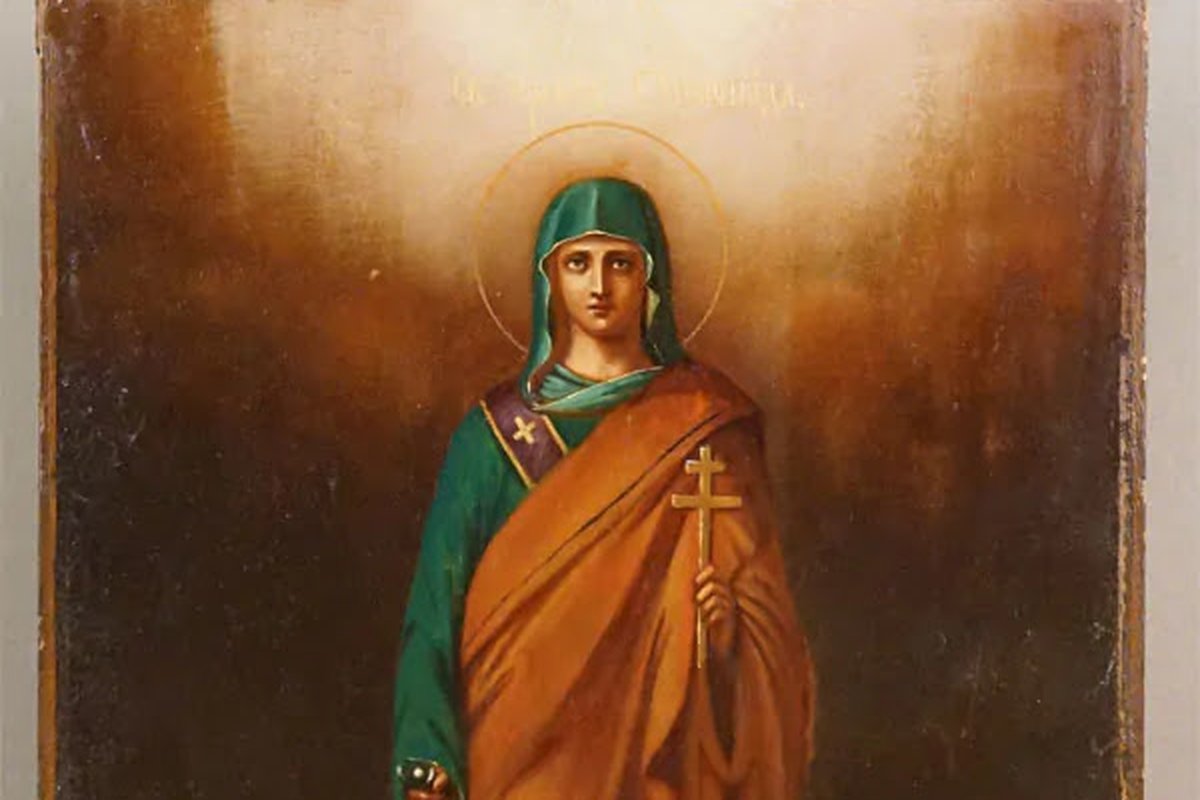
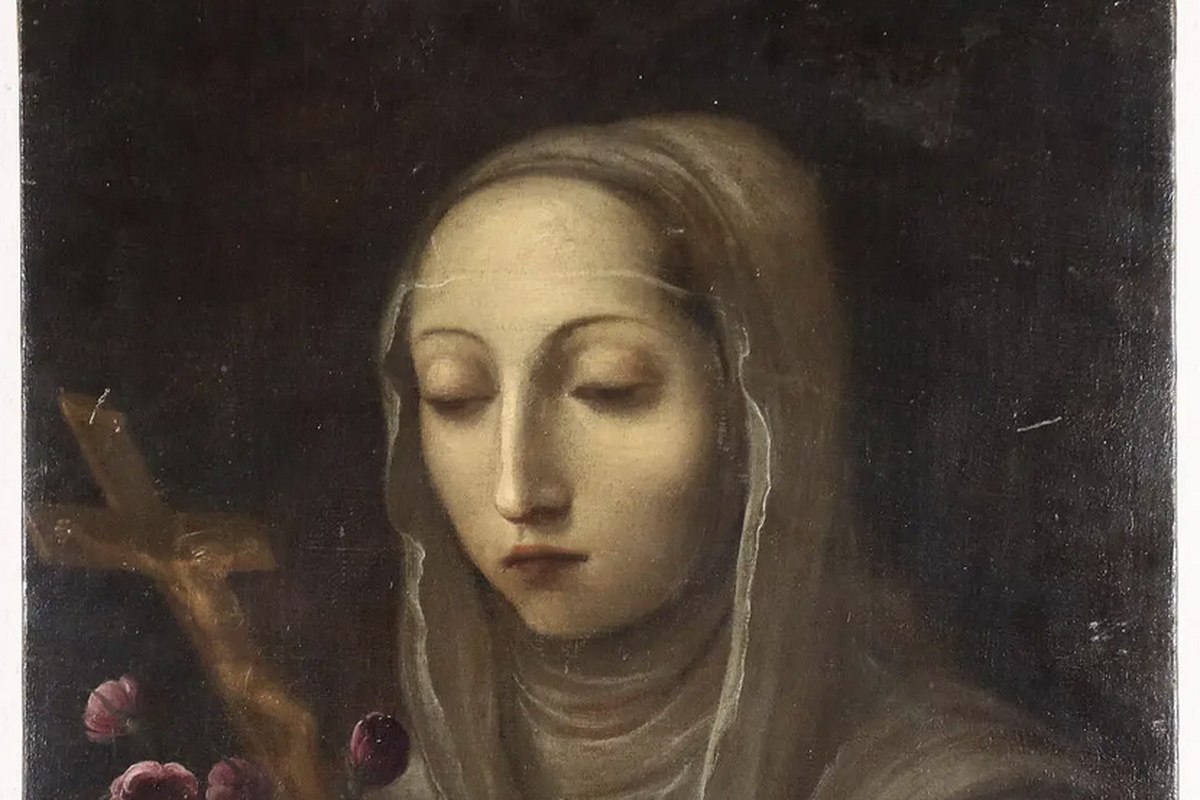
Icon of Saint Olympias the Deaconess, artist unknown, 19th–20th century — public domain.
An emperor steps into her finances
Olympias's refusal to remarry, combined with how quickly she was giving away her inheritance to churches and the poor, drew direct intervention from the highest level of imperial government. Emperor Theodosius I placed her estate under an appointed administrator, effectively taking control of her finances out of her own hands, apparently to slow the pace at which she was disposing of her wealth and to pressure her toward a more conventional remarriage. It didn't work as intended: Theodosius eventually restored her full control over her own property in 391. It's a genuinely striking, concrete historical detail — an emperor of Rome personally intervening in the financial decisions of one wealthy widow, and ultimately losing that particular contest.
Consecrated as a deaconess
Once back in control of her own fortune and her own choices, Olympias was consecrated as a deaconess by Nectarius, Bishop of Constantinople, who held that office from 381 to 397. It's worth pausing on what that title meant at the time: a deaconess in the early Church held a recognized, ordained-adjacent ministry distinct from the later model of religious sisterhood that would develop in subsequent centuries, typically involving responsibilities like assisting at the baptism of women and other forms of pastoral care that male clergy could not appropriately provide. Olympias went on to found a convent beside Constantinople's cathedral, gathering relatives and other women into a community dedicated to prayer and charitable work, funded in large part by her own continuing generosity.
Friend and patron to John Chrysostom
Everything changed, in terms of the record we have of her, after John Chrysostom became Bishop of Constantinople in 398. Olympias became his close friend, his financial patron, and by most accounts his spiritual disciple as well — a relationship that mattered enormously to Chrysostom's ability to carry out his reforming, sometimes confrontational ministry in the imperial capital. When Chrysostom was deposed and exiled in 404, largely as the result of court politics and his own uncompromising preaching against corruption among the powerful, Olympias did not distance herself from him for her own safety. She remained loyal, and she paid for it directly: she was herself persecuted and driven into exile as a consequence of her continued support for the disgraced bishop.
The clearest surviving evidence of their friendship is textual and substantial: seventeen letters from Chrysostom to Olympias survive, written during his exile, preserved in the Patrologia Graeca and available in English translation through collections such as the Nicene and Post-Nicene Fathers series. It's worth being precise about what that correspondence actually gives us — these are Chrysostom's words to her, offering comfort, encouragement, and theological reflection from exile; her letters to him, unfortunately, do not survive. Even so, seventeen surviving letters from a major Church Father to a single named laywoman is an unusually well-documented relationship for this period of Church history, and it anchors Olympias's story in primary-source material rather than later legend.
Exile, and death within a year of Chrysostom's own
Olympias died on July 25, 408, most likely at Nicomedia, still in exile for her loyalty to Chrysostom, who had himself died the year before, in 407. Their deaths, coming within roughly a year of each other, close out one of the more genuinely moving friendships to survive from the late antique Church — a bishop who wrote from exile to console the woman who'd once bankrolled his ministry, and a woman who lost her freedom rather than abandon him when the empire turned against him.
Olympias is a pre-congregation saint, venerated from antiquity, and her historical footing is unusually solid for a figure of her era: a 5th-century biography of her life exists, and the Chrysostom correspondence provides an established, scholarly primary source independent of any later hagiographical embellishment. Her feast is kept on December 17 in the Roman calendar and on July 25 — her date of death — in the Greek and Byzantine calendars. No strongly codified universal Roman patronage attaches formally to her name, though she's sometimes informally invoked as a patroness of deaconesses and of widows, a fitting, if unofficial, tribute to a life spent turning one of the largest private fortunes in the empire into support for the Church and the poor, right up until the empire itself turned against her for it.
Trivia
Who was Saint Olympias of Constantinople?
Why did Emperor Theodosius I intervene in Olympias's finances?
What was a deaconess in the early Church, and was Olympias one?
What was Olympias's relationship with John Chrysostom?
When is Saint Olympias's feast day, and what is she the patron of?
You May Also Like
Related Reading