Saint Rita of Cascia

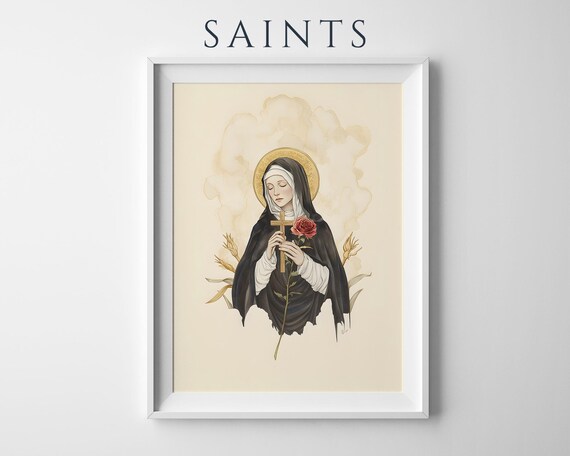
A childhood marked for the convent
Rita was born Margherita Ferri Lotti in 1381 in the small hill town of Roccaporena, near Cascia in central Italy, to parents who were already older and had, by tradition, prayed for years for a child. As a girl, she is said to have felt drawn toward the religious life and asked her parents to let her enter a convent, but Antonio and Amata Lotti, protective of their only daughter, arranged instead for her to marry a local man named Paolo Mancini while she was still in her teens — a common practice in an era when parents, not children, generally decided such matters.
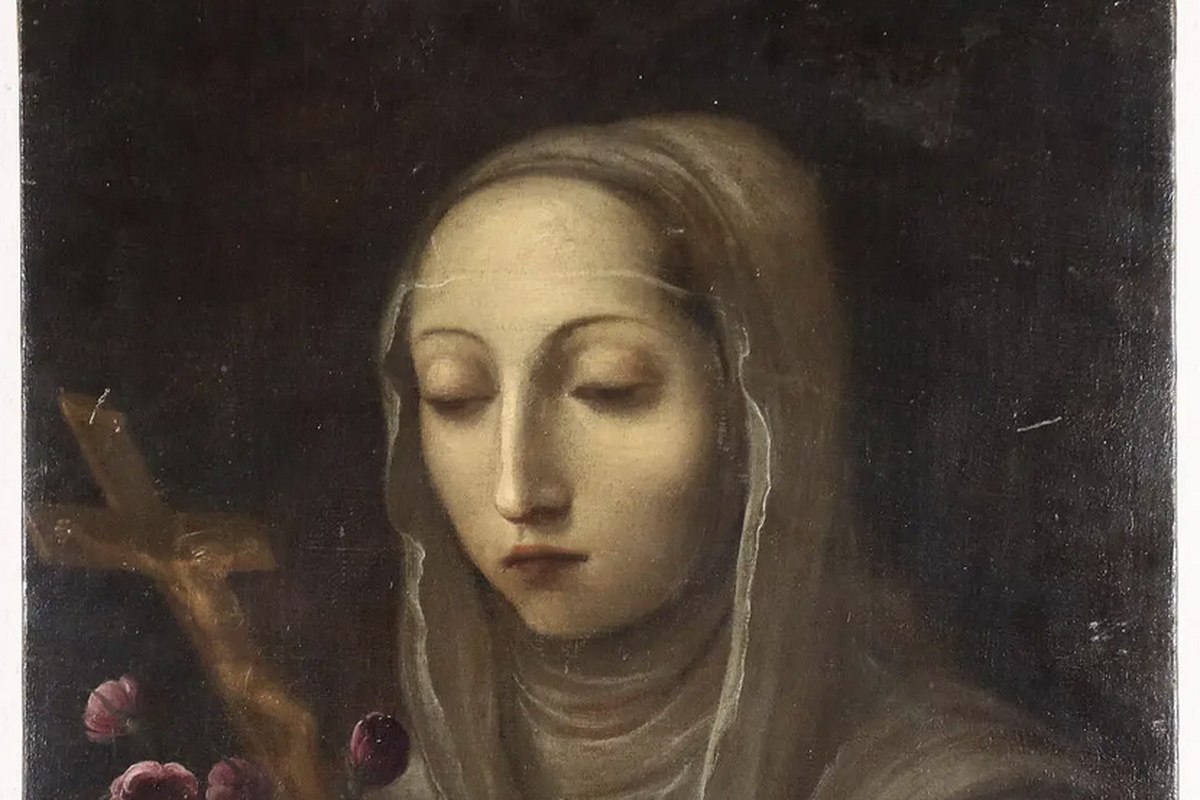
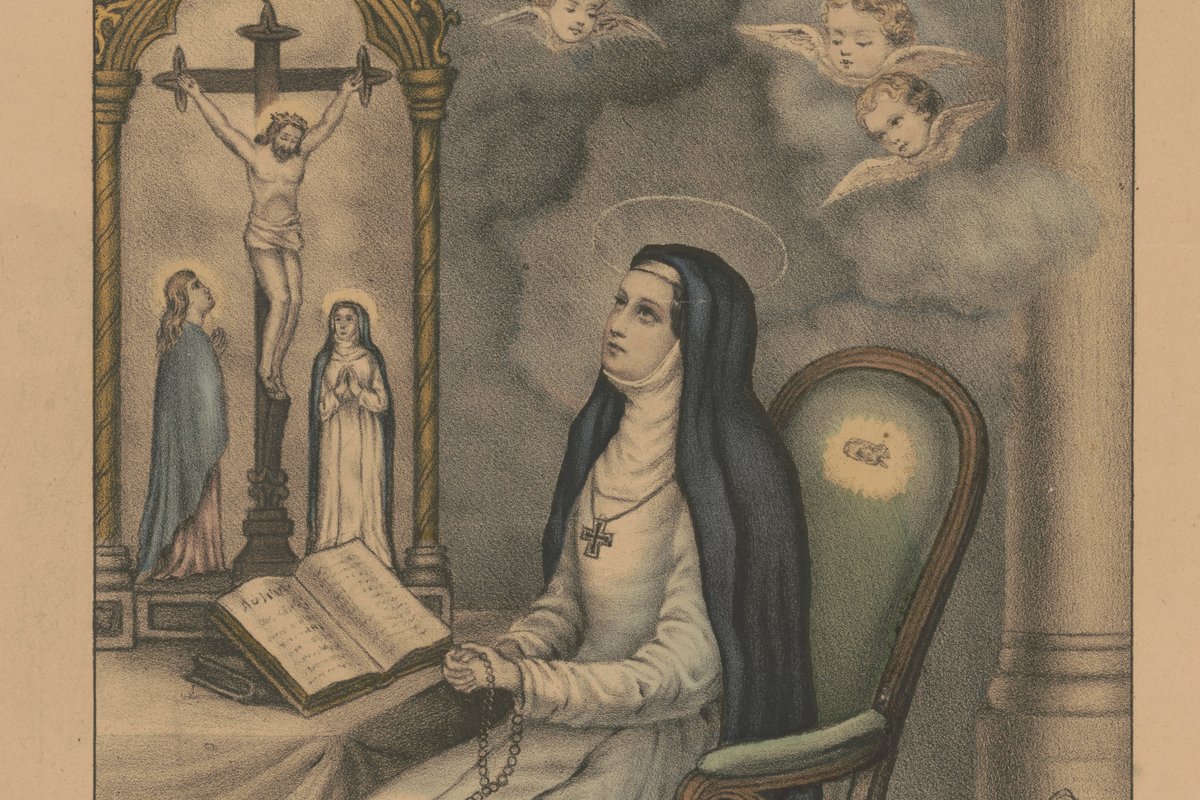
Traditional depiction of Saint Rita of Cascia, public domain.
A difficult marriage, then widowed and childless within a year
Paolo Mancini had a reputation for a quick temper and was reportedly involved in the violent feuding common among Umbrian families of the time. By most accounts, Rita spent nearly two decades gradually softening his behavior through patience, and the couple had two sons, Giangiacomo Antonio and Paolo Maria. That fragile peace ended when Paolo was ambushed and murdered, likely in retaliation for a feud he himself had been drawn into. Rita, fearing her sons would seek violent revenge and be drawn into the same cycle that had killed their father, prayed that they would be spared from committing that sin — and within a year, both boys died of a serious illness, leaving her without husband or children at all.
Entry into religious life, decades in the making
At thirty-six, Rita finally sought to enter the Augustinian convent of Saint Mary Magdalene in Cascia, the community she had long been acquainted with and had been baptized near. Tradition holds the nuns turned her away at first, since the convent's rule accepted only women who had never married, and a widow who had been drawn into a family blood feud, however unwillingly, did not fit that mold easily. Only after years of persistence, and — according to popular tradition rather than any documented Church record — a night in which she was said to have been miraculously carried into the locked convent, was she finally received. Over the following four decades of monastic life, she devoted herself to prayer, penance, and fasting, while also regularly going out to serve the poor and the sick of the town, much as Saint Elizabeth of Hungary had combined a life of penance with direct care for the poor a century earlier.
A wound that mirrored Christ's own crown
When Rita was around sixty years old, she was meditating before an image of Christ crucified when a small wound suddenly appeared on her forehead, as though a thorn from his crown of thorns had loosened itself and pierced her own flesh. Considered a partial stigma — a physical mark echoing Christ's wounds, distinct from the full stigmata reported in saints like Padre Pio — she bore this wound, which reportedly gave off a foul odor and kept her apart from the other nuns at times, for the remainder of her life. She died of tuberculosis on May 22, 1457, having spent her final years largely confined to her cell.
Patroness of impossible causes
Pope Leo XIII canonized Rita on May 24, 1900, bestowing on her at that ceremony the title "Patroness of Impossible Causes" — a title that traces directly back to a life defined by losses that seemed, at each turn, impossible to bear: a broken marriage mended, sons lost to illness rather than to vengeance, entry into a convent that had firmly closed its doors to her. Augustinians have kept her body, reported by the community to be remarkably well-preserved, in a glass-sided reliquary at the Basilica of Santa Rita in Cascia, where it remains venerated today. Devotion to her has spread widely among Catholics facing hopeless situations — grave illness, broken marriages, family estrangement — who find in her story a saint who understood loss from the inside.
Roses, bees, and a hometown that still bears her mark
Rita's feast day, May 22, is marked in many parishes by the blessing of roses, a tradition tied to a story that as a dying woman she asked a relative to bring her a rose from the garden at her old family home in Roccaporena — in the dead of winter, when nothing should have been blooming, a single rose was reportedly found flowering there. A separate strand of local legend from Roccaporena holds that as an infant, a swarm of bees was found gathered gently around her cradle without harming her, an image later taken as an early sign of the extraordinary life to come; it is treated as folk tradition from her hometown rather than a documented event. Roccaporena itself remains a modest pilgrimage site today, considerably smaller than the basilica in Cascia but still visited by those retracing the arc of her life from a hillside village to sainthood recognized worldwide.
Trivia
Who was Saint Rita of Cascia?
What happened to her family?
What is the story of the wound on her forehead?
When was she canonized?
Related Reading