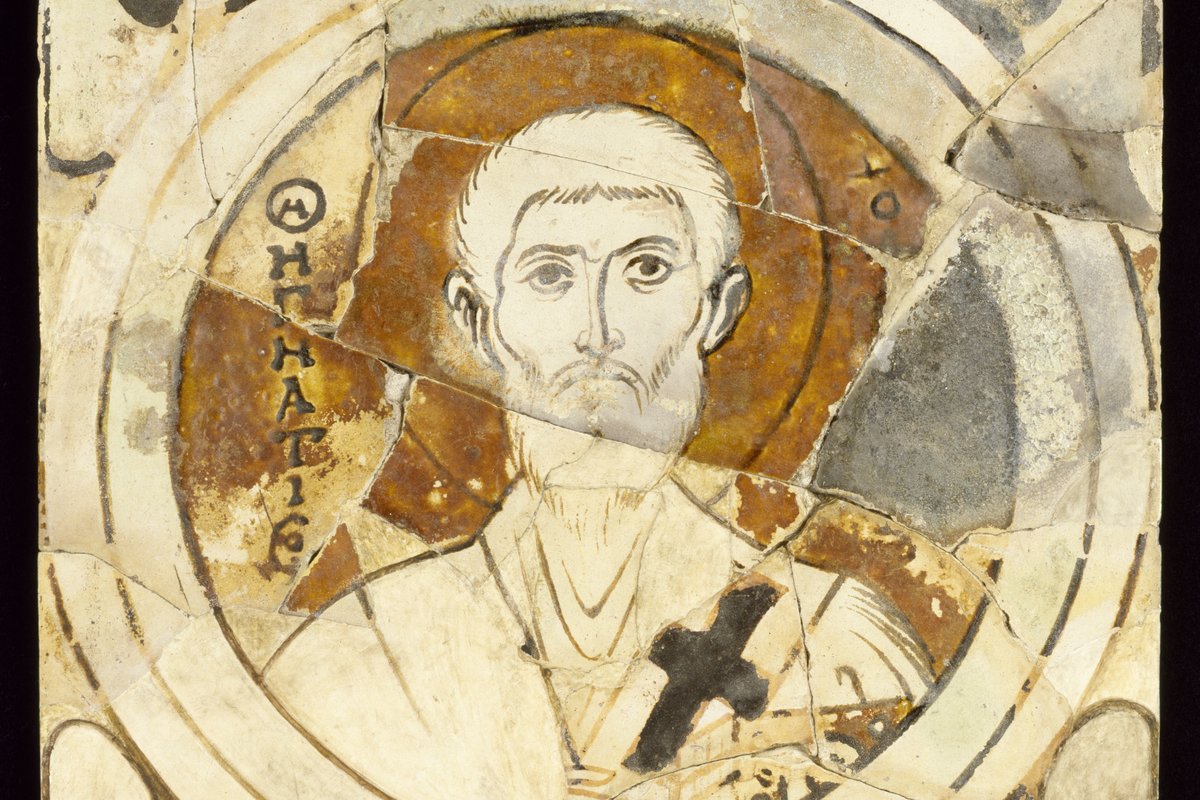
Saints Perpetua and Felicity

The strongest-documented story in the early Church's martyr record
Before anything else, it's worth saying plainly: the story of Perpetua and Felicity rests on some of the best historical footing of any martyrdom account from Christian antiquity. The surviving text, known as "The Passion of Saints Perpetua and Felicity," was assembled by an editor — possibly an eyewitness to the executions, and sometimes speculatively linked to the North African theologian Tertullian, though that attribution is unproven — who framed the account with a description of the deaths themselves. But the heart of the document, a substantial central section, is widely believed by scholars to be something far rarer: Perpetua's own prison diary, written in the first person, in her own voice, while she was still alive and waiting for her execution. That makes her one of the earliest Christian women whose own writing has survived to the present day, in a period where almost everything we know about other early martyrs comes through much later, secondhand retelling.
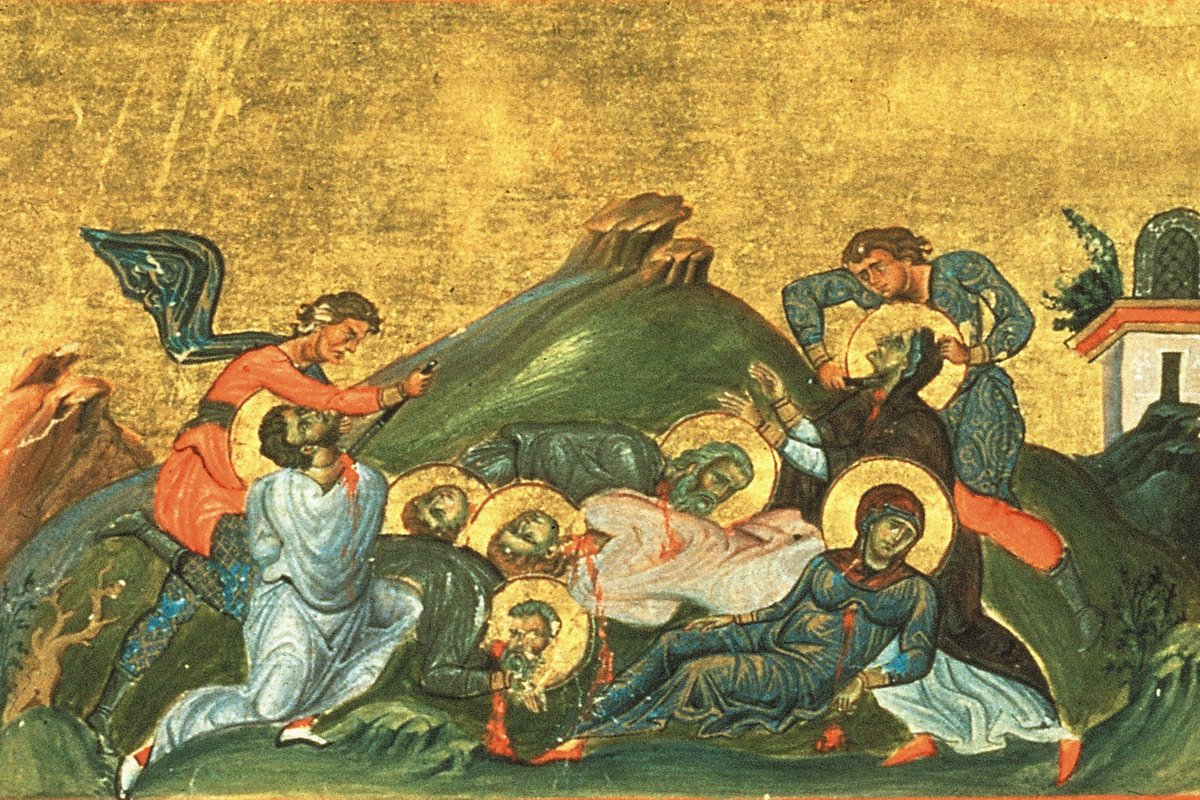
Menologion of Basil II, Perpetua, Felicitas, Revocatus, Saturninus and Secundulus, c. 985 AD, Vatican Library (Vat. gr. 1613) — public domain.
Two women, two very different lives, one prison cell
Vibia Perpetua was twenty-two years old, married, a Roman noblewoman, and still nursing her infant son when she was arrested at Carthage in Roman North Africa, in the province that is now Tunisia. Felicity, imprisoned alongside her, was enslaved and eight months pregnant. Both were catechumens — new converts preparing for baptism — swept up under Emperor Septimius Severus's persecution of Christians in 203 AD. Their backgrounds could hardly have been more different: one a citizen of considerable social standing, the other legally the property of another person. Prison erased the distance between them. They were tried, sentenced, and executed together, alongside several companions, as members of the same condemned group.
Perpetua's diary describes the visions she experienced in prison and her repeated confrontations with her own father, a pagan who came to her again and again, begging her to recant for the sake of her infant son and to spare the family the shame of her execution. In one exchange she records, he pressed her to explain how she could keep calling herself a Christian when it would cost her everything. She pointed to a water vessel nearby and asked him, "Can it be called by any other name than what it is?" He answered no. "Neither can I call myself anything else than what I am, a Christian," she said. At her formal interrogation before the Roman procurator Hilarianus, the exchange was even more direct: he asked her, "Are you a Christian?" and she replied simply, "I am a Christian."
Felicity's choice
Roman law prohibited executing a pregnant woman, which meant Felicity, eight months along when she was arrested, initially faced being separated from the rest of the group and held back to be martyred alone, later, after her child was born — a prospect that distressed her more than the execution itself, since it meant facing death without her companions. She gave birth prematurely in prison, shortly before the group's scheduled execution date, specifically so that she wouldn't be separated from Perpetua and the others. According to the account, when a prison guard mocked her during a difficult labor, asking what she would do when she faced the wild beasts in the arena if she was already crying out this much over childbirth, she answered him directly: "Now it is I that suffer what I suffer; but then there will be another in me, who will suffer for me, because I also am about to suffer for Him." Her newborn daughter was taken in and raised by a fellow Christian woman.
Death in the amphitheater, and a place in the Mass ever since
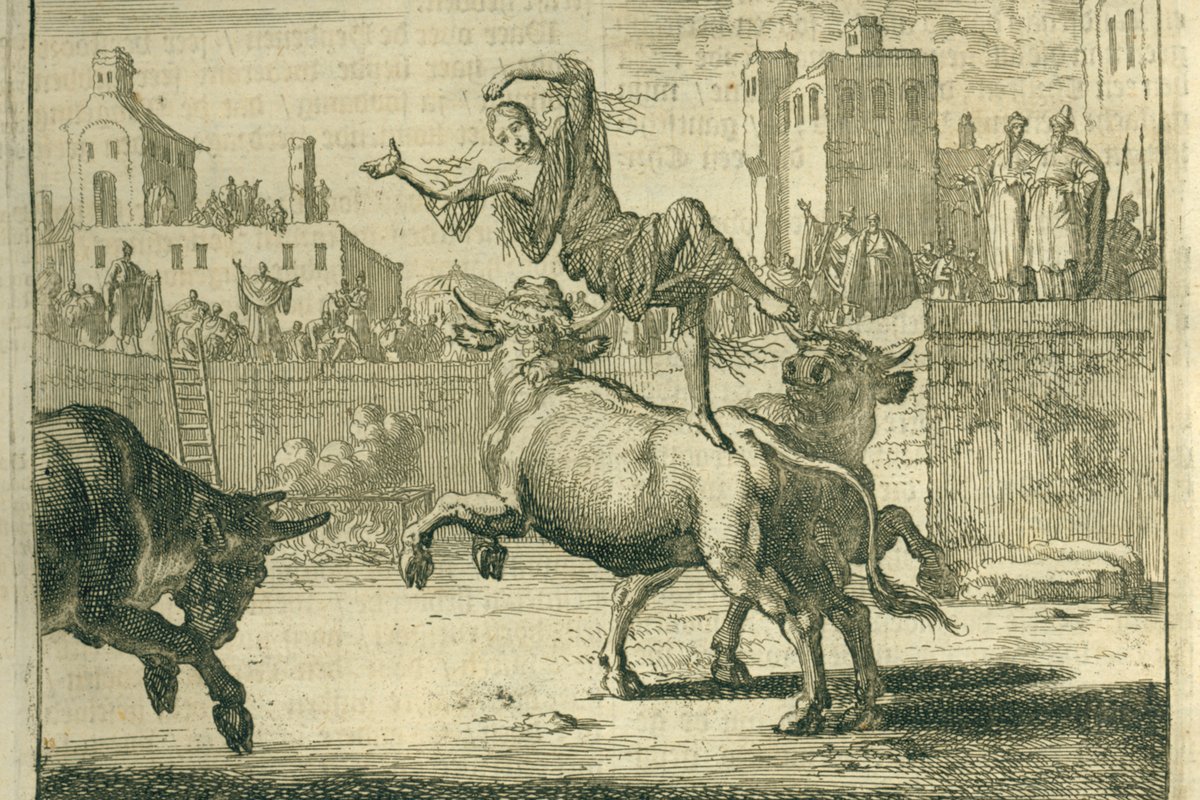
Perpetua, Felicity, and their companions were killed in the amphitheater at Carthage on March 7, 203 AD, timed to coincide with celebrations for the birthday of Geta, the emperor's son — a public spectacle in the fullest Roman sense. They were exposed to wild animals in the arena and then killed by the sword. The account of their deaths, appended to Perpetua's diary by the text's original editor, describes both women meeting their end with a composure that struck even the crowd watching them.
Their story didn't fade the way so many ancient martyrdoms did. Perpetua and Felicity are named together in the Roman Canon — Eucharistic Prayer I — one of the oldest and most solemn texts in the Catholic Mass, a distinction shared by only a small number of women in the entire history of the Church. Their feast is kept on March 7, the date of their deaths, and they're venerated today as patrons of mothers and expectant mothers, a patronage that grows directly and transparently out of their own documented story — Perpetua nursing an infant, Felicity giving birth in a prison cell days before her death. Few saints from this early in Christian history — perhaps alongside Saint Blandina, martyred a few decades later at Lyon — left behind a record this vivid, this direct, or this well attested. Fewer still left it in their own words.
Trivia
Who were Saints Perpetua and Felicity?
Is the account of Perpetua's martyrdom considered a reliable historical source?
Why did Felicity give birth in prison?
What did Perpetua say to her father when he begged her to recant?
Are Perpetua and Felicity mentioned in the Mass?
You May Also Like
Related Reading