Saint Scholastica


A sister known almost entirely through her brother's biographer
Very little about Scholastica's life is independently documented outside her connection to her far more famous brother, Saint Benedict of Nursia. She's traditionally dated to around 480, born near Nursia in central Italy, the same region and roughly the same period as Benedict — but beyond that connection, details of her early life, her exact birthplace, and her parentage simply aren't recorded anywhere that survives. What we do know comes almost entirely from one source: Pope Gregory the Great's "Dialogues," Book II, a biography of Benedict written around 593-594, several decades after Benedict's own death and further still from Scholastica's. Gregory calls her Benedict's sister, devoted to religious life from her earliest years, and credits her with founding a community of nuns near the monastery Benedict established at Monte Cassino.
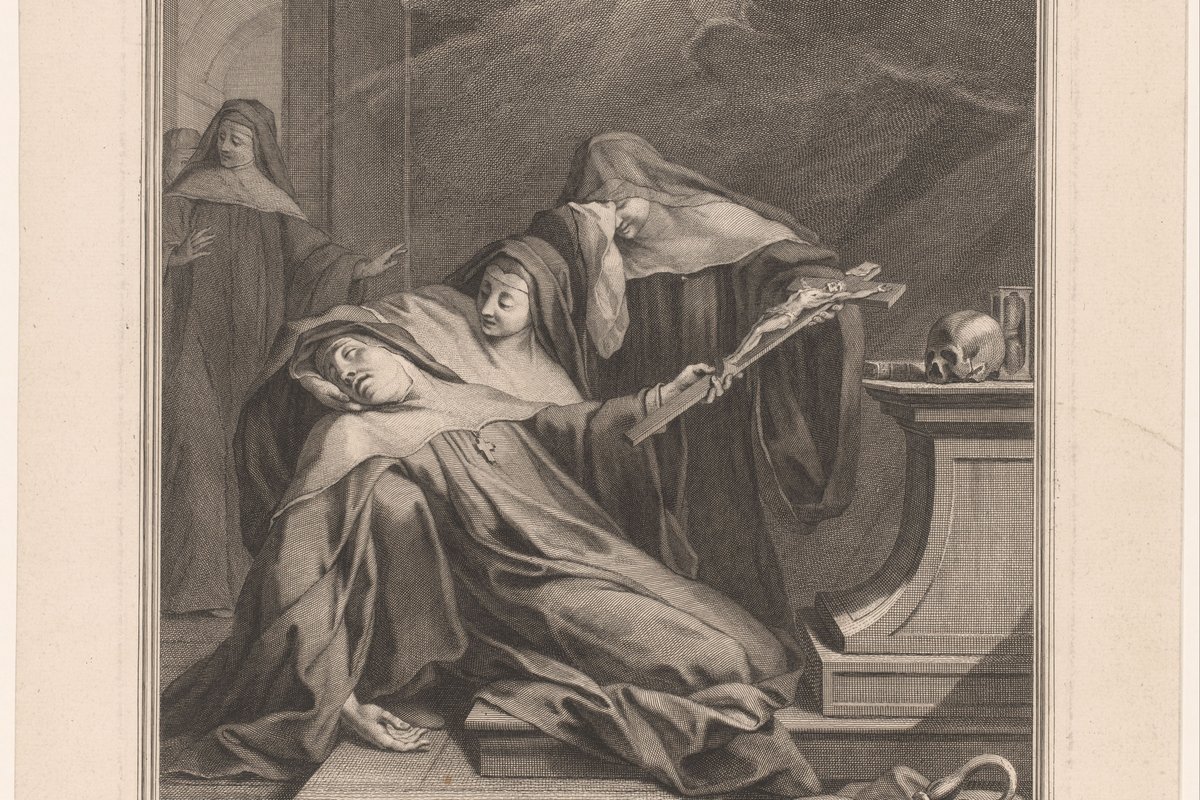
Jean Audran, after Jean Restout the Younger, "Death of St. Scholastica" (Sainte Scolastique), 1702–1756, Rijksmuseum — public domain.
It's worth being precise here about a detail that gets blurred in popular retelling. Scholastica is very widely described today as Benedict's twin sister. That specific claim doesn't actually appear in Gregory's 6th-century account, our earliest and most authoritative source — he calls her only "his sister." The twin tradition doesn't show up in the record until the 9th century, several hundred years later. That Scholastica was Benedict's sister and the founder of a related monastic community rests on solid, ancient testimony. That the two were twins is a long-standing tradition, but a later addition to the story, not part of Gregory's original account.
Two monasteries, one yearly visit
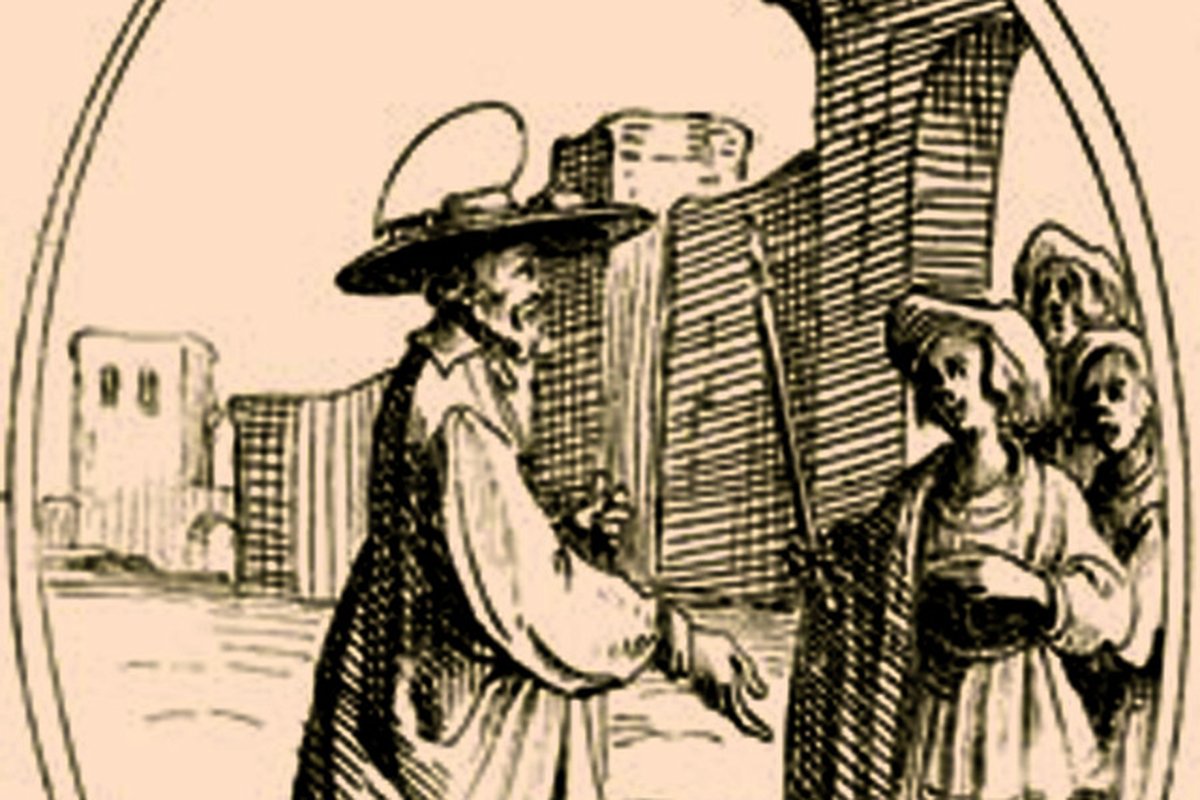
Once Benedict had established his monastery at Monte Cassino and Scholastica had founded her own community of nuns nearby, the siblings settled into a yearly rhythm: meeting once a year at a modest guesthouse near the monastery to spend the day in conversation about God, since Benedict's own monastic rule forbade him from sleeping outside the monastery walls, which meant that however deep the conversation ran, he left for home each year as evening approached.
The storm, according to Gregory's Dialogues
The single story that made Scholastica memorable comes from that same source, Gregory the Great's "Dialogues," Book II, chapter 33 — and it's worth naming that source explicitly, since this is a specific hagiographic anecdote from one text written decades after the events it describes, not an independently verified historical record. According to Gregory's account, during what turned out to be the siblings' final visit, Scholastica sensed it might be their last meeting and asked Benedict to stay through the night so they could keep talking about the things of heaven. He refused, unwilling to break his own rule even for her. She lowered her head onto the table and prayed — and, per the account, a storm broke out so suddenly and so violently that Benedict could no longer safely leave to return to his monastery. Startled, he reportedly asked her what she had done. She answered, according to the story, that she had asked him and he had refused her, so she had turned to God instead, and God had heard her.
Three days later, Scholastica died. Benedict, informed of her death through a vision rather than a messenger, had her body brought to Monte Cassino and placed in the tomb he had already prepared for himself. Tradition holds that brother and sister are buried together there still, two founders whose separate communities helped shape the future of Western monastic life, resting side by side at the end.
Why Gregory told the story the way he did
Gregory the Great, later a pope himself and the author of the "Dialogues" that preserve nearly everything known about Scholastica, didn't just record the storm as a curious anecdote — he drew an explicit theological point from it, and it's worth reading in his own framing rather than as a simple weather miracle. Gregory writes that Benedict, told by Scholastica what she had done, marveled and said her prayer had accomplished more than his own will, "because she loved more" (a paraphrase of Gregory's point in "Dialogues," Book II, chapter 33 — the exact Latin wording is not quoted here to avoid overclaiming precision on the historical phrasing). The moral Gregory drew for his monastic readers was that charity, caritas, can rightly override even a well-kept rule, since the rule itself exists to serve love rather than the reverse. It's a detail that turns the storm from a party trick into a small parable about which virtue outranks which.
Iconography and how she's usually shown
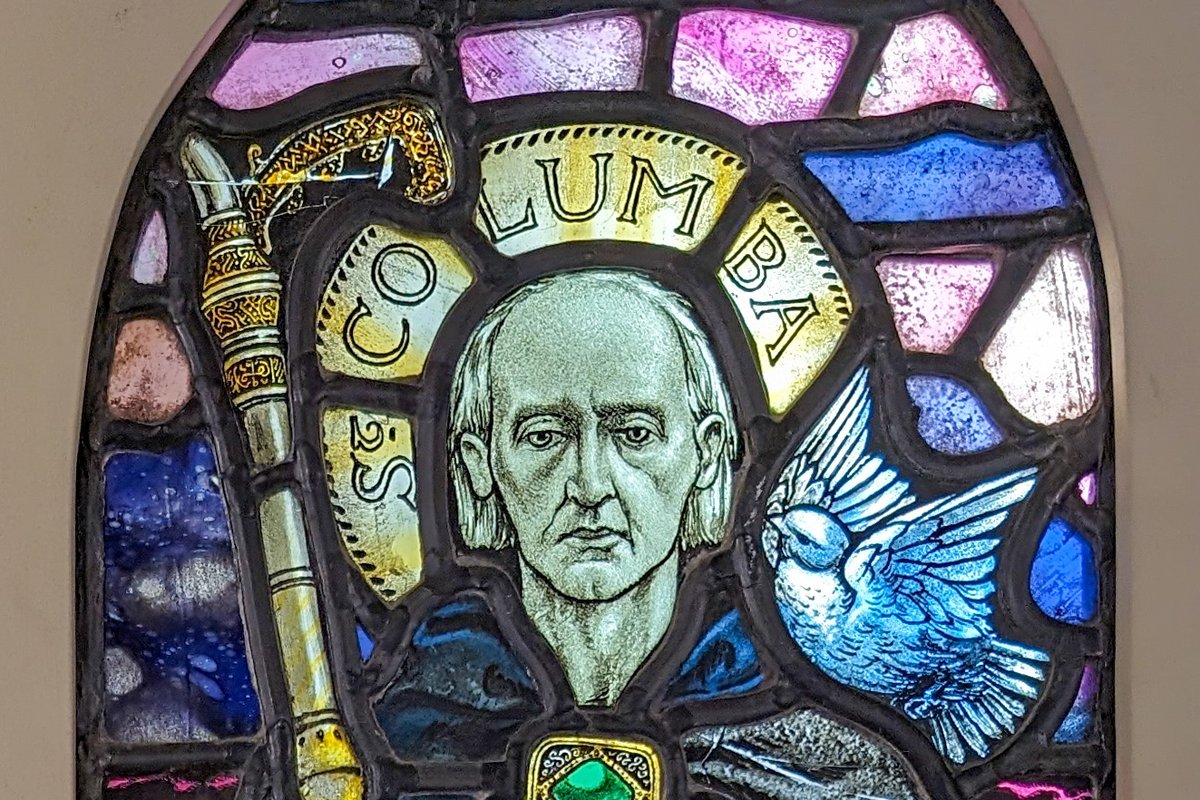
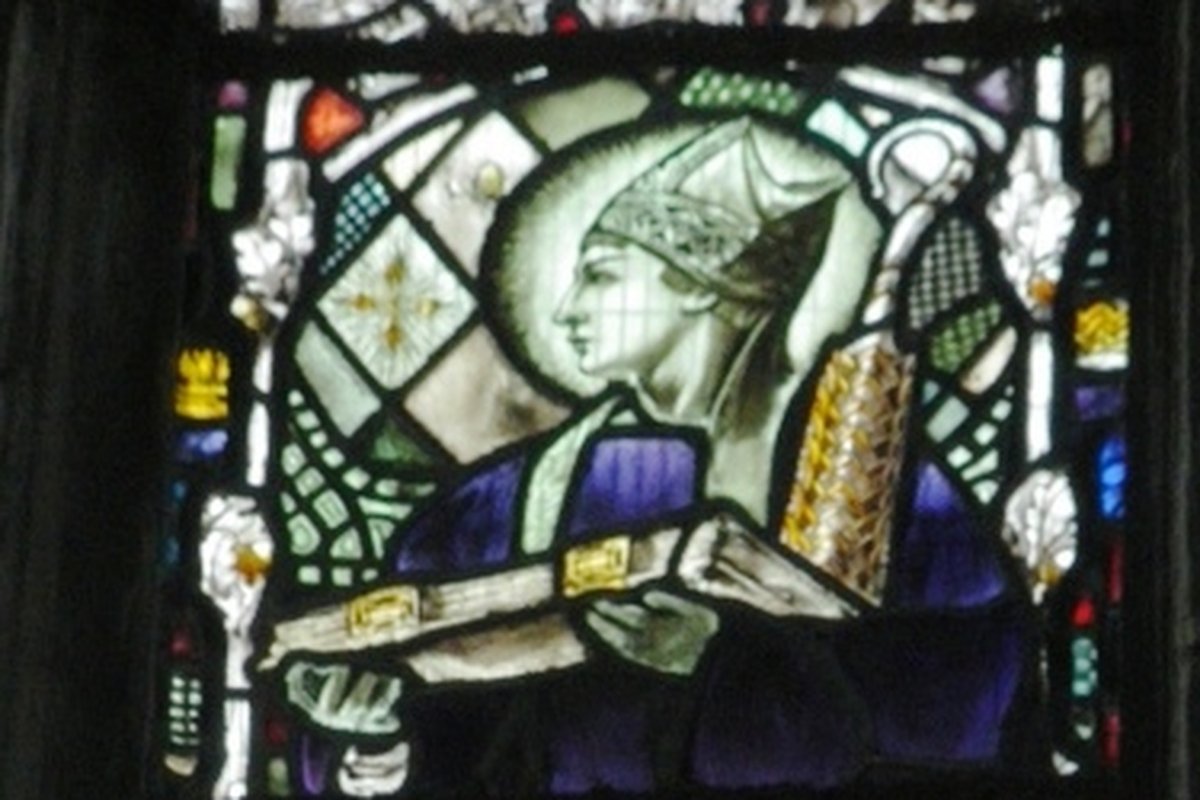
Scholastica is typically depicted in the black habit of the Benedictine order, often holding a crucifix or a small dove — the dove referencing another detail from Gregory's account, in which Benedict, after his sister's death, reportedly saw her soul ascend to heaven in the form of a dove. She's sometimes shown alongside Benedict himself, the two siblings pictured together in the way their story has always been told: not as separate saints who happened to share a birthplace, but as a linked pair, her community of nuns and his community of monks growing up side by side at the foot of the same mountain.
A patron of nuns, and of a very specific kind of storm
Scholastica is honored today primarily as a patron of Benedictine nuns and of monastic life more broadly, a patronage that follows directly from her documented role founding and leading a religious community of women alongside her brother's better-known work. A looser folk tradition, considerably weaker and less formally established, also invokes her against storms and rain, and on behalf of children suffering convulsions — associations that trace back, unmistakably, to the single dramatic image at the center of her story: a woman who prayed, and got the weather she needed to keep the conversation going just one more night. Her feast is kept on February 10.
Trivia
Who was Saint Scholastica?
Was Scholastica really Benedict's twin sister?
What is the story of Scholastica and the storm?
How did Scholastica die, according to tradition?
What is Saint Scholastica the patron saint of?
Related Reading