Saint Seraphim of Sarov

A note on tradition, before anything else
Saint Seraphim of Sarov is one of the most beloved figures in Russian Orthodox Christianity — and it needs to be said plainly, up front, that his sainthood comes from a different process than the one that produces Catholic saints. He was glorified by the Russian Orthodox Church's Most Holy Synod in 1903, not canonized by the Vatican, and no Roman process has ever formally recognized him. He's included here because he's deeply admired across Christian traditions, including by Catholics — Pope John Paul II spoke of him with real warmth in his book "Crossing the Threshold of Hope," and Eastern Catholics of the Byzantine tradition venerate him following Russian usage. But calling him "Saint Seraphim" in this article means Orthodox glorification, not a Catholic title, and that distinction matters enough to state outright rather than let it blur.
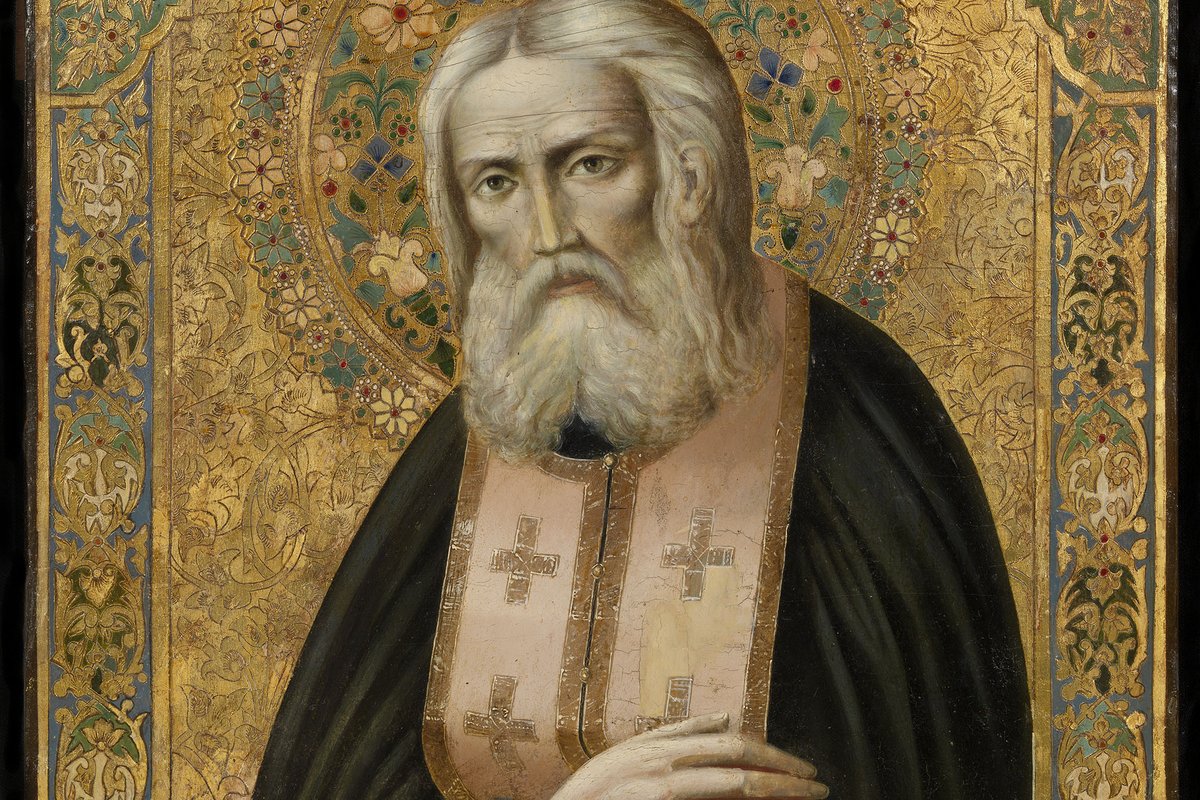
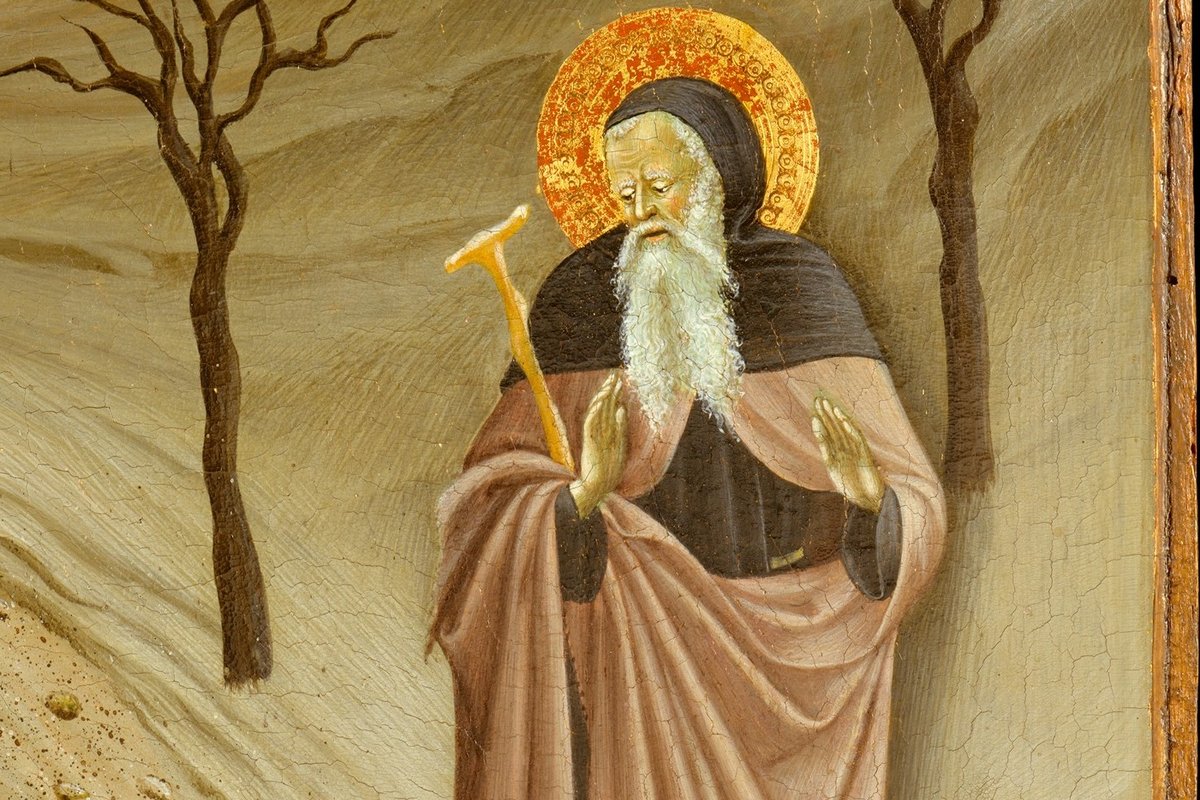
Icon of St. Seraphim of Sarov, workshop of the Seraphimo-Diveevsky Monastery, Russia, after 1903 — public domain.
From Kursk to the forest
Seraphim was born Prokhor Isidorovich Moshnin on July 19 (Old Style) or July 30, 1754, in Kursk, Russia. He entered Sarov Monastery around age nineteen and was ordained a hieromonk — a monk who is also an ordained priest — in 1793. Not long after, he withdrew from the monastery entirely to live alone in the surrounding forest, a hermit's life he sustained for somewhere between fifteen and twenty-five years, depending on which account is followed. His asceticism during this period included a multi-year episode of standing or kneeling in prayer atop a large rock, a detail that shows up consistently across accounts of his forest years even where other details vary.
Sometime in the 1810s or 1820s, Seraphim returned to the monastery and took up a very different kind of ministry: public spiritual guidance as a starets, or elder, receiving enormous numbers of pilgrims who came seeking his counsel. He became closely associated with founding and guiding the Diveyevo Convent for women nearby, a community that remains one of the most significant in Russian Orthodox monastic life.
What Motovilov wrote down
The single most famous episode connected to Seraphim comes from November 1831, recorded by his spiritual disciple Nicholas Motovilov in a manuscript titled "On the Acquisition of the Holy Spirit: Conversation with Motovilov." By Motovilov's own account, the two men stood together in a snow-covered clearing near Seraphim's hermitage when the monk took him by the shoulders and asked him to look directly at him. What Motovilov says he then witnessed was startling: Seraphim's face became, in Motovilov's words, brighter than the sun, and warmth spread through the freezing winter air "as in a bathhouse," even as snow continued falling around them undisturbed. Seraphim explained the radiance as the visible presence of the Holy Spirit — something, he told Motovilov, any Christian could "acquire."
This is a first-person eyewitness testimony, not a later legend invented long after the fact, which sets it apart from the kind of folklore that accumulates around saints centuries after their death. Even so, it remains a testimony to a mystical or miraculous claim, not an independently verifiable historical fact, and it should be read that way — a documented primary source, but a claim resting on one witness's own sworn account.
Motovilov's manuscript was lost for decades after it was written and only rediscovered around 1902 to 1903, shortly before Seraphim's glorification — a detail that adds its own layer of historical texture to how the story reached wider audiences.
What he actually said, and what he didn't
Seraphim is often quoted online with the line "Acquire the Spirit of Peace and a thousand souls around you will be saved." It's a striking sentence, and it circulates constantly in devotional writing — but it does not appear verbatim in the primary "Conversation with Motovilov" text, and it shouldn't be presented as an exact quotation of his words. What that primary source does record, and what can be cited with confidence, is this: "Acquiring the Spirit of God is the true aim of our Christian life, while prayer, fasting, almsgiving and other good works done for Christ's sake are merely means for acquiring the Spirit of God." The underlying idea is closely related to the popular paraphrase, but the wording is genuinely different, and a saint this frequently misquoted deserves the more careful version.
Beyond the Motovilov episode, a large body of popular miracle stories and prophecies — including claims about the eventual fate of the Romanov dynasty — circulate widely in Orthodox devotional literature about Seraphim. These should be treated as devotional tradition unless they can be traced to a specific, named primary source; that's simply not the case for most of them.
A canonization shaped by an empire, not only by devotion
Seraphim's 1903 glorification is also, candidly, a piece of political history and not only a religious one. Tsar Nicholas II personally pressed for the process and pushed it through despite some hesitation within the Church hierarchy, and the glorification ceremony at Sarov that July was attended by the Tsar and the full imperial family. Historians have pointed to this as a decision shaped in part by the dynastic and political pressures of a Russian monarchy under real strain — alongside, not instead of, seventy years of genuine popular devotion that had already grown up around Seraphim since his death. Both things were true of the same event.
Feast days and how he's remembered
Seraphim's feast is kept on January 2 (Julian calendar) or January 15 (Gregorian), marking his death, and again on August 1 (Julian) or August 14 (Gregorian), marking the 1903 glorification. He doesn't carry a specific, named patronage in the Western Catholic sense — no single trade or cause is formally attached to him — and none should be invented. He's remembered instead as one of the great Russian startsy, a model of hesychasm, the Eastern Christian tradition of inner stillness and contemplative prayer, and, through Motovilov's account, as the monk who once stood in a snowy clearing and, in front of a witness who wrote it all down, became too bright to look at.
Trivia
Who was Saint Seraphim of Sarov?
Is Saint Seraphim of Sarov recognized by the Catholic Church?
What happened between Seraphim and Nicholas Motovilov in 1831?
Did Seraphim of Sarov really say a thousand souls would be saved around anyone who found peace?
Why was Seraphim of Sarov canonized in 1903, and was it purely a religious decision?
You May Also Like
Related Reading