Blessed Charles de Foucauld

An officer discharged for indiscipline
Charles de Foucauld was born on September 15, 1858, in Strasbourg, into an old aristocratic French family, and orphaned young — both his parents died before he was six, leaving him and his sister to be raised by their grandfather. He inherited a considerable fortune, trained at the French military academy of Saint-Cyr, and by his early twenties had built a reputation less for soldiering than for excess: he was known for his weight, his taste for fine food, and a relationship with a mistress he brought along even on military postings, conduct serious enough that the army eventually discharged him from active duty. It is not a résumé that predicts sainthood, and Foucauld himself, later in life, described these years in blunt terms — a decade spent living for nothing beyond his own appetite.
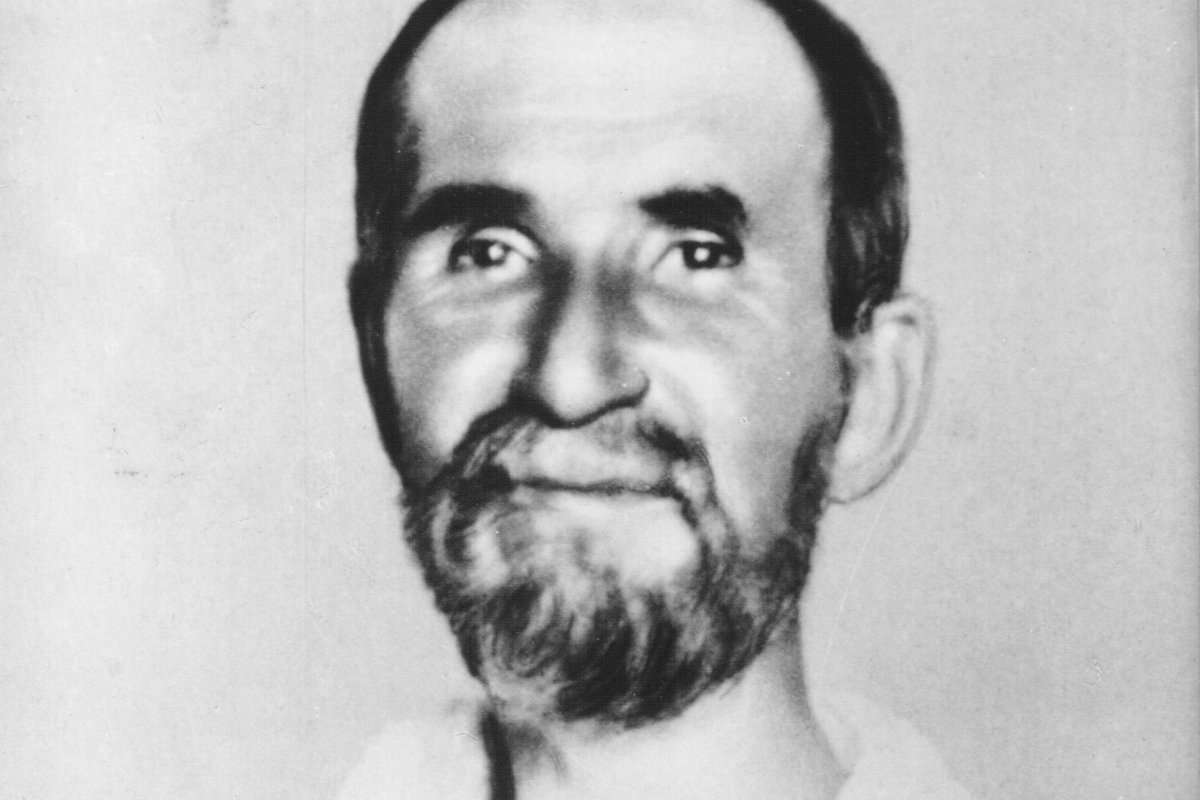
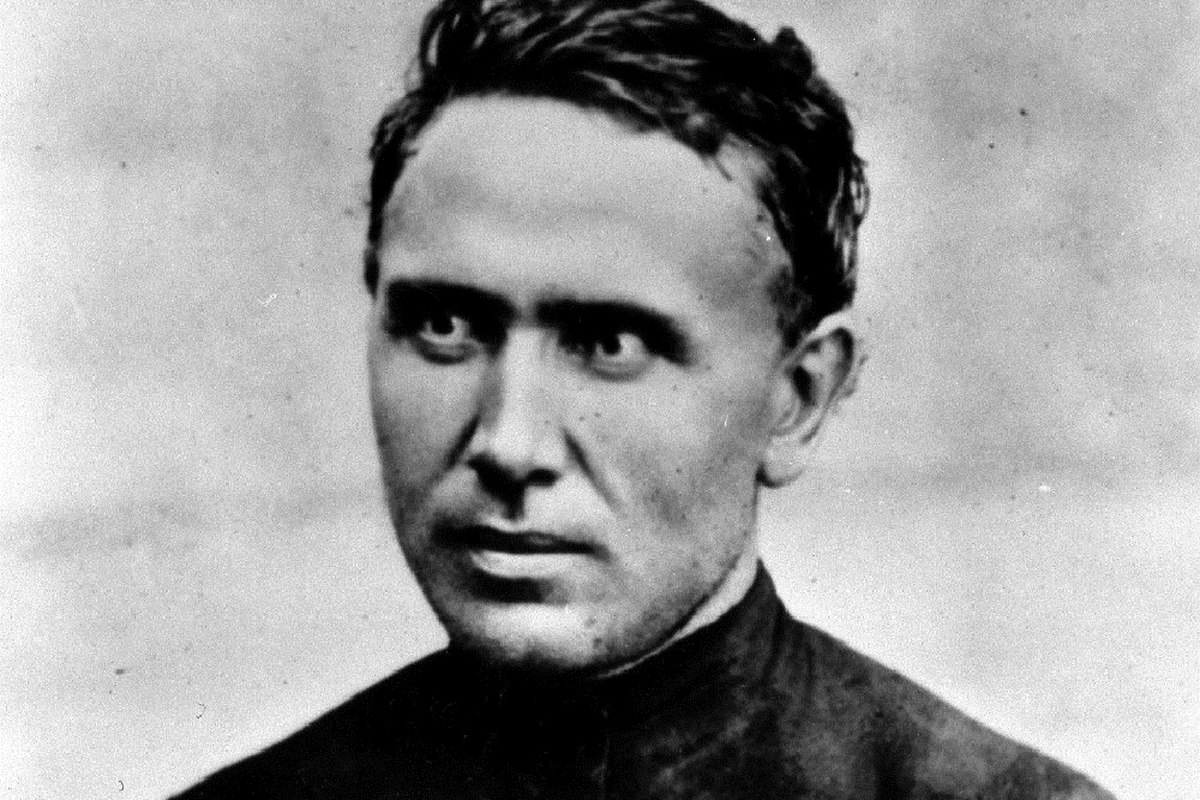
Photograph of Charles de Foucauld, c. 1900, photographer unknown — public domain.
An explorer who found faith in the desert
What pulled Foucauld out of that drift wasn't a single dramatic event but a slow reorientation that started, unexpectedly, with geography. He rejoined the army briefly for active service in Algeria, then resigned his commission to spend more than a year traveling through Morocco in 1883 and 1884 — at the time a country largely closed to Europeans, which forced Foucauld to travel disguised as a Jewish rabbi's guide, mapping terrain and documenting local life with genuine scholarly rigor. The resulting book, Reconnaissance au Maroc, was serious enough work that the French Geographical Society awarded him its gold medal. But the deeper effect of the journey was on Foucauld himself: watching Muslims around him pray with an unselfconscious, disciplined devotion he had never practiced in his own inherited faith left a lasting impression, planting a question he couldn't shake about the God he had stopped believing in.
Back in Paris, that question found an answer through Father Henri Huvelin, a priest his devout cousin Marie de Bondy had introduced him to. According to the standard account, Foucauld went to Huvelin in 1886 asking only for instruction in the Catholic faith, not for the sacraments — and the priest told him to go to confession first. He did, and by his own later account it was in that moment, kneeling in an ordinary Parisian church, that his conversion became real rather than intellectual.
From Trappist monastery to Sahara hermitage
Conversion, for Foucauld, immediately meant radical rearrangement rather than a quiet return to ordinary religious practice. Within a few years he entered the Trappists, the strict monastic order known for silence and manual labor, first in France and then at a poorer daughter house in Syria, deliberately seeking out greater austerity than even the Trappist life offered. It still wasn't enough. In 1897 he left the order altogether — with his superiors' permission — to live for several years as an unaffiliated servant and caretaker at a Poor Clare convent in Nazareth, doing menial work and modeling his life as closely as he could on what he imagined of Jesus's own hidden, laboring years there.
Ordained a priest in France in 1901 at the age of forty-two, Foucauld asked to be sent somewhere with no other priest and no Catholic community at all — and got his wish in French Algeria. He settled first at Béni Abbès, on the edge of the Sahara, building a small hermitage he kept deliberately open to travelers, the poor, and freed slaves passing through, and later moved deeper into the desert to Tamanrasset, in the Hoggar mountains, to live among the Tuareg people.
Learning a language no missionary before him had mastered
Foucauld's years among the Tuareg are where his life took its most distinctive and least imitated turn. Rather than treat his hermitage as a base for open evangelization — the Tuareg population around him remained overwhelmingly Muslim, and Foucauld made few if any converts — he devoted enormous scholarly effort to learning their language, Tamahaq, compiling a Tuareg-French dictionary and grammar substantial enough that linguists still consult his work today. His approach to mission was almost entirely one of presence: living simply and visibly alongside people of a different faith, offering friendship, medical help, and hospitality, on the theory that a life recognizably devoted to God would preach on its own, without a single sermon attached to it.
He never had a single companion join him in this way of life, despite years of writing to friends and religious contacts back in France hoping to attract others to it. The rule of life he drafted for a religious community he hoped to found went unused in his own lifetime.
Death at the fort door
The outbreak of the First World War destabilized the wider Sahara region, and by 1916 Tamanrasset sat inside a zone unsettled by raiding parties connected to the broader unrest along the Ottoman-aligned Senussi resistance to French colonial rule. Foucauld had built a small fort at Tamanrasset partly as a refuge for the local population in case of exactly this kind of danger. On the evening of December 1, 1916, a raiding party arrived at the fort. According to the most widely accepted reconstruction of events, Foucauld was taken outside as a guard was posted over him — and in the confusion of a French military patrol approaching, a panicked teenage guard shot him at close range. He died instantly, alone except for his killers, at the door of the refuge he had built for others.
A solitary life that produced generations of followers
No religious congregation existed to carry Foucauld's name forward when he died — by any ordinary institutional measure, his particular project had failed. What survived instead were his letters, his spiritual notebooks, and the account of his life that circulated among French Catholics in the years after his death, particularly through a biography written by René Bazin in 1921. Those writings did what Foucauld's own recruiting efforts in life never managed: they drew people. Starting in the 1930s, a series of religious communities took shape explicitly modeled on his vision of a hidden, laboring, deeply prayerful presence among the poor — the Little Brothers of Jesus, founded in 1933, and later the Little Sisters of Jesus, followed over subsequent decades by numerous other communities and lay groups that now describe themselves collectively as the Spiritual Family of Charles de Foucauld.
He was beatified on November 13, 2005, by Pope Benedict XVI, and canonized on May 15, 2022, by Pope Francis, in the same ceremony as Titus Brandsma, another modern figure whose path to sainthood ran directly through resistance to violence rather than around it. His feast is kept on December 1, the anniversary of his death, and while no formal universal patronage has been attached to him, he is widely regarded, in an informal and devotional sense, as a patron of the kind of quiet, unglamorous missionary presence he spent his last two decades practicing in the Sahara.
Trivia
Who was Blessed Charles de Foucauld?
Why did Charles de Foucauld convert back to Catholicism?
Did Charles de Foucauld found a religious order?
How did Charles de Foucauld die?
When was Charles de Foucauld canonized?
You May Also Like
Related Reading