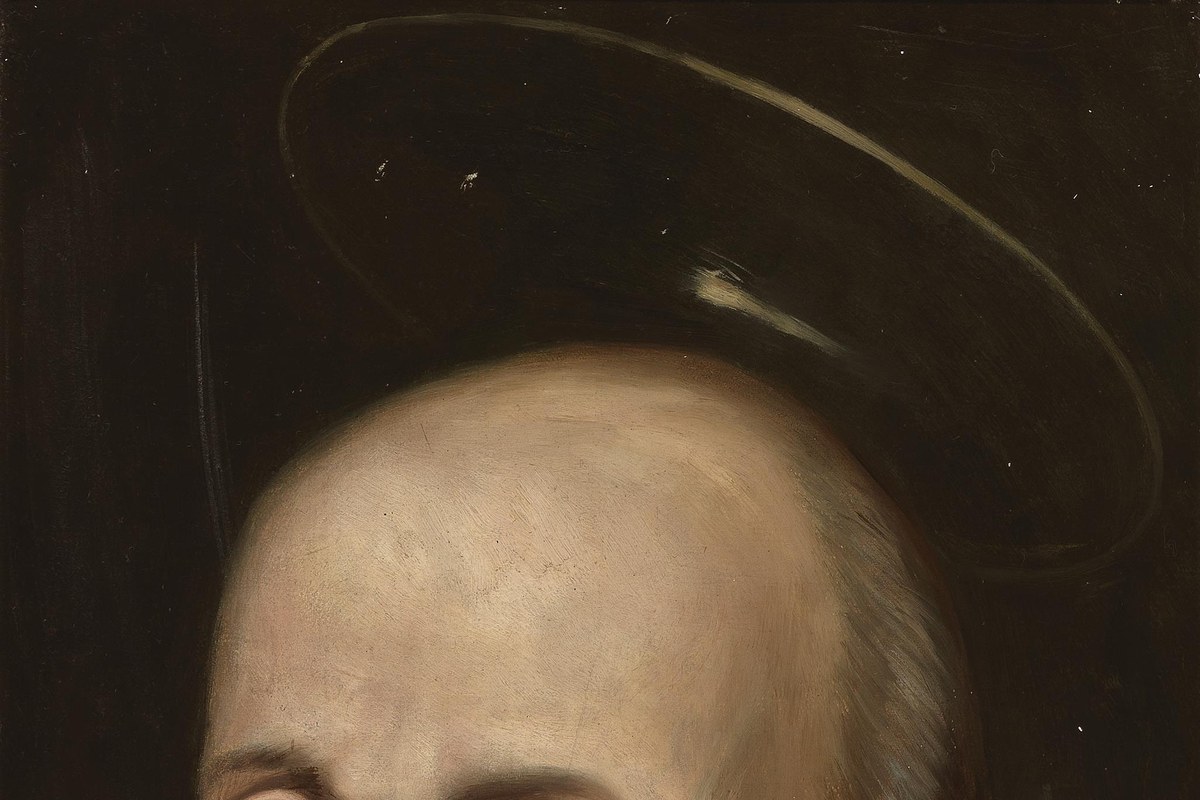
Saint Zita of Lucca

Forty-eight years in the same house
Zita was born around 1212 in Monsagrati, a village near Lucca in Tuscany, and her documented life is almost entirely defined by a single, remarkable fact: at age 12, she entered domestic service with the Fatinelli family, a household of wealthy Lucchese silk merchants, and she stayed there for roughly the next 48 years. There was no dramatic career change, no founding of an order, no journey to a distant mission field — just decades of the same household work, performed with enough evident integrity that her employers eventually placed her in charge of the family's almsgiving and allowed her to personally visit and care for the sick poor of the city.
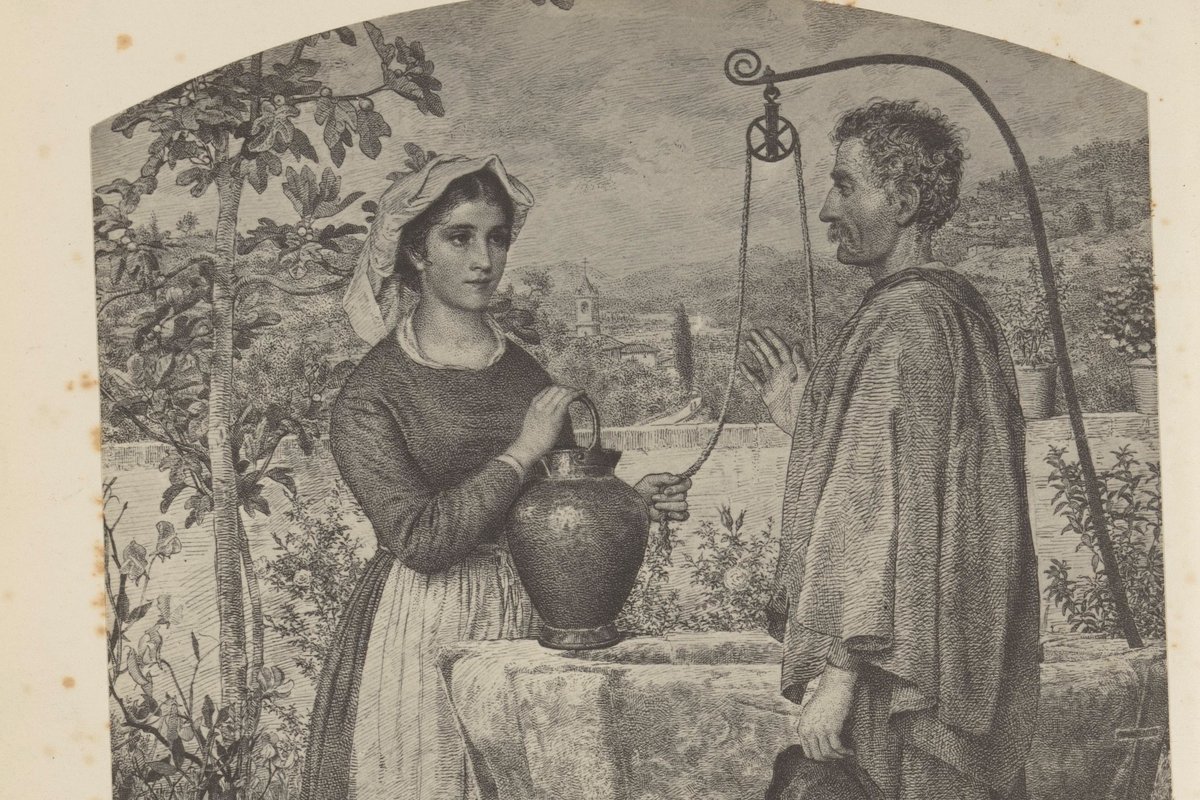
Frederick Hollyer, after a drawing by Francesca Alexander, "Santa Zita: The Miracle at the Well," c. 1875–1885, Rijksmuseum — public domain.
Zita divided her modest wages three ways: a portion to her own family, a portion to the poor, and only a small remainder kept for herself. It's a detail easy to skim past, but it's really the whole shape of her sanctity in miniature — not visions, not extraordinary suffering, just an ordinary servant's wages, deliberately and consistently given away for nearly half a century.
Lucca in the 13th century was a prosperous, self-governing city-state built largely on the silk trade, and a household like the Fatinellis' would have sat comfortably among the merchant class that ran it. That context matters for understanding what made Zita unusual: she wasn't performing charity from a position of wealth or independence, the way a noblewoman or a merchant's wife might. She was a servant, bound to a household schedule and answerable to employers, giving away money and food that, strictly speaking, wasn't fully hers to give — which is precisely why the stories about her generosity so often involve tension with her employer, caught in the act of smuggling out food she wasn't authorized to distribute. Her later years, once the family had come to trust her completely, look almost like the reverse of where she started: a servant girl gradually made the household's informal minister of charity.
Legends of bread and flowers
Two stories attached themselves to Zita's memory that are worth naming clearly as pious legend rather than documented fact. In the first, her employer reportedly caught her leaving the house with bread concealed under her cloak, intending to give it to the poor; when he demanded she open the cloak and show him what she was hiding, the bread had turned into flowers. In the second, she is said to have left her bread-baking duties unfinished — either called away to help someone in need or simply lost in prayer — and returned to find the loaves already perfectly baked, with no explanation for who had finished the work; popular tradition credited angels. Both stories follow a familiar pattern found attached to other saints as well, a kind of "miracle of provision" motif common in medieval hagiography, and neither has documentary support beyond long-standing local tradition. They're worth telling because they're part of how Lucca remembered her — not because they're verified events.
These stories share a family resemblance with the "aporrheta" pattern found across medieval hagiography — food miraculously transformed or multiplied at exactly the moment charity might otherwise have been exposed or punished. The same basic shape appears in stories told about other saints known for quiet, hidden almsgiving, most famously Saint Elizabeth of Hungary, whose own bread is said to have turned to roses when her husband questioned what she was carrying. The recurrence of the motif doesn't make either story true in a documentary sense, but it does suggest something real about how ordinary medieval Christians processed the tension between a servant's duty to an employer and a conscience that wanted to give more than was strictly permitted — the miracle stories let both loyalties come out looking blameless.
A cult that started before Rome noticed
Popular veneration of Zita began almost immediately after her death in Lucca on April 27, 1272, with numerous miracles reported and credited to her intercession by ordinary people in the city who had known her, or known of her, during her lifetime of service. Official recognition came much more slowly. Pope Leo X sanctioned local liturgical veneration of her in the early 16th century — a real but limited step, short of full canonization — and it wasn't until September 5, 1696, that Pope Innocent XII formally canonized her a saint, more than four centuries after her death and long after Lucca's own working people had already made up their minds about her.
Still visible, still in Lucca
One detail about Zita doesn't require any leap of legend or faith to verify: her body was exhumed in 1580 and found incorrupt, and it has since undergone natural mummification. It remains on public display today at the Basilica di San Frediano in Lucca, a physically checkable fact distinct from the bread-and-flowers stories above, and one that visitors to the church can still see for themselves. Zita's feast is kept on April 27, and she is recognized today as the patron saint of domestic servants, maids, and housekeepers — a patronage as directly rooted in a documented, ordinary working life as any saint on the calendar can claim. She's also informally invoked, in a much looser folk sense, for lost keys, and more broadly by waitstaff and others in service professions who've adopted her as a natural patron of their own daily work.
Trivia
Who was Saint Zita of Lucca?
Why is Saint Zita the patron saint of domestic servants?
What is the legend of Zita and the flowers?
Is Saint Zita's body really still on display?
When was Saint Zita canonized?
You May Also Like

Related Reading