The Cherub

A guard, not a baby
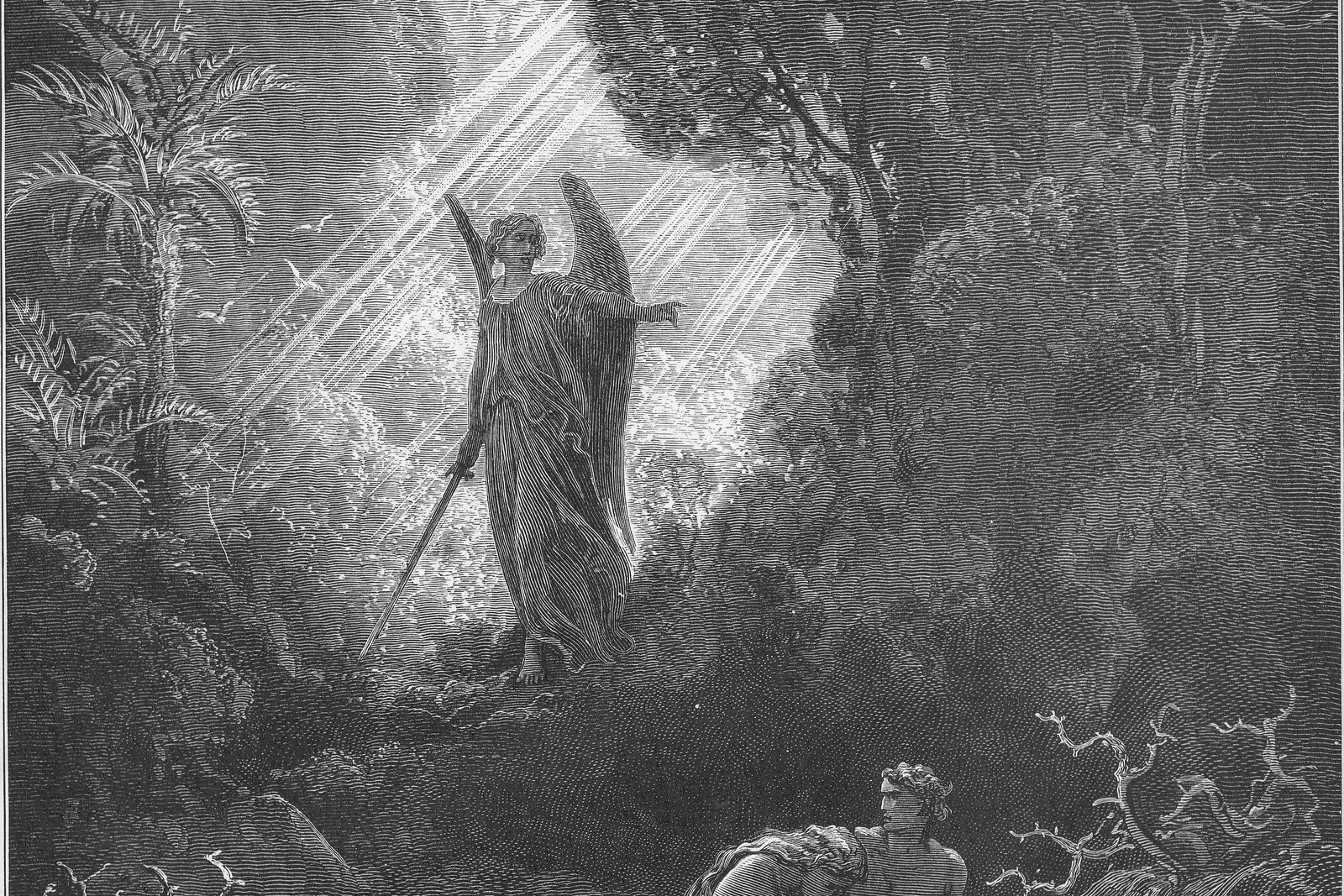
The very first angels named in the Bible aren't Michael or Gabriel — they're cherubim, and their job has nothing to do with delivering messages. After Adam and Eve are expelled from Eden, Genesis records that God "He expelled the man, stationing the cherubim and the fiery revolving sword east of the garden of Eden, to guard the way to the tree of life." (Genesis 3:24, RSV-CE). Whatever cherubim originally looked like in the biblical imagination, the role given to them here is unambiguous: standing watch over something too important to leave unguarded.
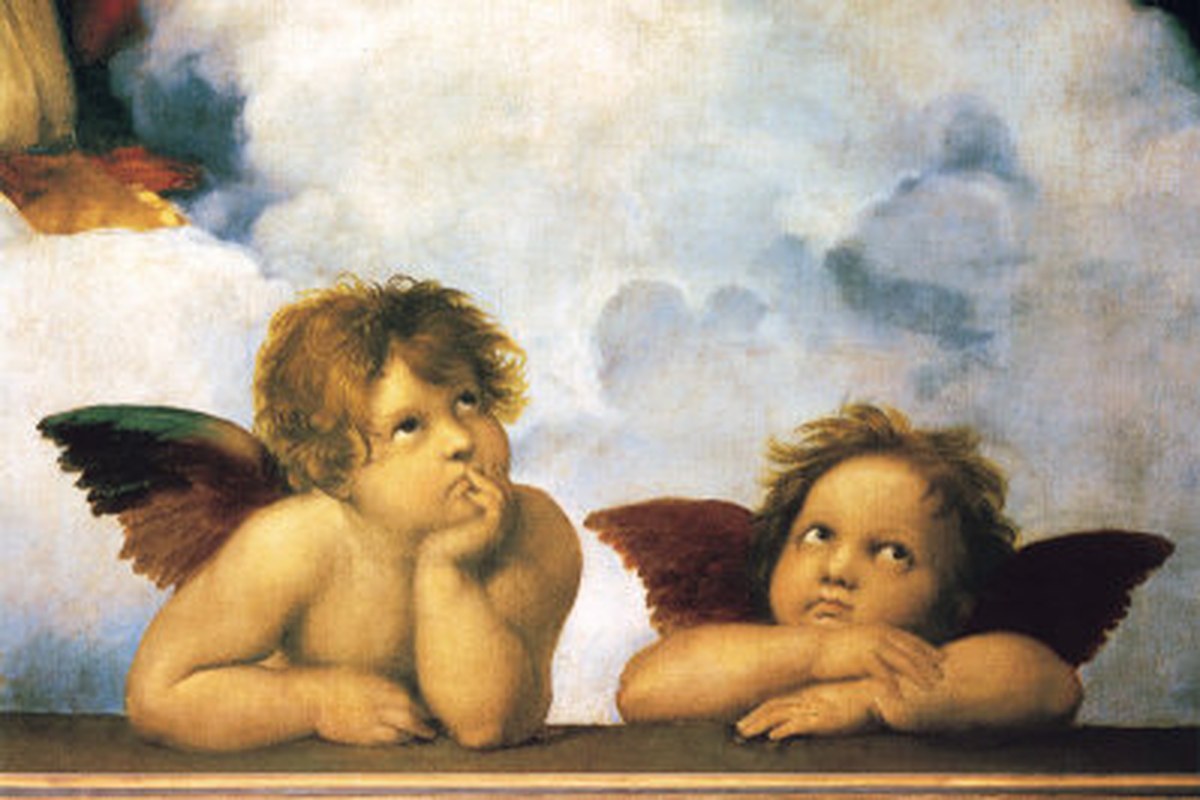
Raphael, detail from "The Sistine Madonna," 1512–1514 — public domain.
Ezekiel's later visions add texture — strange, difficult texture — to what a cherub might actually look like. In his opening vision, the prophet describes four living creatures near God's throne, each with four faces (human, lion, ox, and eagle) and multiple wings, later identifying them explicitly as cherubim. It's a far cry from anything resembling a human figure, let alone an infant, and it's part of why scholars generally treat cherubim as a distinct category from the more familiar messenger angels like Gabriel — creatures defined less by an individual appearance than by their proximity to the direct, overwhelming presence of God.
Facing each other over the Ark
Cherubim reappear at the heart of Israel's most sacred object. When God gives Moses instructions for the Ark of the Covenant, he specifies: "Make two cherubim of beaten gold for the two ends of the cover," with "wings spread out above, sheltering the cover with them," facing each other (Exodus 25:18-20, NABRE). Positioned wing to wing over the place where God's presence was said to dwell among his people, the cherubim here again serve a guardian, boundary-marking function — flanking something holy rather than announcing it.
That image of guarding recurs throughout Solomon's Temple, too. When Solomon built the Temple in Jerusalem, he had two enormous olivewood cherubim carved for the innermost sanctuary, each roughly fifteen feet tall, their outstretched wings touching in the middle of the room and reaching the walls on either side — a scaled-up echo of the smaller golden cherubim on the Ark itself, now filling the most sacred space in Israel's central place of worship. You can read more about that sanctuary's construction in the dedication of Solomon's temple. Cherubim were carved and embroidered throughout the building's decoration — on the walls, the doors, and the woven curtains — turning the entire Temple into a space visually enclosed by guardian figures on every side.
Where the baby-faced cherub comes from
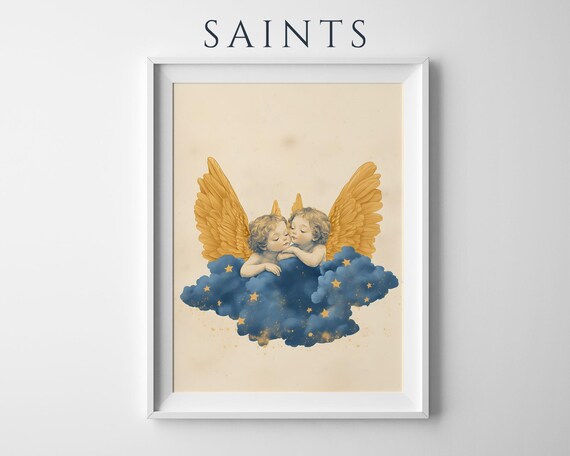
The soft, infant cherub familiar from ceilings and greeting cards has a completely different origin. Renaissance and Baroque painters borrowed putti — the chubby, winged children found throughout ancient Greek and Roman decorative art — and folded them into Christian imagery as a kind of generic angelic ornament. Raphael's famous pair, resting their chins on their arms at the bottom of "The Sistine Madonna," are the single most reproduced example of this convention. They're beautiful, and they're everywhere — but they have no real connection to the sword-bearing guardians of Genesis or the four-faced beings of Ezekiel's visions. The resemblance is a matter of shared name only.
The highest rank, not a lesser one
It's worth underlining just how far this popular image drifts from the theological one. In the nine-choir system developed by later Christian tradition, cherubim rank second only to the seraphim, placed among the very highest order of angels, closest to God's own presence — nothing like the decorative, almost incidental figures found on the ceilings of Baroque churches. Their name is even believed by some scholars to derive from a Semitic root meaning "to bless" or "to intercede," fitting for beings tradition holds are perpetually near the throne of God. Their close companions in that same highest tier, the seraphim, are described similarly in Scripture — you can read more about their fiery, six-winged appearance in the seraph.
Why the mismatch is worth knowing
It's a useful reminder that centuries of art can quietly reshape a word without anyone intending to mislead. "Cherub" in casual use today means something gentle and decorative; "cherub" in the Bible means something closer to a sentinel standing between people and what they are not yet ready to approach. Neither image cancels the other out — they've simply grown up along separate paths, one theological and one artistic, that happen to share a single name.
Both traditions have their own kind of staying power. The guardian cherub of Genesis and Ezekiel speaks to something Scripture returns to again and again — that God's presence is holy, not casual, and that approaching it is never something to be taken lightly. The soft-faced cherub of Renaissance art speaks to something else entirely: a longing for warmth, innocence, and tenderness in how people picture the divine. Neither impulse is wrong on its own. The mistake is only in assuming they're describing the same being. See our companion article on the Nine Choirs of Angels for where the Cherubim fit among the other eight ranks.
Trivia
What do cherubim actually do in the Bible?
Where else do cherubim appear in the Bible?
Why do cherubs look like babies in most art today?
Are cherubim the same as guardian angels?
Related Reading