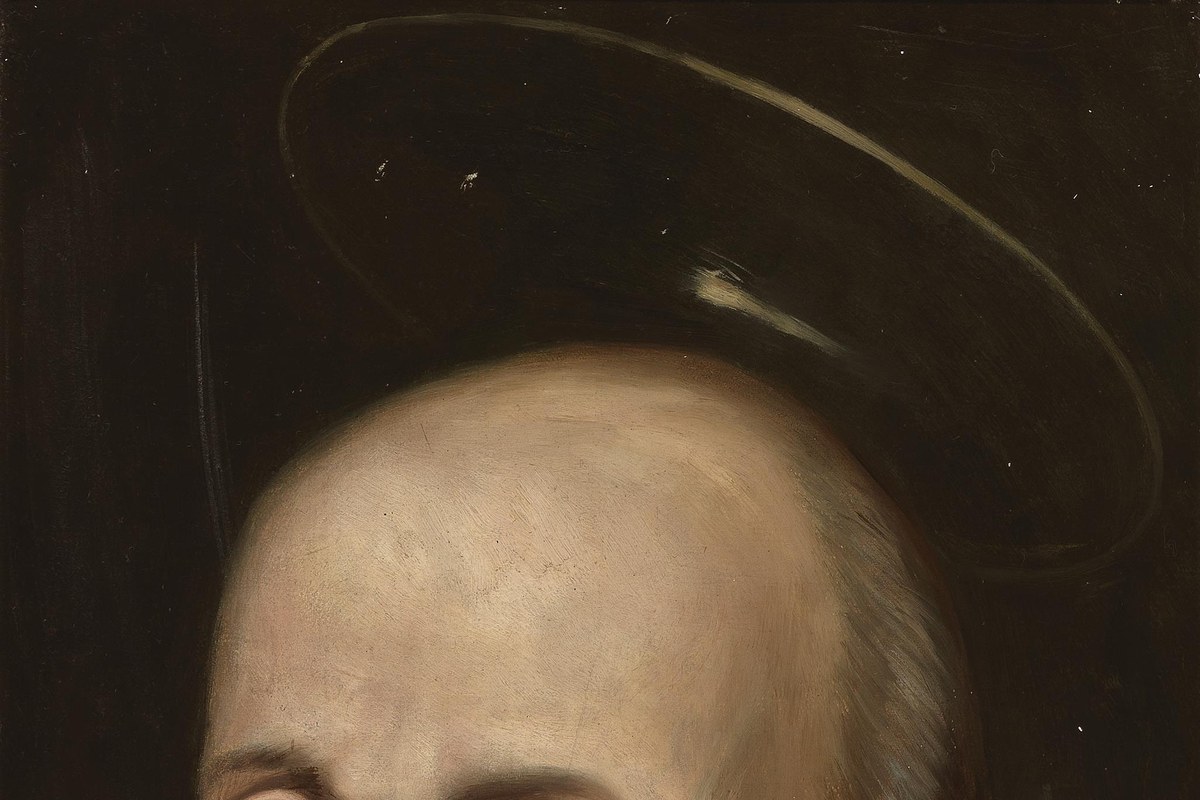
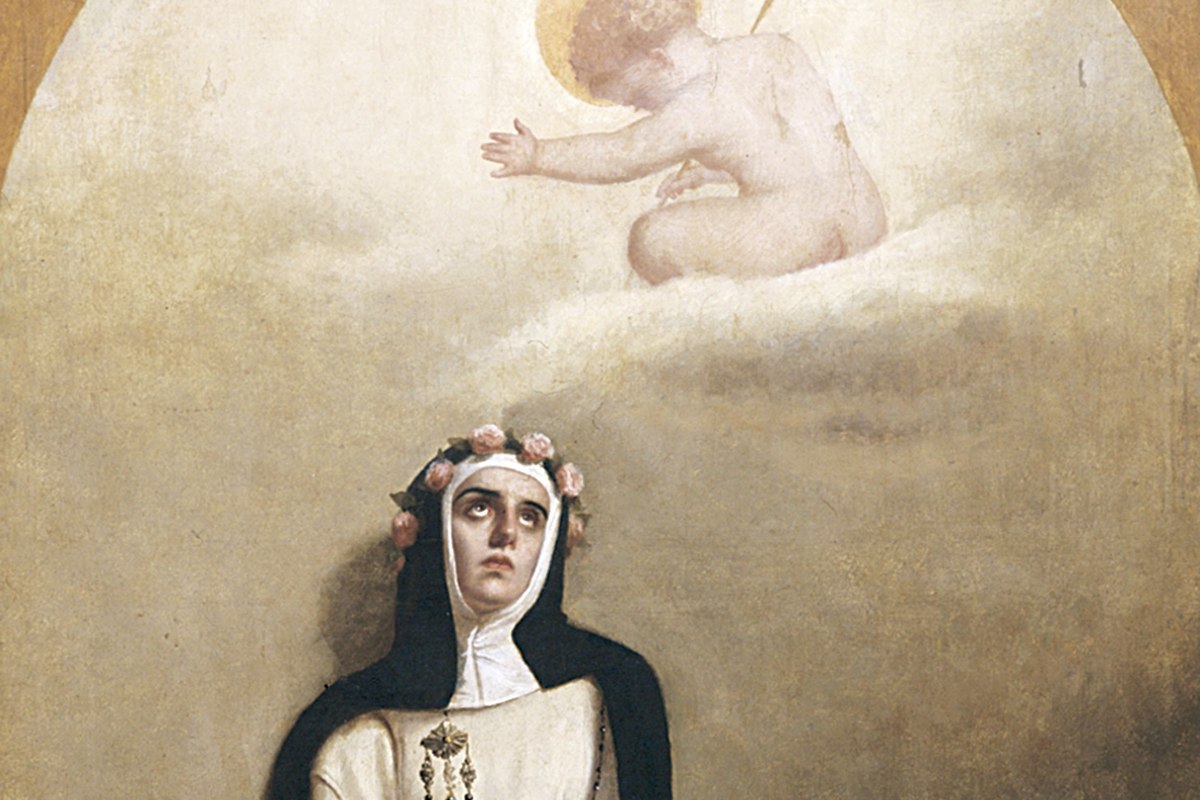
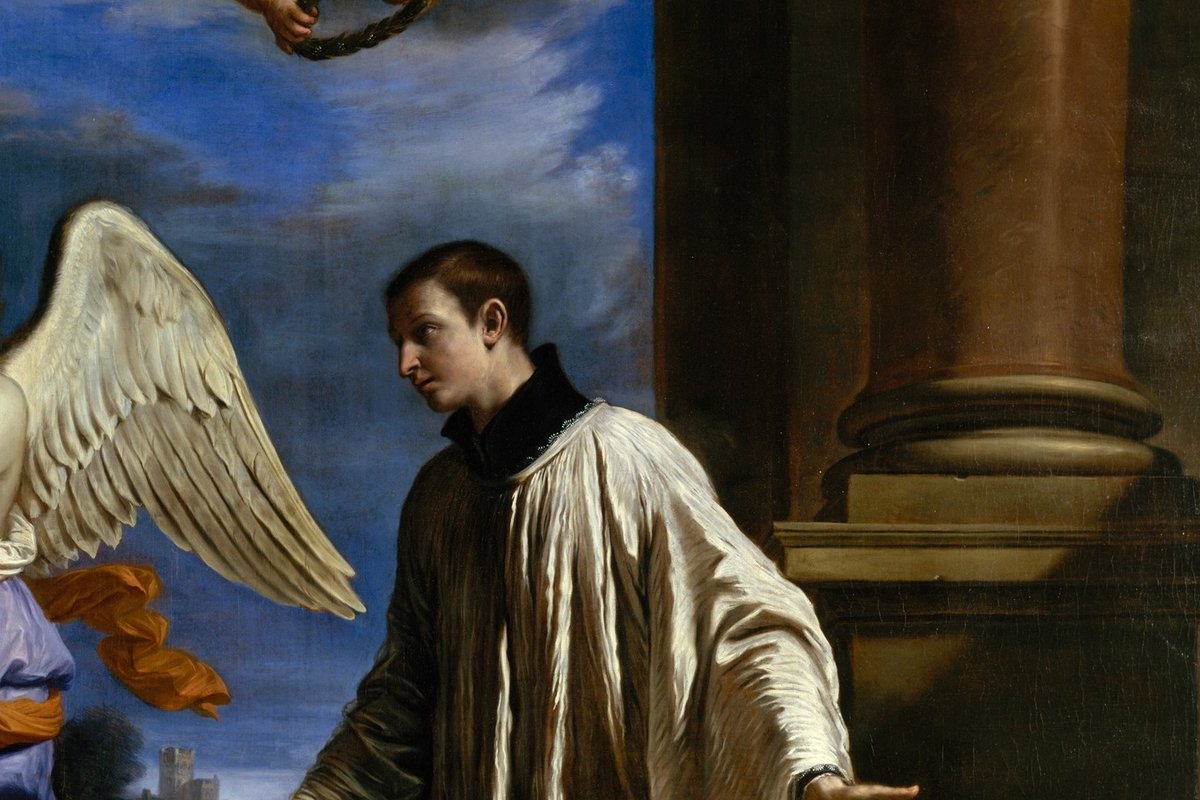
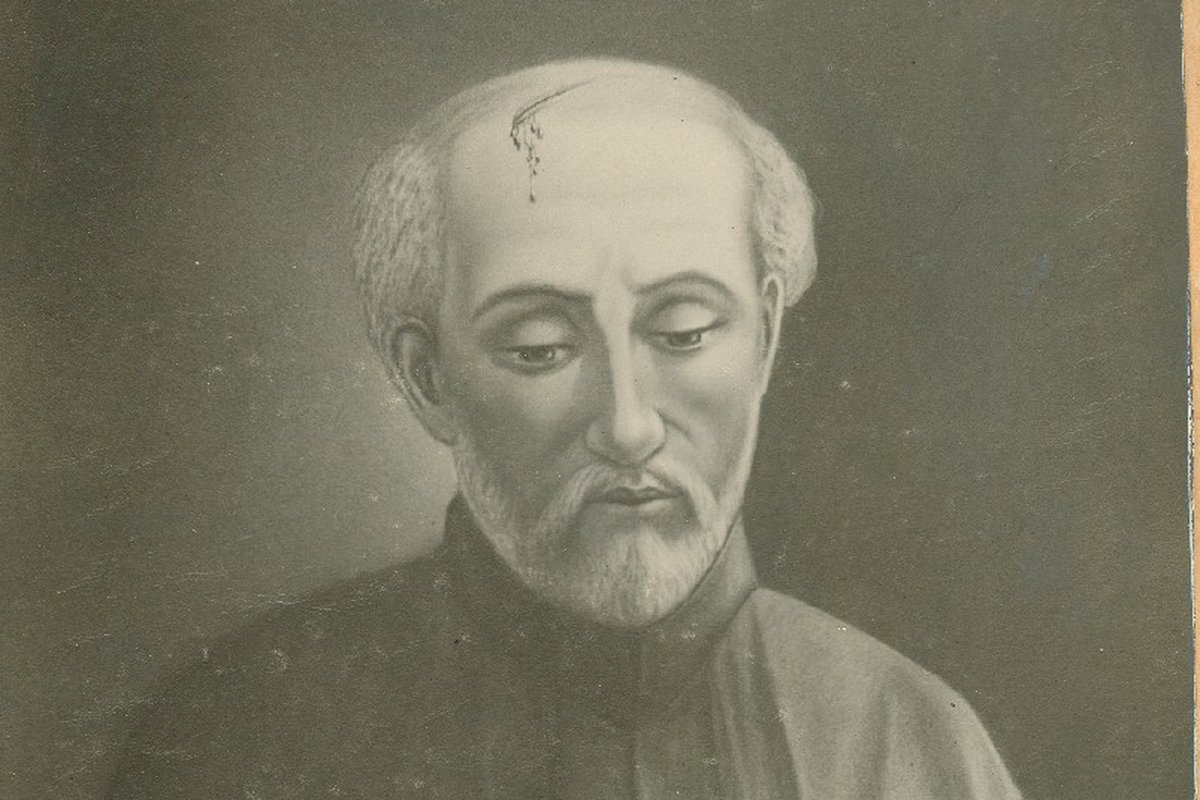
Saint Alphonsus Rodriguez

A merchant who lost everything
Alphonsus Rodriguez was born on July 25, 1532, in Segovia, Spain, the son of a prosperous wool merchant. As a boy, he briefly attended a Jesuit school newly established in Segovia — one of the order's first educational foundations in Spain — but his father's death forced him to leave his studies early and take over the family cloth-trading business, a detail that gives his much later entry into the Jesuit order a certain symmetry: the school he'd been pulled out of as a child eventually pointed him back toward the same religious order decades on. By his twenties he was running that business and raising a family of his own.
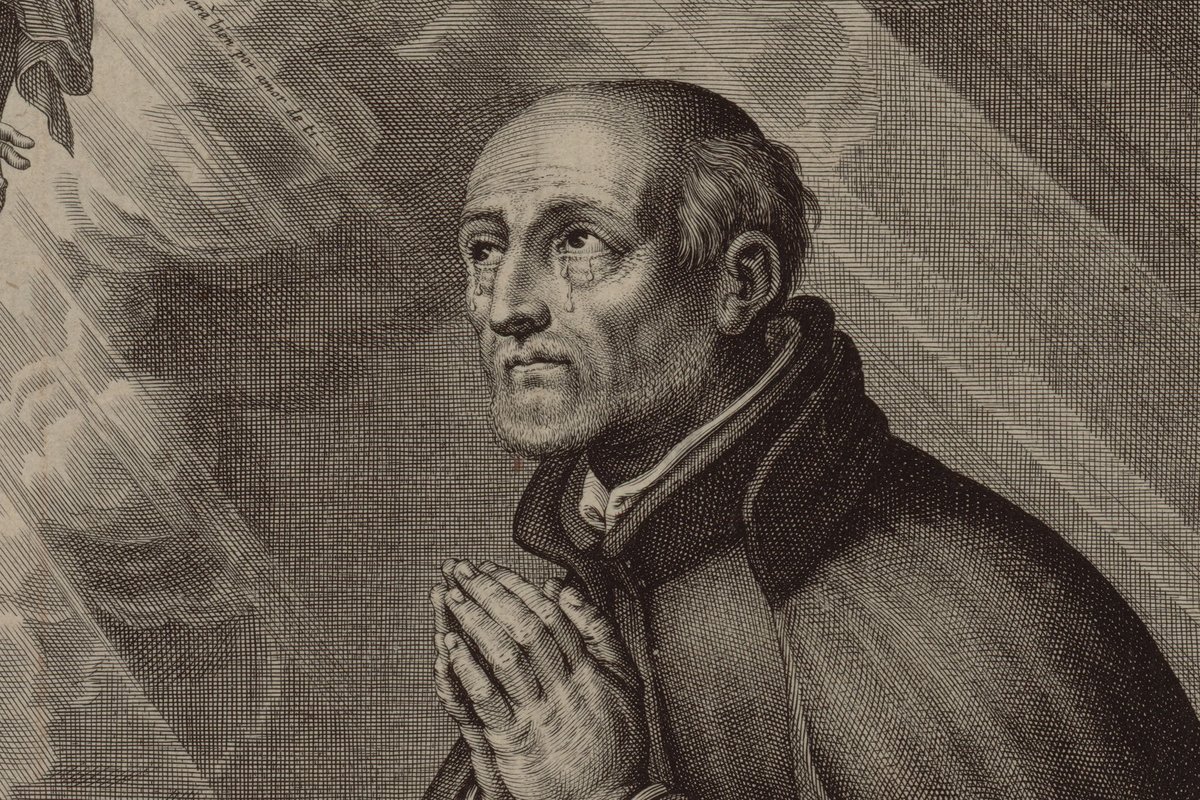
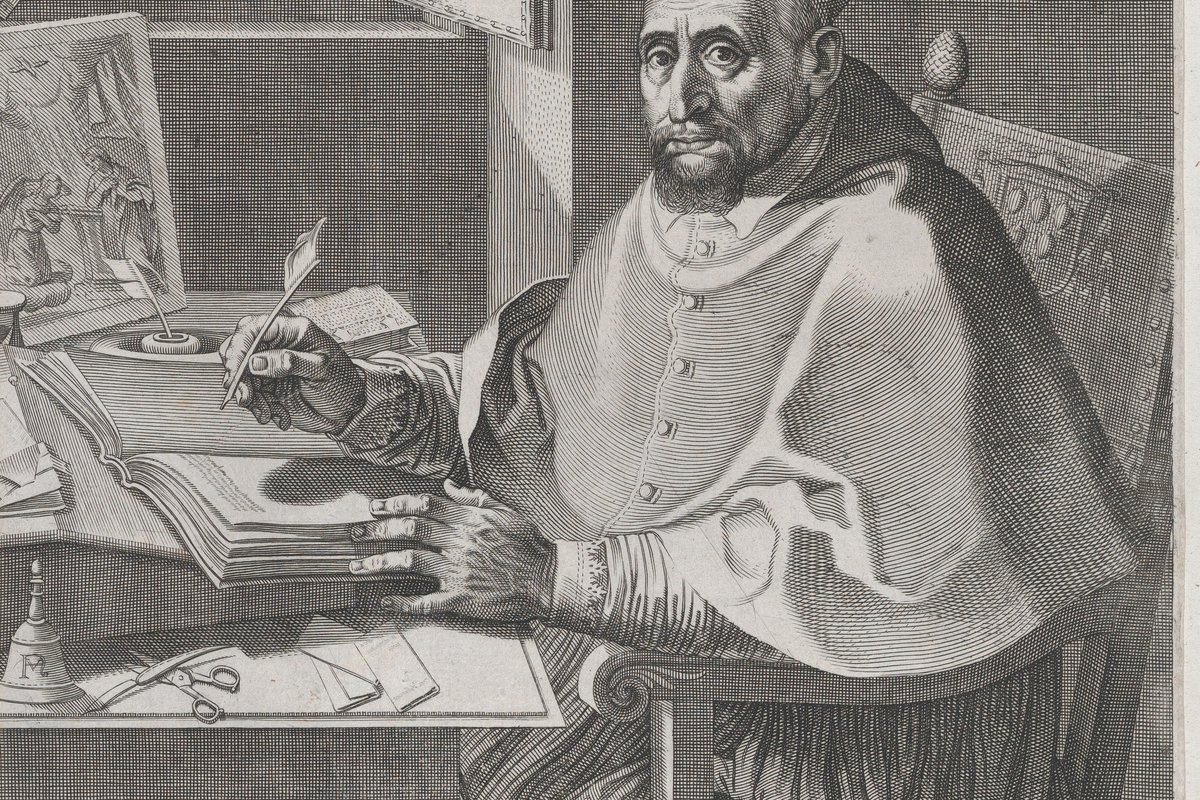
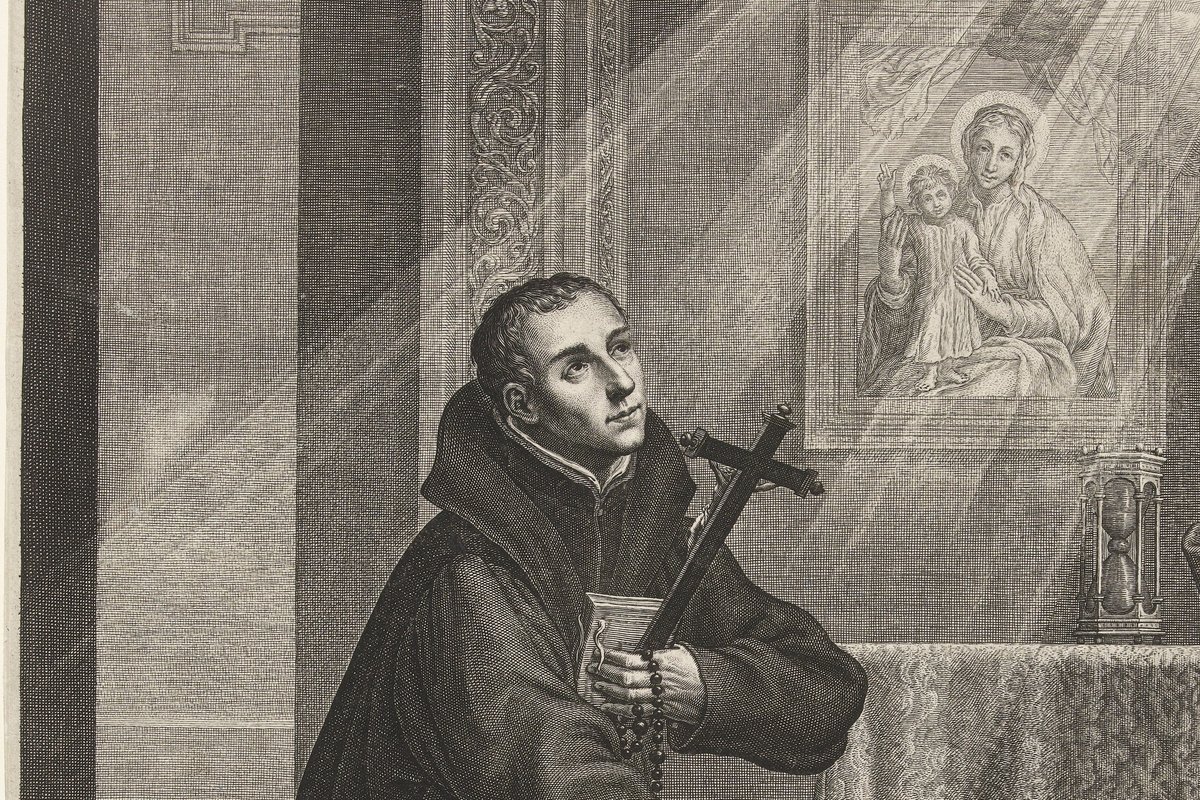
Schelte à Bolswert, Alphonsus Rodriguez, engraving, 17th century, Limédia Galeries — public domain.
The next fifteen years took nearly all of it away. He was widowed, and by his early thirties he had lost two of his three children as well; not long after, the cloth-trading business that had supported him collapsed, leaving him with neither family nor livelihood to fall back on. It's a genuinely hard run of loss, not a narrative device to make what comes next more dramatic — a real widower in his late thirties with nothing obvious left to build on. Accounts from this period describe him turning increasingly to prayer and penitential practices even before he approached the Jesuits formally, treating the collapse of his old life less as a disaster to recover from than as an opening toward something he'd perhaps always been drawn to.
The Jesuits' least likely recruit
What Alphonsus did next was ask the Society of Jesus to take him in. His first attempts to enter religious life were turned down — his age and lack of formal education worked against him, and he was reportedly rejected by the Jesuits at least once before ultimately being accepted. He had none of the university education the order normally required of its priests, having left school as a boy to join the family trade, so when the Jesuits finally admitted him on January 31, 1571, it was as a lay brother — a member who takes full religious vows without proceeding to ordination and typically performs the practical, domestic work that keeps a religious house running. He was 40 years old, an unusual age to start a religious vocation from nothing, and he professed his final, perpetual vows in 1585. From there he was sent to Mallorca, to the Jesuit College of Montesión in Palma, and given the job of porter: the brother responsible for answering the monastery's front door.
Forty-six years at the door
He held that post for roughly 46 years, until his death — greeting visitors, receiving deliveries, and managing the constant low-level business of a working religious house, for decades on end. It's worth being clear about what that job actually involved, since "porter" undersells it somewhat to modern ears: in a Jesuit college of this period, the doorkeeper was the constant point of contact between the enclosed religious community and the outside world, dealing daily with beggars, tradesmen, worried parents, students, and the ordinary friction of running an institution — an unglamorous position that offered no advancement, no recognition, and no end date beyond retirement or death. Tradition holds that Alphonsus treated the assignment as considerably more than an administrative chore: that every time the bell rang, he consciously received it as though Christ himself might be standing on the other side of the door asking to be let in. No verified line survives in his own hand stating it in exactly those terms, but the image is consistently attested in accounts of how his community remembered him, and it fits everything else known about a man who spent decades finding depth in the single most menial job in the house. Alongside the visible routine of the door, Alphonsus kept a private spiritual journal recording decades of reported mystical visions and ecstasies — a hidden inner life running underneath what looked, from the outside, like an unremarkable daily chore.
The doorkeeper who launched a missionary
That quiet post gave Alphonsus an outsized influence he could never have had as a merchant. Among the young Jesuits who passed through Montesión was Peter Claver, and it was Alphonsus — by then an old man well known for his holiness — who personally encouraged Claver toward the overseas missions. Claver took the advice, sailing for the Americas and spending roughly forty years in Cartagena boarding incoming slave ships to bring water, food, and medicine to the enslaved people arriving in the port, a ministry covered in full elsewhere on this blog. A doorkeeper in Mallorca, in other words, helped set in motion one of the most demanding missionary careers in the history of the Society of Jesus.
Canonization and a poet's tribute
Alphonsus died in Palma de Mallorca on October 31, 1617, at 85. Pope Leo XII beatified him on June 5, 1825, and Pope Leo XIII canonized him on January 15, 1888. For the first anniversary of that canonization, the English Jesuit poet Gerard Manley Hopkins — writing centuries after Alphonsus's death, not quoting him — composed a sonnet in his honor, closing on a line that has become the most quoted image of his life: "That in Majorca Alfonso watched the door" (Gerard Manley Hopkins, "In Honour of St. Alphonsus Rodriguez," 1888). His feast is kept on October 30, and he remains associated with Mallorca and the Balearic Islands, and more informally with lay religious brothers and porters — a patronage built, quite literally, on decades spent answering a door.
Trivia
Who was Saint Alphonsus Rodriguez?
Why was Alphonsus Rodriguez a lay brother instead of a priest?
What was Alphonsus Rodriguez's connection to Saint Peter Claver?
Did Alphonsus Rodriguez really believe Christ was at the door every time the bell rang?
What is Saint Alphonsus Rodriguez the patron saint of, and when is his feast?
You May Also Like
Related Reading