Saint Edith Stein — Teresa Benedicta of the Cross

A philosopher trained to seek the truth
Edith Stein was born on October 12, 1891, in Breslau, then part of Germany and now the Polish city of Wrocław, the youngest child of an observant Jewish family. She was gifted enough as a student to move into philosophy at university, and by 1917 she had earned her doctorate under Edmund Husserl, the founder of phenomenology — one of the very first women in Germany to hold such a degree, and quickly a respected voice in one of the most demanding philosophical circles in Europe. Somewhere along the way, the faith of her childhood had slipped out from under her; by her early twenties she described herself as having lost belief in God altogether.
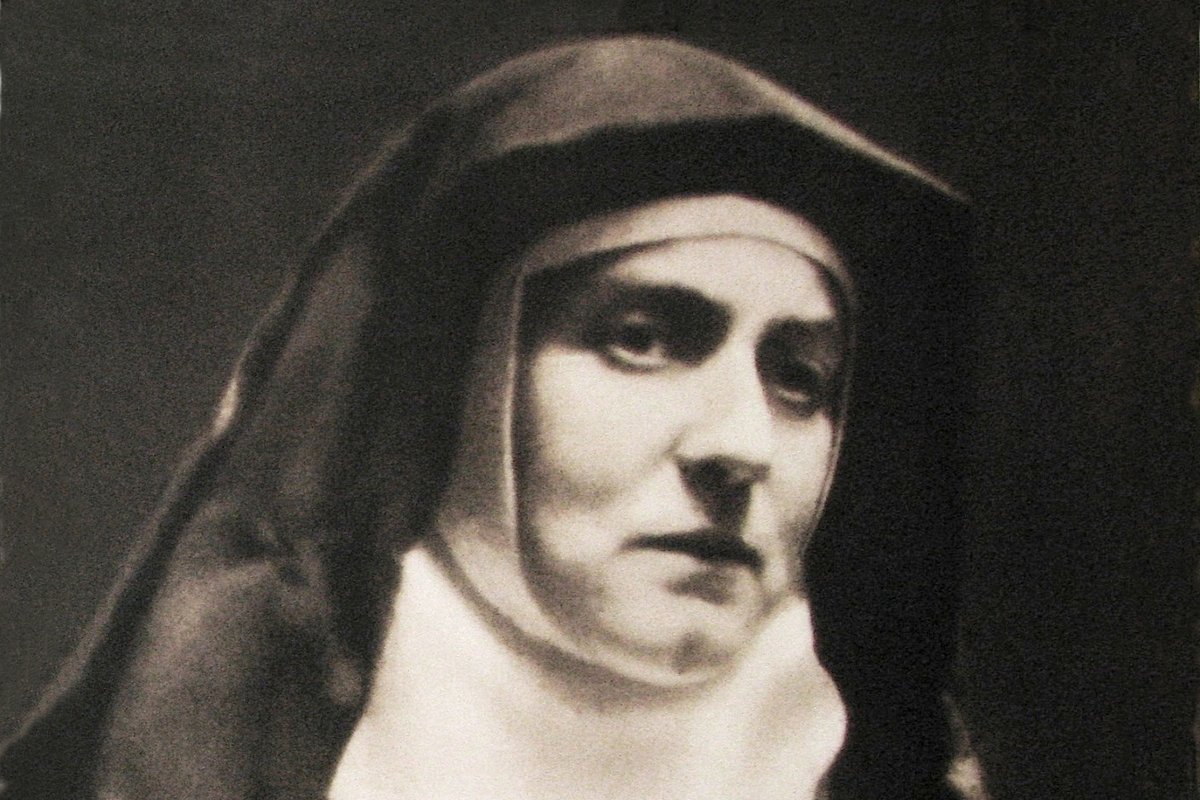
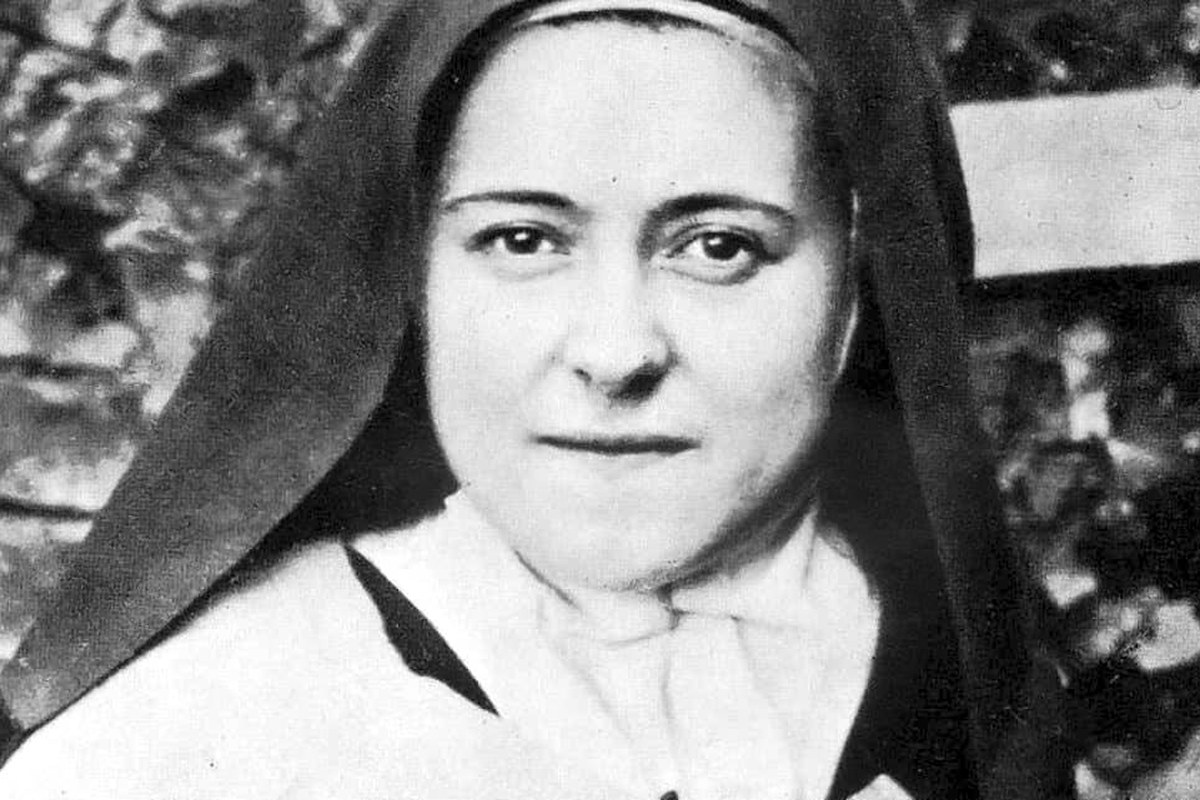
Cologne Carmel Archives, passport photograph of Edith Stein (Sr. Teresa Benedicta of the Cross), c. 1938–1939 — public domain.
A night with Teresa of Ávila
The turn came almost by accident. Visiting friends in 1921, Stein picked up a copy of the autobiography of Teresa of Ávila, the 16th-century Spanish Carmelite mystic, intending to read a little. She read the whole book in one sitting, through the night, and set it down changed. Tradition holds she said simply, "This is the truth" — not a debate won on philosophical terms, but a recognition that stopped a restless search cold. She was baptized into the Catholic Church the following year, 1922, a decision that cost her a great deal within her own Jewish family, who did not share her conviction and did not hide their grief over it.
For over a decade afterward she taught and lectured, still active in German intellectual life, before finally entering the cloister she'd wanted since that first night with Teresa's book. In 1934 she became a Discalced Carmelite nun at the convent in Cologne, taking the name Teresa Benedicta of the Cross — a name that, in hindsight, reads almost as a forecast.
Moving for safety, and finding none
By 1938, Nazi persecution of Jews in Germany had escalated past the point where the convent walls in Cologne offered any real protection to a nun of Jewish birth, converted or not. Her order moved her across the border to a Carmel in Echt, in the Netherlands, hoping that distance and a different country would keep her safe. It did not.
On August 2, 1942, the Nazi regime in the occupied Netherlands ordered the arrest of all Catholics of Jewish descent in the country — a targeted reprisal against a public letter the Dutch Catholic bishops had issued condemning the deportation of Jews from the Netherlands. Under that specific order, Edith Stein and her sister Rosa, herself also a Catholic convert living at the Echt convent, were seized. Both were deported to Auschwitz-Birkenau. Edith Stein was murdered in the gas chambers there on August 9, 1942.
This detail matters and shouldn't be softened: she was arrested and killed because she had been born Jewish, in a reprisal action aimed specifically at Catholics of Jewish descent, despite two decades as a baptized Catholic and eight years as a professed religious. Her death belongs to the history of the Holocaust as much as it belongs to the history of the Church, and both of those things are true at once.
What the Church says about her death
At her canonization in Rome on October 11, 1998, Pope John Paul II spoke of her life as a search for truth that never really stopped, even after her conversion: "Whoever seeks the truth is seeking God, whether consciously or unconsciously," he said in the homily, describing her whole biography — philosopher, convert, nun, victim — as one continuous line. He also spoke directly to the tension in her identity, saying she had come "to be a daughter of the chosen people and to belong to Christ not only spiritually, but also through blood," language that held her Jewishness and her Catholic vocation together rather than treating one as having replaced the other. Of her final days, he quoted words attributed to her from beneath the cross of her own suffering: "Beneath the Cross I understood the destiny of God's People... Indeed, today I know far better what it means to be the Lord's bride under the sign of the Cross."
Her canonization as a martyr was not without controversy. Some Jewish commentators and organizations raised a real concern at the time: that calling her death a Catholic "martyrdom" — technically defined in canon law as death suffered in hatred of the faith — risked obscuring the plainer historical fact that the Nazis killed her as a Jew, not as a Christian, and that her murder was one small part of the same genocide that killed six million Jews who had never converted to anything. The Church's own position holds both truths without collapsing one into the other: she died specifically because of her Jewish ancestry under Nazi racial law, and the Church separately recognizes in that death an act of Christian witness. It's a tension worth naming honestly rather than resolving too neatly in either direction.
Co-patroness of Europe
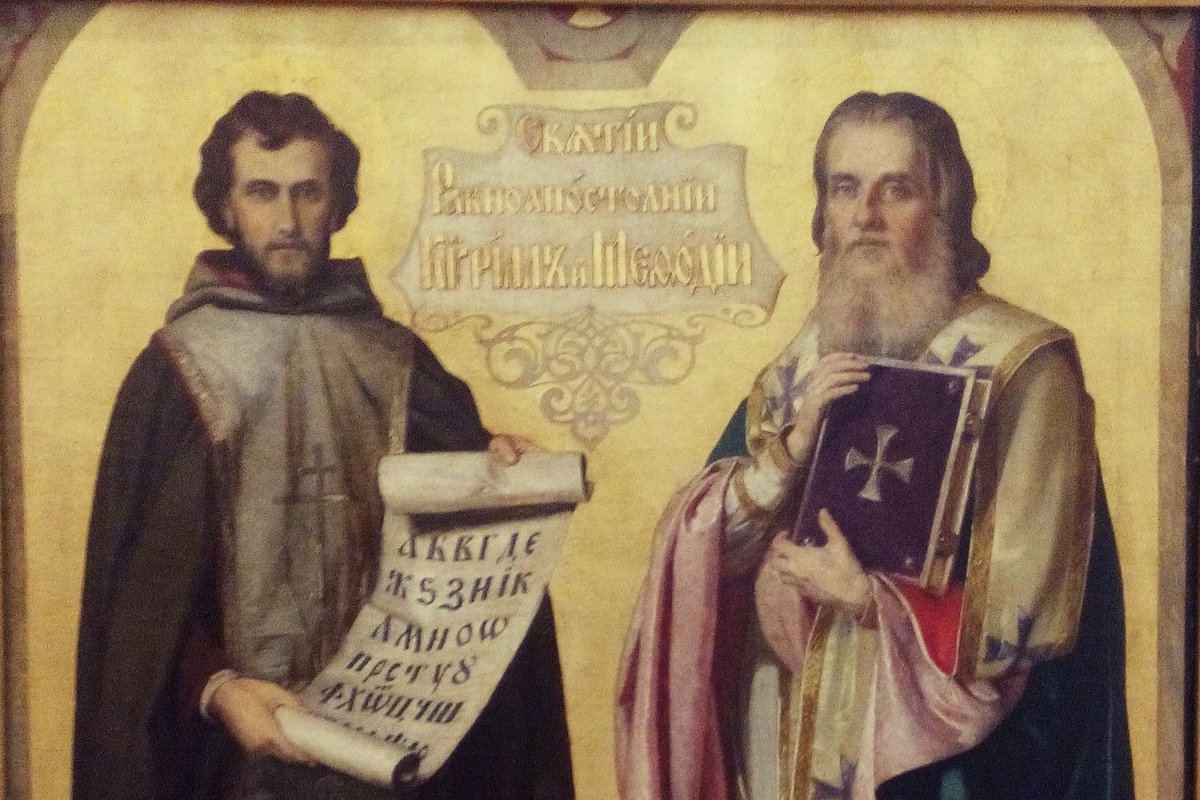
On October 1, 1999, in the apostolic letter Spes Aedificandi, John Paul II named Edith Stein co-patroness of Europe, alongside Bridget of Sweden and Catherine of Siena, joining Benedict of Nursia and Saints Cyril and Methodius as patrons of the continent — see the Patron Saints Directory for the fuller list of countries and peoples under a saint's patronage. It's a formal, well-documented papal designation, distinct from the folk patronages that grow up more informally around some saints, and it reflects both her intellectual stature and the particular weight her story carries for a continent still reckoning with what happened on it in the 20th century. She's also increasingly invoked today in the context of Jewish-Catholic dialogue, by converts navigating complicated family reactions to a change of faith, and in Holocaust remembrance more broadly.
Her feast is kept on August 9 — not a date chosen for convenience, but the actual date of her death at Auschwitz, a small but deliberate refusal to let the calendar soften what happened to her.
Trivia
Who was Saint Edith Stein?
Why was Edith Stein arrested and killed, if she was a Catholic nun?
What made Edith Stein convert to Catholicism?
Is Edith Stein considered a martyr, and why is that a sensitive question?
What is Saint Edith Stein the patron saint of, and when is her feast?
You May Also Like
Related Reading