Patron Saints Directory — Who's the Patron Saint of...?

How the Church decided who protects what
The idea of a patron saint is older than most people assume. In the first three centuries of Christianity, the faithful worshipped in private homes — there was no custom yet of naming a building after a saint. Once Constantine legalized the faith, churches began rising directly over the graves of martyrs, and each building naturally took on the name and protection of the martyr buried beneath it. From there, the custom spread outward: from places to occupations, from occupations to causes, from causes to whole countries. Rules eventually caught up with the practice — Pope Urban VIII formalized how new patrons could be chosen in 1638 — but centuries of already-venerated traditional patrons, like several below, were explicitly left in place rather than overridden.
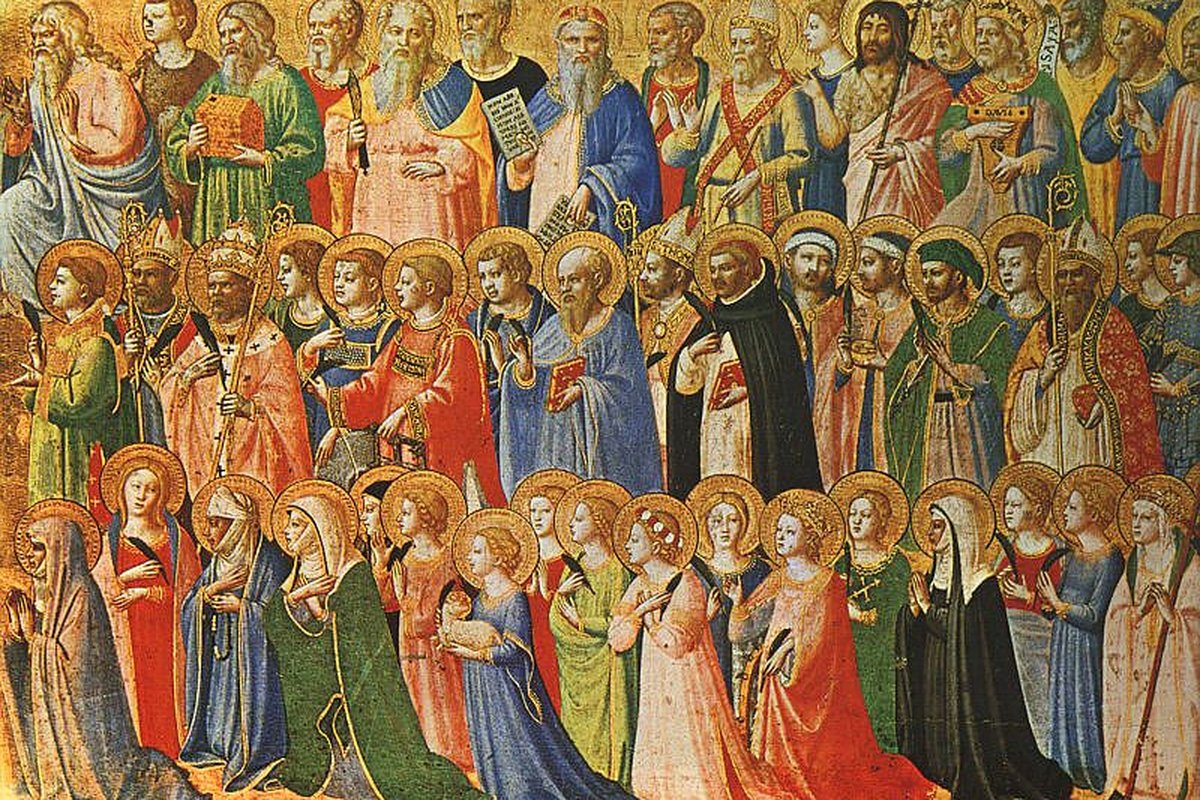
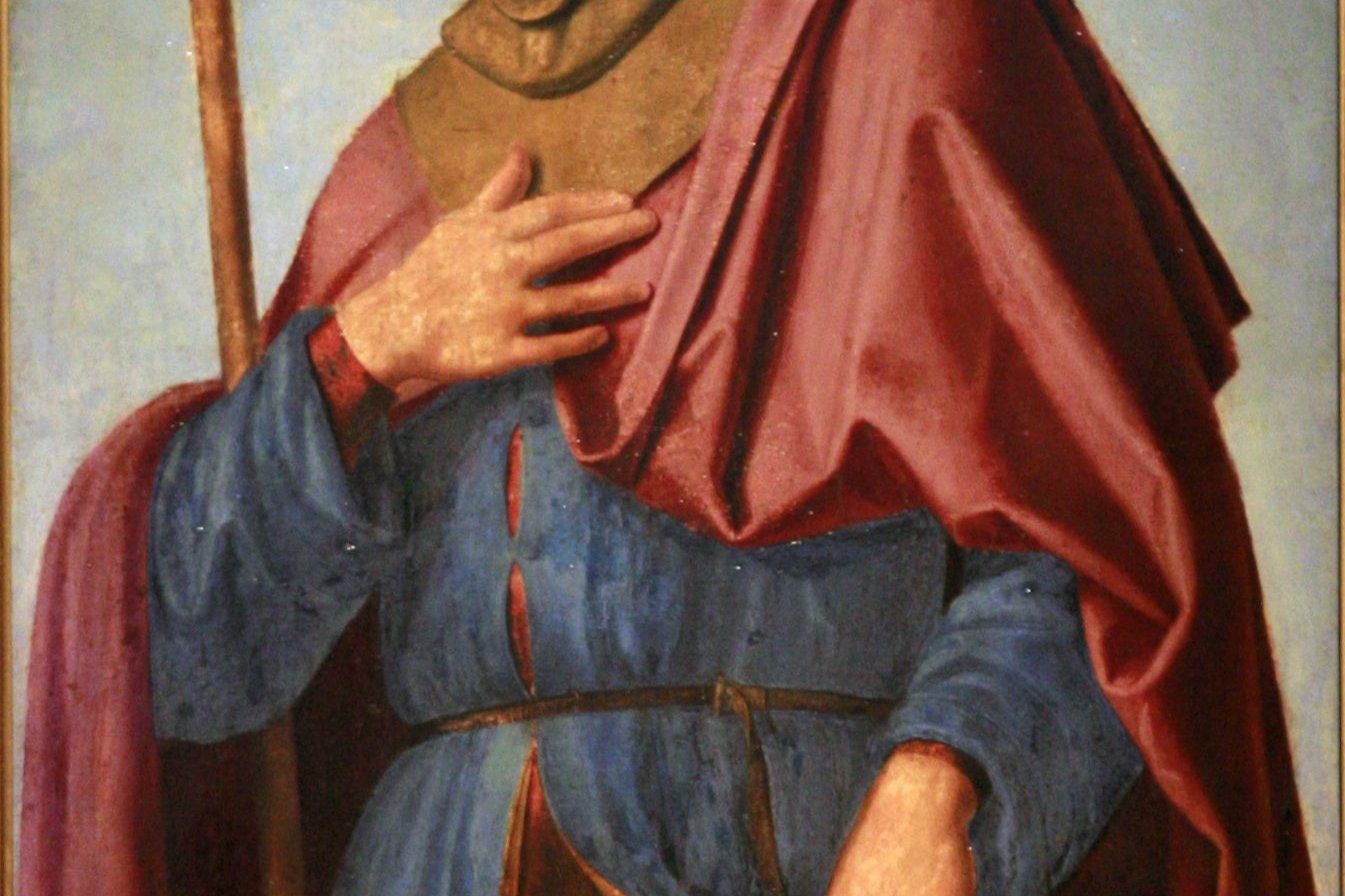
Fra Angelico, The Forerunners of Christ with Saints and Martyrs (predella panel, San Domenico Altarpiece), c. 1423–24, National Gallery, London — public domain.
Every saint in this directory already has a full article on this blog — this page just organizes the patronages in one place, by what they cover, so you can find the right saint faster than reading fifty articles end to end.
Occupations, trades & communication
- Saint Cecilia — patron of music and musicians, a title tradition traces to her singing to God in her heart during her own forced wedding.
- Saint Martha of Bethany — patron of cooks, servants, housekeepers, and hospitality workers, because of her role serving Jesus in her own home.
- Saint Luke the Evangelist — patron of painters, credited by a much later tradition as the first person to paint Mary's face.
- Saint Simon the Zealot — patron of woodworkers and sawyers, tied to an apocryphal account of how he was martyred.
- Saint Ambrose of Milan — patron of beekeepers, after a legend that a swarm of bees settled harmlessly on his face as an infant.
- Saint Thomas Aquinas — patron of students, universities, and scholars, recognition for the largest single body of theological work in the Church's history.
- Saint Raphael the Archangel — patron of physicians, nurses, and travelers, drawn directly from his role guiding and healing in the Book of Tobit.
- Saint Gabriel the Archangel — patron of telecommunications workers — messengers, radio operators, postal workers, broadcasters — a modern extension of his role as God's own messenger.
- Saint Clare of Assisi — patron of television, a 1958 papal designation for a saint once said to have watched a Christmas Mass projected on her convent wall.
- Saint Francis Xavier — patron of foreign missions (declared 1927, alongside Thérèse of Lisieux), after a decade spent evangelizing India, the Malay Archipelago, and Japan.
- Saint Athanasius of Alexandria — patron of theologians, recognition for a bishop who survived five exiles without ever abandoning his defense of Christ's full divinity.
- Saint Augustine of Hippo — patron of theologians, printers, and brewers, patronages tied respectively to his prolific theological writing and, by tradition, to the wild youth he left behind before his conversion.
- Saint John Chrysostom — patron of preachers and orators, a title Pope Pius X gave him in 1908 for a surviving body of sermons still studied as some of the finest preaching the early Church produced.
- Saint Basil the Great — patron of hospital administrators and monks (and, more locally, of Russia and of Cappadocia, where he served as bishop), recognition for the hospital complex he built outside Caesarea and the monastic rule he wrote for Eastern Christian communal life.
- Saint Pachomius the Great — patron of monks and coenobites (monks living in community), recognition for founding the first documented cenobitic monastery at Tabennisi around 323–325 and writing the earliest surviving Christian monastic rule.
- Saint Robert Bellarmine — patron of catechists and canonists, honoring his own plainly written catechism texts meant for ordinary believers and the rigor of his defense of Church doctrine and law.
- Saint Matthias the Apostle — traditionally invoked as patron of carpenters, tailors, and alcoholics, and against smallpox, patronages whose historical origins aren't clearly documented.
- Saint Madeleine Sophie Barat — recognized as a patron of the education of girls and young women, reflecting the international network of schools she founded as head of the Society of the Sacred Heart.
- Saint Isidore the Farmer — patron of farmers, day-laborers, and the city of Madrid, tied to the legend of an angel plowing his field while he stopped to pray.
- Saint Fiacre — patron of gardeners, a patronage that tracks closely with what tradition says he actually did with his days: clearing land, cultivating food and healing herbs, and building a place of shelter and care directly from the fruit of that labor.
- Saint Dunstan of Canterbury — popularly invoked by metalworkers and locksmiths, a folk association tied to his own real skill as a craftsman and to the legend of him gripping the Devil's nose with blacksmith's tongs, rather than any formal papal decree.
- Saint Jean-Baptiste de La Salle — patron of teachers, a title given in 1950 for founding the first religious congregation of men dedicated entirely to teaching poor children.
- Saint Ivo of Kermartin — patron of lawyers, of Brittany, and of abandoned children, recognition for the only judge or advocate the Catholic Church has ever formally canonized, remembered for representing the poor in court free of charge.
- Saint Agatha of Sicily — patron of bell-founders, a patronage grown from a visual association popular devotion drew between the shape of a bell and imagery tied to her ancient, largely legendary martyrdom account.
- Saint Eustace — patron of hunters and firefighters (and of the city of Madrid), drawn from a legendary hunting vision and a martyrdom by fire that scholars now treat as largely unhistorical.
- Saint Genesius of Rome — patron of actors and entertainers, following directly from a legend of a comic performer whose stage mockery of baptism turned into a real, and fatal, conversion.
- Saint John Berchmans — patron of altar servers and of young students, both patronages that reflect his own life as a devoted young man still in formation when he died.
- Saint Tarcisius — popularly recognized, rather than formally proclaimed, as a patron of altar servers, First Communicants, and eucharistic ministers, a devotion that grew directly out of his enduring image as a young person entrusted with guarding the Blessed Sacrament; his altar-server patronage overlaps with, but is separate from, Saint John Berchmans's above.
- Saints Cosmas and Damian — patrons of physicians, surgeons, dentists, and pharmacists, twin brothers remembered for practicing medicine and refusing to make the sick pay for it.
- Blessed Fra Angelico — patron of Catholic artists, a title Pope John Paul II gave him in 1984, citing the perfect integrity of his life alongside the almost divine beauty of the images he painted.
- Saint Titus Brandsma — increasingly promoted as a patron of Catholic journalists and journalism, honoring the press-resistance work that led to his arrest and death at Dachau in 1942; a modern, still-solidifying designation rather than a centuries-old tradition.
- Saint Albert the Great — patron of natural scientists (declared 1941) and also commonly invoked by philosophers and students of the natural sciences, recognition for a Dominican encyclopedist who wrote commentaries on nearly the whole of Aristotle and taught Thomas Aquinas.
- Saint Alphonsus Rodriguez — associated with lay religious brothers and porters generally, a patronage of long custom rather than a single sweeping decree, honoring the ruined widower who spent 46 years answering a Jesuit monastery door in Mallorca.
- Saint Bernard of Clairvaux — patron of the Cistercian order, beekeepers, and candlemakers (and also of Gibraltar), honoring the 12th-century abbot whose preaching and writing made him one of the most influential churchmen of his age.
- Saint Brendan the Navigator — patron of sailors, mariners, and travelers, a patronage drawn directly from a legendary seven-year Atlantic voyage told centuries after this real 6th-century Irish abbot's death.
- Saint Marcellin Champagnat — patron of the Marist Brothers and of Marist education worldwide, and informally regarded as a patron of teachers, honoring the French priest who founded a teaching order after personally attending a dying teenager who knew almost nothing of the Catholic faith.
- Blessed Natalia Tułasiewicz — since a 2022 Vatican-approved designation, patroness of Polish teachers, honoring the literature graduate who volunteered for Nazi forced labor in Germany to secretly minister to fellow deported Polish women before her death at Ravensbrück in 1945.
- Saint Hilda of Whitby — honored as a patron of learning and culture, and, through her recognition of the herdsman-poet Caedmon's gift, of poetry, honoring the abbess who hosted the pivotal Synod of Whitby in 664.
- Saint Zita of Lucca — patron of domestic servants, maids, and housekeepers, a patronage rooted directly in her own life: 48 years in the same household position, dividing her modest wages between her family and the poor.
- Saint Marguerite Bourgeoys — informally associated with teachers and educators, a fitting tribute to the laywoman who crossed to New France in 1653 and founded Canada's first uncloistered teaching congregation, the Congrégation de Notre-Dame de Montréal.
- Saint Barbara — patron of artillerymen, miners, and military engineers, a patronage tradition traces to the lightning bolt said to have struck down her father moments after her martyrdom.
- Saint Homobonus — patron of businesspeople, tailors, shoemakers, and clothworkers, trades tied directly to his own work as a cloth merchant and tailor in Cremona, and to his reputation for honest dealing.
- Saint Drogo — patron of shepherds and cattle, grounded in the years he spent tending flocks around Sebourg after giving away his family estate, plus a later, looser patronage of coffeehouse keepers tied to the innkeepers who sheltered him on pilgrimage.
- Saint Margaret Clitherow — patron of businesswomen, honoring the York butcher's wife who ran her family's household and trade while secretly sheltering Catholic priests at the cost of her own life.
- Saint Florian — patron of firefighters, a patronage built on a legend of extinguishing a burning building with a single bucket of water, paired with his own death by drowning.
- Saint Joseph of Cupertino — patron of pilots and air travelers, a direct extension of his reputation for levitating during prayer, and also of students, honoring his own well-documented struggles as a boy learning his studies.
- Saint Bernard of Menthon — patron of mountaineers, skiers, and Alpine travelers, a 1923 papal declaration recognizing the rescue hospices he founded at two of the deadliest Alpine passes, later famous for the rescue dog breed that took his name.
- Saint Nicholas Owen — informally honored as a patron of illusionists and escapologists, a modern patronage drawn from his own craft of building hidden priest holes across Elizabethan England.
- Saint Guy of Anderlecht — patron of farmers, laborers, and horses and other work animals, a devotion that grew from reports of a horse stopping unbidden at his grave and the centuries-long tradition of Belgian farmers leading their horses to Anderlecht for an annual blessing.
Life situations & difficult causes
- Saint Anne — widely venerated as patron of mothers, grandmothers, expectant mothers, and housewives, a patronage that follows naturally from her traditional role as the woman who raised the mother of Jesus.
- Saint Joachim — venerated as patron of fathers and grandfathers, a role that follows directly from his traditional identity as the father who raised the mother of Jesus, alongside Anne.
- Saint Expeditus — patron for urgent needs, quick resolutions, and resisting the temptation to procrastinate, a connection tradition draws from his name (resembling the Latin for "prompt") and a legend of refusing the devil's temptation to delay his conversion.
- Saint Anthony of Padua — patron of lost things, after a story of a stolen psalter miraculously returned through his prayer.
- Saint Jude Thaddaeus — patron of hopeless and desperate causes, a role tradition says grew from his name's resemblance to Judas Iscariot leaving him under-invoked, and so especially attentive to the causes everyone else had given up on.
- Saint Rita of Cascia — "Patroness of Impossible Causes," a title bestowed at her 1900 canonization after a life that survived an abusive marriage and the deaths of both her sons.
- Saint Elizabeth of Hungary — patron of bakers, beggars, brides, charities, the homeless, hospitals, and widows, reflecting a life built almost entirely around giving her wealth away.
- Saint Gianna Molla — patron of mothers, physicians, and unborn children, honoring a 20th-century doctor who continued a pregnancy at the cost of her own life.
- Saints Perpetua and Felicity — patrons of mothers and expectant mothers, a patronage tracing directly to their own documented story: a young noblewoman nursing an infant son and an enslaved woman who gave birth in prison days before their shared martyrdom in 203 AD.
- Saint Valentine of Rome — patron of lovers (and, less famously, of people with epilepsy and of beekeepers), attached to a Roman martyr about whom very little is historically certain.
- Saint Francis of Assisi — patron of ecology and animal welfare, earned by a life of preaching to birds and a poem praising God through sun, water, and "Brother Fire."
- Saint Kateri Tekakwitha — also honored as a patron of ecology, the first Native American saint canonized by the Catholic Church.
- Saint Philip Neri — patron of joy, humor, and laughter, a reputation the "Apostle of Rome" cultivated on purpose.
- Saint Vincent de Paul — patron of charitable societies and organizations, honoring the door-to-door charity networks and religious communities he built to serve the poor.
- Saint Pier Giorgio Frassati — patron of youth and of mountaineers, reflecting both his death at 24 while still a university student and his genuine passion for mountain climbing throughout his short life.
- Saint Aloysius Gonzaga — patron of youth (declared 1729) and, since 1991, of AIDS patients and their caregivers, honoring a Jesuit nobleman who died at 23 after nursing plague victims by hand.
- Saint Alban of Britain — invoked as a patron of refugees, converts, and torture victims, a modern connection drawn from his story of sheltering a fugitive priest and taking his place at execution.
- Saint Dominic Savio — patron of choirboys, falsely accused people, and juvenile delinquents, recognition for a student of Don Bosco's Turin oratory who died at fourteen after building his own peer group to help fellow students live their faith.
- Saint Margaret of Antioch — patroness of pregnant women and childbirth, a patronage drawn directly from her legendary escape from a dragon's throat, and also, less formally, of nurses and the dying.
- The Holy Innocents — patrons of children and foundlings, honoring the infant boys of Bethlehem killed by King Herod while searching for the child he feared as a rival king.
- Saint Gregory Thaumaturgus — invoked in some traditions as a patron for desperate or seemingly impossible situations, reflecting the scale of transformation credited to his 3rd-century missionary ministry in Asia Minor.
- Saint Charles Lwanga — patron of African Catholic youth and converts, and specifically of torture victims, honoring the head of the royal pages burned alive in 1886 for protecting the younger boys under his charge.
- Saint Cajetan — patron of the unemployed and job-seekers in modern popular devotion, and also documented as a patron of Argentina and, in some traditions, of gamblers, honoring the Counter-Reformation priest who set up an interest-free lending fund to fight loan sharks preying on famine-stricken Naples's poor.
- Saint Eugene de Mazenod — patron of bishops, broken homes and families in crisis, exiles, founders, evangelizers and missionaries, and troubled marriages, patronages tracing directly back to his own childhood as a poor exile during the French Revolution.
- Saint Germaine Cousin — patroness of abused and neglected children, victims of child abuse, the poor, shepherdesses and shepherds, and people with disabilities or physical deformities, honoring a shepherdess who endured documented cruelty from her own stepmother.
- Saint Macrina the Elder — invoked, in a comparatively minor and folk devotional sense, as a patroness of widows and against poverty, honoring the grandmother who survived Diocletian's persecution in hiding and personally taught the faith to grandsons Basil the Great and Gregory of Nyssa.
- Blessed Elisabetta Canori Mora — a widely invoked intercessor for troubled marriages, for spouses suffering infidelity or abuse, and for family life generally, a patronage grown directly out of her own documented story of sustaining her daughters after her husband's abandonment.
- Blessed Laura Vicuña — increasingly invoked in recent decades as a patroness of victims of abuse, a devotional emphasis still taking shape that fits naturally with her own documented story of recognizing and responding to her mother's exploitation.
- Saint Margaret of Castello — widely invoked today by and for people with disabilities and for the blind, and — especially within pro-life advocacy — for unborn and unwanted children, a modern devotional development rather than an ancient formal title.
- Saint Marguerite d'Youville — informally invoked on behalf of the poor, widows, and those facing serious financial hardship, honoring the widow left with crushing debt at 29 who went on to found the Grey Nuns of Montreal.
- Saint Melangell — patron saint of hares and small or wild animals, a patronage rooted in centuries of continuous local Welsh practice tied to her legendary sheltering of a hunted hare from a prince's hounds.
- Saint Jerome Emiliani — patron of orphans and abandoned children, a title Pope Pius XI formalized in 1928 honoring the Venetian soldier-turned-priest who founded orphanages across northern Italy and the Somaschi Fathers to continue that work.
- Saint Josephine Bakhita — patron saint of victims of human trafficking and modern slavery, honoring a Sudanese woman kidnapped and enslaved as a child who found freedom in an Italian convent and became a Canossian sister.
- Saint Drogo — venerated as patron of unattractive and disfigured people, a patronage that comes directly from the illness that changed his appearance and led him to live walled into a cell rather than be seen in public.
- Saint Margaret Clitherow — also honored as a patron of converts to Catholicism, honoring her own decision, as a young married Englishwoman, to embrace the Catholic faith at real legal risk during the reign of Elizabeth I.
- Saints Zelie and Louis Martin — widely invoked today as intercessors for married couples and family life, honoring the first spouses in Church history canonized together for their shared life as a married couple and parents.
- Saint Toribio Romo — a popular, informal intercessor for migrants, a devotion that grew from decades of reported encounters between Mexican migrants crossing the US border and a young priest they later identified from photographs as Toribio Romo, rather than from any formal Vatican declaration.
- Saint Olga of Kiev — venerated as patron of widows and converts, honoring the 10th-century regent who was widowed young and became the first ruler of Rus to embrace Christianity, decades before her grandson Vladimir made it the state faith.
- Saint Godelieve of Gistel — patron against marital difficulties, a patronage drawn directly from her own documented suffering in an abusive arranged marriage that ended in her murder around 1070.
Health & protection
- Saint Roch — patron invoked against plague, contagious disease, and epidemics generally, as well as patron of the sick, of dogs and dog owners, and of surgeons, patronages that follow directly from his own legend of contracting and surviving the plague while caring for others.
- Saint Lazarus of Bethany — venerated as a patron of those who are sick or in need of healing, a patronage that follows naturally from his own story of being restored from death.
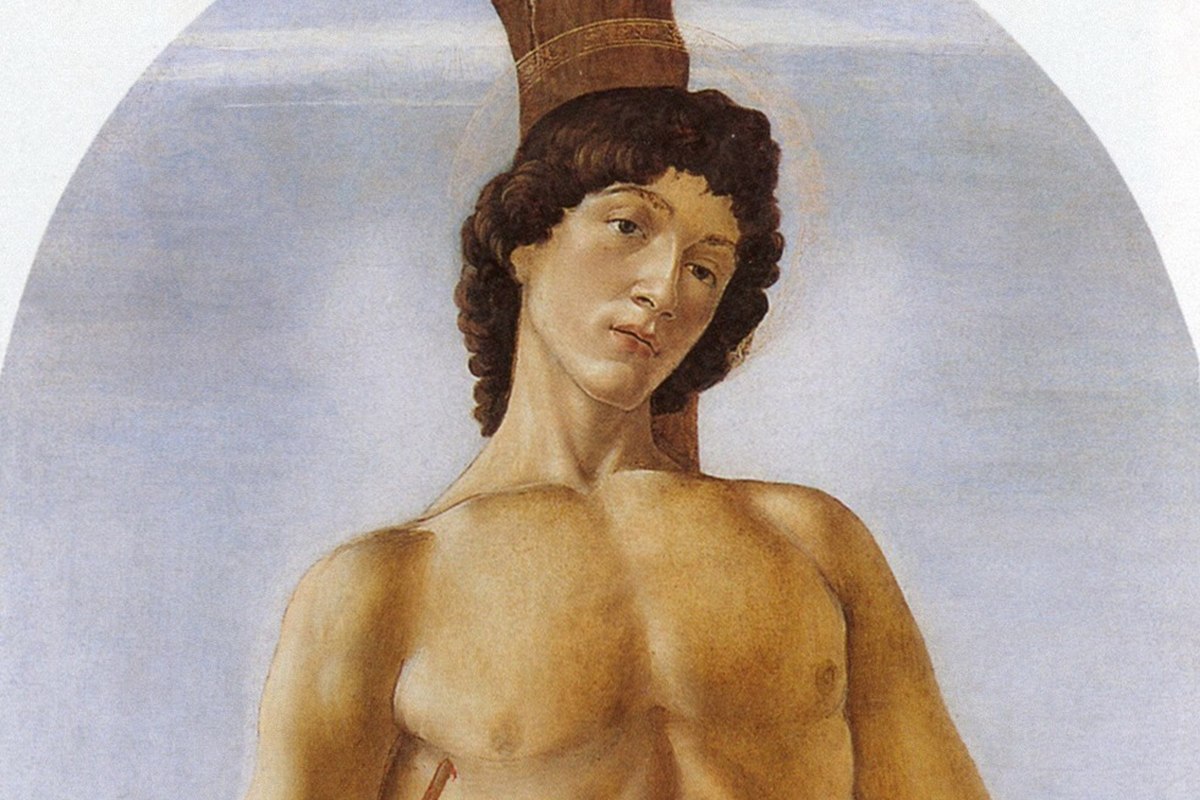
- Saint Sebastian — patron of plague victims, a patronage built less on a single miracle than on his story of surviving what should have killed him.
- Saint Lucy of Syracuse — patron of the blind, tied to a legend involving her own eyes and to her name's root in "lux," Latin for light.
- Saint Dymphna — patron of people with mental illness, epilepsy, and victims of incest, drawn from a 7th-century legend of her flight from her own father.
- Saint John of God — patron of hospitals, the sick, nurses, firefighters, alcoholics, and booksellers, patronages tracing directly back to his hospital order and his own dramatic conversion.
- Saint Apollonia — patron of dentists and those suffering a toothache, tied directly to the account of a mob violently knocking out her teeth before her death.
- Saint Bibiana — traditionally invoked against epilepsy, headaches, and hangovers, and as a patron of torture victims and single laywomen, associations without a clearly documented historical origin.
- Saint Peregrine Laziosi — patron of cancer patients, honoring the Italian friar tradition credits with a miraculous healing of a severe leg tumor on the eve of a scheduled amputation.
- Saint Blaise — patron of throat ailments, source of the Blessing of Throats ceremony still performed on his feast day, and traditionally also of wool-combers, tied to the legend of his torture with iron wool-combs.
- Saint Edmund the King — patron of kings, of protection against pandemics, and of torture victims, patronages tracing directly to his royal status and his traditional death by arrows at the hands of Viking invaders.
- Saint Vitus — patron of dancers, actors, and epileptics, and, through the medical condition that borrowed his name, of people with nervous disorders generally; German folk tradition also invokes him against oversleeping and lethargy.
- Saint Lydwine of Schiedam — patroness of chronic pain and long-term illness sufferers, and of ice skating, a modern patronage directly tied to the skating accident at fifteen that left her disabled for the rest of her life.
- Saint Bernadette Soubirous — patroness of the sick, of shepherds and shepherdesses, and of Lourdes itself, honoring the sickly fourteen-year-old whose reported 1858 apparitions at the Massabielle grotto turned a garbage-dump grotto into one of Catholicism's most visited pilgrimage sites.
- Saint Rafqa — widely invoked for eye conditions and the blind, honoring the Lebanese Maronite nun who lived nearly three decades of her own life completely blind.
- Saint Marianne Cope — venerated by and for people affected by leprosy (Hansen's disease) and social outcasts generally, honoring her 35 years of hands-on nursing care for leprosy patients exiled to Molokai, Hawaii.
- Saint Godelieve of Gistel — also invoked against ailments of the throat, a patronage tied directly to the manner of her death by strangling around 1070.
Countries & peoples
- Saint Barnabas the Apostle — venerated as patron of Cyprus, of Antioch, and of peacemakers, patronages that follow naturally from his role founding and encouraging the earliest mixed Jewish-Gentile Christian communities.
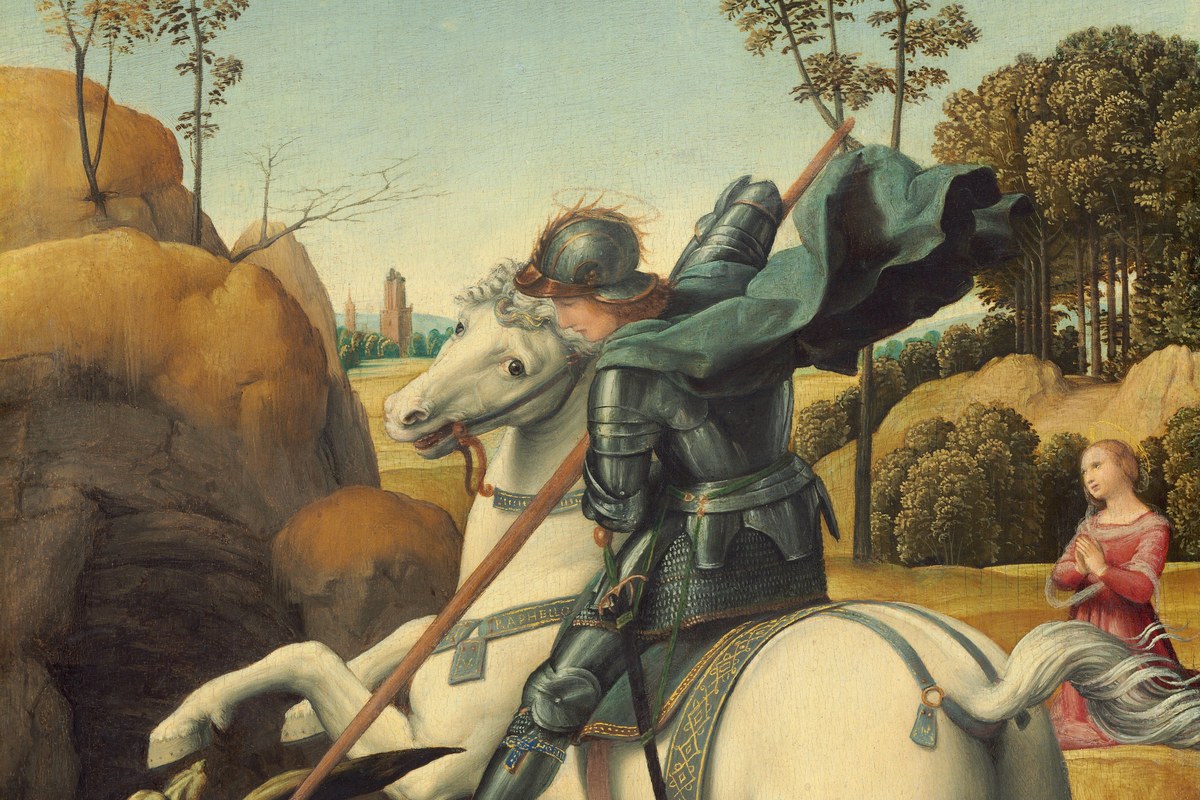
- Saint George — patron of England, and also historically claimed by Portugal, Bosnia and Herzegovina, Bulgaria, Georgia, Ukraine, Malta, Ethiopia, Catalonia and Aragon, Moscow, and Beirut.
- Saint Andrew the Apostle — patron of Scotland, whose X-shaped saltire cross became the country's national symbol.
- Saint Columba of Iona — also honored as a patron of Scotland and one of the three patron saints of Ireland (with Patrick and Brigid), plus poets, bookbinders, and protection against floods, tributes to the monastery he founded on Iona and its renowned scriptorium.
- Saint James the Greater — patron of Spain, anchoring the Camino de Santiago, one of Christianity's most-walked pilgrimage routes.
- Saint Joan of Arc — patroness of France, canonized in 1920, nearly five centuries after her death.
- Saint Thérèse of Lisieux — patroness of missions and of France, despite never having left her convent to serve as a missionary herself.
- Our Lady of Guadalupe — patroness of the Americas, following the 1531 apparitions to Juan Diego.
- Saint Rose of Lima — principal patroness of Peru and of Latin America, the first person born in the Americas ever canonized.
- Saint Mariana de Jesus de Paredes — principal patroness of Ecuador, credited by local tradition with offering her own life to end a 1645 earthquake and epidemic in Quito.
- Saint Benedict of Nursia — patron of all Europe, a 1964 title recognizing how his monastic Rule helped hold learning and community together after Rome's fall.
- Saints Cyril and Methodius — co-patrons of Europe alongside Saint Benedict, a 1980 title honoring the brothers who gave the Slavic peoples their first alphabet and their first Bible.
- Saint Stanislaus of Krakow — principal patron of Poland and of the Diocese of Kraków, also invoked in battle.
- Saint Patrick — patron of Ireland, earned not through a single miracle but through decades spent evangelizing the very people who had once enslaved him.
- Saint Adalbert of Prague — patron of Bohemia, the Czech Republic, Hungary, Poland, and Prussia, a rare span of patronage across Central Europe reflecting how many peoples claimed him after his 997 martyrdom.
- Saint Willibrord — patron of Luxembourg, the Netherlands, and the Archdiocese of Utrecht, a direct reflection of where his missionary work and his abbey at Echternach actually stood; also traditionally invoked against epilepsy and convulsions, an old popular association whose precise origin isn't well documented.
- Saint Januarius — principal patron saint of the city of Naples, and — owing directly to his famous blood relic — also recognized as a patron of blood banks and blood donors.
- Saint Isaac Jogues — honored, together with the other North American Martyrs, as a secondary patron of Canada, a joint patronage tied to their shared 17th-century mission and martyrdom in New France.
- Saint Oliver Plunkett — venerated as a patron of peace and reconciliation in Ireland, a role invoked especially during peace efforts amid the sectarian violence of the Troubles in Northern Ireland in the later 20th century.
- Saint Wenceslaus — principal patron of the Czech Republic and Bohemia, and, less formally, of brewers, a 10th-century duke murdered by his own brother and revered ever since as Bohemia's duke-saint.
- Saint Junípero Serra — patron of California, honoring the Franciscan friar who founded nine of the state's 21 Spanish missions, a legacy that remains genuinely contested in modern historical assessment.
- Saint Peter Claver — patron of missionary work among Black people and people of African descent, honoring the Jesuit who spent 40 years personally boarding incoming slave ships in Cartagena to bring water, food, and medicine to the enslaved arriving in its harbor.
- Saint Toribio de Mogrovejo — patron of Latin American bishops and of Peru, honoring the Spanish judge turned Archbishop of Lima who covered immense distances across the Andes on foot and horseback to reach his diocese's most remote parishes.
- Saint Kilian — patron saint of Würzburg and of the wider Franconia region, honoring the Irish missionary bishop murdered there around 689 after challenging a local duke's unlawful marriage.
- Saint Louis Bertrand — patron of Colombia and, more broadly, of missionaries, honoring the Spanish Dominican who spent seven years evangelizing New Granada and openly opposing colonial abuse of the people he converted.
- Saint Mary MacKillop — Australia's first canonized saint and a founding figure of Catholic education there, honoring the nun who co-founded the Sisters of St Joseph to educate poor children regardless of their family's ability to pay.
- Saint Peter of Alcantara — patron of Brazil (declared 1826) and of the Spanish region of Extremadura (declared 1962), honoring the barefoot Franciscan reformer and close spiritual friend of Teresa of Ávila.
- Saint Casimir of Poland — patron of Poland and Lithuania, and since 1948 specifically of Lithuanian youth, honoring the young prince remembered for quiet integrity rather than the one military campaign his father sent him on as a teenager.
- Saint Norbert of Xanten — patron of Bohemia, owing to his relics' later transfer to Strahov Abbey in Prague, and of Magdeburg, honoring the wealthy courtier turned uncompromising reforming archbishop who founded the Premonstratensian order.
- Saint Edith Stein — co-patroness of Europe (with Bridget of Sweden and Catherine of Siena, joining Benedict of Nursia and Saints Cyril and Methodius), a 1999 papal designation honoring the philosopher and Carmelite nun killed at Auschwitz in 1942 for her Jewish ancestry.
- Saint Bridget of Sweden — patron of Europe (a 1999 co-patronage alongside Edith Stein and Catherine of Siena), of Sweden, and of widows, honoring the noblewoman who founded the Bridgettine Order and spent her final decades in Rome pressing for the pope's return from Avignon; not to be confused with the 5th-century Irish Saint Brigid of Kildare, listed separately below.
- Saint Geneviève of Paris — patron saint of Paris, a role essentially unchallenged and central to how the city has understood her for over 1,500 years, since she was credited with persuading Parisians to stay and pray rather than flee as Attila the Hun's army advanced in 451.
- Saint Josephine Bakhita — patron saint of Sudan, the first person from that country ever canonized, honoring the woman kidnapped into slavery there as a child who later found freedom and religious life in Italy.
- Saint Brigid of Ireland — one of the Three Patron Saints of Ireland alongside Patrick and Columba, and by longstanding folk and liturgical tradition also associated with poets, healers, midwives, newborns, and, more loosely, blacksmiths, dairy workers, and cattle.
- Saint Willibald — patron of the Diocese of Eichstätt in Bavaria, which he founded and led as its first bishop for over forty years, and honored more broadly as a patron of travelers and pilgrims for his own extraordinary journey to the Holy Land.
- Saint Ninian — venerated as a patron of Galloway in southwestern Scotland and of Scotland more broadly, alongside Andrew and Columba, honoring the missionary bishop who founded Candida Casa at Whithorn.
- Saint Frideswide — patron saint of the city of Oxford and of Oxford University, honoring the Anglo-Saxon princess traditionally credited with founding the priory on the site now occupied by Christ Church Cathedral.
- Saint David of Wales — patron saint of Wales, whose feast, March 1, is celebrated as the country's national day, honoring the austere 6th-century monk who founded the monastery at what is now St Davids.
- Saint Winifred — a significant patron saint of North Wales specifically, honoring the 7th-century noblewoman whose holy well at Holywell has drawn pilgrims continuously for well over a thousand years.
Church & clergy
- Saint Joseph — patron of the universal Church, a title Pope Pius IX gave him in 1870 for the same protective role he once played for the Holy Family.
- Saint John Vianney — patron of parish priests, recognition for a man who sometimes heard confessions sixteen hours a day.
- Saint Charles Borromeo — patron of bishops, cardinals, seminarians, and catechists, mapping directly onto the three roles that defined his life.
- Saint Alphonsus Liguori — patron of confessors and moral theologians, recognition for his lifelong work helping priests guide penitents with both mercy and honesty.
- Saint Leopold Mandić — informally regarded by many as a patron of confessors, earned by decades spent hearing confessions up to 15 hours a day in Padua rather than any single formal decree.
- Saint Thomas Becket — venerated as a patron of the clergy generally and of secular (diocesan) priests specifically, as well as of the city of Canterbury, whose cathedral became one of medieval Europe's most important pilgrimage destinations after his death.
- Saint Romuald — patron of hermits, recognition for a restless reformer who spent decades founding stricter monasteries before establishing Camaldoli around 1012, fusing solitary hermit cells with a small communal monastery below.
- Saint John of Avila — patron of Spanish diocesan clergy, honoring the Counter-Reformation spiritual director and Doctor of the Church who personally advised both Ignatius of Loyola and Teresa of Ávila.
- Saint Margaret Mary Alacoque — patroness of devotees of the Sacred Heart, honoring the 17th-century Visitation nun whose reported visions of Christ became the foundation of the modern Sacred Heart devotion.
Didn't find a specific need above? New articles get added to this directory as they're published — check back, or browse the full Saints category directly.
Trivia
What exactly is a patron saint?
How does a saint officially become the patron of something?
Can one saint be the patron of more than one thing?
Is patronage official Church dogma, or is it tradition?
Where does the custom of patron saints come from historically?
Related Reading