Saint Germaine Cousin

Neglect documented, not exaggerated
Germaine Cousin was born in 1579 in Pibrac, a village near Toulouse in southern France, with a withered right hand and a skin condition, likely a form of scrofula, that left her visibly disfigured from infancy and swollen glands in her neck that never fully healed. Her mother died while Germaine was still young, and her father, Laurent Cousin, a modest farmer, remarried a woman named Armande Gin who made no secret of her contempt for the girl. Sixteenth-century rural France offered little formal protection for a child in Germaine's position — no school inspectors, no social workers, no legal mechanism by which a stepmother's cruelty toward an unwanted stepdaughter might be checked from outside the household — which is part of what makes the documented details of her case so striking even by the standards of the period.
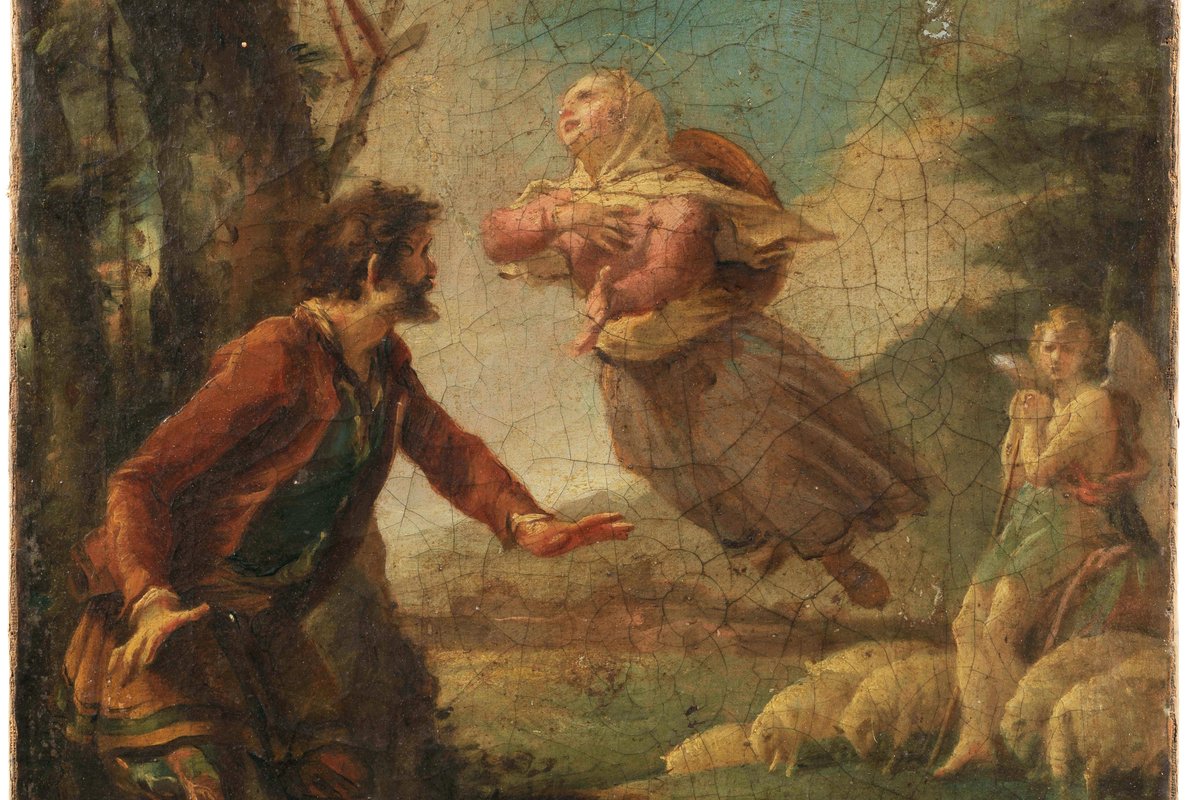
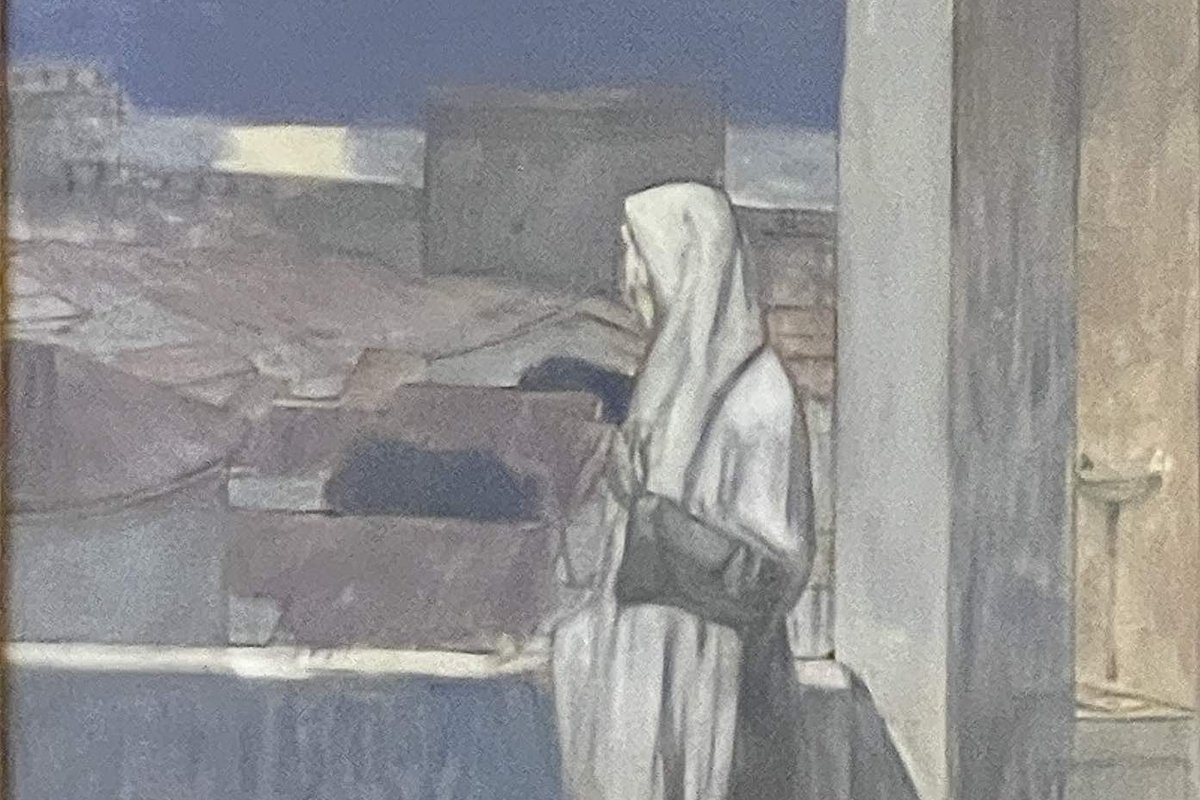
Giuseppe Cades, Scene from the Life of Saint Germaine Cousin, oil on canvas, before 1799 — public domain.
The cruelty that followed isn't a later embellishment layered onto a vague memory — it's documented in the accounts gathered for Germaine's own canonization cause: her stepmother made her sleep apart from the rest of the family, first under the stairs and later in a shed or stable, fed her so little that she reportedly learned to eat from the scraps left in the family dog's bowl, and, by tradition, once left her in a drain for days. Rather than send her to school alongside her half-siblings, the family put Germaine to work minding their sheep, alone, in open country where wolves and bandits were both a real danger. She is remembered as having accepted this treatment without visible bitterness, a detail her later admirers read not as passive resignation but as an early, unforced expression of the same patient faith that marked the rest of her short life.
A faith nobody taught her
Her physical condition compounded the cruelty in a specific way: the withered hand meant she couldn't perform many ordinary farm tasks as easily as other children, giving her stepmother a ready pretext to treat her as a burden rather than a daughter, and the visible skin condition likely made her an object of suspicion or mockery among neighbors in a rural village where physical difference was rarely met with sympathy. Some accounts describe her father as largely passive throughout this period, unwilling or unable to intervene against his second wife on his disabled daughter's behalf — a detail that, if accurate, makes Germaine's isolation even more complete: neglected by a stepmother who despised her and unprotected by a father who did nothing to stop it.
What makes Germaine's story remarkable isn't only the neglect — it's what she did inside it. With no religious instruction from a household that had given her nothing else either, Germaine developed a devotional life that the investigators for her later cause found genuinely striking given how little support she had: daily attendance at Mass, weekly confession and communion, a habit of prayer built entirely on her own initiative in a home that offered her no model for it. She is said to have fashioned a small rosary out of knotted string for herself, and to have planted a distaff — a simple tool for spinning wool — in the ground to lean on while she prayed the Angelus in the fields, since her deformed hand made ordinary shepherding tasks more difficult.
To get to Mass, she had to leave her flock unattended in open country every single day, a risk her stepmother certainly wouldn't have sanctioned even if she'd cared to notice. Villagers in Pibrac are said to have remarked on how consistently her sheep stayed put and unharmed during these absences, at a time and place where wolf attacks on unattended flocks were a real, recurring problem for other local shepherds — an observation that, whatever its precise origin, helped plant the seed of the devotion that would eventually grow up around her.
Popular tradition surrounding Germaine holds that a guardian angel watched over her sheep while she was away at church, and that in all her years as a shepherdess she never lost a single animal to the wolves that were a genuine local threat. That detail belongs to the pious legend that grew up around her cult rather than to anything independently documented at the time — worth telling as part of how she's been remembered, but worth being clear that it's tradition, not verified fact, layered onto a life whose harder edges are already well attested without it.
Death at twenty-two
Germaine died in 1601, at 22 years old, found by her own father in the outbuilding where she'd slept for most of her short life; local tradition holds that her stepmother, only in the last years of Germaine's life, had shown some late softening toward her, though by then decades of neglect had already taken their toll on the young woman's health. In 1644, when her grave at the parish church was reopened to bury someone else, witnesses reported finding her body remarkably preserved and the flowers she'd been buried holding still fresh — accounts recorded in the documentation later gathered for her cause, and best understood as what those witnesses reported at the time rather than as something modern forensics has verified.
Whatever the precise nature of that 1644 discovery, it marked the beginning of a devotion to Germaine that grew steadily over the following two centuries, eventually supported by numerous French bishops petitioning on her behalf and a cause that documented more than 400 claimed miracles and graces attributed to her intercession. Her relics were disturbed again during the French Revolution, when anti-clerical authorities opened her tomb and reportedly found her body still remarkably intact after nearly a century and a half — an episode that, whatever one makes of the physical claim, shows how thoroughly local devotion to her had survived even a period openly hostile to the veneration of saints.
Canonization and what she became a patron of
Pope Pius IX beatified Germaine Cousin on May 7, 1854, and canonized her on June 29, 1867. The patronages that followed track directly onto the specifics of her own life rather than reading as generic titles attached after the fact: she's venerated as patroness of abused and neglected children and of victims of child abuse specifically, as well as of the poor, of shepherdesses and shepherds, and of people with disabilities or physical deformities. In an era with far more awareness of child abuse than existed when she was canonized, Germaine's story — a documented account of a child's cruelty at home, met with a resilience and faith that her family never gave her any reason to develop — has taken on renewed weight in exactly those child-protection contexts. Her feast is kept on June 15. For more on how the Church has recognized saints across different kinds of suffering and need, see the Patron Saints Directory.
Trivia
Who was Saint Germaine Cousin?
How was Germaine Cousin treated by her family?
Is it true that a guardian angel protected Germaine's flock while she was at Mass?
Was Germaine Cousin's body found incorrupt after death?
What is Saint Germaine Cousin the patron saint of, and when is her feast?
You May Also Like

Related Reading