Saint Peter Julian Eymard

A vocation his father didn't want
Peter Julian Eymard was born February 4, 1811, in La Mure, in the Isère region of southeastern France. His path into religious life wasn't smooth from the start: he entered the Oblates of Mary Immaculate in 1829 against his father's explicit wishes, a decision that says something about the stubbornness that would show up again, more consequentially, decades later. He didn't stay with the Oblates — he was later ordained a diocesan priest, and in 1839 joined the Marist Fathers, the religious congregation with which he would spend the next seventeen years of his priesthood.
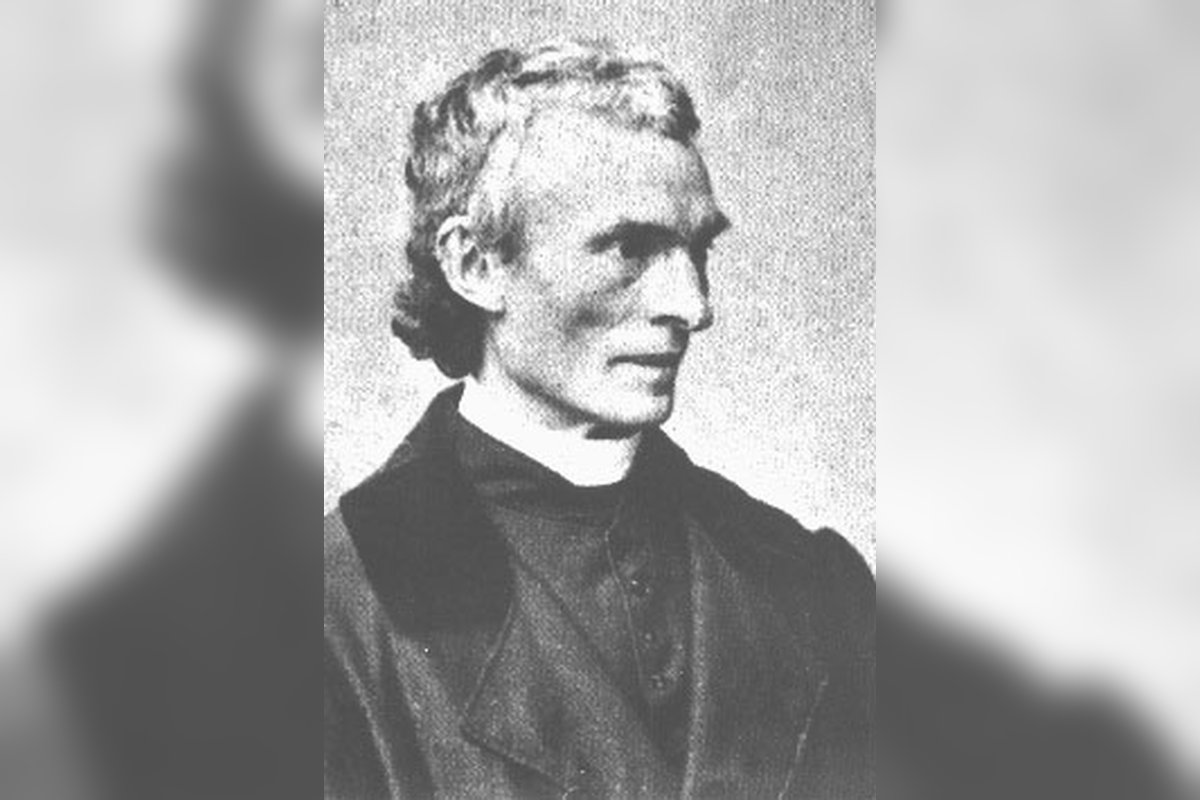
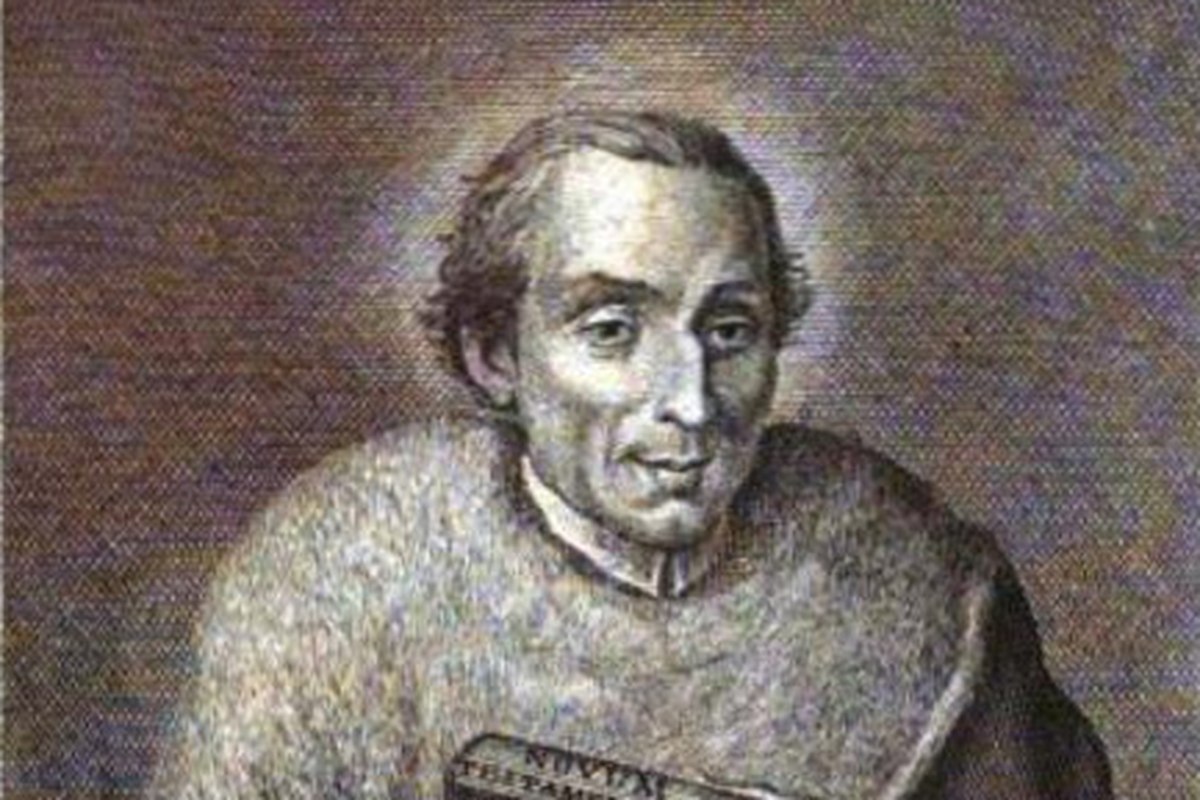
Photographic portrait of St. Peter Julian Eymard, before 1868, photographer unrecorded, via the Congregation of the Blessed Sacrament — public domain.
What he saw in the slums of Paris
It was in Paris in the 1850s that Eymard's ministry took the turn that would define the rest of his life. Serving in the city's poorer districts, he was confronted directly with a kind of quiet religious neglect: children reaching adolescence without ever being properly prepared for First Communion, adults who had drifted entirely away from the sacraments despite living within easy walking distance of a parish church. It wasn't that the churches were absent. It was that the Eucharist itself, in Eymard's eyes, had become something close to a devotional afterthought in ordinary parish life — present, technically, but not treated as the center of anything.
In 1849, at the Basilica of Our Lady of Victories in Paris, he encountered the Association of Nocturnal Adorers, a group devoted to sustained, round-the-clock Eucharistic adoration. The experience convinced him that adoration of the Blessed Sacrament needed to be more than a devotion practiced on the side — it needed to be the organizing center of an entire religious life.
Leaving the Marists
His superiors in the Marist order didn't share that conviction, at least not enough to support building a whole new community around it; the vision Eymard was describing fell outside what the Marist charism was built to do, and he was transferred away from Paris. Rather than let the idea die, Eymard requested — and received — permission to leave the Marists in 1856, at forty-five years old, to found something of his own: the Congregation of the Blessed Sacrament, known informally as the Sacramentini. Two years later, in 1858, working with Marguerite Guillot, he founded a companion women's branch, the Servants of the Blessed Sacrament.
It's worth being honest about what came next, rather than skipping straight to a tidy success story. The new congregation's early years were genuinely difficult: financial trouble, foundations that failed outright, personal conflict within the fledgling community, and physical exhaustion that took a real toll on Eymard himself. It took seven years of that kind of struggle before Pope Pius IX granted the congregation formal Church approval in June 1863 — a reminder that a founder walking away from an established order to follow a conviction doesn't guarantee anything except a harder road, at least at first.
"Really and substantially present"
Eymard's own writings on the Eucharist were later gathered into a multi-volume collection, including a work titled "The Real Presence." In a section called "The Eucharistic Veil," he put the conviction that had driven his entire second career in plain terms: Christ, he wrote, "is really and substantially present in the Holy Eucharist." It's a line that reads almost like a summary of everything else in his life — the slum ministry, the break with the Marists, the exhausting early years of the new congregation — all of it organized around that single claim about what the Eucharist actually is, not merely represents.
A congregation built around a single practice
What made Eymard's new community genuinely unusual among nineteenth-century religious orders wasn't just its devotion to the Eucharist, since Eucharistic piety was hardly new to Catholic life — it was the decision to organize an entire congregation's daily structure around continuous, exposed adoration of the Blessed Sacrament as its primary work, rather than as one devotional practice alongside teaching, nursing, or parish ministry. Members of the Congregation of the Blessed Sacrament kept a near-constant rotation of adorers before the exposed Eucharist, a rhythm of prayer that left little room for the kind of active apostolates — schools, hospitals, missions — that defined most religious founding of the era. That structural choice reflected Eymard's core conviction directly: he had come to believe that a soul's encounter with Christ in the Eucharist, sustained over long, quiet hours rather than compressed into a brief weekly Mass, could reach people that the era's more visibly active ministries were failing to reach in the crowded, de-churched neighborhoods of industrial Paris. The model proved durable — congregations dedicated to this same style of perpetual adoration continue that same rhythm of prayer today, well over a century and a half after Eymard first insisted it deserved to be a religious order's entire reason for existing.
Canonization and the title that followed
Eymard died on August 1, 1868, back in his hometown of La Mure, worn down by the demands of the work he'd taken on. Pope Pius XI beatified him on July 12, 1925, and Pope John XXIII canonized him on December 9, 1962. Pope John Paul II later gave him the title "Apostle of the Eucharist," a fitting label for a priest whose entire adult ministry, once he found his direction, never really moved on to another subject.
Eymard doesn't carry a strong traditional patronage in the way many saints do — no trade, no life situation, no country formally invokes him — and it wouldn't be honest to invent one. His feast is kept on August 2, shifted one day past his actual date of death to avoid falling on the same day as Saint Alphonsus Liguori. What he's remembered for isn't a patronage at all, but a single, sustained argument made with his whole life: that the Eucharist deserves to be the center of Christian devotion, not its quiet edge.
Trivia
Who was Saint Peter Julian Eymard?
Why did Peter Julian Eymard leave the Marist Fathers?
Did Peter Julian Eymard's new congregation succeed right away?
What did Peter Julian Eymard write about the Eucharist?
When is the feast day of Saint Peter Julian Eymard?
You May Also Like
Related Reading