Saint Marguerite Bourgeoys

From Troyes to the edge of the world
Marguerite Bourgeoys was born on April 17, 1620, in Troyes, France, into a large merchant family. Nothing in her early life particularly marked her out for the frontier — she was involved in a local religious association connected to the Congregation of Notre-Dame in her home city, teaching and doing charitable work in the ordinary way many devout laywomen of the period did. What changed her trajectory was an invitation from Paul de Chomedey de Maisonneuve, the founder and governor of Ville-Marie, the small fortified settlement on the St. Lawrence River that would eventually grow into Montreal. Maisonneuve needed someone to establish a school for the colony's children, and in 1653 Bourgeoys accepted, sailing to New France to a settlement that, at the time, numbered only a few hundred people clinging to survival on land contested by Indigenous nations and hemmed in by wilderness on every side.
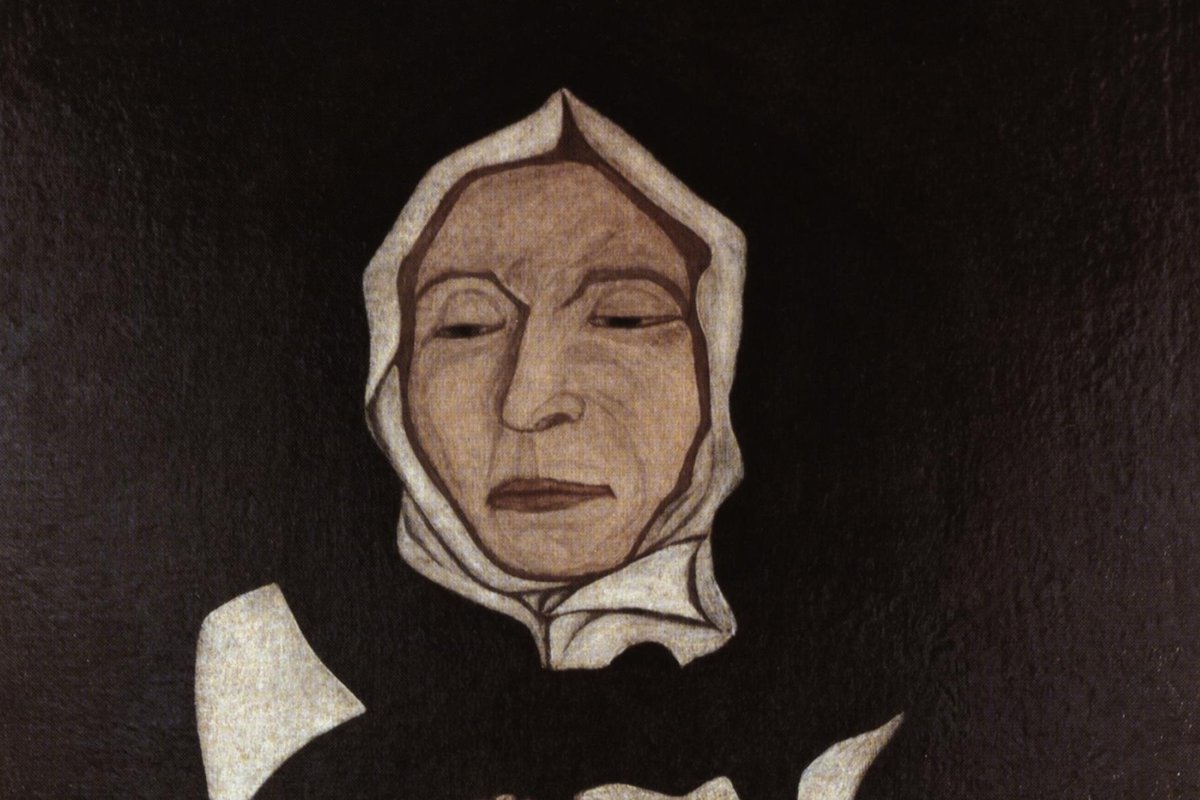
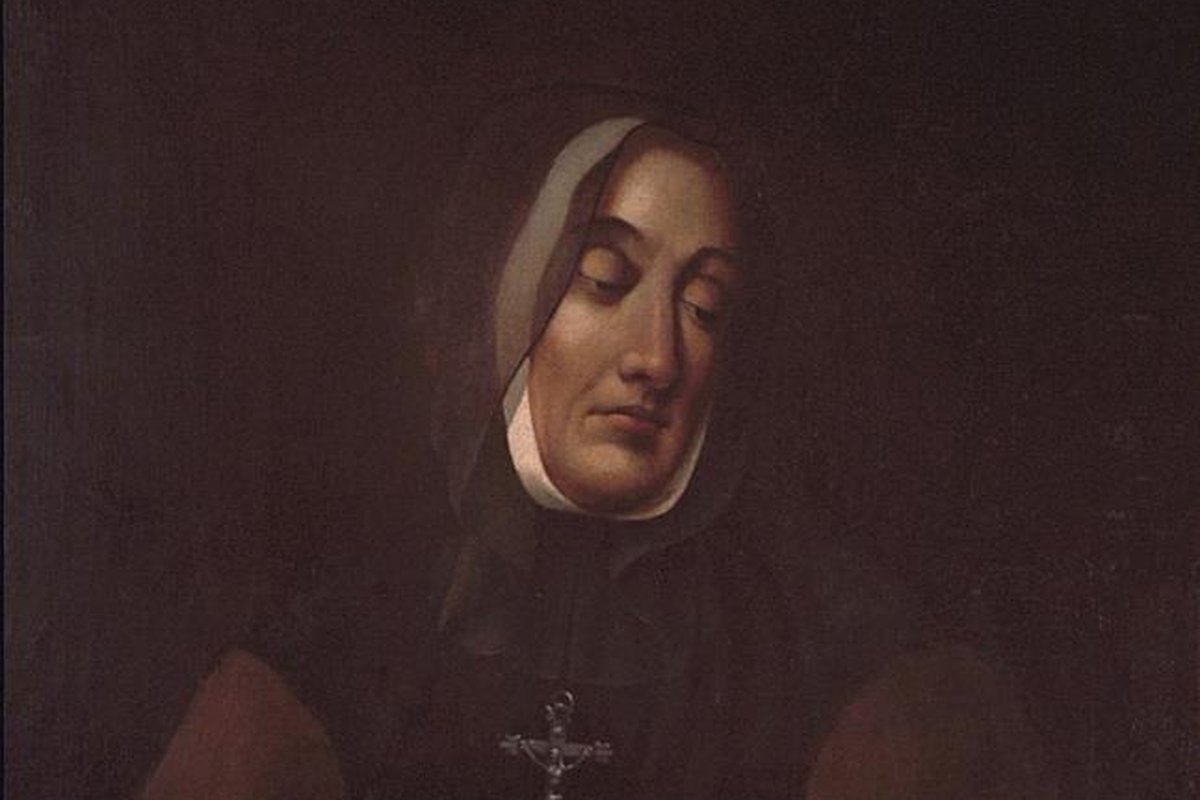
Pierre Le Ber, Portrait of Marguerite Bourgeoys, oil on canvas, 1700, Marguerite Bourgeoys Museum, Montreal — public domain.
A school, and then something bigger
Bourgeoys opened her school in a stone stable Maisonneuve had given her — an appropriately humble beginning for what became one of the most consequential teaching ministries in Canadian history. But her ambitions, and her sense of what the colony actually needed, grew well beyond a single classroom. In 1658, with several companions who had joined her, she founded the Congrégation de Notre-Dame de Montréal.
What made the new community genuinely unusual, even radical by the standards of the 17th-century Church, was Bourgeoys's decision to keep it uncloistered. Nearly every other structured option available to religious women at the time involved permanent enclosure — a life lived behind convent walls, often behind a literal grille separating the sisters from visitors and the outside world. Bourgeoys built something different on purpose: a community of women free to travel throughout the colony, teaching in scattered settlements, visiting the sick, and doing the kind of mobile social work that cloistered life simply couldn't accommodate. It reflected a clear-eyed read of what a frontier colony actually needed from its religious women, and it set a template that would influence uncloistered teaching congregations well beyond New France.
Helping settle the "king's daughters"
One of the more distinctive, well-documented chapters of Bourgeoys's work involved the "filles du roi" — the "king's daughters" — young women the French crown sent to New France between the 1660s and 1670s specifically to marry colonists and help stabilize the colony's population. Arriving in an unfamiliar country with few resources and no family nearby, these women needed practical support before they could reasonably be expected to marry and set up households of their own. Bourgeoys personally took on much of that work: providing lodging, orientation to colonial life, and basic domestic training to a number of these women during their first months in New France. It's a concrete, specific detail that separates her from a purely devotional or legendary saint's biography — this is documented, institutional social work, carried out by a named historical figure whose activities show up in colonial records.
A life on solid documentary ground
Unlike a number of saints from earlier centuries whose stories rest heavily on later legend, Bourgeoys is a well-documented 17th-century figure. Substantial correspondence, colonial and court records, and her own writings survive, including material from her final years that was later compiled and published as The Writings of Marguerite Bourgeoys — a spiritual testament and partial autobiography she worked on toward the end of her life. No single short, cleanly quotable line from that testament could be confidently verified against a specific public-domain edition for this article, so rather than risk misquoting her, her own account is described here in substance: the writings of an elderly foundress reflecting back on decades spent building a religious community from nothing on the edge of a very young colony.
Canada's first female Catholic saint
Bourgeoys died in Montreal on January 12, 1700. Her cause moved through the Church's process across nearly three centuries: declared Venerable in 1878 by Pope Leo XIII, beatified on November 12, 1950, by Pope Pius XII, and finally canonized on October 31, 1982, by Pope John Paul II. That canonization made her the first female Canadian Catholic saint — a genuinely notable distinction, worth stating precisely: it's specific to female saints, since earlier Canadian-connected men had already been canonized (the North American Martyrs among them), and it's distinct from the honor held by Saint Marguerite d'Youville, canonized eight years later, who was the first saint actually born on Canadian soil.
Her feast is kept on January 12. She has no strongly established universal Roman patronage, but she's informally regarded, quite naturally given her legacy, as a patroness of teachers and educators — the founder of what grew into Canada's first teaching congregation for women, built on the simple, stubborn idea that religious life and an unwalled, well-traveled classroom weren't incompatible after all. For more on how the Church has recognized figures who shaped education and mission across the Americas, see the Patron Saints Directory.
Trivia
Who was Saint Marguerite Bourgeoys?
What made the Congrégation de Notre-Dame de Montréal unusual for its time?
What role did Marguerite Bourgeoys play with the filles du roi?
Is Marguerite Bourgeoys the first Canadian saint?
When is Saint Marguerite Bourgeoys's feast day, and what is she the patron of?
You May Also Like
Related Reading