Saint Marguerite d'Youville

A troubled marriage and a young widowhood
Marie-Marguerite Dufrost de Lajemmerais was born on October 15, 1701, in Varennes, in the colony of New France, now part of Quebec. In 1722 she married François d'Youville, and the marriage that followed was not a happy one. Historical accounts describe François as frequently absent and involved in illegal trading of liquor to Indigenous communities, activity that was both against colonial law and directly harmful to the people it targeted. The couple had six children together; four died young, a devastating but not uncommon toll for the period. François himself died in 1730, leaving Marguerite a widow at 29, saddled with significant debts from his affairs and responsible for the two children who had survived.
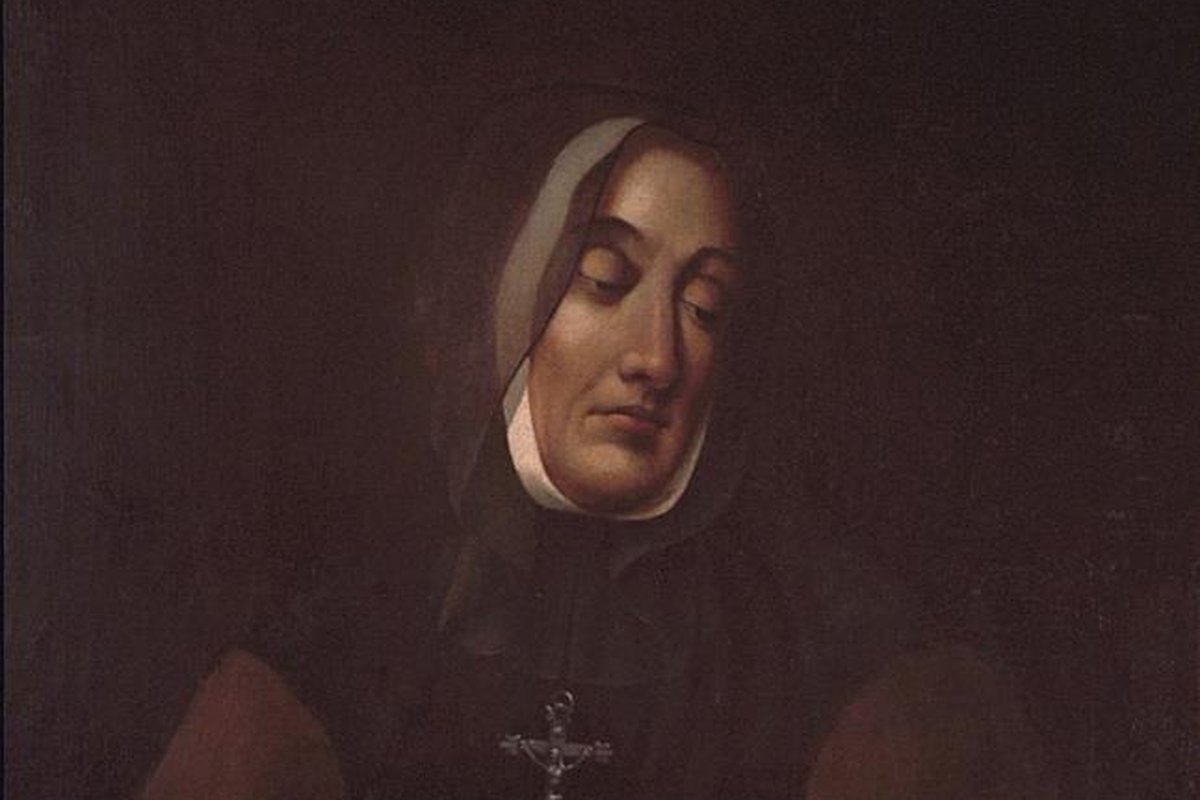
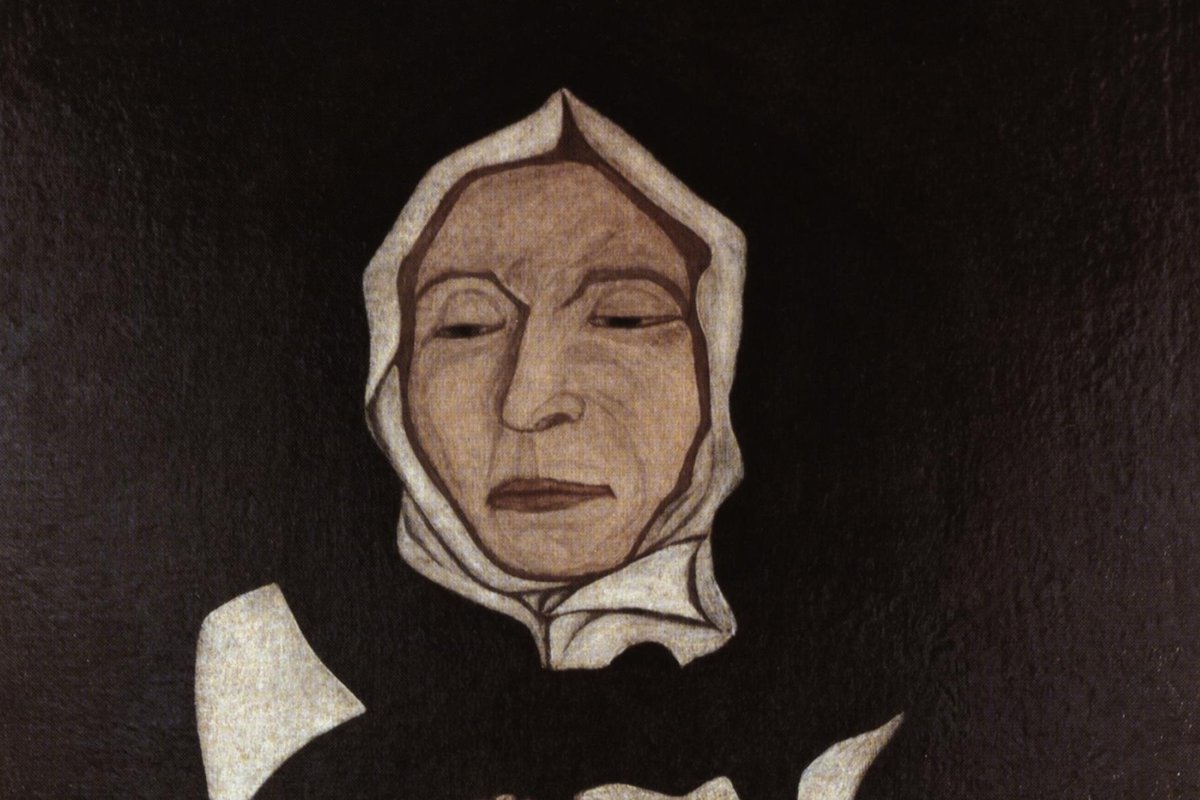
James Duncan, Portrait of Marguerite d'Youville, oil on canvas, 19th century (between 1825 and 1881) — public domain.
For most women in her position, that combination — young widowhood, debt, grief — would have meant a narrowing of options, not an expansion of them. Marguerite chose otherwise.
An insult that became a name
In 1737, Marguerite and several companions committed themselves to a deliberate life of organized charity, caring for the poor and sick of Montreal. The reception they got from their neighbors was not what you might expect for women embarking on a life of service: local gossip, unfairly and without real basis, accused the group of drunkenness, and mockers took to calling them "les grises" — a French phrase that, through a pointed pun, could suggest being tipsy as much as it literally meant "the grey ones." It was meant as a slight. Rather than fight the name or quietly let it fade, Marguerite's community eventually absorbed it as their own, becoming known thereafter as the Grey Nuns — the Sœurs Grises, or Sisters of Charity of Montreal. It's a small, genuinely charming piece of institutional history: an entire religious order carrying, to this day, the name its founders were originally taunted with.
A popular saying about the sisters circulated among Montreal's poor in the years that followed — that you should go to the Grey Nuns, because they never refuse to serve. It's worth being precise about what that line actually is: a folk proverb about the community and its reputation, not a verified quotation from Marguerite d'Youville herself. No specific first-person line from her own writings could be confidently verified against a named, checkable source for this article, so her voice here is described through her actions and the institutions she built rather than through invented or unverifiable quotations.
Rescuing a bankrupt hospital
The clearest measure of what d'Youville's community accomplished came in 1747, when she and her sisters took over administration of Montreal's General Hospital. The hospital was in genuinely dire shape at the time — near-bankrupt, poorly maintained, and struggling to function at all. Under the Grey Nuns' management, it was restored to solvency and became a stable, functioning institution serving the colony's sick and poor for generations afterward. It's the kind of achievement that's easy to state in a single sentence and easy to underrate: taking over a failing hospital and making it work, in a small colonial city with limited resources, using a religious community that had itself started as a handful of women mocked by their own neighbors just a decade earlier.
An order that outlived its founder by centuries
What d'Youville built in 1737 didn't stay confined to Montreal for long. The Grey Nuns went on to found hospitals, orphanages, and schools across Canada and eventually into the United States, following the pattern of practical, unglamorous institution-building that had defined d'Youville's own approach to charity from the start — she was never drawn to dramatic gestures so much as to the steady, unromantic work of keeping a hospital solvent or a household fed. By the 20th century, Grey Nuns communities were operating well beyond New France's original borders, a direct institutional descendant of the small group of mocked, under-resourced women who first opened their door to Montreal's poor. That kind of durability, an order still actively serving nearly three centuries after a handful of insulted widows and laywomen banded together, is itself a fairly rare outcome in the history of religious communities, most of which either formalize quickly under strong ecclesiastical direction or fade within a generation or two of their founder's death.
Canonization, and a title from a Pope
D'Youville's cause for canonization moved forward under a succession of popes. She was declared Venerable under Pope Pius XII, and beatified on May 3, 1959, by Pope John XXIII, who gave her the title "Mother of Universal Charity" at that beatification — a fitting summary of a life spent extending care to whoever needed it, regardless of the mockery that greeted her earliest efforts. She was canonized on December 9, 1990, by Pope John Paul II, becoming the first saint actually born on Canadian soil — a distinction worth stating precisely alongside Saint Marguerite Bourgeoys, canonized eight years earlier, who was the first female Canadian Catholic saint but had been born in France before emigrating to New France as an adult. Both are genuinely notable Canadian "firsts," and they're not the same title.
D'Youville is a solidly documented 18th-century figure — her life is anchored in institutional and hospital records rather than resting on later legend, which sets her apart from a number of earlier saints whose biographies depend heavily on much-later hagiographical writing. Her feast is kept on October 16 in Canada, and on December 23, her date of death, in some other calendars. No strongly codified universal patronage attaches to her name, but she's sometimes informally invoked, quite naturally given her own story, on behalf of the poor, widows, and anyone facing serious financial hardship after loss. For more on how the Church has recognized women who built lasting charitable institutions from very little, see the Patron Saints Directory.
Trivia
Who was Saint Marguerite d'Youville?
Why are d'Youville's sisters called the Grey Nuns?
What did the Grey Nuns do at Montreal's General Hospital?
Is Marguerite d'Youville the first Canadian-born saint?
When is Saint Marguerite d'Youville's feast day, and what is she the patron of?
You May Also Like

Related Reading