Saint Elizabeth of Hungary

A princess betrothed before she could choose
Elizabeth of Hungary was born in 1207, probably in Pressburg, present-day Bratislava, the daughter of King Andrew II of Hungary and Gertrude of Merania. In keeping with the political marriage customs of medieval European royalty, she was betrothed in infancy to Louis IV, son of the landgrave of Thuringia, a German territory in the Holy Roman Empire, and sent at only four years old to be raised at his family's court in the Wartburg castle — a practice meant to bind the two families together long before either child had any say in the matter. Despite this arranged and distant beginning, the two grew genuinely fond of each other, and the marriage that followed when Louis succeeded his father as landgrave in 1221 is described in contemporary accounts as a happy one, unusual for a royal match of its time. Elizabeth was known even before her widowhood for her deep piety and for quietly giving away food and clothing to the poor around the castle, often against the objections of members of the court who felt such behavior was beneath her rank.
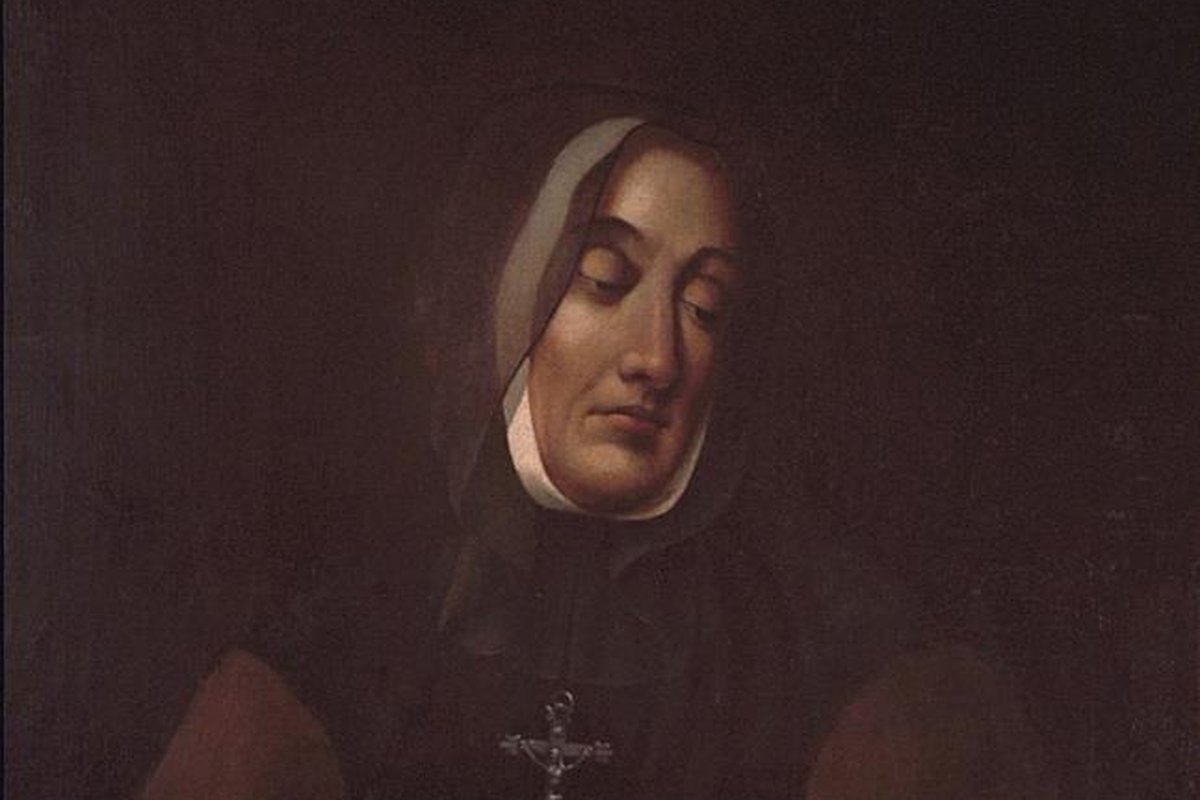
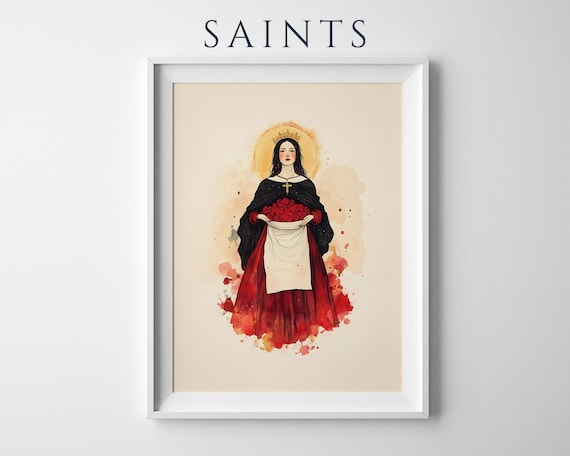
Traditional depiction of Saint Elizabeth of Hungary, public domain.
Widowed at twenty
Louis died of plague in 1227 in Otranto, Italy, while en route to join the Sixth Crusade, leaving Elizabeth a widow at just twenty years old with three young children. Her husband's death also left her vulnerable within his family's court: some of Louis's relatives, resentful of her charitable spending and her increasingly ascetic lifestyle, are said to have pressured her to leave the castle altogether. Rather than fight to remain within the wealth and status her marriage had afforded her, Elizabeth left her position entirely and, under the spiritual direction of the Franciscan friar Rodeger and later the more severe confessor Konrad of Marburg, joined the Third Order of St. Francis — a lay branch of the Franciscan movement that allowed men and women to live according to Franciscan ideals of poverty and service without becoming cloistered religious. It was a decisive break from the royal life she had been raised into from infancy.
A hospice built with her own hands
She then used what remained of her dower income to build a hospice in Marburg beneath the Wartburg, and devoted herself fully to serving the poor and the sick there, reportedly nursing patients with her own hands rather than merely funding their care from a distance — a degree of direct, hands-on charity from a woman of royal birth that struck her contemporaries as remarkable, even excessive. Her confessor Konrad imposed a demanding regime of fasting and penance on her during these final years, a severity that some later biographers have questioned, but Elizabeth herself is described as embracing it willingly, seeing it as inseparable from her service to the sick. She died on November 17, 1231, at just twenty-four years old, worn down by years of self-denial and hard physical labor among the ill. Her reputation for sanctity spread so quickly that she was canonized only four years later, in 1235, by Pope Gregory IX — an unusually fast process even by medieval standards, reflecting how widely her charity had already been recognized in her own lifetime.
A legend that outlived its original saint
The best-known story attached to her name, the Miracle of the Roses — in which loaves of bread she carried for the poor turned to roses when her husband's hunting party (or, in some versions, her disapproving in-laws) confronted her on the road — is absent from her earliest biographies and was originally told about a different saint entirely, Elizabeth of Portugal, who lived roughly a century later. It was only afterward attributed to Elizabeth of Hungary, a testament to how thoroughly her reputation for charity absorbed stories associated with sanctity more broadly; the tale is best understood as pious legend illustrating her generosity rather than a documented historical event. Elizabeth is remembered today as the patron saint of bakers, beggars, brides, charities, the homeless, hospitals, and widows, and the church built over her tomb in Marburg — the Elisabethkirche, one of the earliest purely Gothic churches in Germany — remained a major pilgrimage site for centuries. Her example of a noblewoman abandoning privilege for direct service to the poor later influenced figures like Saint Rita of Cascia, another widow who turned personal loss into a life spent caring for others.
A model for lay charity across centuries
Elizabeth's decision to remain outside a formal religious order, serving the poor as a laywoman rather than retreating fully into convent life, made her an early and influential model for what the Church would later formalize as Third Order or lay-associated religious life, extending monastic ideals of poverty and service to people who continued living, working, and raising families in the wider world. Her example was cited directly centuries later in the founding documents of charitable confraternities across Europe, and hospitals and charitable societies bearing her name have continued to appear well into the modern era, particularly across German-speaking Europe where her cult has always remained especially strong. The Wartburg castle where she was raised and later where much of her early married life unfolded remains a major historical site in Germany today, visited as much for its association with Elizabeth as for its later fame as the refuge where Martin Luther translated the New Testament into German three centuries afterward.
Trivia
Who was Saint Elizabeth of Hungary?
What happened to her husband?
What did she do after being widowed?
What is the Miracle of the Roses?
Related Reading