Saint Peter of Alcantara

Ninety minutes of sleep, by choice
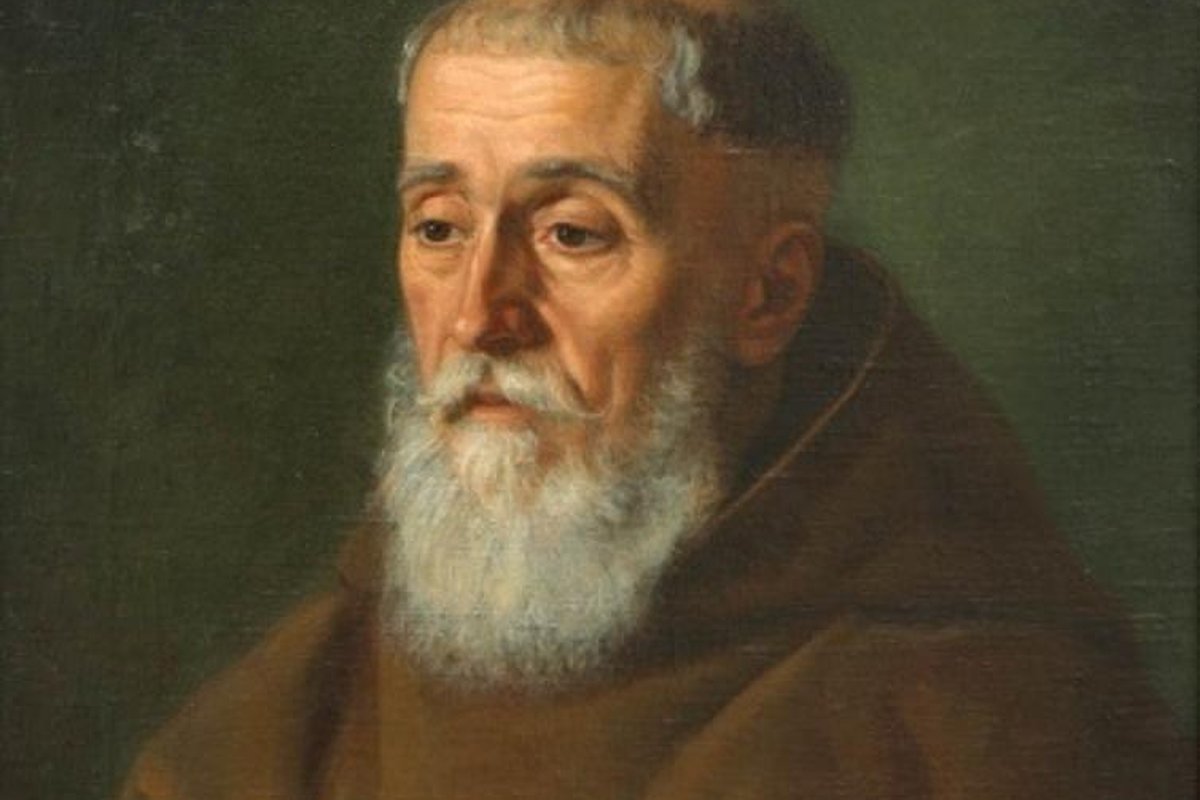
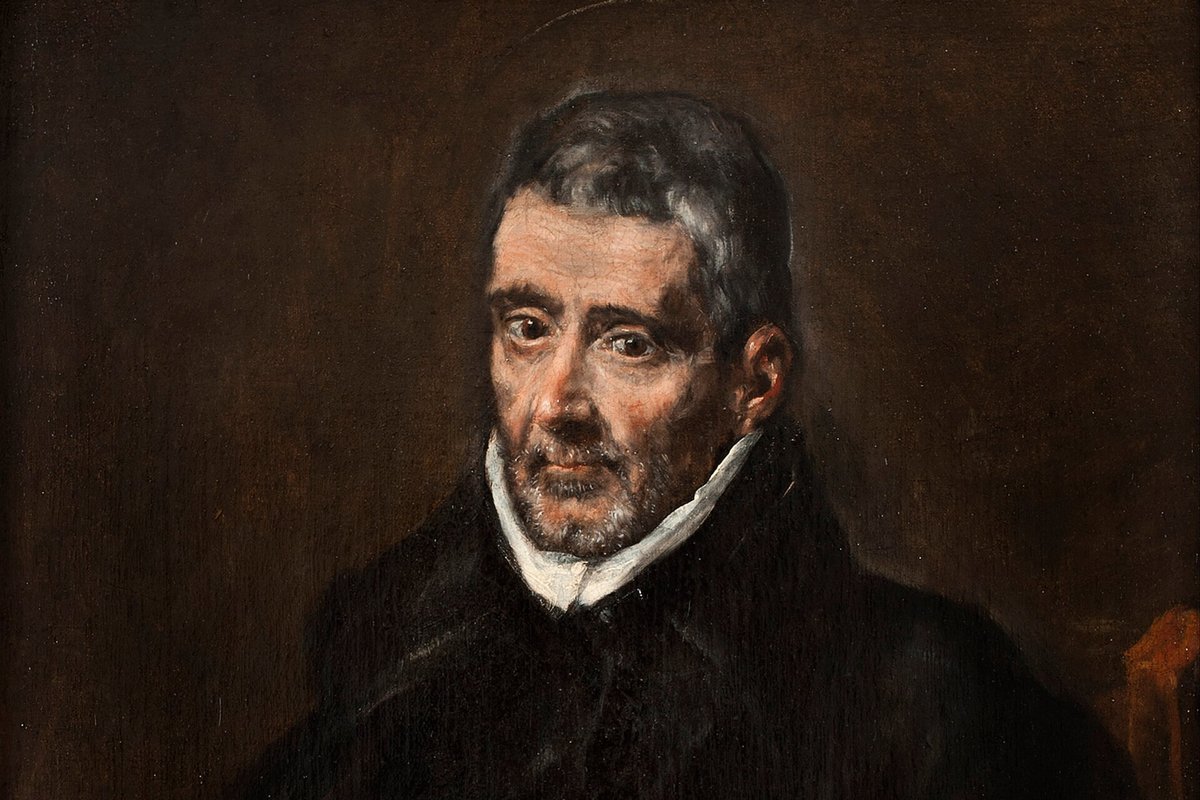
Peter of Alcantara was born Pedro Garavito in 1499 in the town of Alcántara, in the Extremadura region of Spain, and entered the Franciscan order as a young man. What he became known for, across his entire adult life, was a level of physical austerity that stood out even in a religious culture that already prized fasting and self-denial. By tradition, he slept only around ninety minutes a night, sitting upright rather than lying down; he went barefoot year-round, a practice that later gave rise to the term "Discalced" for friars who followed his example; he ate minimally; and he reportedly left his cell window open to the cold on purpose, treating the discomfort itself as a form of penance.
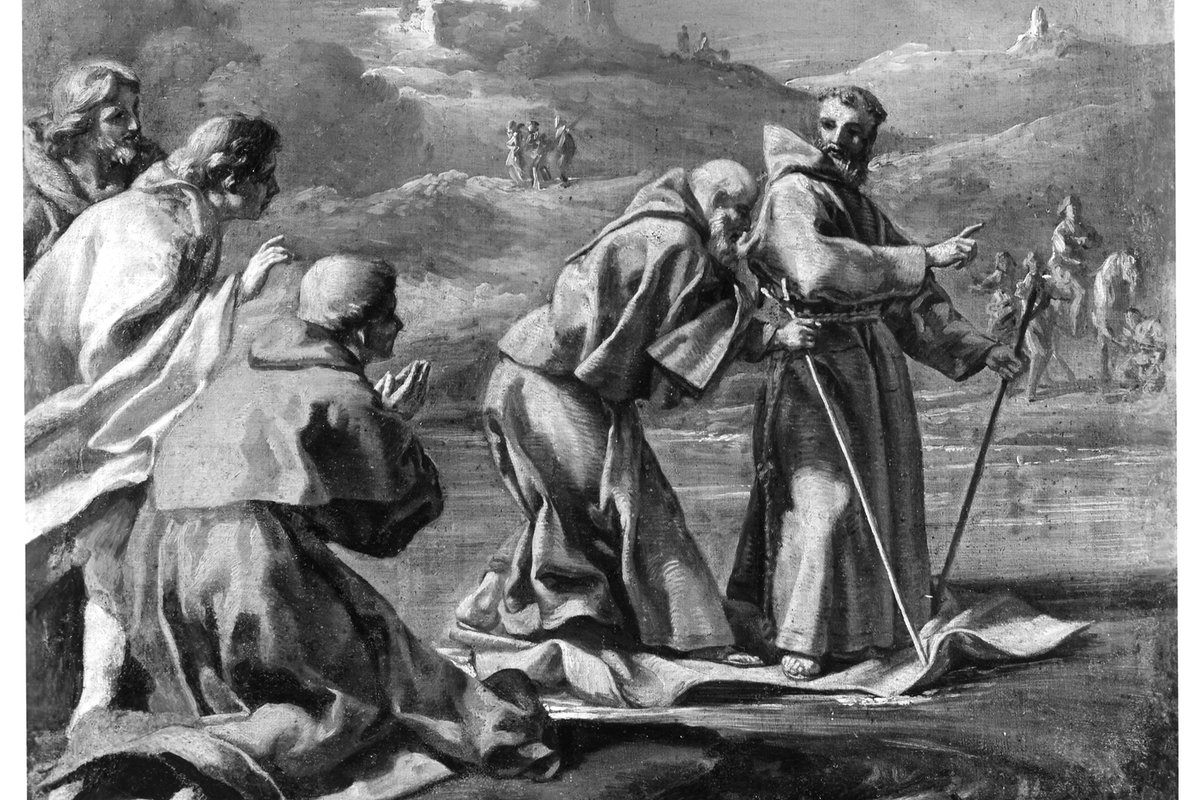
Pier Leone Ghezzi, A Miracle of St. Peter of Alcántara, 18th century, Walters Art Museum — public domain.
It's worth placing that austerity in its own century rather than either praising it uncritically or judging it by today's standards. Peter lived through the Catholic Counter-Reformation, a period when many religious reformers pushed toward stricter, more visibly demanding forms of monastic life as a deliberate contrast to what they saw as the laxity of the age. Some modern readers may look at practices like near-total sleep deprivation and see something closer to self-harm than holiness — that's a fair reaction, and this isn't the place to argue anyone out of it. The facts of how Peter lived are simply presented here as history, not as a model to imitate.
Reforming the Franciscans from the inside
Peter wasn't only austere in his personal habits — he was a genuine institutional reformer. Convinced that Franciscan life in Spain had drifted from the order's original rigor, he worked to establish a stricter branch of the Observant Franciscans, a movement that came to be known as the "Alcantarine" reform, later associated with the broader Discalced Franciscan tradition. That effort was formally recognized in 1561, a year before his death, when the reform was established as the Province of St. Joseph with Peter himself serving as its superior.
The friend Teresa of Ávila needed
Peter's most historically documented relationship was with Teresa of Ávila, who was, at the time they knew each other, in the middle of her own difficult effort to reform the Carmelite order. Teresa's autobiography, particularly chapters 27 and 30, is the primary source connecting the two of them, and she doesn't describe Peter as a distant admirer — she describes him as a genuine comfort during a period when her mystical experiences were drawing suspicion from some of her superiors and confessors. Peter, by her account, defended those experiences as authentically of the Holy Spirit rather than delusion or worse.
In April 1562, Peter wrote Teresa a letter of encouragement. Four months later, in August 1562, she founded St. Joseph's in Ávila, the first convent of her reformed Carmelite order — a foundation that would eventually grow into the entire Discalced Carmelite movement. Peter died just two months after that, on October 18, 1562, in Arenas de San Pedro, so he lived to see the very beginning of a reform he'd helped encourage into existence, though not its later flowering.
A posthumous appearance, and a snowstorm
Teresa's writings also record a reported apparition of Peter appearing to her after his death, in which he is said to have told her that his earthly penances had earned him great reward in heaven — the exact wording shifts somewhat between translation editions of Teresa's works, so it's presented here as a reported account rather than a single fixed quotation.
The story of the snowstorm belongs to the same category of evidence. By Teresa's own account, Peter once found himself caught in a storm severe enough that snow buried the ground around him — except, according to the story, the snow immediately around him hung suspended rather than falling, forming something like a protective roof over his head, leaving him untouched. This comes from Teresa as an eyewitness reporting what she says Peter told her directly, which sets it apart from later, invented folklore attached to saints who died centuries earlier. Still, it's a miracle claim, not a verifiable historical event, and it should be read that way even though the person reporting it was herself a canonized saint.
Feast day and patronage
Peter of Alcantara was beatified in 1622 by Pope Gregory XV and canonized on April 28, 1669, by Pope Clement IX. His feast is kept on October 19 on the general Roman calendar since the 1969 reform, though some older or local calendars mark it on October 22. He's venerated as the patron of Brazil, a title declared in 1826, and of the Spanish region of Extremadura, declared in 1962 — both specific, regional patronages rather than a broad universal one, which fits a saint whose life was defined less by a single dramatic act than by a decades-long, almost relentless personal discipline.
Trivia
Who was Saint Peter of Alcantara?
How austere was Peter of Alcantara's daily life?
What was Peter of Alcantara's connection to Teresa of Ávila?
Is the story of Peter of Alcantara surviving a snowstorm true?
What is Saint Peter of Alcantara the patron saint of?
You May Also Like
Related Reading