Saint Bridget of Sweden

Not the Irish Brigid
Before anything else: this is Birgitta Birgersdotter of Sweden, a 14th-century Swedish noblewoman, mystic, and founder of the Bridgettine Order — not Saint Brigid of Ireland, the 5th-century Irish abbess of Kildare. The two names are near-homonyms in English, "Bridget" and "Brigid," which has caused genuine confusion for centuries, but the women themselves are separated by roughly 800 years, two different countries, two entirely different founding legacies, and two different feast days. It's worth stating clearly and early, because the mix-up is common enough to be worth heading off before going any further.
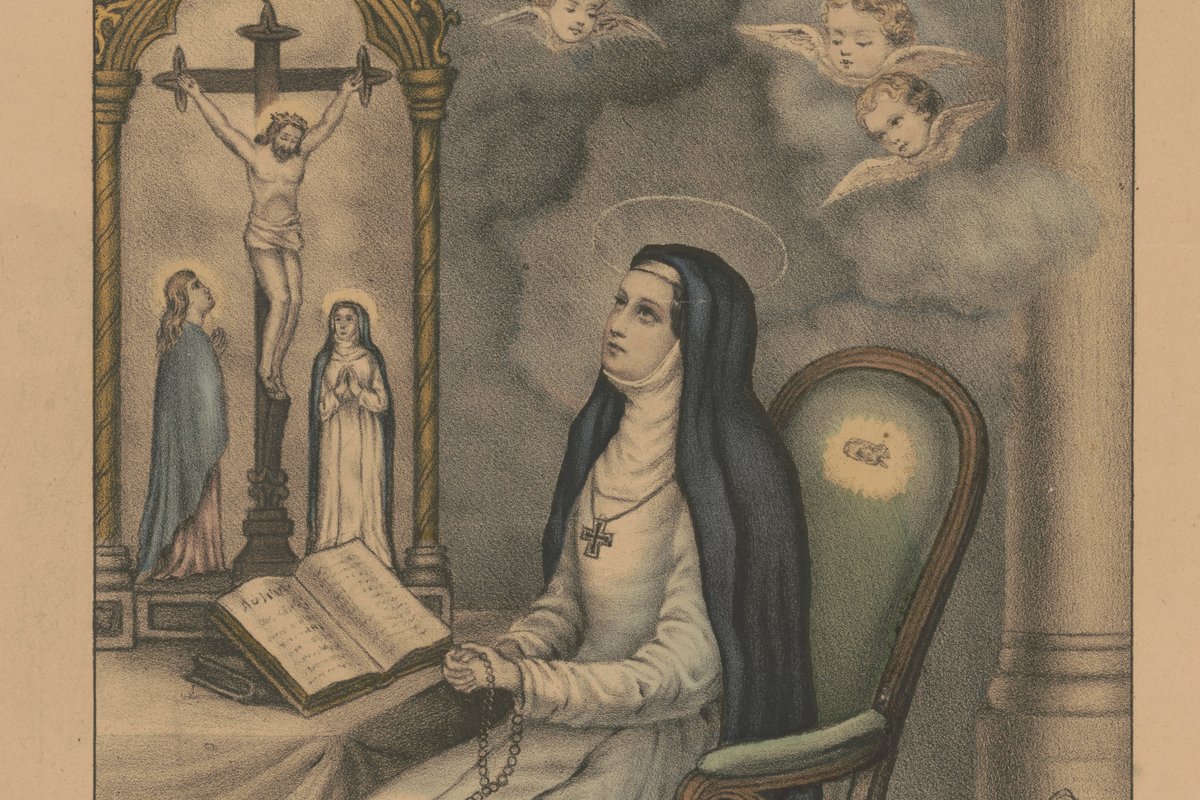
"Saint Bridget," hand-colored lithograph, Popular Graphic Arts collection, Currier & Ives, Library of Congress — public domain.
A noblewoman's ordinary path, until it wasn't
Bridget was born around 1303 or 1304 in Uppland, Sweden, into a prominent noble family. Following the marriage customs of her era, she was married at 13 to Ulf Gudmarsson of the Ulvåsa family, in 1316. The marriage produced eight children, six of whom survived infancy, including a daughter, Catherine of Vadstena, who would later be venerated as a saint in her own right. Bridget's life, to this point, tracked the expected course for a woman of her class and century — advantageous marriage, a large household, children raised into noble society. Ulf died in 1344, leaving Bridget a widow.
A vision, an order, and a move to Rome
What happened next departed sharply from what was expected of a widowed noblewoman in 14th-century Sweden. Bridget reported a divine vision instructing her to found a new religious order, and from it came the Order of the Most Holy Savior — known ever since as the Bridgettines. The order's structure was unusual for its period: "double monasteries," meaning separate but physically adjoining communities of nuns and monks, with the whole community placed under the overall governance of an abbess. The motherhouse, Vadstena Abbey, was endowed by King Magnus IV and Queen Blanche of Namur, giving the new order royal backing from the start.
In 1350, a Jubilee year, Bridget traveled to Rome to seek papal approval for her order — and she never went home. She remained in Rome for the rest of her life, and while she was there she became an outspoken critic of the Avignon Papacy, the decades-long period during which the popes resided in France rather than in Rome. Bridget pushed publicly for church reform and for the pope's return to Rome, an unusually bold position for anyone to take at the time, let alone a foreign widow with no official office. Late in life, she also made a pilgrimage to Jerusalem. She died in Rome on July 23, 1373.
Visions that shaped how painters saw the Nativity
Bridget reported visions from childhood onward, and the compiled record of them, the "Revelationes Coelestes" — "Celestial Revelations" — was translated into Latin by her confessors, Matthias of Linköping and Peter Olafsson. It's worth being precise about what that record is: private revelation, not Church dogma. The general orthodoxy of the Revelations was affirmed alongside Bridget's own canonization, and reaffirmed by the Council of Constance in 1415 and the Council of Basel in 1436 — but that confirmation means the Church found nothing in them contrary to the faith, not that every specific visionary detail is doctrinally binding on the faithful.
One of those visions had an outsized influence on art history. Bridget described witnessing the Nativity directly, with the infant Jesus radiating light as he lay on clean white cloth and Mary kneeling in adoration rather than reclining, as earlier depictions of the scene had typically shown her. That specific imagery is credited with directly shaping how Northern Renaissance and Baroque painters went on to depict the Nativity for roughly the next two centuries — a genuinely traceable, art-historical example of a private vision reshaping how an entire tradition of religious art rendered a biblical scene.
Canonization, patronage, and a contested legacy
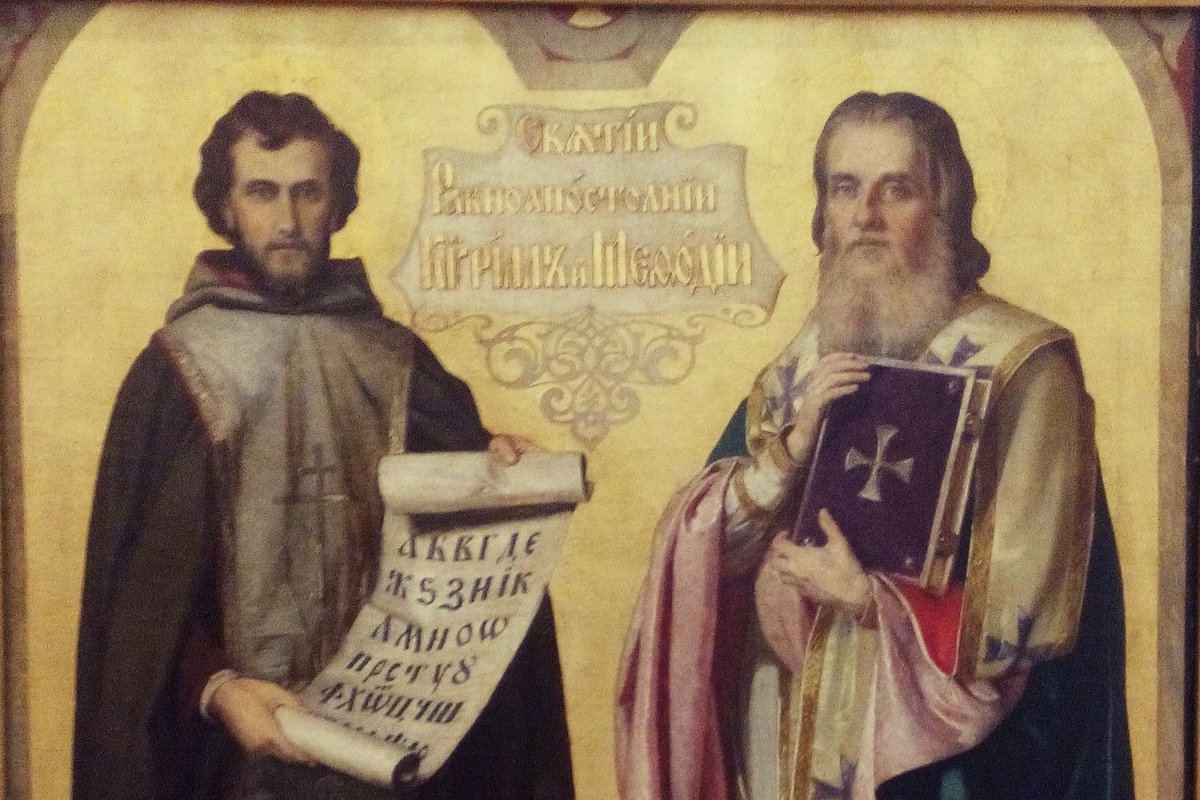
Bridget was canonized on October 7, 1391, by Pope Boniface IX, and on October 1, 1999, Pope John Paul II named her a patron saint of Europe, one of several co-patrons alongside Benedict of Nursia, Saints Cyril and Methodius, Catherine of Siena, and Edith Stein. Her feast is kept on July 23, and she's also recognized as a patron of Sweden and of widows.
Her legacy hasn't gone uncontested. During the Reformation, Martin Luther dismissed her visions harshly, reportedly calling her "die tolle Brigit" — "the foolish" or "mad" Bridget — a useful historical data point about how sharply her reputation split along confessional lines in the centuries after her death, presented here as a fact about that reception rather than a live theological dispute to referee. Separately, and worth noting as an example of the Church distinguishing a saint's own approved canonization from later popular devotions that grew up around her name, the Holy Office ruled in 1954 that specific spiritual benefits promised through a popular prayer devotion associated with her, known as the "Fifteen O's," were unreliable and unfounded. Bridget's own canonization and her role as a patron of Europe stand on their own; not every later accretion built around her cult carries the same weight.
Trivia
Is Saint Bridget of Sweden the same person as Saint Brigid of Ireland?
Who was Saint Bridget of Sweden?
What is the Bridgettine Order that Saint Bridget founded?
What are Saint Bridget's Revelations, and are they Church doctrine?
Why is Saint Bridget of Sweden important to European history and art?
Related Reading