The Dormition of the Virgin Mary

Two names for one departure
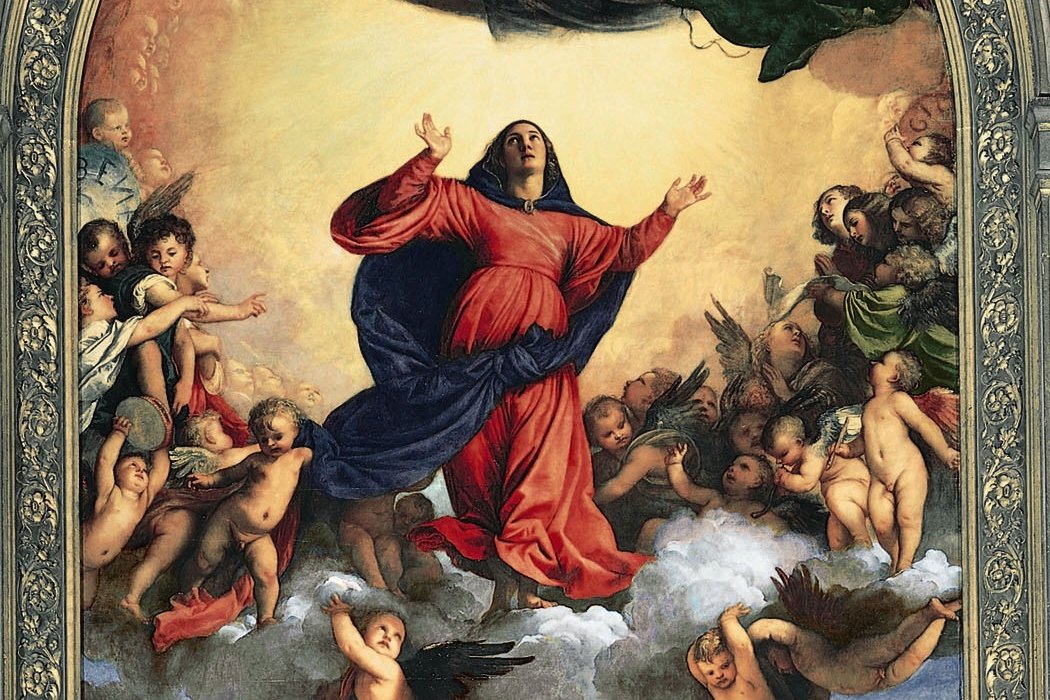
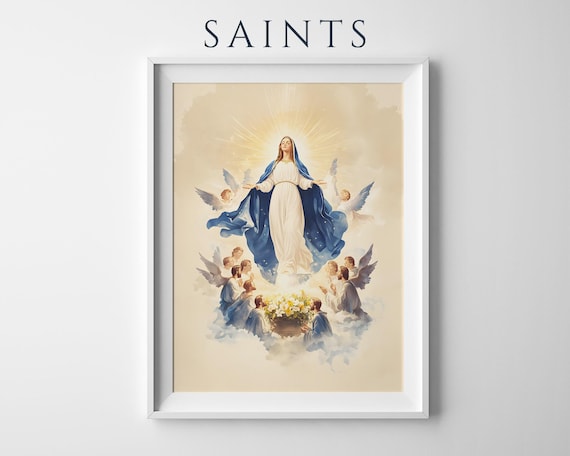
In the Christian East, what happened to Mary at the end of her life is called the Dormition — literally, her "falling asleep." In the West, it is called the Assumption. Both point to the same August 15 feast and the same underlying belief: that Mary was taken body and soul into heavenly glory rather than her remains simply resting in a grave like everyone else's. But the two names encode a real, if narrow, theological difference. Orthodox teaching is explicit that Mary died a natural death, just as her Son did, before her body was raised and taken to heaven. The Catholic dogma, defined centuries later, is carefully agnostic on that point — a distinction that turns out to be deliberate rather than accidental.
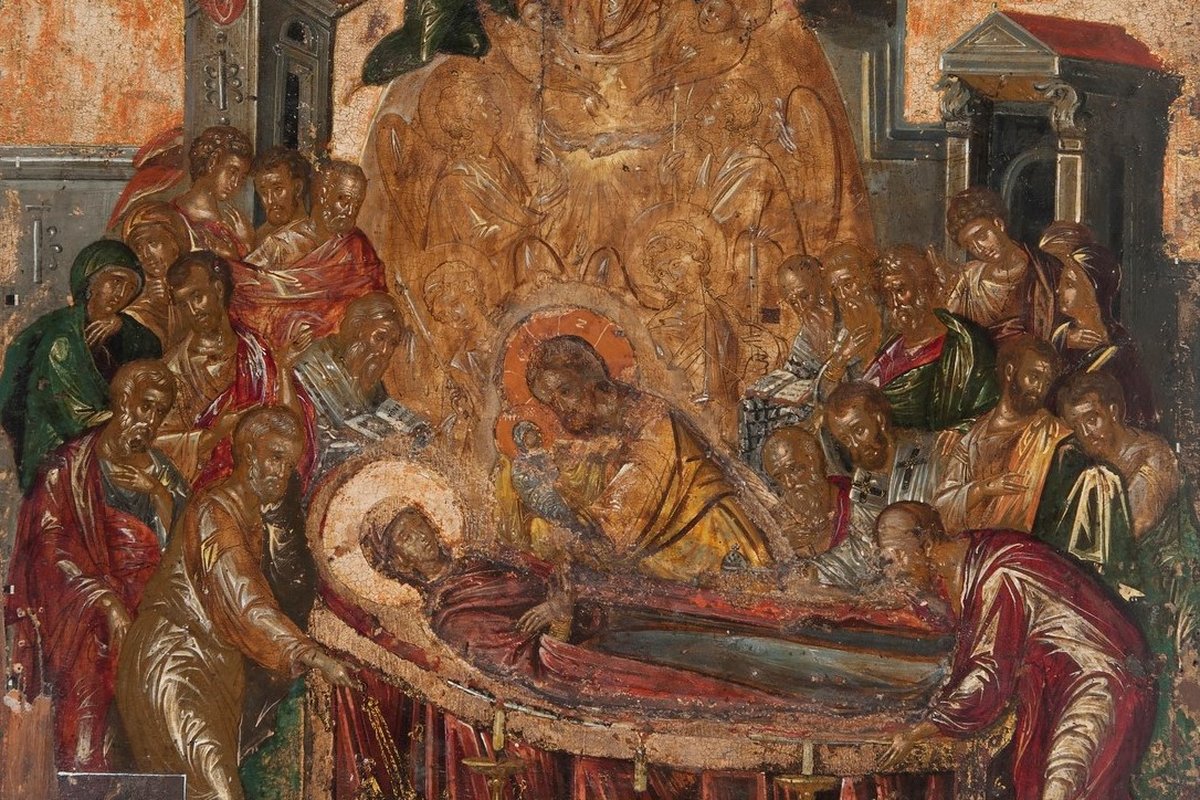
El Greco, Dormition of the Virgin, c. 1567, Church of the Dormition of the Virgin, Ermoupoli, Syros — public domain.
A dogma careful about what it doesn't say
The Assumption became formally defined Catholic dogma only in 1950, when Pope Pius XII issued the apostolic constitution Munificentissimus Deus. That declaration followed a lengthy process: Pius XII consulted the world's bishops beforehand, asking them to report on how firmly and how widely the belief was already held among the Catholic faithful in their own dioceses, and found near-unanimous support before moving to define it formally — a process the Church treats as significant in its own right, since a teaching this consistently and universally held across so many centuries and cultures is itself considered a kind of evidence for its truth, part of what theologians call the sensus fidelium, the instinctive sense of the faith shared by the whole body of believers.
Its actual defining language is precise: Mary, "having completed the course of her earthly life, was assumed body and soul into heavenly glory." Notice what it doesn't say. It never states that Mary died. That phrasing was a deliberate choice, leaving the question of her death as a widely held pious opinion among Catholics rather than a required article of faith — even though later popes, including John Paul II, personally spoke of her undergoing a natural death. The distinction matters for anyone trying to separate defined Church teaching from devout tradition: the dogma is the assumption itself; how and whether she died beforehand is left, quite intentionally, unsettled. Theologically, the Assumption is closely tied to Mary's Immaculate Conception — the separate teaching that she was conceived without the stain of original sin — since her freedom from sin is part of the Church's reasoning for why her body, unlike others, would not undergo the ordinary corruption of the grave.
Thomas, and a tomb with nothing in it
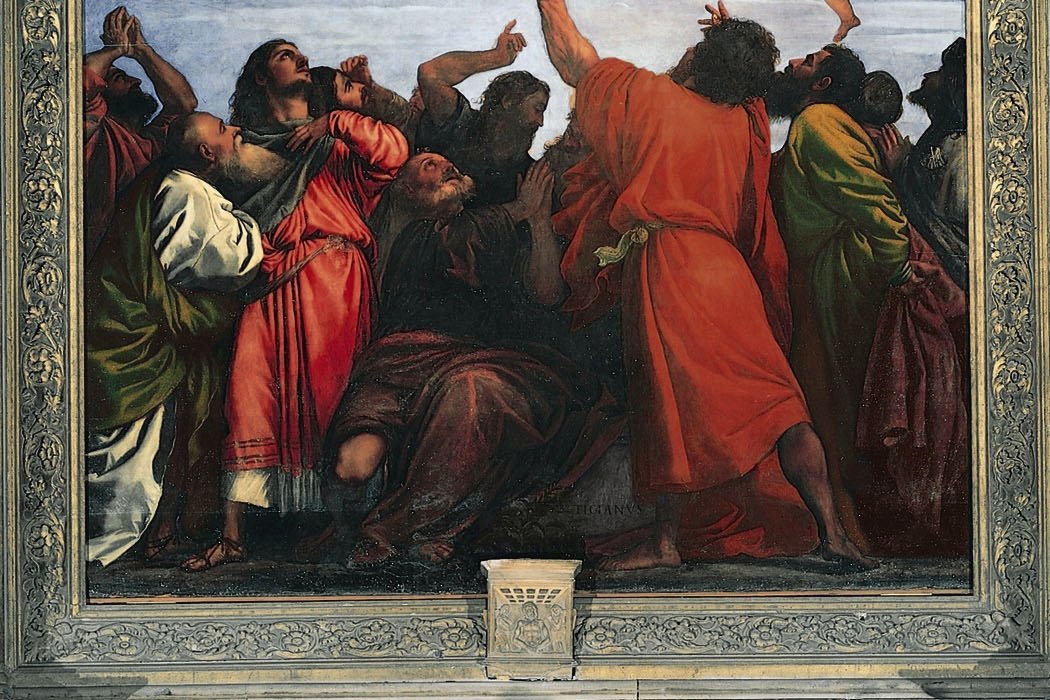
Long before 1950, though, popular devotion already had a vivid answer to that question, preserved in a group of texts scholars call the Transitus Mariae ("the passing of Mary"), written between the 4th and 6th centuries under titles like De Obitu S. Dominae and De Transitu Virginis. These are apocryphal — outside the Bible, never treated by the Church as Scripture — but their narrative shaped centuries of art, including the icon above. In it, the apostles, scattered across the world on their separate missions, are miraculously gathered to Mary's deathbed in Jerusalem. All except Thomas, delayed and arriving only after she has already been buried. When her tomb is opened for him, it is empty — in some tellings filled with flowers — the same shape as the Easter story bookending Mary's life the way it once bookended her son's. It's a beautiful piece of storytelling, but the Catholic Encyclopedia is direct that the Assumption dogma does not actually rest on these legends; it points instead to the Church's ancient, near-universal veneration of the belief itself, and to reasoning about what befits the mother chosen to bear God.
A feast celebrated across the whole Christian world
August 15 ranks among the oldest and most widely observed Marian feasts in the Christian calendar, with roots reaching back at least to the sixth century in Jerusalem and spreading from there across both the Eastern and Western Church well before the formal doctrinal statements either tradition eventually made about it. In many historically Catholic and Orthodox countries it remains a public holiday, marked by processions, blessings of harvest produce — a custom tied to the feast's timing near the end of summer — and, in Orthodox practice, a preceding two-week fast comparable in seriousness to Lent. That liturgical weight is one more reason the feast resists being treated as a minor or merely legendary observance: whatever theological nuance separates Dormition from Assumption, both traditions have marked the day with comparable solemnity for well over a thousand years.
Where East and West still don't quite agree
Set side by side with Our Lady of Fátima or Our Lady of Lourdes — apparitions the Catholic Church investigated and only cautiously endorsed years later — the Dormition/Assumption is a case where two ancient Christian traditions already agree on almost everything and diverge on one specific, narrow point. Orthodox theology commits fully to Mary's death as a concrete instance of the resurrection every Christian is promised; Catholic teaching leaves that same detail open by design, treating her manner of death as tradition rather than dogma. Neither side treats this as a live dispute worth arguing over — it's less a disagreement than two related answers to a question neither is in a hurry to close.
Trivia
What is the difference between the Dormition and the Assumption of Mary?
What did Pope Pius XII actually declare in 1950?
Why do some Orthodox churches celebrate the feast on August 28 instead of August 15?
Where does the story of Thomas and the empty tomb come from?
Is the Dormition or Assumption described anywhere in the Bible?
Related Reading