Our Lady of Fatima

Three children, six visits
The events at Fátima center on three young shepherds: Lúcia dos Santos, ten years old, and her cousins Francisco and Jacinta Marto, ages eight and six. Tending sheep in a field known as the Cova da Iria, near their village in central Portugal, the children reported seeing a radiant woman "brighter than the sun," standing on a small holm oak tree, who appeared to them six times, once a month, between May 13 and October 13, 1917 — a sustained pattern rather than a single, isolated event, giving word of the visits time to spread well beyond their own families. Portugal at the time was a young, unstable republic openly hostile to the Catholic Church, having recently expelled religious orders and suppressed public displays of faith, which made the local authorities deeply suspicious of the reports and, at one point, led to the children being briefly detained and threatened by a local official trying to force them to recant.
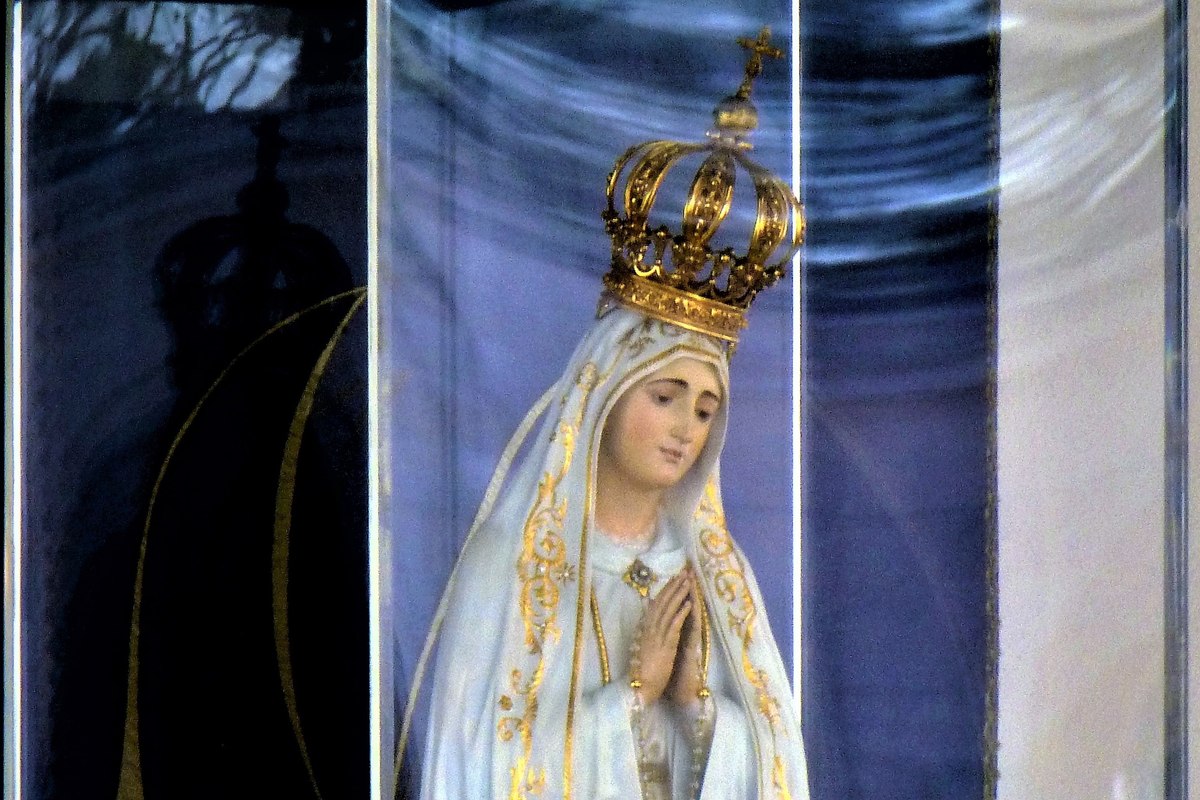
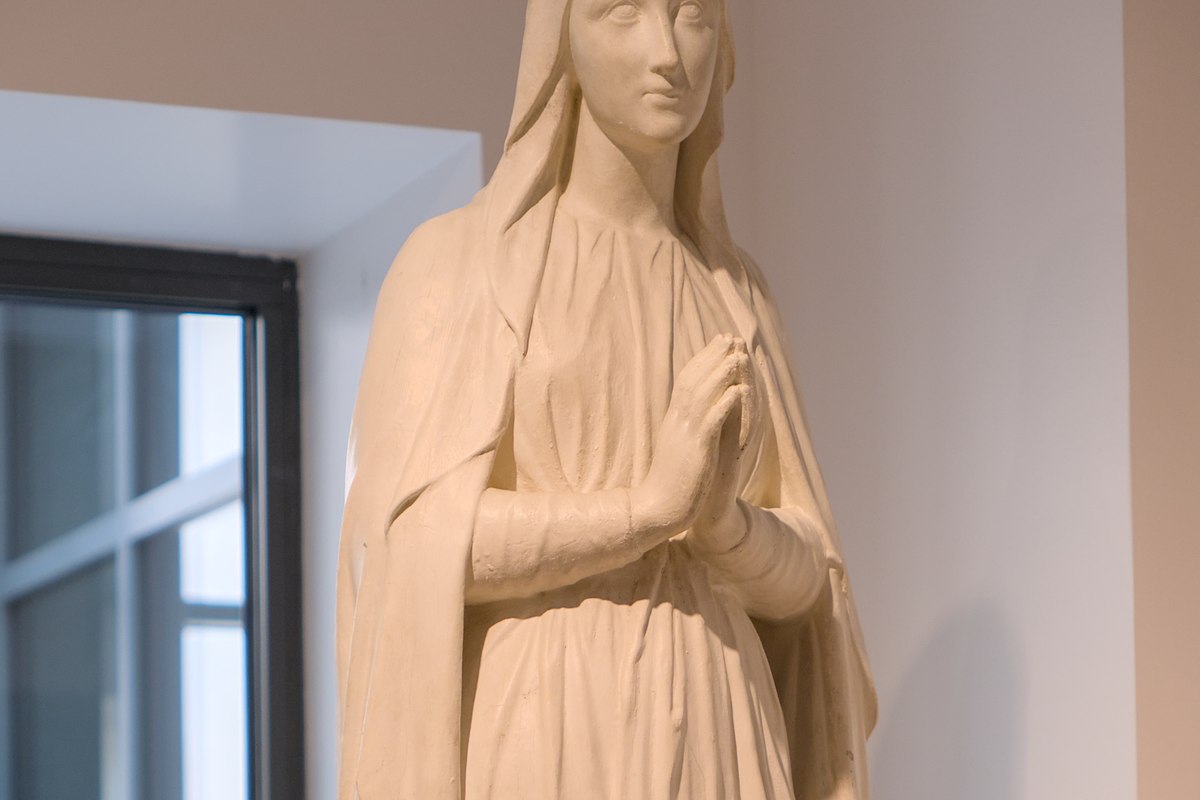
Statue of Our Lady of Fatima, Cova da Iria, Fátima, Portugal — photograph, own work.
A message centered on prayer, not spectacle
According to the children, the woman identified herself during one of the later apparitions as the "Lady of the Rosary," and her message throughout the visits emphasized prayer — particularly the rosary, the devotional practice of repeated prayers meditating on events in the lives of Jesus and Mary — along with penance and conversion. She also reportedly shared what became known as the Three Secrets of Fátima: a terrifying vision of hell, a prediction concerning the end of the First World War and the coming of a worse conflict unless people turned back to God, and a final, more cryptic vision involving a bishop in white that was not publicly released by the Vatican until 2000, decades after the events themselves, and that has been interpreted variously by theologians and historians ever since. The first two secrets were written down by Lúcia at the request of church authorities years after the apparitions, a detail that is part of why scholars treat the exact wording as her own later testimony rather than a verbatim transcript taken at the time.
A crowd of seventy thousand watching the sky
By the date of the sixth and final apparition, word of the children's reports had drawn an enormous crowd — estimated at around 70,000 people, believers and skeptics alike, including journalists from Lisbon's largely anti-clerical press who had come expecting to expose a hoax, gathered at the site specifically to see what would happen. What many of them reported witnessing became known as the "Miracle of the Sun": the sun appearing to spin, shift colors, and move unpredictably in the sky before seeming to plunge toward the earth, an event described by a far larger and more varied audience than the three children who had started it all, and reported in secular newspapers the following day alongside more skeptical accounts from other observers who saw nothing unusual.
A cautious Church, and two very young saints
Rather than moving quickly, the Catholic Church investigated the Fátima apparitions with notable caution, not formally declaring them worthy of belief until 1930 — thirteen years after the events themselves, following a lengthy canonical inquiry into the children's testimony and the reports of the crowd. Francisco and Jacinta both died young, in the influenza epidemic that swept Europe following World War I, dying in 1919 and 1920 respectively, while Lúcia entered religious life and lived on as a Carmelite nun until 2005, writing several memoirs about the apparitions along the way that became the primary historical source for what is known about them. In 2017, on the hundredth anniversary of the first apparition, Pope Francis canonized Francisco and Jacinta, making them the youngest saints in Church history ever canonized without having been martyred. Fátima today remains one of the most visited Marian shrines in the world, comparable in scale to devotion at sites like Our Lady of Lourdes in France, drawing pilgrims each May and October to the same field where three children once tended sheep.
A shrine shaped by twentieth-century popes
Fatima's influence on the modern papacy has been unusually direct. Pope Pius XII consecrated the world to the Immaculate Heart of Mary in 1942 in language echoing the children's reported requests, and Pope John Paul II credited Our Lady of Fatima with saving his life after he survived an assassination attempt in St. Peter's Square on May 13, 1981, the exact anniversary of the first apparition. He later had the bullet removed from his body placed in the crown of the statue of Our Lady of Fatima at the shrine, a gesture of personal gratitude that tied his own near-death experience directly back to the events of 1917. The Cova da Iria site has since grown into a vast pilgrimage complex capable of holding hundreds of thousands of visitors during major anniversaries, a scale that would have been unimaginable to the shepherd children and the local villagers who first gathered, skeptical and curious in equal measure, to see what the youngest of them had reported seeing in the sky.
Trivia
Who were the three children who reported the apparitions?
How many times did the apparitions occur?
What was the 'Miracle of the Sun'?
Did the Church officially recognize the apparitions?
Is Our Lady of Fátima a patron saint of anywhere?
Related Reading