Our Lady of Lourdes

Eighteen visits to a grotto outside town
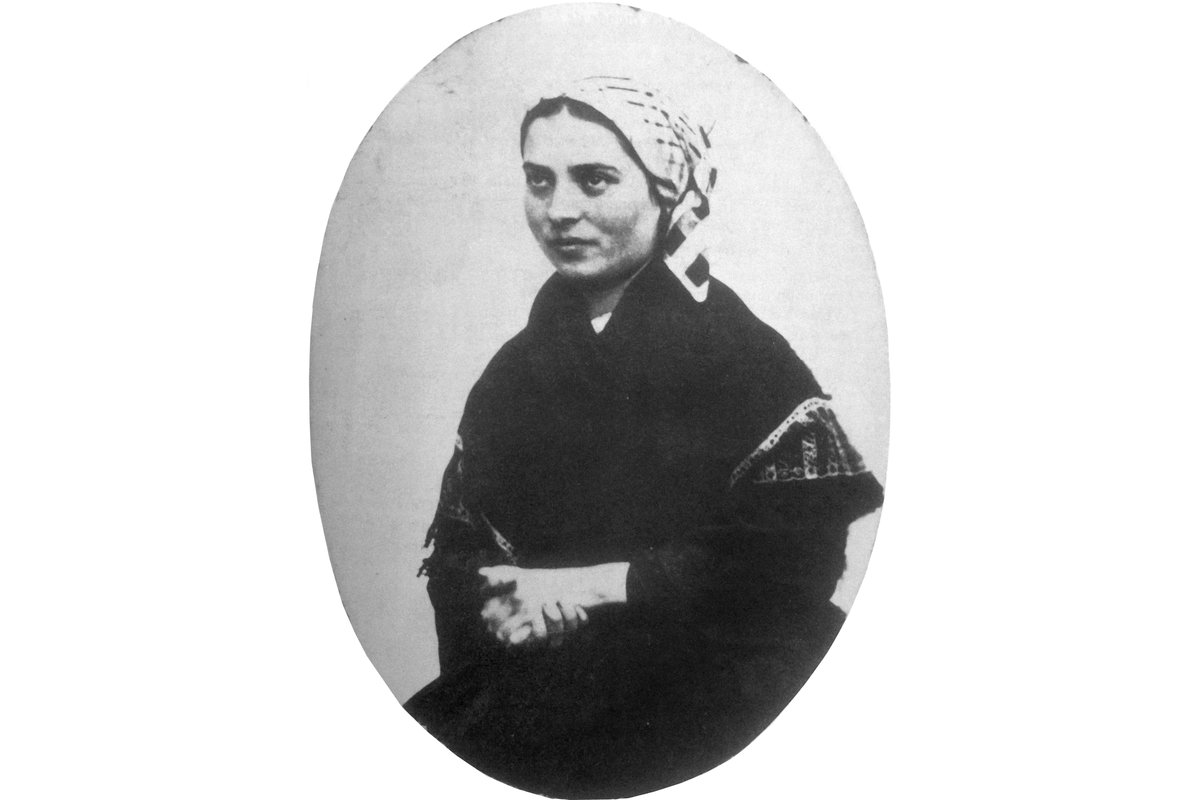
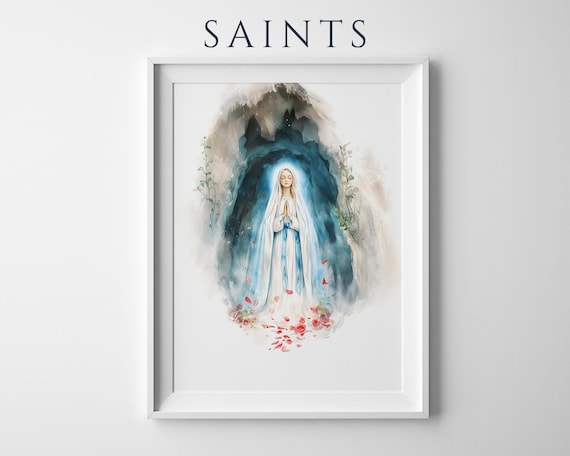
The events at Lourdes unfolded over a specific, well-documented span: between February 11 and July 16, 1858, Bernadette Soubirous, then fourteen, reported seeing "a Lady" at the grotto of Massabielle, on the edge of her hometown, eighteen separate times. The visits weren't a single dramatic event but a sustained pattern, spread across five months, drawing growing crowds of townspeople who came to watch Bernadette as she knelt in prayer at the grotto, often visibly moved by something no one else present could see.
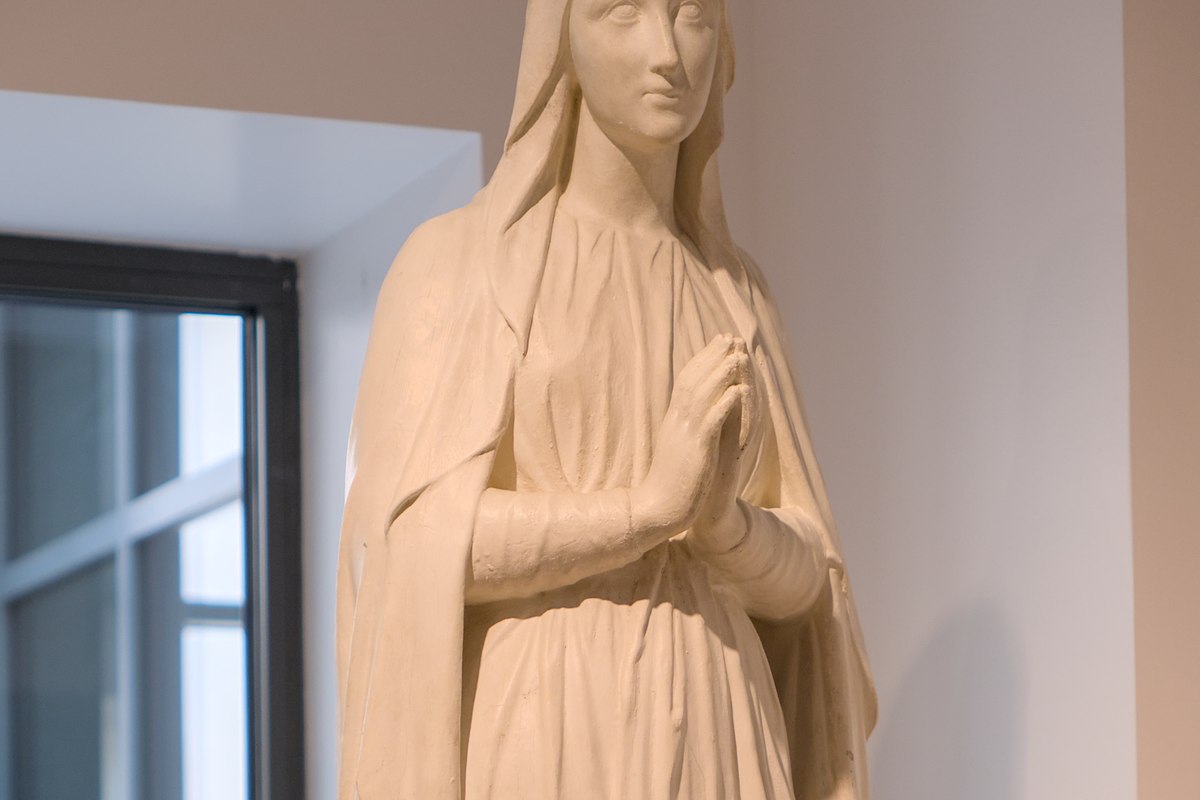
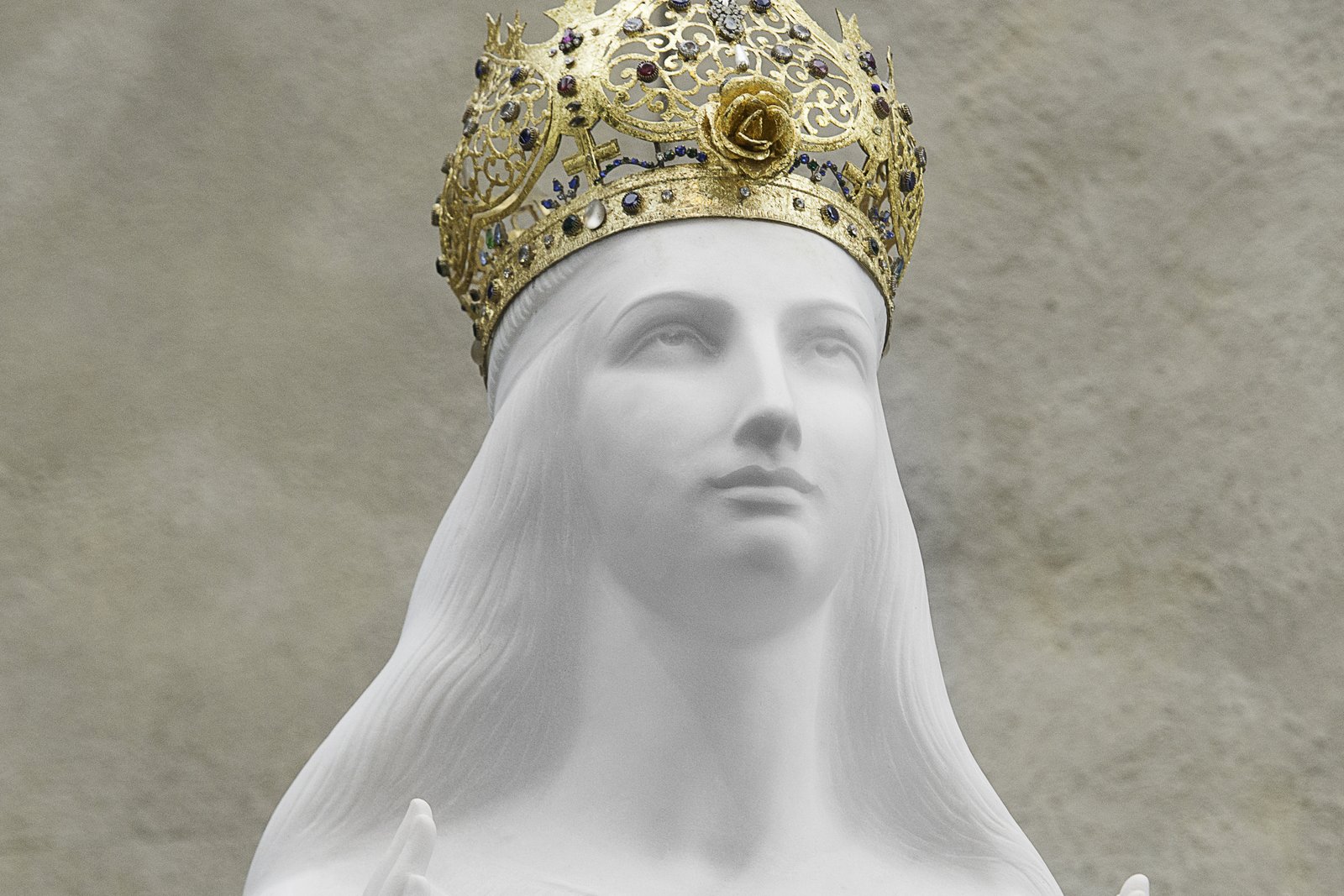
Joseph-Hugues Fabisch's 1864 model of Our Lady of Lourdes, Musée de Fourvière — CC0, photo by Romainbehar.
Bernadette herself came from a desperately poor family; her father, a miller, had lost his livelihood, and the family was living in a single cramped room in a former jail known locally as "the Cachot." She was out gathering firewood with her sister and a friend near the grotto on February 11 when she reported the first apparition — a young woman, dressed in white with a blue sash, standing in a small natural niche in the rock. Bernadette was, by her own account and that of her family, a sickly, uneducated girl who had barely begun catechism classes in preparation for her First Communion — hardly the profile local authorities expected of someone capable of sustaining a hoax over five months of public scrutiny, arrests, and interrogation, all of which she endured with the same plain, unchanging account each time.
A name given only once
For most of those eighteen visits, the figure Bernadette described gave no name. That changed on March 25, when, according to Bernadette's account, the Lady identified herself directly: "I am the Immaculate Conception" — a title tied to a doctrine the Catholic Church had formally defined only four years earlier, in 1854. For a fourteen-year-old with no theological training to report a title so specific, and so recently defined, became one of the details Church investigators would weigh carefully in assessing her account.
The apparitions also included several specific instructions Bernadette said she was given, not all of which made immediate sense even to her. She was told to "drink of the water of the spring and wash" in it — but at the time, no spring was visible at that spot in the grotto at all. Bernadette began scraping at the dry ground with her hands as townspeople watched, apparently confused, until a trickle of muddy water appeared, which grew over the following days into a flowing spring. She was also told, on separate visits, to tell the local priests to have a chapel built at the site and to have processions come there — requests that put a poor teenage girl in the position of making formal demands of Church authorities who, understandably, treated her with considerable skepticism at first.
A spring that became a destination
Beyond the apparitions themselves, Bernadette was directed to a spring at the grotto — a detail that would shape everything Lourdes became afterward. That spring, and the claimed healing miracles associated with it over the following decades, transformed an obscure grotto on the edge of a small French town into one of the most visited pilgrimage destinations in the Catholic world, drawing millions of visitors annually to this day.
The Church has applied an unusually rigorous, evidence-based process to evaluating the healings reported at Lourdes. Since 1883, a standing Lourdes Medical Bureau has examined claimed cures, and since 1947 an International Medical Committee of specialist physicians, most of them not themselves Catholic, has reviewed cases before any healing is forwarded to the local bishop for a final determination. Out of many thousands of reported cures over more than a century and a half, only a small number — around 70 as of recent decades — have received the Church's formal recognition as miraculous, a proportion that reflects just how demanding the medical scrutiny is: investigators require that a condition be serious, medically documented before and after, without any plausible natural explanation, and durable over time before it is ever classified as inexplicable by medical science.
A formal, cautious investigation
The Church did not simply accept Bernadette's account at face value. A formal investigation followed, and it wasn't until February 18, 1862 — nearly four years after the apparitions began — that the local bishop declared her reports "worthy of belief." Pope Leo XIII later approved February 11, the anniversary of the first apparition, as the official feast of Our Lady of Lourdes. Bernadette herself was canonized decades later, remembered less for anything she claimed to have done and more for the plain, unembellished consistency with which she described what she said she saw.
A life spent away from the crowds she inspired
Bernadette herself never returned to public life. In 1866, at age twenty-two, she left Lourdes for good and entered the convent of the Sisters of Charity of Nevers, far from the pilgrims already gathering at the grotto in growing numbers. She spent the rest of her short life — she died in 1879, only thirty-five — largely out of the public eye, working as an infirmary assistant and sacristan, and reportedly uncomfortable with the attention her story attracted. She is said to have remarked that the Blessed Virgin had used her "like a broom," sweeping away dust from something greater than herself, and once that work was done, put back in the corner. Pope Pius XI canonized her in 1933, and her body, exhumed and found remarkably well preserved during the canonization process, remains on display in a glass reliquary in Nevers, France, to this day.
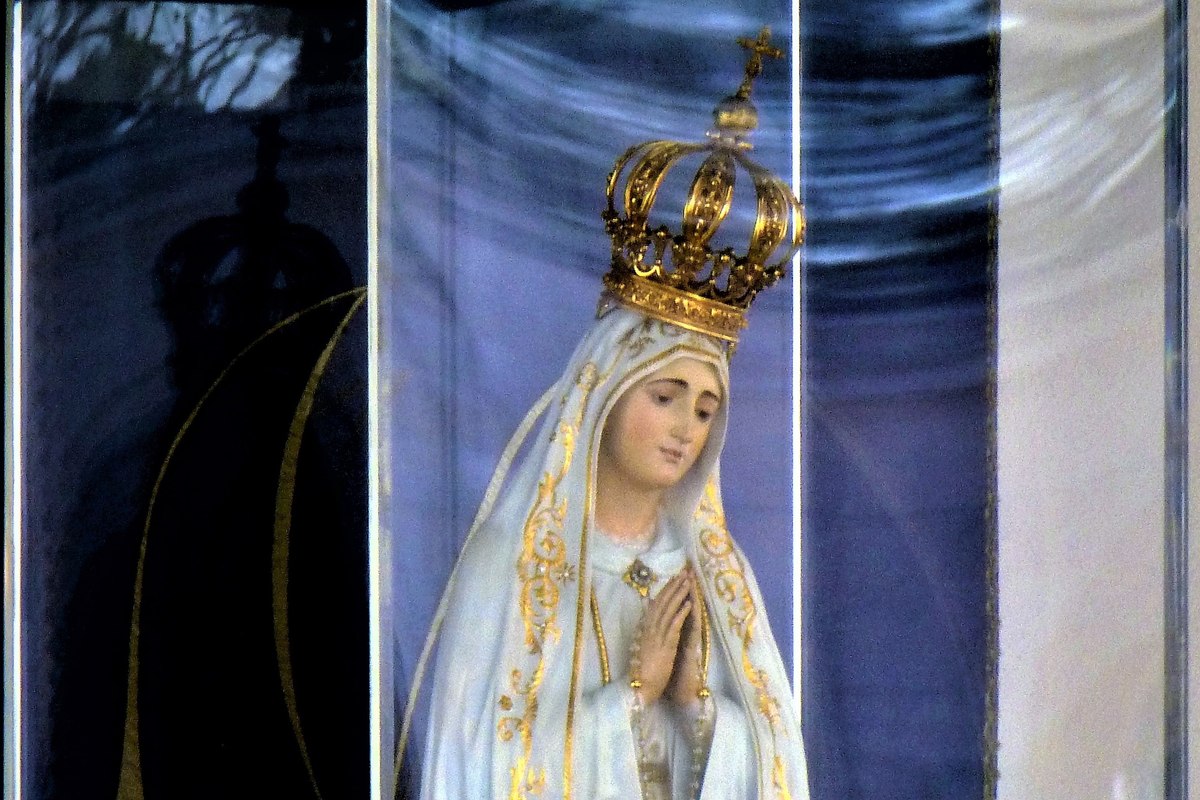
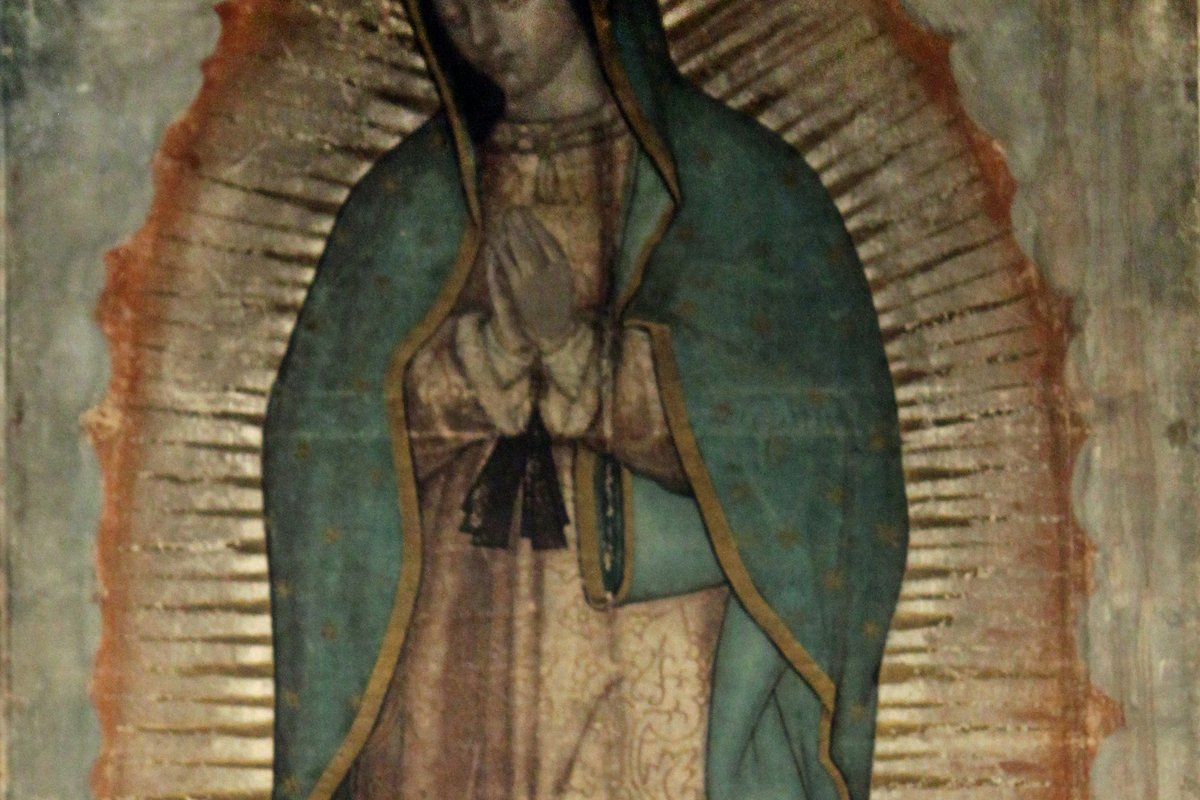
Lourdes today draws an estimated five to six million visitors each year, making it one of the most visited pilgrimage sites in the world, alongside places like the Basilica of Our Lady of Guadalupe in Mexico. Sick and disabled pilgrims are given particular priority in the organized processions there, a practice rooted directly in Bernadette's own frail health and in the healings reported at the spring since 1858. Along with other Church-recognized Marian apparitions such as Our Lady of Fatima, Lourdes remains one of the handful of apparition sites the Vatican has formally approved for public devotion, distinguishing it from the far larger number of reported apparitions worldwide that the Church has never confirmed.
Trivia
Who reported the apparitions at Lourdes?
Did the Lady ever identify herself?
What did the apparition lead to at the site?
Did the Church confirm the apparitions were genuine?
Related Reading