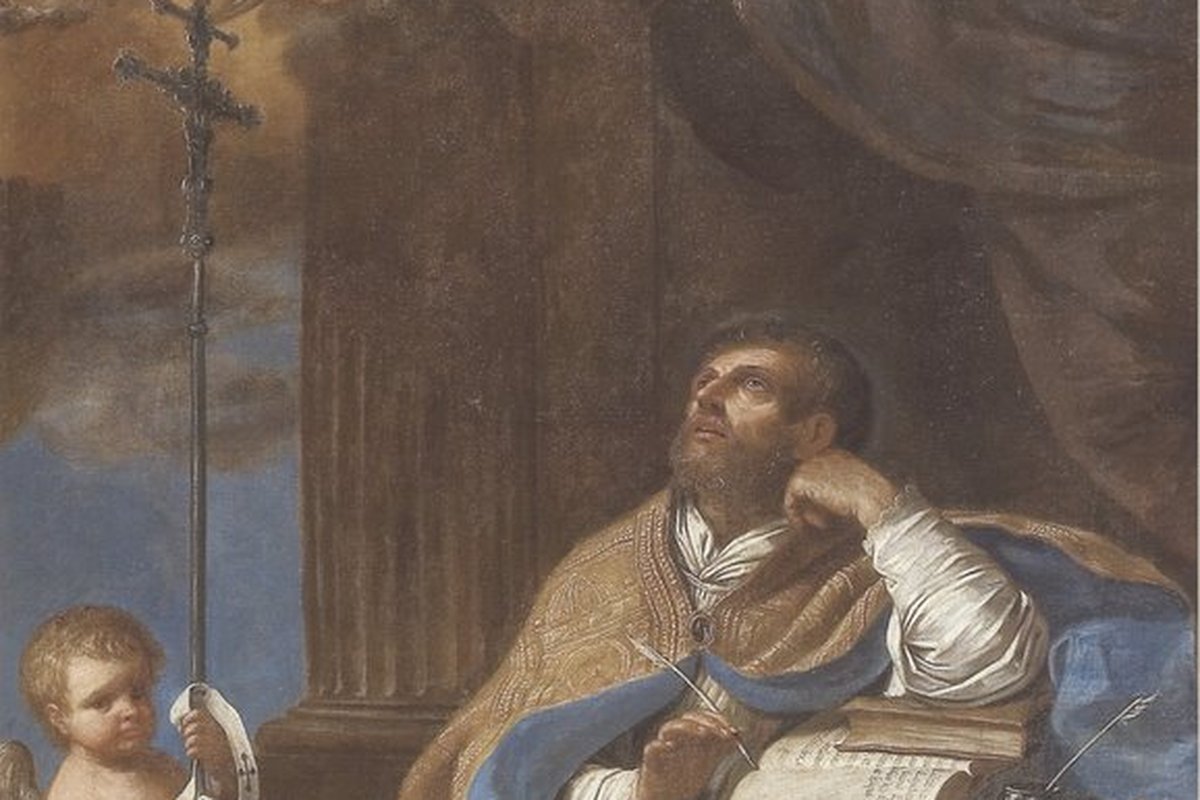
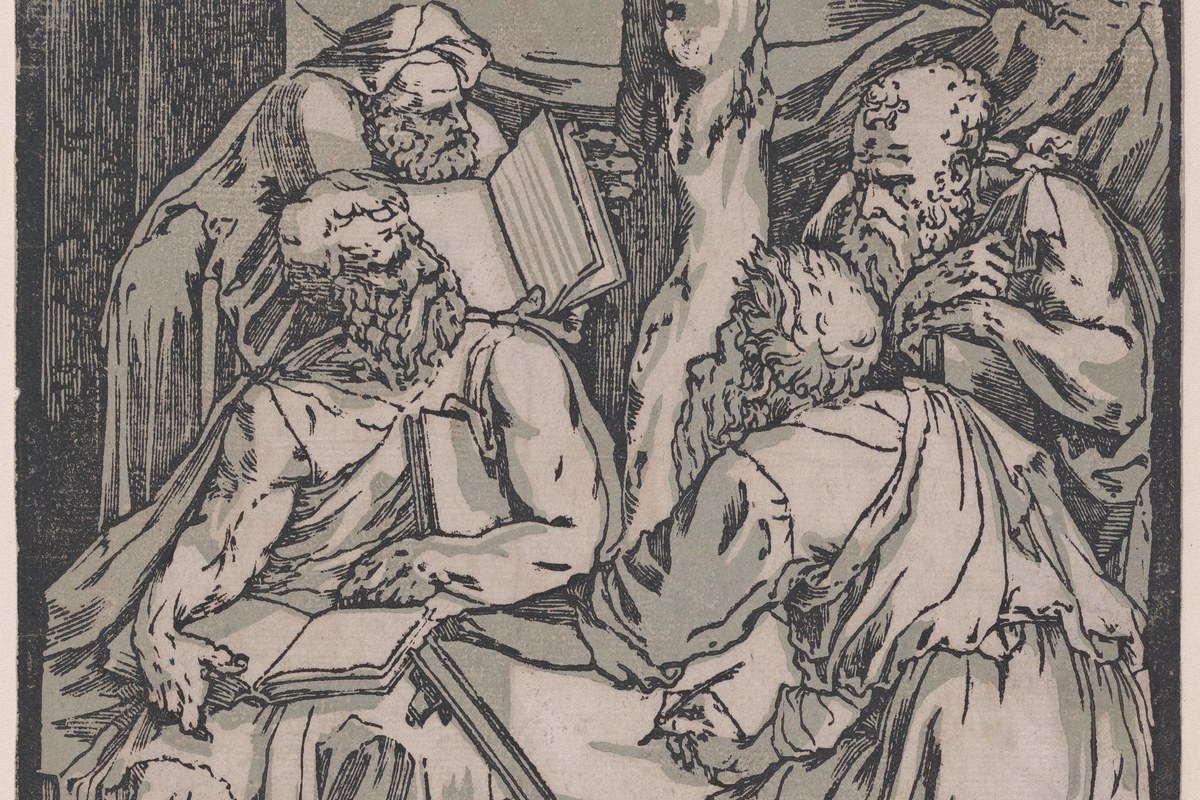
Saint Irenaeus of Lyon

A boyhood spent near an apostle's own student
Irenaeus was born around 130, most likely in Smyrna, a city in Asia Minor (in what's now western Turkey), and as a young man he studied under Polycarp, the bishop of Smyrna, who was himself, by strong and widely accepted tradition, a direct disciple of the Apostle John. Irenaeus later recalled these years vividly in his own writing, describing where Polycarp used to sit and speak and how he described his own conversations with John and others who had seen Jesus. That personal link mattered enormously for how later generations read Irenaeus: whatever he taught could be presented as standing only two steps removed from the Apostles themselves. At some point Irenaeus traveled west to Roman Gaul, settling in Lyon, where he became a priest and, following a persecution that killed the previous bishop, was elevated to bishop of Lyon around 177 or 178.
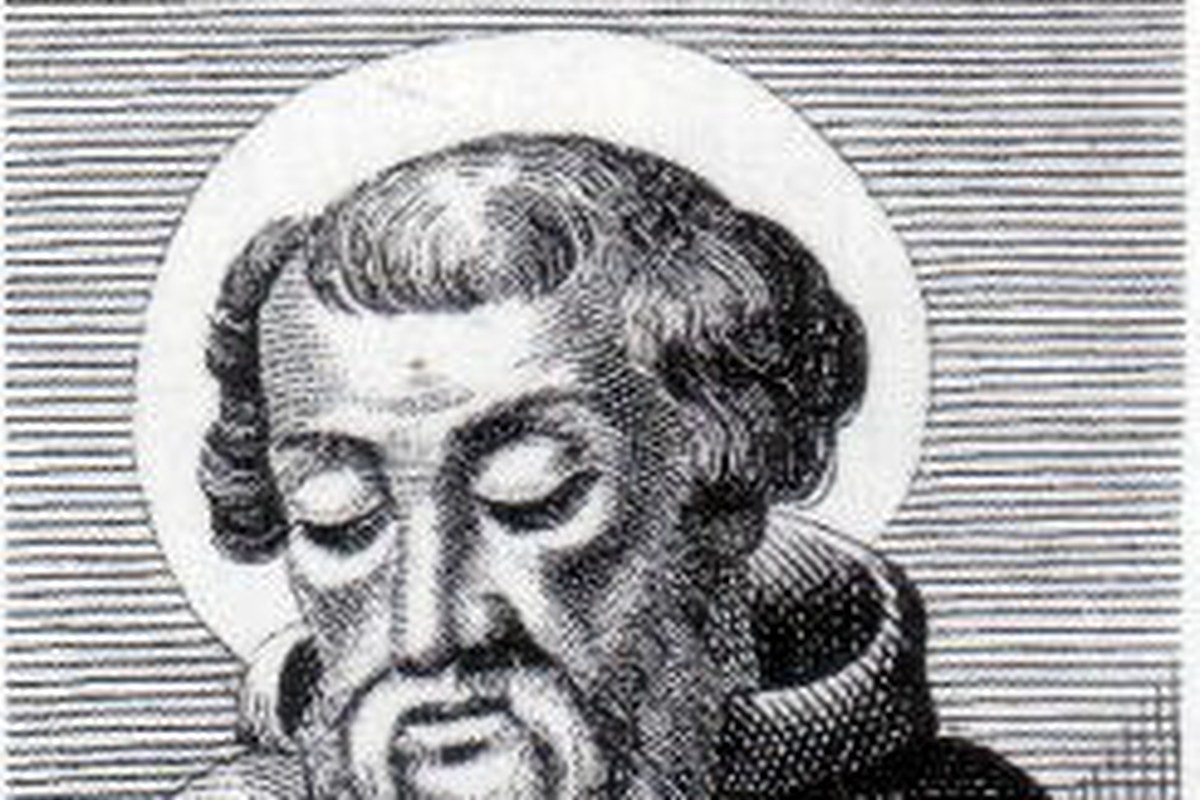
Unknown engraver, portrait of Saint Irenaeus of Lyon, date unknown — public domain (Wikimedia Commons).
Dismantling the Gnostics, book by book
Irenaeus's defining work is Against Heresies, a sprawling five-volume treatise written to refute the Gnostic teachers active in Gaul and beyond, particularly followers of Valentinus, who taught a complex mythology of hidden divine emanations and secret saving knowledge unavailable to ordinary believers. Irenaeus answered them systematically: laying out their teachings in detail before dismantling them, and building in the process one of the earliest sustained arguments for apostolic succession, the idea that authentic Christian teaching could be traced through an unbroken chain of bishops back to the Apostles, as opposed to secret traditions claimed by Gnostic teachers with no such lineage. The work was so thorough and so widely copied that "Gnosticism" as a scholarly category today rests substantially on how Irenaeus described and organized it, even though it survives complete only in an ancient Latin translation rather than its original Greek.
Doctor of Unity, nearly eighteen centuries later
Irenaeus is traditionally said to have died around 202, possibly during a persecution under the emperor Septimius Severus, though the circumstances of his death aren't documented with certainty. His theological reputation endured across the centuries that followed, but formal recognition as a Doctor of the Church came remarkably late: Pope Francis declared him a Doctor on January 21, 2022, giving him the title "Doctor of Unity" — a title chosen deliberately, reflecting both his historical argument for a unified apostolic teaching authority and, more recently, his relevance to modern ecumenical efforts between Eastern and Western Christianity. As of that declaration, Irenaeus stands as the most recently named of the Doctors of the Church.
A phrase that outlived its exact wording
Irenaeus is often quoted today with the line "the glory of God is man fully alive," a phrase repeated so often in homilies and devotional writing that it's frequently treated as an exact quotation. It is closer to an interpretive paraphrase. What survives of Against Heresies, Book 4, chapter 20, in the standard Ante-Nicene Fathers translation, reads: "For the glory of God is a living man; and the life of man consists in beholding God." The underlying idea, that human flourishing itself gives glory to God, is genuinely his — but the original Greek text has not survived, and readers encounter the passage only through ancient translation. His feast is kept on June 28, and Lyon still honors him as one of its own, nearly two thousand years after a boy from Smyrna arrived to become its bishop.
What the Gnostics actually taught, and why it worried him
To understand why Irenaeus devoted five entire books to refuting Gnosticism, it helps to know roughly what these teachers claimed. Gnostic groups — the name comes from the Greek gnosis, "knowledge" — generally taught that the material world was flawed or evil, created not by the true, transcendent God but by a lesser, ignorant power, and that salvation came through secret spiritual knowledge available only to an initiated elite, rather than through faith and the sacraments available to the whole Church. Followers of Valentinus, the teacher Irenaeus targets most directly, elaborated an intricate mythology of divine emanations called "aeons" descending in pairs from an ultimate source, with the material world resulting from a kind of cosmic accident far removed from any direct divine plan. Irenaeus saw this as a direct threat to core Christian teaching on creation, since it denied that the one true God had made the physical world good, and to the Church's unity, since it treated ordinary believers as permanently second-class compared to those let in on Gnostic secrets. His counter-argument insisted that salvation was public, available to all through the Church's own teaching, not hidden knowledge reserved for a spiritual elite.
Apostolic succession as an argument, not just a structure
Irenaeus's case for apostolic succession deserves a closer look, since it became one of the most influential arguments in the early Church's self-understanding. Facing Gnostic teachers who claimed access to secret oral traditions supposedly passed down privately from the Apostles, Irenaeus countered that the true test of authentic teaching was public and verifiable: any believer could trace the line of bishops in a given church back, generation by generation, to an apostolic founder, and check what was actually being taught along the way. He pointed specifically to the church at Rome as an example, listing its bishops in order back to the Apostles Peter and Paul, as proof that its teaching had remained consistent and traceable rather than secret or invented. This wasn't merely an administrative argument about who had authority — it was an argument that truth in the Church was something open and checkable, not something only a hidden few could access, which is part of why the "Doctor of Unity" title Pope Francis gave him in 2022 fits his original argument so naturally.
A death without a documented martyrdom
Popular tradition has long remembered Irenaeus as a martyr, killed during persecution under Septimius Severus around 202, and some later liturgical calendars list him that way. Serious historians and even some Catholic reference works are more cautious, since no contemporary account actually describes the circumstances of his death, and the martyrdom tradition appears to emerge only in later centuries without clear documentary support. It's a useful reminder of how carefully this site tries to separate durable, well-documented fact from later, however sincere, embellishment — Irenaeus's genuine and enormous contribution to Christian theology doesn't need an unverified martyrdom attached to make his legacy significant.
Trivia
Who was Saint Irenaeus of Lyon?
What is Irenaeus's most famous work?
When was Irenaeus of Lyon declared a Doctor of the Church?
Did Irenaeus really say 'the glory of God is man fully alive'?
What is Saint Irenaeus of Lyon the patron saint of, and when is his feast day?
You May Also Like
Related Reading