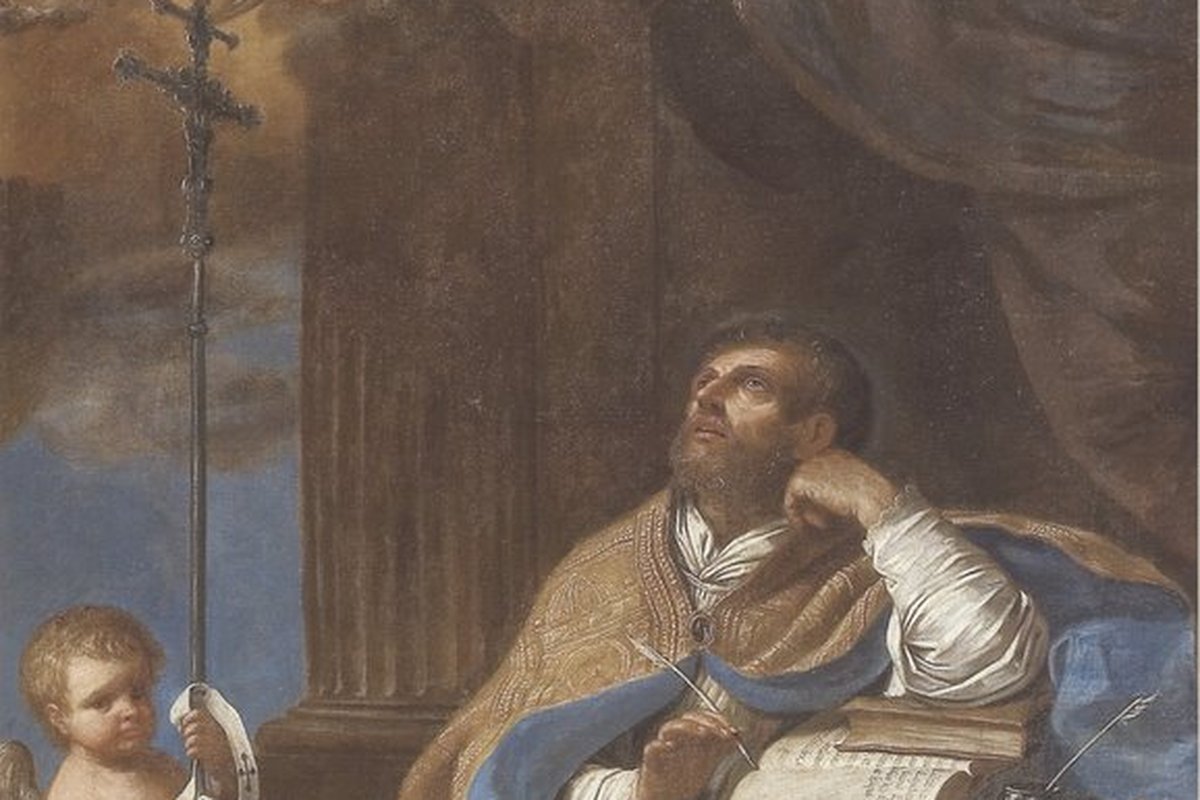
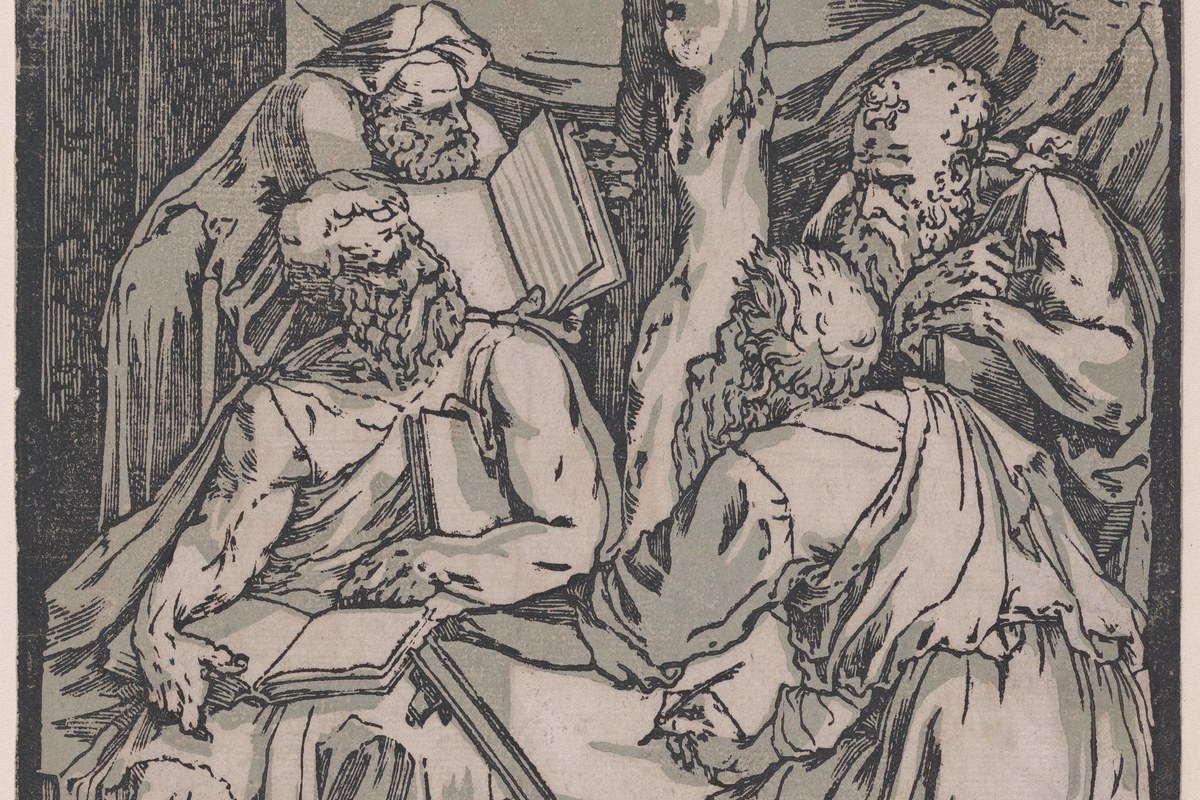
Saint John Damascene

A Christian civil servant under Muslim rule
John was born around 675 in Damascus, into a prominent Christian family that had served for generations in the administration of the city — first under Byzantine rule, and then, after the Arab conquest of Syria, under the new Umayyad caliphate. His grandfather, Mansur ibn Sarjun, had reportedly negotiated the surrender of Damascus to the invading Arab armies decades earlier, a role that helped secure the family's continued standing under the new government rather than costing them their position, as happened to many of the city's former Byzantine elite. John himself apparently held a senior administrative post in that same government early in his career, likely serving as a financial official, a detail that says something about the relatively practical relationship between the Muslim state and its Christian subjects in that period, at least in its earlier decades before later, more restrictive policies took hold.
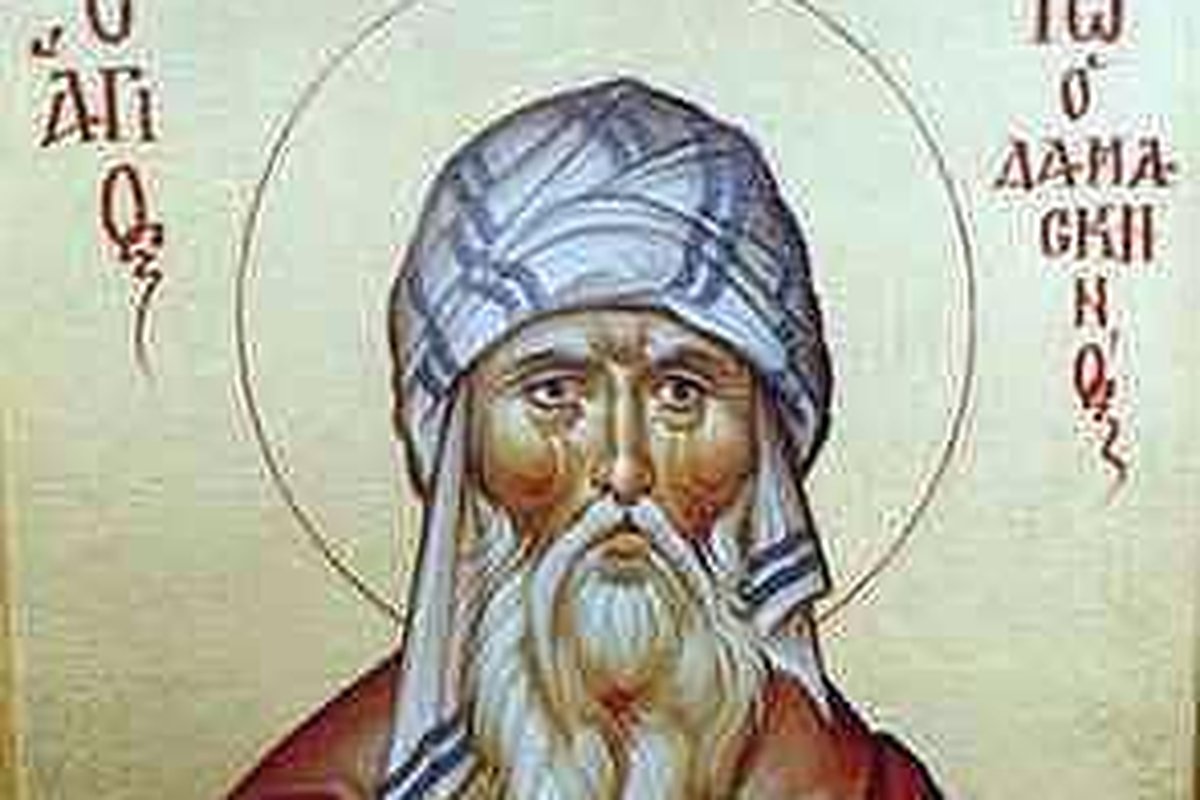
Traditional Orthodox icon of Saint John Damascene, artist and date unrecorded, image courtesy of St. Nicholas Russian Orthodox Church, Dallas — public domain (photographic reproduction of a two-dimensional public domain work).
Tradition also credits John's early education to a learned Sicilian monk named Cosmas, whom his father is said to have ransomed from slavery specifically to tutor his son and an adopted foster-brother, also named Cosmas, who himself later became a bishop and hymn writer. Whether every detail of that account is precisely accurate, it fits with what's independently known about John's formation: a rigorous grounding in Greek philosophy, rhetoric, and theology that shows clearly in the systematic, carefully argued style of his later writing. At some point in the early 700s, he left his administrative career behind and entered the monastery of Mar Saba, in the Judean desert near Jerusalem, where he would spend most of the rest of his life as a monk and priest, writing.
Defending icons from outside the emperor's reach
John's monastery sat outside Byzantine territory, under Muslim political control — and that geography turned out to matter enormously. When the Byzantine emperor Leo III launched a campaign against the veneration of icons in the 720s, ordering religious images destroyed and their defenders punished, John was one of the few prominent theologians positioned where the emperor's authority simply didn't reach. He used that safety to write a series of treatises defending icons, arguing that since God had taken on a real, visible human body in the Incarnation, representing Christ and the saints in art wasn't idolatry — it honored the fact that the invisible God had made himself visible. He put the distinction sharply: he did not worship matter, but the Creator of matter, "who became matter for my sake" (On the Divine Images, 1.16). Decades later, at the Second Council of Nicaea in 787, his arguments were read aloud and helped settle the controversy in favor of the icons. His near-contemporary, Saint Germanus of Constantinople, was making a related theological case from within the Byzantine capital itself around the same period, at far greater personal cost — he was forced to resign his position as patriarch for refusing to sign the emperor's edict against icons, a risk John, writing from safely outside imperial jurisdiction, never had to face directly himself.
The Iconoclast emperors were not indifferent to John's influence, despite being unable to reach him physically. A persistent tradition holds that Emperor Leo III arranged to have a forged letter attributed to John circulated, implicating him in a fabricated plot against the Muslim caliph, in the hope that the caliph's own government would punish him for it. According to the same tradition, John was accused, had his hand cut off as punishment, and was miraculously healed after praying before an icon of the Virgin Mary — a story that, whatever the exact historical reliability of its details, illustrates just how seriously his Byzantine opponents were said to have taken the threat his writing posed to their policy.
An organizer of doctrine, not just a defender of images
Beyond the icon controversy, John's most lasting written work is The Fount of Knowledge, a three-part project that surveys philosophy, catalogs heresies, and then lays out an organized summary of Christian doctrine in a section called An Exact Exposition of the Orthodox Faith. That last section, in particular, functioned for centuries afterward as a kind of reference point for later theologians working through systematic doctrine, including scholastic writers in the Latin West who had access to it in translation. He's also credited with hymns still used in Eastern liturgical tradition, giving him a footprint in Christian worship that extends well past his theological prose.
The last of the Eastern Fathers
John died around 749 at Mar Saba, having spent decades as a monk writing at a real, physical distance from the imperial court that wanted his arguments silenced. Pope Leo XIII declared him a Doctor of the Church in 1890, honoring both his role in preserving icon veneration and the broader scope of his theological writing. He's often described as the last of the great Eastern Church Fathers, closing out an era of Greek patristic writing that had run for several centuries, alongside towering earlier figures like Saint Basil and Saint Gregory of Nazianzus. His feast is kept on December 4.
Trivia
Who was Saint John Damascene?
Why is John Damascene important to the history of icons?
What did John Damascene say about worshiping icons?
When was John Damascene declared a Doctor of the Church?
What is Saint John Damascene's feast day?
You May Also Like
Related Reading