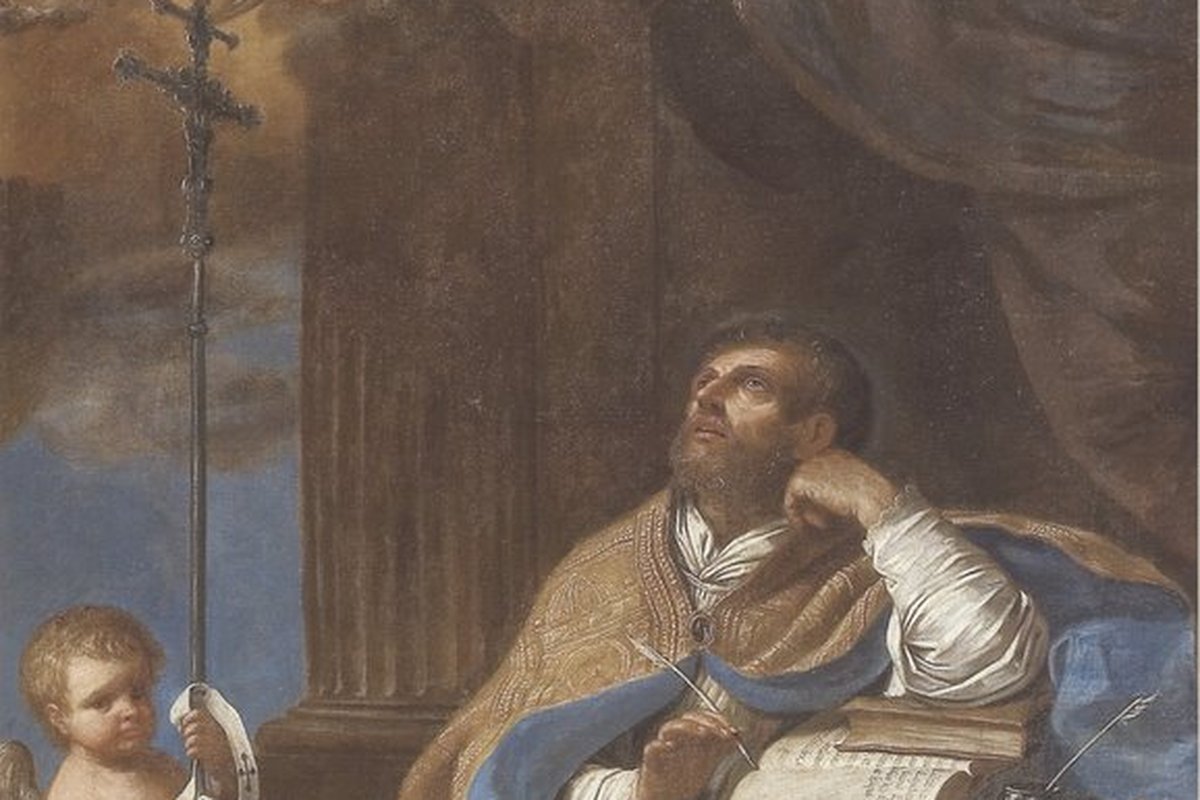
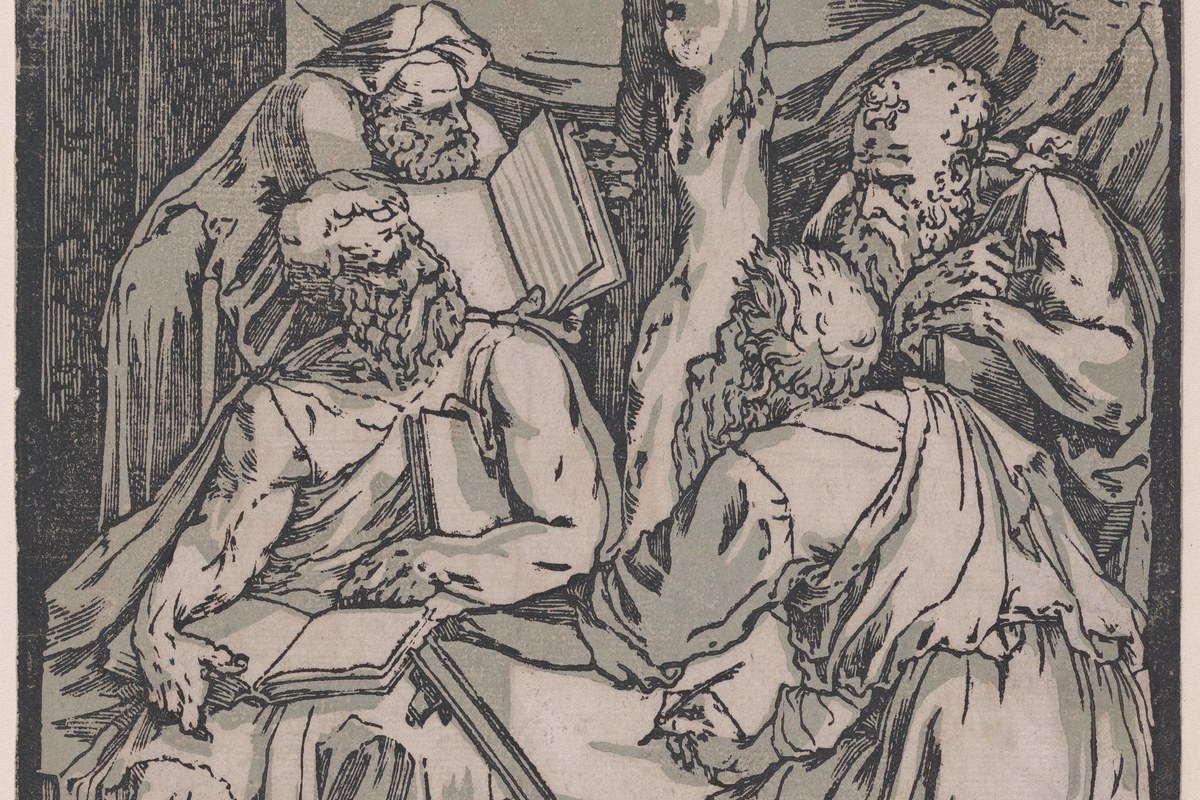
Saint Ephrem the Syrian

A deacon from the edge of the Roman world
Ephrem was born around 306 in Nisibis, a fortress city on the eastern edge of the Roman Empire, in what is now southeastern Turkey, close enough to the Persian frontier that its ownership changed hands repeatedly during his lifetime. Later tradition holds that his parents were Christian, though some early sources suggest his father may have been a pagan priest — the record on this point is not fully consistent, a reminder that even a relatively well-documented Father of the Church like Ephrem still comes down to us through sources that don't always agree on every biographical detail. He was baptized as a young man, attached himself to the city's bishop, Jacob of Nisibis, who is traditionally said to have taken Ephrem with him as a companion to the Council of Nicaea in 325, and was ordained a deacon — a role he apparently kept for the rest of his life, by tradition never seeking the priesthood or any higher office, reportedly out of a sense of personal unworthiness rather than any restriction placed on him.
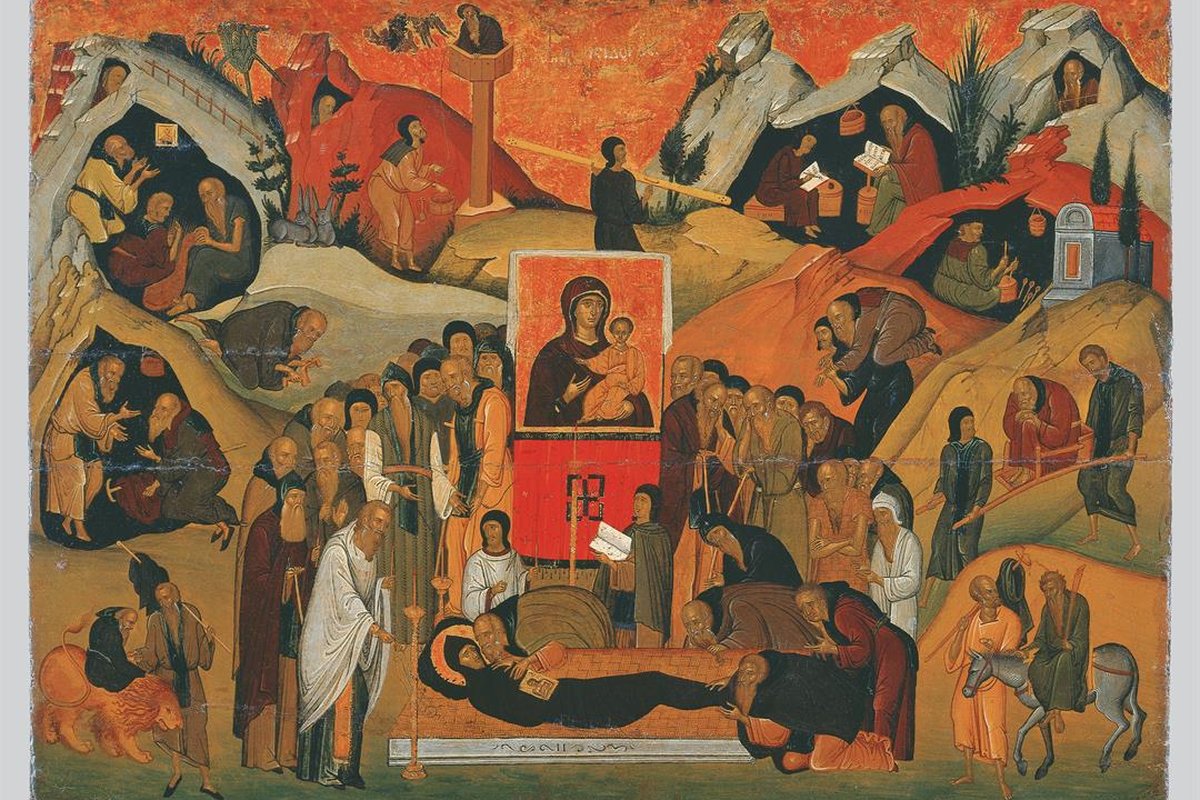
Unknown Cretan icon painter, The Dormition of Saint Ephrem the Syrian, mid-15th century, Byzantine and Christian Museum, Athens — public domain.
Nisibis endured repeated Persian sieges during Ephrem's lifetime, and later tradition credits his prayers with helping preserve the city during one particularly dangerous assault — the kind of legendary military intervention often attached retrospectively to a beloved local holy man, and one that should be read as pious tradition rather than verified history. He also ran a school in Nisibis for many years, teaching Scripture and theology to students who would go on to spread his influence well beyond the city itself. When Nisibis was finally ceded to the Persian Empire in 363, Ephrem left along with much of the Christian population and settled in Edessa, a major center of Syriac-speaking Christianity, where he spent his remaining years teaching and writing until his death in 373.
Theology set to music
Ephrem's real innovation was formal, not just doctrinal: he wrote enormous quantities of theology in verse, meant to be sung rather than read silently or debated in academic prose. His hymns cover the Nativity, the Church, the Eucharist, and sharp polemics against Gnostic and Arian teachings that were competing for influence in the same region, and by tradition, he trained choirs of women in Edessa to perform them publicly in church, using memorable, singable verse to plant orthodox doctrine in people's minds more effectively than a rival group's catchy but heretical hymns could plant theirs. This wasn't theology written for other theologians. It was built for ordinary congregations, in a language — Syriac — that was itself a living pastoral choice, not a scholarly one, since Syriac was the everyday spoken language of the region rather than the Greek or Latin used in more urban, imperial centers of Christian scholarship.
A voice from a tradition often overlooked
Ephrem wrote almost entirely in Syriac, a dialect of Aramaic, which sets him apart from the Greek- and Latin-writing Fathers who dominate most surveys of early Christian theology. That linguistic distinctiveness is part of why his enormous body of work — hundreds of surviving hymns, along with verse and prose commentaries on Scripture — took longer to become well known in the Latin West than the writings of contemporaries like Saint Hilary of Poitiers, even though Ephrem's influence within Syriac and broader Eastern Christianity was, if anything, more immediate and more widely felt during his own lifetime.
Doctor of the Church, centuries later
Ephrem died in Edessa in 373, reportedly having spent his final months organizing famine relief for the city during a period of severe shortage, personally distributing supplies to those in need despite his own failing health — a detail that fits the pattern of a man who spent his diaconate in direct pastoral service rather than administrative or political church leadership. Pope Benedict XV declared him a Doctor of the Church in 1920, a recognition that came far later than similar honors for many Greek and Latin Fathers, reflecting how long it took the wider Church to fully engage with the Syriac tradition on its own terms. His feast is kept on June 9 in the Roman Catholic calendar, while Eastern Christian traditions, including the Syriac Orthodox and Byzantine churches, commemorate him on other dates within their own liturgical calendars, a reflection of how widely his memory is shared across Christian traditions that don't otherwise always agree on their calendars of saints.
Ephrem's hymns remain in active liturgical use today, particularly within Syriac Christian communities, where some of his compositions are still sung in something close to their original form during the seasons of Lent and Advent. His influence also reached the Byzantine tradition through translation: a prayer traditionally attributed to him, asking God to remove a spirit of idleness, despair, and pride, is recited during Lenten services in Eastern Orthodox and Byzantine Catholic churches to this day, prayed with full prostrations — a living link between a 4th-century Syriac deacon and Lenten worship practiced across the world sixteen centuries later. He remains the most celebrated poet-theologian the early Syriac Church ever produced — proof that doctrine set to music can travel just as far, and last just as long, as doctrine argued in prose.
Trivia
Who was Saint Ephrem the Syrian?
Why is Ephrem the Syrian called the 'Harp of the Holy Spirit'?
Did Ephrem the Syrian organize choirs of women to sing his hymns?
When was Ephrem the Syrian declared a Doctor of the Church?
What is Saint Ephrem the Syrian's feast day?
You May Also Like
Related Reading