Saint Lawrence of Brindisi

From Brindisi to the Capuchin friars
Lawrence of Brindisi was born Giulio Cesare Russo in 1559 in Brindisi, a port city in the Kingdom of Naples, to a family of merchants. After his father's early death, an uncle who was a Franciscan friar took charge of his education, and by age sixteen the young man had entered the Capuchins, a reform branch of the Franciscan order known for strict poverty and austere living, taking the name Lawrence. He studied at the University of Padua, where he built the linguistic foundation that would define his career: alongside Latin and Greek, he developed real fluency in Hebrew, an unusual achievement for a Catholic churchman of the period, plus working command of French, German, and Spanish, in addition to his native Italian.
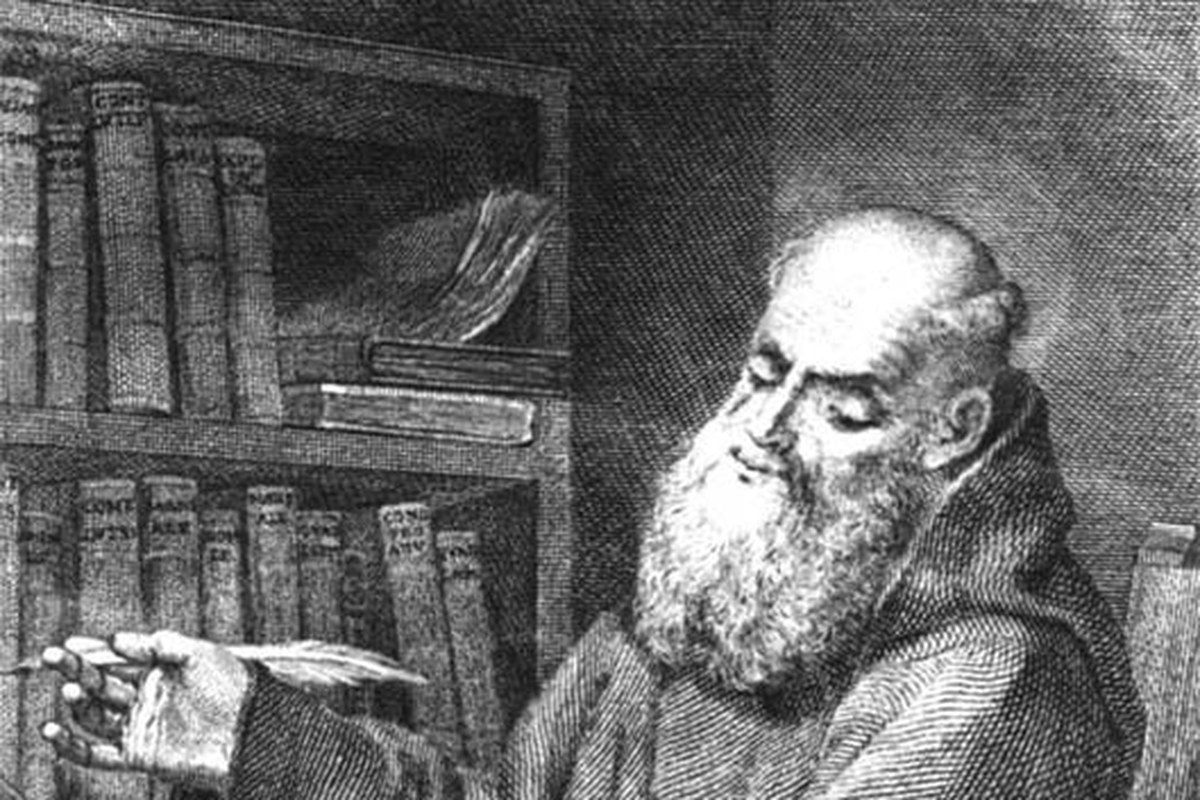
Unknown engraver, portrait of Saint Lawrence of Brindisi, 18th century — public domain (Wikimedia Commons).
A preacher fluent in the language of his opponents
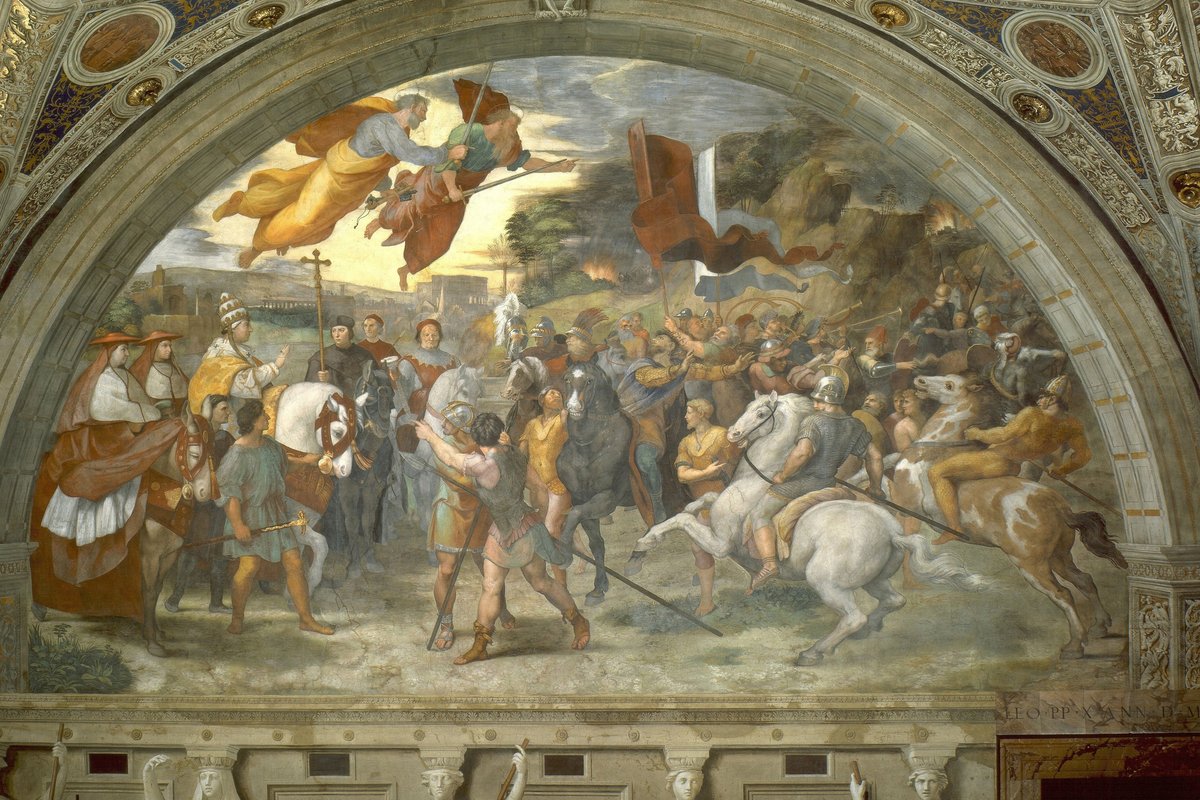
Lawrence's language skills weren't a scholarly curiosity — they were the tool he used most. Assigned to preach across German-speaking and Central European territory during the height of Counter-Reformation tension, he could argue theology directly with Protestant reformers in their own languages and engage Hebrew biblical scholarship on its own terms rather than through translation, giving his anti-Protestant preaching an unusual depth for the period. That reputation carried him into diplomacy as well: popes and Catholic princes repeatedly sent him on delicate negotiating missions across Europe, including efforts to organize Christian resistance against Ottoman expansion into Hungary, which put him, in 1601, on the field at the Battle of Székesfehérvár, where by tradition he rode among the troops unarmed, holding up a crucifix, while an outnumbered Christian force won the engagement.
Rising through Capuchin leadership
Lawrence's talents didn't go unnoticed within his own order. He rose quickly through Capuchin leadership, serving as minister provincial in several regions and, in 1602, was elected minister general of the entire Capuchin order — its highest office — at what was, for the role, a strikingly young age. He used the position to push the order's rapid expansion northward into Austria, Bohemia, and other Central European territories still contested between Catholic and Protestant rulers, seeing the Capuchins' distinctive combination of austere poverty and vigorous preaching as particularly suited to winning back ground the Reformation had taken. He eventually stepped down from the post voluntarily, a choice not universally expected of a man that successful, preferring to return to preaching and diplomatic work rather than remain in permanent administration.
His diplomatic missions, in fact, extended well beyond the Hungarian campaign that made him famous. He undertook journeys on behalf of the papacy and Catholic rulers to Spain, Bavaria, and elsewhere, often tasked with delicate negotiations meant to hold together fragile alliances among Catholic princes during the tense decades leading up to the Thirty Years' War. His final mission, undertaken in 1619 at the request of Naples' nobility, sent him to Lisbon to appeal directly to the King of Spain on behalf of the Kingdom of Naples — a journey that proved to be his last; he fell ill and died there shortly after completing the negotiation.
Apostolic Doctor
Lawrence died in Lisbon in 1619 while on a diplomatic mission, and it took a very long time for the Church to formally recognize his theological legacy: Pope John XXIII declared him a Doctor of the Church only on March 19, 1959, giving him the title "Apostolic Doctor" for his combination of scholarly depth and tireless practical preaching across the Continent. The gap of three and a half centuries between his death and that declaration reflects how long it can take for a churchman remembered mostly for activity — preaching, negotiating, organizing — to have his written theological output properly assessed and elevated to that rank.
A legacy of language and diplomacy
What survives of Lawrence's own writing runs to several volumes of sermons and biblical commentary, valued particularly for how directly he engaged Hebrew sources rather than relying on secondhand Latin scholarship. His life is also a reminder that the Counter-Reformation wasn't fought only in theological treatises: it played out in multilingual sermons delivered to mixed congregations, in tense diplomatic missions between rival Catholic and Protestant princes, and occasionally on actual battlefields. Compared to earlier Doctors of the Church such as Saint Peter Chrysologus or Saint John Chrysostom, whose reputations rest almost entirely on their surviving sermons, Lawrence stands out for how thoroughly his theological formation was put to use outside the pulpit — in negotiation rooms and, by tradition, on a battlefield in Hungary.
His feast is kept on July 21, and he remains the patron of his home city, Brindisi, and of the Capuchin order he served for over forty years. Modern Capuchin communities still point to him as a model of the order's founding ideal: rigorous personal poverty and simplicity paired, without contradiction, with real intellectual seriousness and public engagement with the wider world of politics and scholarship.
Trivia
Who was Saint Lawrence of Brindisi?
Why is Lawrence of Brindisi associated with a military victory over the Ottomans?
When was Lawrence of Brindisi declared a Doctor of the Church?
What made Lawrence of Brindisi's preaching distinctive?
What is Saint Lawrence of Brindisi the patron saint of, and when is his feast day?
You May Also Like
Related Reading