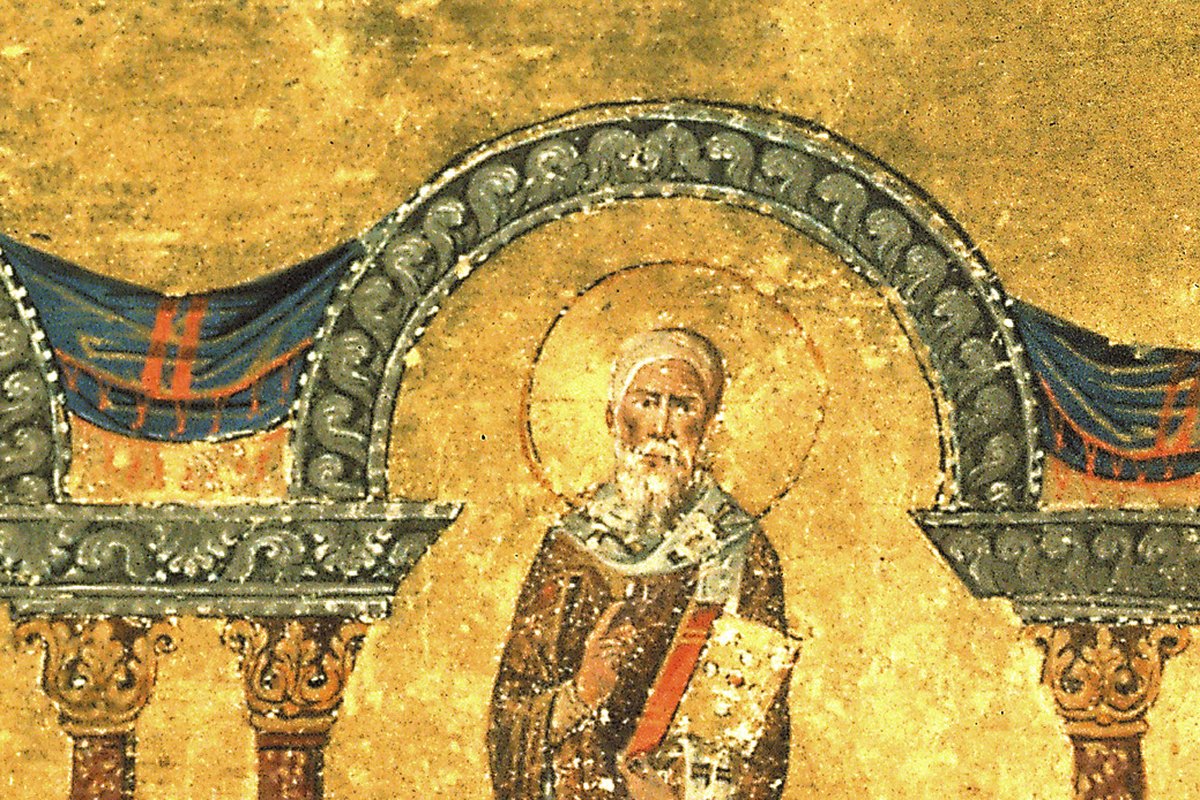
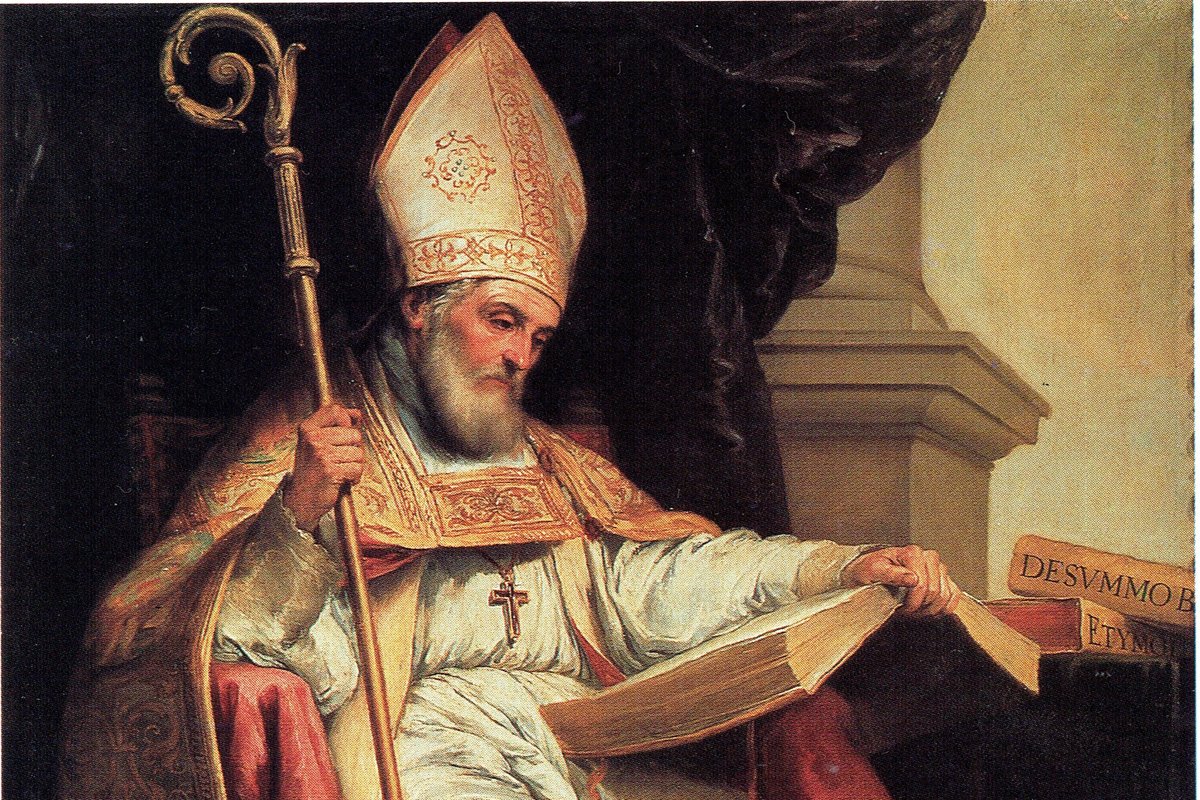
Saint Anselm of Canterbury

From Aosta to a Norman monastery
Anselm was born around 1033 in Aosta, a town in the Alpine foothills of what is now northern Italy, then part of the Kingdom of Burgundy. His early years were marked by a difficult relationship with his father, who reportedly disapproved of his son's early attraction to monastic life, and Anselm's mother, by contrast, is described in later accounts as a formative spiritual influence on him. After a restless youth and years of travel through France, he entered the Benedictine abbey of Bec in Normandy in 1060, drawn there by the reputation of its prior, the theologian Lanfranc, who was already, at that point, one of the most respected teachers in Latin Christendom.
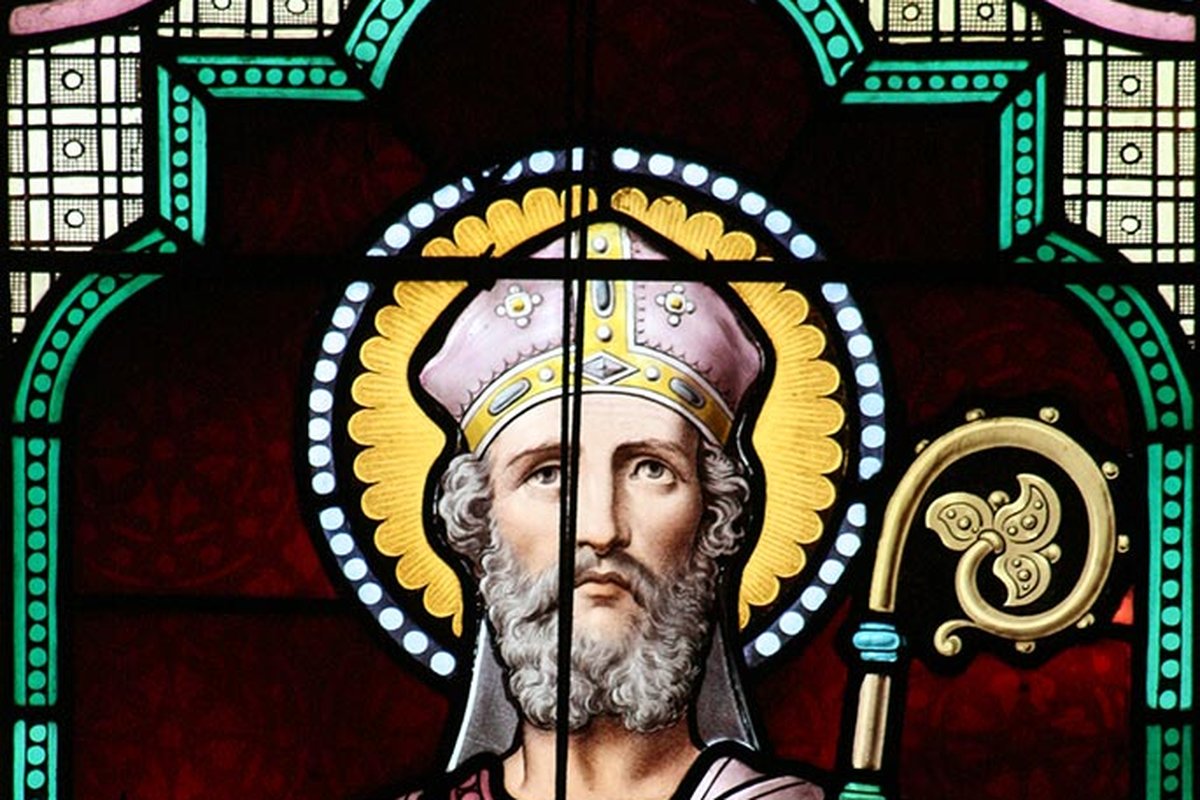
Unknown English glassmaker, Saint Anselm of Canterbury, stained glass, last quarter of the 19th century — public domain.
Anselm rose quickly within the community, becoming prior himself after Lanfranc left, and later abbot. It was during these years at Bec that he wrote his earliest and most philosophically ambitious works, developing a habit of working through theological questions using close, patient reasoning rather than leaning primarily on citation and authority — a method that would come to define the emerging scholastic style of the coming centuries. He also maintained an extensive correspondence during this period, writing warm, spiritually intense letters to monks and former students that reveal a side of Anselm rarely visible in his formal treatises: a man capable of deep personal affection, expressed openly in an era when such language between men in religious life was not unusual but is still striking to modern readers.
An argument built from a single definition
Anselm's most famous piece of writing, the Proslogion, attempts something unusual: proving God's existence from reason alone, without appealing to Scripture or the created world as evidence. He proposes defining God as "that than which nothing greater can be conceived," and argues that such a being must exist in objective reality, not merely as an idea in someone's mind, since a being that actually exists is greater than one that exists only as a concept. This line of reasoning, now known as the ontological argument, has been picked apart, defended, and revived by philosophers continuously since Anselm's own century — a contemporary monk named Gaunilo raised an early objection to it, arguing that the same logic could be used to "prove" the existence of a perfect island, and Anselm wrote a direct reply distinguishing God, a necessarily existing being, from any merely contingent thing like an island. Few medieval arguments have had anywhere near this long an afterlife in philosophy departments that have nothing else to do with the medieval Church — thinkers from Descartes and Leibniz through 20th-century logicians like Kurt Gödel have all produced their own versions or rebuttals of it.
The Proslogion followed an earlier work, the Monologion, in which Anselm had attempted a similar proof of God's existence and attributes through a longer chain of reasoning about degrees of goodness and being. Anselm considered that approach unsatisfying — too dependent on a long sequence of separate arguments — and wrote the Proslogion specifically in search of what he called "one single argument that would need nothing but itself alone for its proof," a search that produced the ontological argument as we now know it. That framing matters for understanding what Anselm thought he was doing: not constructing a rhetorical trick, but searching, in prayerful reflection, for the simplest possible expression of why God's existence follows from what God even means.
Archbishop against two kings
In 1093, Anselm was made Archbishop of Canterbury, inheriting the highest church office in England at a politically dangerous moment — succeeding his own former mentor Lanfranc, who had held the post before him. He clashed repeatedly with King William II, and later King Henry I, chiefly over lay investiture — the practice of kings personally appointing and installing bishops, which Anselm insisted belonged to the Church, not the crown. William II in particular resented Anselm's insistence on traveling to Rome to receive the pallium, the woolen vestment symbolizing an archbishop's authority, directly from the pope rather than through royal permission, viewing it as an intolerable challenge to his own authority over the English Church.
The conflict drove him into exile from England twice, for a combined total of years spent working from the continent rather than his own cathedral, before a compromise on investiture was finally reached with Henry I in 1107, an agreement in which the king gave up the right to formally install bishops with ring and staff while retaining a say in who was chosen — an early example of the kind of negotiated settlement that, in various forms, would eventually resolve investiture disputes across much of medieval Europe. It was a genuinely dangerous position to hold — arguing that a king's authority over the Church had real limits — and Anselm held it anyway, at real cost to his own career and comfort.
Doctor of the Church, six centuries on
Anselm died in Canterbury in 1109. Pope Clement XI declared him a Doctor of the Church in 1720, more than 600 years later, honoring him as one of the founders of scholastic method — the disciplined, reasoned approach to theology that later thinkers like Saint Albert the Great and his student Thomas Aquinas would build into the great theological systems of the high Middle Ages. His feast is kept on April 21, and he's remembered today as much for a single stubborn phrase, "faith seeking understanding," as for any one completed argument — a description of a whole way of doing theology that continues to shape how the Church thinks about the relationship between belief and reason.
Beyond the ontological argument, Anselm also left a lasting mark on Catholic theology with Cur Deus Homo ("Why God Became Man"), a treatise written during one of his periods of exile that laid out an influential explanation of why the Incarnation and Christ's death were necessary to restore what human sin had damaged in humanity's relationship with God. That work, alongside the Proslogion and Monologion, secured Anselm's reputation less as an original innovator in doctrine — he insisted throughout his life that he was simply trying to understand more clearly what the Church already believed — and more as the figure who gave medieval theology its characteristic method: take an article of faith already held on authority, and subject it to the fullest, most rigorous reasoning a human mind can bring to it.
Trivia
Who was Saint Anselm of Canterbury?
What does 'faith seeking understanding' mean?
What is Anselm's ontological argument for God's existence?
When was Anselm of Canterbury declared a Doctor of the Church?
Why did Anselm of Canterbury clash with English kings?
You May Also Like
Related Reading